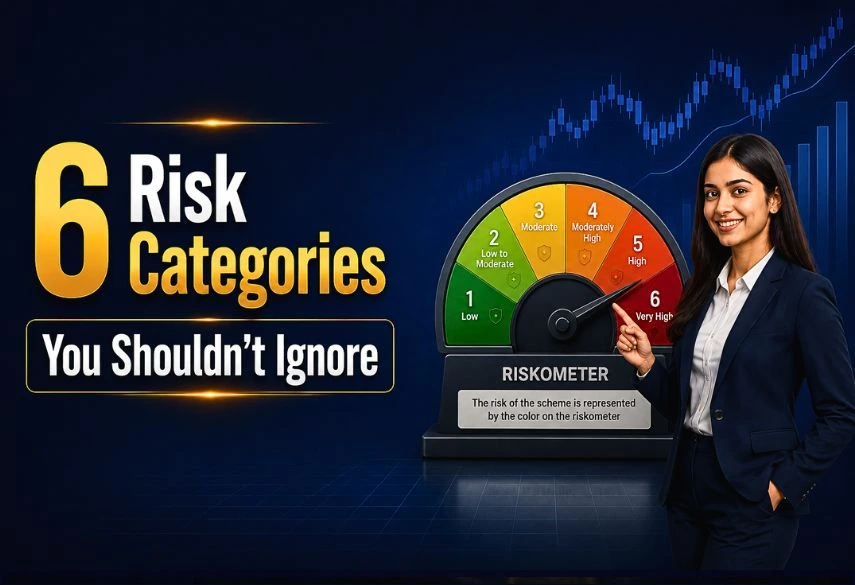
The Indian Stock Market goes through a period of market correction at least once a year, with an investment downturn and an investment upturn in relatively close succession. In early 2026, it registered 2 consecutive 2000-point steps in a single time unit. This resulted in the vast majority of once rational investors feeling irrational and panicking.
A once rational investor is an investor who believed in the SIP Mutual funds available in the Indian market and consequently submerged their head into the SIP Mutual funds available in the Indian market. However. The vast majority of once rational investors feeling irrational does not necessarily mean that it is, in fact, irrational.
Investors planning long-term wealth creation through index funds can also explore SIP planning strategies and estimate future returns using a SIP Calculator before investing in NFOs or mutual funds.
What is the SIP of a Mutual Fund and why do people choose to run it?
Systematic Investment Plan or SIP, allows an individual/legal entity to run a customer account to which they can regularly deposit a predetermined amount, irrespective of the market, except for their deposit or account creation. This method of Investment / Deposit is so popular that, as of 2026, close to 10 crore SIP accounts have been opened, with some instances of deposits exceeding 20000 crores in the account.
Stopping Your SIP During a Market Crash?
The magic of SIP is in the rupee cost-averaging strategy. When the markets are high, you buy less. When the markets drop, the same fixed amount buys more units because the Net Asset Value (NAV) is lower. This ultimately averages the purchase price and reduces the risks of market timing.
Due to its disciplined approach, SIP, or a Systematic Investment Plan, has become a preferred method for achieving long-term goals for new investors, young professionals, for mortgages, and for retirees, supplementing income. However, this disciplined approach tends to fail the most during the most important phases — during market corrections.

Why Stopping Your SIP During a Market Crash Is a Costly Mistake
The mathematics is incredibly harsh. Let’s take, for example, an assumed monthly SIP of 10,000 rupees for 20 years and assuming an expected return of 12% (which is the norm of diversified equity funds in India). If you were not to take a single break in that period, you would expect to have a corpus of approx 96 lakhs. If you, however, take 1 pause during that period (which is fairly common) you would expect to have lost approx 8-12 lakhs because of that 1 pause.
The math is unfortunately compounded against you here for the following 2 reasons:
1. Missed rupee cost averaging: You would have stopped purchasing cheaper units just when the units are lower.
2. Interrupting your investments: Every rupee invested in the beginning will grow over the years. Missing a year means the money in question will never be able to grow.
Most investors who stop rarely go back to investing at the same level. They either restart smaller or miss months waiting to try to “hit the bottom.” This is a timing mistake that turns a temporary paper loss into a permanent opportunity loss.
Historical Evidence: SIPs that Managed to Survive Major Crashes
Consider the actual history of the Indian market:
- 2020 COVID Crash: Nifty lost 38% in a matter of weeks. SIPs that were stopped lost the opportunity to benefit from the rapid recovery. Those who kept their SIPs were able to purchase units at the extremely low NAVs, and in the subsequent years, many equity funds returned 14% CAGR.
- 2008 Global Financial Crisis: Even though the market didn't fully recover for 5 years, disciplined SIP investors who remained invested were able to multiply their long-term returns in the market during the recovery phase.
- 2022-2023 Correction & the 2025-2026 Period of Increased Volatility: Every correction has been followed by new highs. Investors who stopped during these markets were able to invest at lower prices. The Indian stock markets quickly recover after each downtime. Nifty grew over 350% from 7,511 in March 2020 to 24,000 in Early 2026, regardless of the continuous global crisis. Those who invested in Nifty through SIPs profited from the dip.
Most of the Top SIP Investing Mistakes
Here is a list of the most common SIP investing mistakes Indian investors make during down markets.
- Halted SIPs: No action is the most detrimental to the wealth created.
- Cashing out to a debt fund: You sell your equity at untenable prices, meaning you lose the growth opportunity to reinvest at even more untenable prices.
- Drastically reduced SIP amounts: Please keep your SIP at the same level or even increase your SIP amount if your cash flow allows it.
- No market timing: No one can do this consistently.
- Ignoring the portfolio review: You sell your equity at untenable prices, meaning you lose the growth opportunity to reinvest at even more untenable prices.
To avoid mistakes, learn to think of your SIPs as long- term commitments, not short-term trades. Treat your SIP downturn as a short-term setback.
Simple SIP Strategy for Downturn: What Experts Recommend
1. A time-tested SIP downturn strategy: Is to do the complete opposite of stopping your SIPs and continue investing at all costs. Your fixed monthly SIP investment is your most powerful tool in volatile markets and is to be regarded as a superpower.
2. Step up if possible: If you have additional money available, you can temporarily increase your SIP amount. Many AMCs have “step-up SIP” features. Experts, including Dr. V.K. Vijayakumar, Geojit, suggest: “Continue with systematic investment plans. If possible, increase the amount.”
3. Diversify across categories: For your portfolio to be stable, have a combination of large-cap, mid-cap, flexi-cap, and some international funds.
4. Annual reviews, not daily: Reviewing your portfolio daily can be quite futile. It is more effective to review your portfolio once a year.
5. Use temporary pause only as a last resort: If you have a real cash-flow problem, many platforms let you pause your SIP investments for 1-6 months. However, you should restart your SIP investment right after the cash-flow issue is solved.
Market corrections are part of investing in equities and should not affect your financial plans, says Ashish Anand of Fortuna Asset Managers.
Market Fall Investing: Turning The Fear Into The Biggest Opportunity
Market fall investing is not about bottom prediction; it is about disciplined purchasing at a discount.
During corrections, high-quality stocks and funds are available at very reasonable valuations. Without any effort, your SIP will automatically take advantage of this. Think of your SIP as your personal “sale” shopping.
In India, the additional tactics that are effective include:
- Top-up SIPs in existing strong-performing funds.
- Consider making a lump-sum investment in addition to your monthly SIP, if you have cash that is currently unused, but limit it to 10 to 20% of your emergency fund.
- Prioritize investments in a fund that charges low expenses and has a proven fund manager.
It is important to keep in mind that in equity mutual funds, the possible increases in value over the long term come at the cost of fluctuations.
Establishing Discipline in Difficult Situations
Keeping your focus has a lot to do with your mindset, and here are some suggestions that may help you:
- Set it and forget it: Establish an automated transfer through ECS to move money out of your account.
- Be goal-oriented, not NAV-oriented: When your daily portfolio value changes, do not think, “What will this help me do in 10 years? Will I buy a house?”
- Invest in your own education: Monthly fund fact sheets and SEBI investor awareness materials are good sources of education.
- Have emergency savings: To ensure that you will not need to end your SIP commitments, keep the equivalent of 6-12 months of your expenses in liquid funds or a CD.
- Consult a certified advisor: Personalized projections from a SEBI-registered planner will help allay your anxiety.

Final Thoughts
Focusing on the fundamentals and first principles as opposed to the noise is the hallmark of a winning investor. To put it bluntly, stopping your SIP is an active decision to forgo the future wealth that market cycles will generate. Here's the trade-off: if you stop your SIP, you are protected, but you will not have the wealth that a market recovery will bring. If you are willing to accept losing protection, but have the potential to benefit from a market recovery, then you have a choice. With a SIP, the choice is yours to mitigate the downside and accept the potential for a market recovery on the upside.
Do not stop your SIP, that is a decision that will cost you the most in future wealth. When the market falls, the worst thing you can do is also stop your investment.

DISCLAIMER: This blog is NOT any buy or sell recommendation. No investment or trading advice is given. The content is purely for educational and information purposes only. Always consult your eligible financial advisor for investment-related decisions.




.webp)