Imagine waking up to the news that South Korea’s stock market has become bigger than India’s in total value. For beginners, this can feel surprising. But here’s the short solution: The KOSPI overtook the Indian stock market mainly due to the global AI boom.
South Korean chipmakers like Samsung and SK Hynix attracted huge foreign investor money. India faced selling pressure from weaker near-term earnings, high valuations, and limited direct AI hardware exposure. This shift highlights the need to diversify and focus on long-term trends rather than short-term moves.
Let’s explore this like a story — one of technology, investor choices, and global opportunities.
A Tale of Two Markets: From Strong Performers to a New Leader
India and South Korea are both dynamic Asian economies with ambitious companies. India’s Indian Stock Market, tracked by indices like Nifty and Sensex, gained popularity for its young population, growing middle class, and services boom. Many investors bet big on the “India story.”
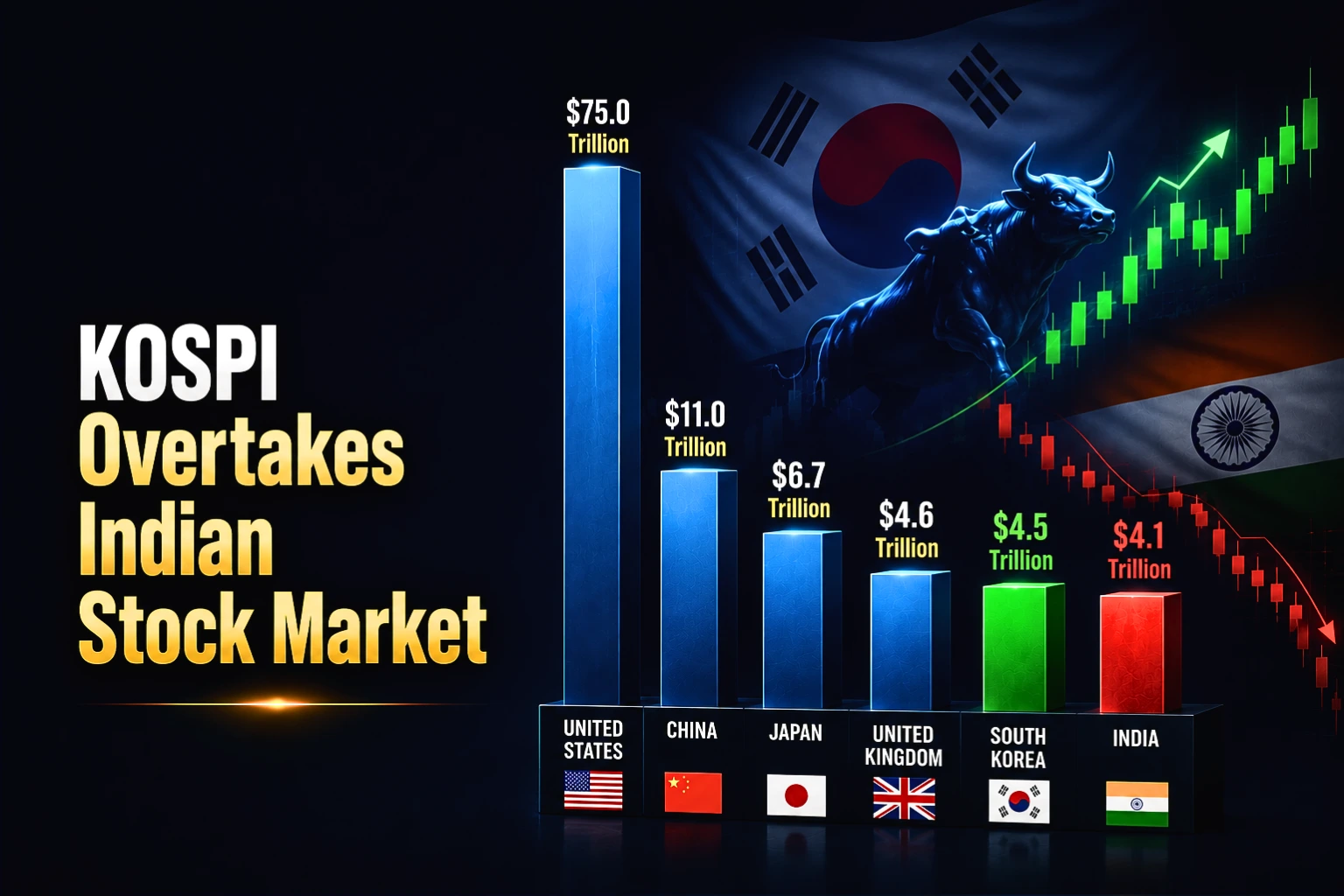
Recently, South Korea’s KOSPI (the key index for the South Korean stock market) pulled ahead in total market capitalization. South Korea’s listed companies edged past India’s in global rankings, with India slipping in the standings. This KOSPI vs Indian Stock Market shift surprised many.

The Hero of the Story: AI and Semiconductors
The big driver? The worldwide rush into Artificial Intelligence (AI).
Demand exploded for advanced computer chips. South Korea shines in semiconductor manufacturing, especially memory chips. Giants like Samsung Electronics and SK Hynix soared, lifting the entire KOSPI. These companies became central to the global AI supply chain.
Indian IT companies excel in software services and use AI for clients, but they have less direct exposure to the hardware side powering data centers and AI tools. This explains much of the India vs Korea market difference in recent performance.
Why India Underperformed: A Detailed Look
India’s economy continues showing strong fundamentals, but its stock market faced headwinds:
- Earnings Growth Challenges: Corporate profits grew more slowly than expected in several sectors. The IT industry saw pressure from cautious global clients, leading to a subdued outlook and lower stock prices.
- Liquidity and Valuation Issues: Indian stocks carried premium valuations. When global capital rotated toward AI opportunities elsewhere, India appeared relatively expensive. Rising input costs and currency movements added to concerns.
- FII Flows Breakdown: Foreign Institutional Investors (FIIs) turned net sellers, pulling out significant amounts. This was driven by better perceived returns in tech-heavy markets, profit-booking, and rotation away from higher-valued emerging markets. Domestic investors helped stabilize the market by continuing to buy during dips.
These factors created short-term pressure on the Indian stock market.
Sector-Wise Breakdown: Different Strengths
Different parts of the market performed differently:
|
Sector |
South Korea (KOSPI) Focus |
India Focus |
Key Takeaway |
|
Technology/Semiconductors |
Strong surge in chipmakers |
IT services under pressure |
Hardware vs software edge |
|
Financials |
Support from broader economy |
Mixed, with domestic resilience |
India’s banking base |
|
Consumer Goods |
Export influence |
Demand slowdown in some areas |
India’s long-term consumption potential |
|
Overall Market |
Concentrated tech rally |
Broader but faced selling |
Diversification matters |
South Korea’s gains were powered by a few big names, while India’s broader market structure offered some buffer but less explosive upside in the AI wave.
Risk Analysis of the Korea Rally
Every big rally carries risks. For the KOSPI:
- Concentration Risk: Heavy reliance on a handful of semiconductor giants means the index can swing sharply if AI hype cools or competition increases.
- Volatility: Rapid gains led to sharp corrections on global news, interest rate shifts, or profit-taking. High leverage among some investors can worsen drops.
- External Factors: Trade tensions, changes in global tech spending, or energy prices can impact exports. The domestic economy has areas of softness despite the stock boom.
- Flow Sensitivity: Dependence on foreign sentiment makes it vulnerable to reversals.
In contrast, India’s market offers more diversification across sectors, supporting steadier long-term growth.
Numbers Tell the Story: Market Comparison
Recent data showed South Korea’s market cap surpassing India’s, driven by valuation rerating in tech. India maintained appeal for its growth potential despite near-term outflows.
What Beginners Can Learn
- Global Trends Matter: Themes like AI can redirect money quickly across borders.
- Earnings Drive Flows: Strong, consistent profit growth attracts investors.
- Valuations Are Key: Expensive markets can lag when cheaper opportunities appear elsewhere.
- Diversify: Consider exposure to multiple countries and sectors.
- Long-Term View: Short-term shifts don’t erase strong economic foundations.

Conclusion
India is expanding in semiconductors and technology infrastructure, which could support a comeback. South Korea must navigate its rally’s risks carefully. In any stock market comparison, adaptability and patience win. This KOSPI vs Indian Stock Market narrative teaches us how markets evolve. Stay informed, manage risks, and invest wisely for the journey ahead.
(Sources: Reuters, JP Morgan, Aljazeera, Finance Yahoo, Business Times)

DISCLAIMER: This blog is NOT any buy or sell recommendation. No investment or trading advice is given. The content is only for educational purposes. Always discuss with your SEBI-registered financial advisor for investment-related decisions.