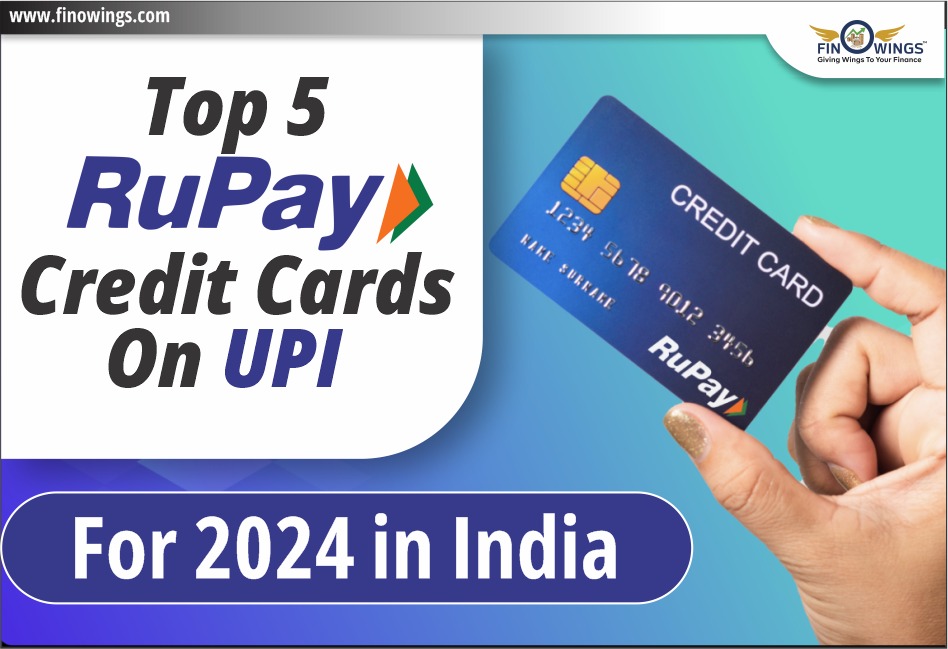
RuPay is the only card network in India whose credit cards can be linked to UPI apps for QR-code payments. Among current options, the Axis Bank IndianOil RuPay Card suits fuel buyers, the CRED IndusInd Bank RuPay Card suits UPI-first online shoppers wanting no joining fee, the Tata Neu Infinity HDFC RuPay Card suits Tata-ecosystem shoppers who want lounge access, the IDFC FIRST Power+ (HPCL) RuPay Card suits HPCL fuel buyers, and the Kotak League Platinum RuPay Card suits everyday spenders who value movie-ticket milestones.
Definition: RuPay Credit Card on UPI
A RuPay credit card on UPI is a credit card issued on India's indigenous RuPay network that a cardholder can link to any UPI app (Google Pay, PhonePe, Paytm, BHIM) to make QR-code and merchant payments directly from their credit limit — without a debit card or bank balance. The Reserve Bank of India approved this linkage in June 2022, and NPCI operationalised it later that year; as of 2026, only RuPay-network cards support this feature.
India's UPI system was built to link bank accounts, not credit lines. In June 2022, the Reserve Bank of India approved a pilot to let credit cards ride on UPI rails for merchant payments, and NPCI restricted this first phase to its own RuPay network. As of 2026, that restriction still holds: Visa and Mastercard credit cards cannot be linked to any UPI app for payments, even though wider network support has been discussed periodically. If a card comparison site or bank agent tells you otherwise, treat it as outdated information.
Once linked, a RuPay credit card behaves like a virtual UPI “account” backed by your credit limit instead of your savings balance. You scan a merchant's QR code, select the RuPay card as the payment source inside your UPI app, and the amount is billed to your card statement — interest-free until your due date, exactly like a regular swipe.

Figure 1: The four-step process to link a RuPay credit card to any UPI app.
Joining and annual fees on RuPay-UPI cards are modest by design — most issuers see UPI linkage as a way to raise everyday spend on a card that will otherwise sit idle. The chart below compares the five cards on pure fee terms; reward rates and waiver conditions differ significantly, so treat this as one input, not the whole decision.

Figure 2: Joining vs. annual fees across the five cards, verified against issuer fee schedules, August 2026.
|
Card |
Joining Fee |
Annual Fee (Waiver) |
Top Reward |
Best For |
|
Axis Bank IndianOil RuPay |
₹500 + GST |
₹500 + GST (₹3.5L spend) |
4% value-back on IOCL fuel |
Frequent IndianOil fuel buyers |
|
CRED IndusInd Bank RuPay |
Nil |
₹499 + GST (2nd yr+) |
5% CRED points on e-comm/CRED |
UPI-first online shoppers |
|
Tata Neu Infinity HDFC RuPay |
₹1,499 + GST |
₹1,499 + GST (₹3L spend) |
Up to 10% NeuCoins on Tata Neu |
Tata-ecosystem shoppers |
|
IDFC FIRST Power+ (HPCL) RuPay |
₹499 |
₹499 (₹1.5L spend) |
Up to 6.5% return on HPCL fuel |
HPCL fuel buyers |
|
Kotak League Platinum RuPay |
₹500 |
₹499 (₹50,000 spend) |
Movie-ticket milestone rewards |
Everyday lifestyle spenders |
Table 1: Side-by-side comparison of the five RuPay-UPI credit cards covered in this guide.
The 5 Cards in Detail
1. Axis Bank IndianOil RuPay Credit Card
A co-branded fuel card built with Indian Oil Corporation. Cardholders earn 4% value-back (20 EDGE Reward Points per ₹100) on fuel spends at IndianOil outlets, for transactions between ₹400 and ₹4,000, plus 1% value-back on online shopping. A 1% fuel surcharge waiver applies in the same transaction band, up to ₹50 per statement cycle.
• Joining fee: ₹500 + GST · Annual fee: ₹500 + GST, waived on ₹3.5 lakh spend in the card year
• Extras: 10% instant discount on BookMyShow (up to ₹100/month), Axis Dining Delights program
• Best for: Riders and drivers who fuel up regularly at IndianOil pumps and want a low entry cost
2. CRED IndusInd Bank RuPay Credit Card
An entry-level, UPI-native card co-branded with the CRED app. It earns 5% value-back as CRED Coins on e-commerce and CRED-app transactions (capped per statement cycle), with lower accelerated rates on other categories. Reward points can be redeemed on CRED for travel bookings or bill payments.
• Joining fee: Nil · Annual fee: ₹499 + GST from the second year onward
• Note: IndusInd Bank revised several credit-card charges (fuel transaction fees, forex markup, partial-payment interest treatment) effective 15 June 2026 — check the current Most Important Terms & Conditions (MITC) before applying
• Best for: CRED app users and online shoppers who want UPI convenience with no joining cost
3. Tata Neu Infinity HDFC Bank RuPay Credit Card
The premium variant of HDFC's co-branded Tata Neu card line. It earns up to 10% NeuCoins on purchases made through the Tata Neu app, 5% on spends at partner Tata brands (BigBasket, Croma, Westside, Tata 1mg, Air India), and about 1.5% NeuCoins on other eligible UPI spends. NeuCoins redeem 1:1 in rupees across the Tata Neu ecosystem.
• Joining/annual fee: ₹1,499 + GST, annual fee waived on ₹3 lakh spend in the membership year
• Extras: Milestone-based domestic airport lounge access — 2 vouchers per quarter on ₹50,000+ spend in that quarter
• Best for: Households that already shop regularly across Tata Group brands
4. IDFC FIRST Power+ (HPCL) RuPay Credit Card
A fuel-focused co-brand with Hindustan Petroleum. It offers up to 6.5% return through reward and loyalty points on HPCL fuel spends, plus a ₹500 gift voucher on the first HPCL transaction of ₹500 or more. Quarterly complimentary domestic lounge access is available on ₹20,000+ monthly spend.
• Joining fee: ₹499 · Annual fee: ₹499, waived on ₹1.5 lakh spend in the preceding year
• Extras: Complimentary roadside assistance (up to 4 times/year), movie-ticket discount
• Best for: HPCL fuel buyers who want a stronger fuel return than entry-level cards offer
5. Kotak League Platinum Credit Card (RuPay)
Kotak's mass-market rewards card, available on both Visa and RuPay networks — choose the RuPay variant specifically for UPI linking. It earns points on eligible category spends, redeemable via the Kotak Rewards catalogue, with a milestone of 4 free PVR tickets or 10,000 points on ₹1.25 lakh spend every six months.
• Joining fee: ₹500 · Annual fee: ₹499, waived on ₹50,000 spend in the anniversary year
• Extras: 1% fuel surcharge waiver (₹500–₹4,000 band, up to ₹3,500/year), railway surcharge waiver, ₹1,25,000 card-loss insurance cover
• Best for: Everyday spenders who want lifestyle/movie milestones alongside UPI convenience
This isn't a niche feature. Government data tabled in Parliament shows RuPay credit card transactions on UPI more than doubling year-on-year: from 362.8 million transactions worth ₹33,439.2 crore across the whole of FY24, to over 750 million transactions worth ₹63,825.8 crore in just the first seven months of FY25 (April–October 2024). By early 2025, NPCI's own leadership put RuPay's share of total credit card spending at around 16–18%, with close to half of that flowing through UPI.

Figure 3: RuPay-UPI credit card transaction volume and value, FY24 vs. the first seven months of FY25. Source: Ministry of Finance data via Lok Sabha reply, reported by Business Standard/IBEF.
For the cardholder, using a RuPay credit card on UPI is free. There's no separate charge for linking your card or for making a payment through it. The Merchant Discount Rate (MDR) — the small processing fee that funds card infrastructure — is paid by the merchant, not you, and NPCI/RBI have exempted UPI transactions of ₹2,000 or less from MDR entirely. Above that threshold, a small MDR may apply to the merchant; from April 1, 2026, NPCI also reduced the third-party app provider (TPAP) component of that MDR, cutting per-transaction costs for apps like Google Pay, PhonePe and Paytm.
Where cardholders should watch costs is the usual credit card fine print: interest charged if you don't pay your statement in full, cash-advance fees (UPI credit lines cannot be used for bank transfers, only merchant payments, so this risk is limited), and the annual fee itself if you fall short of the spend-based waiver.
• Mandatory two-factor authentication: Under RBI's Authentication Mechanisms for Digital Payment Transactions Directions, 2025, every digital payment in India — including RuPay-UPI credit card transactions — has required two-factor authentication since April 1, 2026, with at least one factor dynamically generated per transaction.
• Lower TPAP fees: From April 1, 2026, NPCI cut the TPAP fee on RuPay credit card UPI transactions from 8 to 6 basis points (non-industry category) and 4 to 3 basis points (industry category), reducing costs in the payments chain (this does not change what cardholders pay).
• First-24-hour caution: whichever card you link, expect a reduced ₹5,000 daily cap for the first 24 hours after linking — don't plan a large purchase on day one.
• Fuel-heavy spenders: Axis IndianOil RuPay or IDFC FIRST Power+ (HPCL) RuPay, depending on which fuel brand's pumps you actually use.
• Zero-cost UPI users who shop online often: CRED IndusInd Bank RuPay — no joining fee and a strong e-commerce rate.
• Tata-brand loyalists wanting lounge access: Tata Neu Infinity HDFC RuPay, if you can comfortably clear the ₹3 lakh annual-fee waiver.
• Everyday, lifestyle-first spenders: Kotak League Platinum RuPay for its lower waiver threshold and movie-ticket milestones.
• Whichever you pick, check the current MITC (Most Important Terms & Conditions) on the issuer's own website before applying — fees and reward structures on these cards are revised more often than most comparison pages reflect.

RuPay's exclusive UPI linkage has turned a once-niche feature into one of the fastest-growing corners of India's credit card market — transaction volumes have more than doubled year-on-year, and over two dozen banks now compete on rewards. Of the five cards compared here, there's no single “best” option: the right pick depends on whether you spend more on fuel, on Tata-brand shopping, or on everyday online purchases, and on how comfortable you are clearing each card's annual-fee waiver. What matters most, regardless of which card you choose, is checking the issuer's current terms directly — fees, reward caps and waiver thresholds on these cards change more often than most “top 5” lists keep up with.

DISCLAIMER: This blog is NOT any buy or sell recommendation. No investment or trading advice is given. The content is only for educational purposes. Always discuss with your SEBI-registered financial advisor for investment-related decisions.
Follow this WhatsApp Channel for the latest updates directly on WhatsApp.