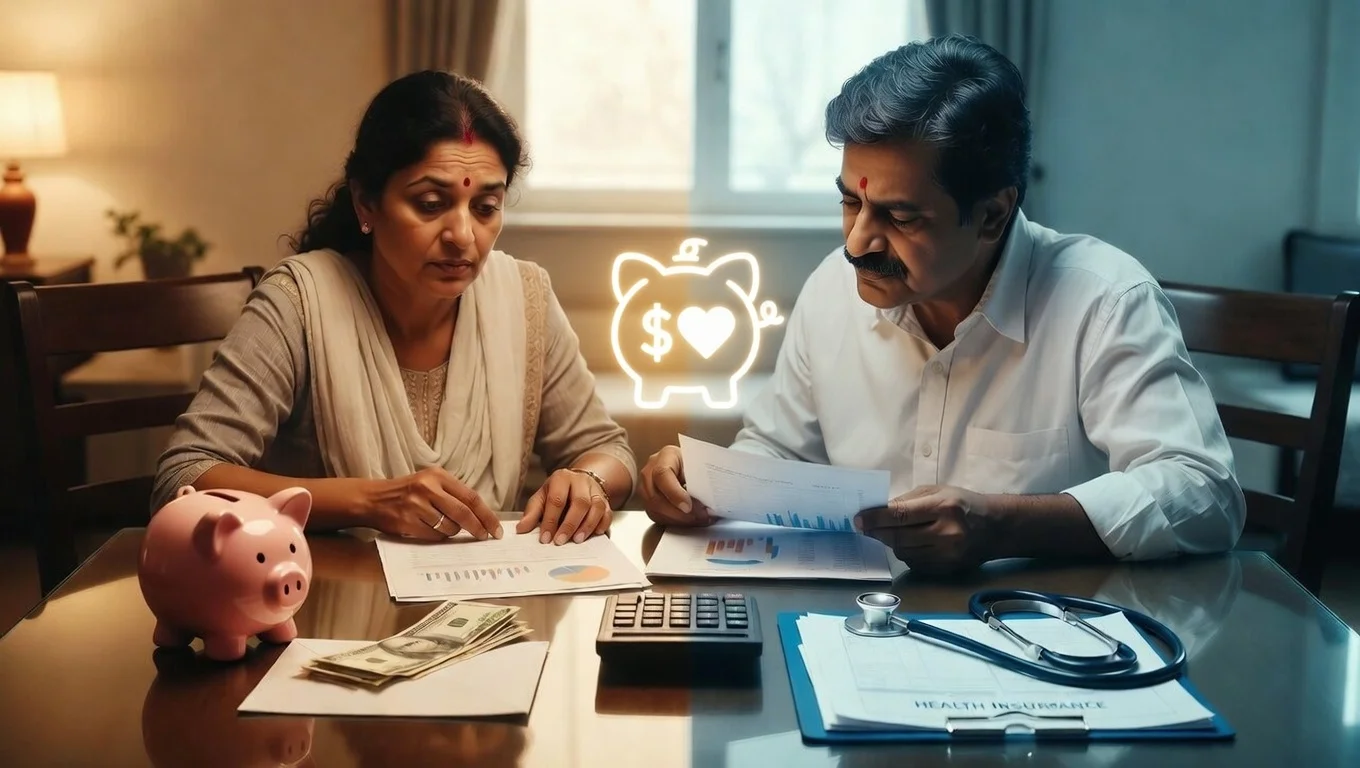
In 2026, financial planning is a worry for many. Living costs keep rising, jobs are becoming harder to obtain, and healthcare costs are rising more quickly than general inflation. This leads personal financial strategists to consider the importance of savings accounts that are used for emergencies and insurance. When budgeting, is it more important to focus on insurance or emergencies? Is it really one or the other?
When budgeting for extra security, many have to consider the use of quick cash available for an emergency fund or the use of health insurance for protection from enormous medical bills. This is an important decision that we will help you with.
Why Health Insurance is Very Important in 2026
Because of the alarming levels of medical inflation, hovering around 11.5% for 2026, it is very important to obtain health insurance. This ranges from unaffordable hospital bills, to unaffordable surgeries and unaffordable treatments. Everything combined can go into the lakhs and crores quickly, wiping out all of the savings.
Experts state that health insurance is the first line of defence against worst-case scenarios. Policies are not like savings. They are replenished year after year. If you were to use your ₹10 lakh cover this year, you can use it again next year (as per the terms). This is extremely beneficial because it allows you to make large claims as often as you need, which makes it better than having a large amount of cash on hand.

Almost everyone uses out-of-pocket payments (except for a few people who use the Ayushman Bharat insurance system). This poor situation causes people to become impoverished and go into debt. People are really scared of the situation. 80 percent of the people you talk to will tell you that they are afraid of not having enough money to pay for emergencies.
This is a true danger. Other than that, you have a variety of choices for comprehensive health insurance that cover a lot of things, like cashless hospitalisation, coverage for post-surgery and pre-surgery services, day-care surgeries, and even health work benefits, like giving you money to do your annual check-up.
If you are a young professional or a young family, you will benefit the most from insurance because buying it sooner will save you money on the premium and there is a high chance that you will not have to wait before your insurance coverage starts because of exclusion clauses for people who have pre-existing conditions.
If you wait until 2026 to buy insurance, your insurance premiums will be based on predicted high insurance claims and cutting-edge medical procedures (which are expected to be really expensive). Waiting to buy insurance will make your coverage significantly more expensive than it would be in your current situation because of the premiums.
Using your savings to pay for medical emergencies is not ideal, especially when you are older, because it is very likely that you will have to go to the hospital many times. If you are to have an emergency fund, it can be beneficial to pay for a single hospital visit, but it will not be able to cover many hospital visits, especially as they are likely to be ongoing.

The Importance of Emergency Savings
An emergency fund puts money aside for non-health-related emergency situations like loss of a job or home repairs. This helps avoid high-interest cash situations or loss of cash due to selling investments when a cash need arises in emergency situations.
In India by 2026, authorities predict a need for 6 to 12 months of basic financial needs placed into low-risk and low liquidity situations which may include savings accounts and very short debt funds. People who suffer from fixed pay jobs need 6 months placed into lower risk and lower liquidity situations, but those who are freelancing or have dependants need 12 months.
This emergency fund offers a buffer when basic health coverage insurance does not apply, such as work-related deductibles, non-covered outpatient department work, or waiting periods. Emergency funds are also designed to cover rent when work-related health issues occur.
Financial advisors recommend separating emergency savings into two different types of savings accounts, and suggest putting aside a certain percentage of the cash coverage to be used for advanced diagnosis emergencies and non-network hospitals.
Emergency Fund and Health Insurance: Above and Below
- Health insurance focuses on significant health-related emergencies, such as surgery, while health insurance focuses on minor emergencies, such as cash and work-related emergencies.
- Cost Efficiency- Insurance uses pooled risk; a ₹10-20 lakh policy is far less expensive on a yearly basis than building that amount in savings, which would earn interest but the savings would be depleted permanently.
- Speed & Access- An emergency fund offers immediate liquidity. Insurance does not offer immediate access unless there are network hospitals involved in cashless transactions, as they are quicker.
- Long-Term Impact- Insurance maintains the status quo, whereas savings can be depleted. Insurance can be thought of as depleting savings, so savings provide flexibility, but there is a risk that savings can be completely exhausted in one large event.
- Inflation Protection- Insurance is far more medically advantageous than keeping savings, as medical costs are rising at 11-12% annually, and insurance will increase the amount of coverage rather than maintaining a static amount.
The majority of experts believe health insurance is more important in the case of large risks - saving for a ₹50 lakh+ bill isn't feasible. But the biggest mistake is viewing them as alternatives. The best strategy is to get health insurance first (preferably a family floater or super top-up) and then build your emergency fund.
Financial Protection Strategy for 2026: Financial planning India 2026
1. Assess Your Needs- Identify your monthly expenses, dependents, health risks, and stability of your work.
2. Health Insurance- For sufficient coverage, look for policies with ₹10-20 lakh coverage, more if you live in a metropolitan area. You can add a rider for critical illness, and it is also recommended to get life insurance, which should cover about 10 - 15 times your annual income.
3. Emergency Fund- Start with 3 months and aim for 6 to 12 months in savings. Put it in an account with high liquidity.
4. Layer Protection- Use super top-ups for more coverage at a lower cost. Have a separate medical buffer.
5. Annual Review- Adjust policies according to inflation, changes in lifestyle or life events, and new policies. Claim settlement ratios and hospital networks are important.
6. Invest- After the basics, focus on growth and invest in mutual funds, NPS, and others, without risking your safety net.
In medical emergency planning, both elements are needed, as health insurance covers major incidents and savings cover daily needs. Without health insurance, you can experience a crisis, and without liquidity, you can experience a crisis.
In the uncertain landscape of 2026, the best personal finance protection involves using emergency savings and health cover, so do both. Start with a policy review, number crunching, and with an advisor if needed. Your family and your future self will appreciate it.
(Source: Livemint)

Conclusion
In the end, the greatest personal finance protection approach in the uncertain environment of 2026 is to integrate emergency savings and health insurance for complete security rather than pick one over the other. Review your insurance, calculate your fund's figures, and, if necessary, get advice from an expert. Start now. Your family and future self will appreciate the peace of mind.

DISCLAIMER: This blog is NOT any buy or sell recommendation. No investment or trading advice is given. The content is purely for educational and information purposes only. Always consult your eligible financial advisor for investment-related decisions.









 72.jpg)