As supply chain disruptions, volatile oil prices and geopolitical tensions continue to impact markets, there is increasing global economic uncertainty. Governments around the world are focusing on economic resilience and spending less. India is continuing to exercise fiscal prudence by proposing the Economic Stabilization Fund. Finance Minister Nirmala Sitharaman announced the fund on March 13, 2026, to develop a buffer against external shocks while continuing India’s fiscal prudence.
With the global economic challenges, India is continuing to be bold and active with new initiatives. Currently, the West Asian conflict is heading towards oil prices exceeding $100 per barrel, and further escalating the energy crisis. What does the Economic Stabilization Fund mean and how will it keep India economically resilient?
What is the Economic Stabilisation Fund?
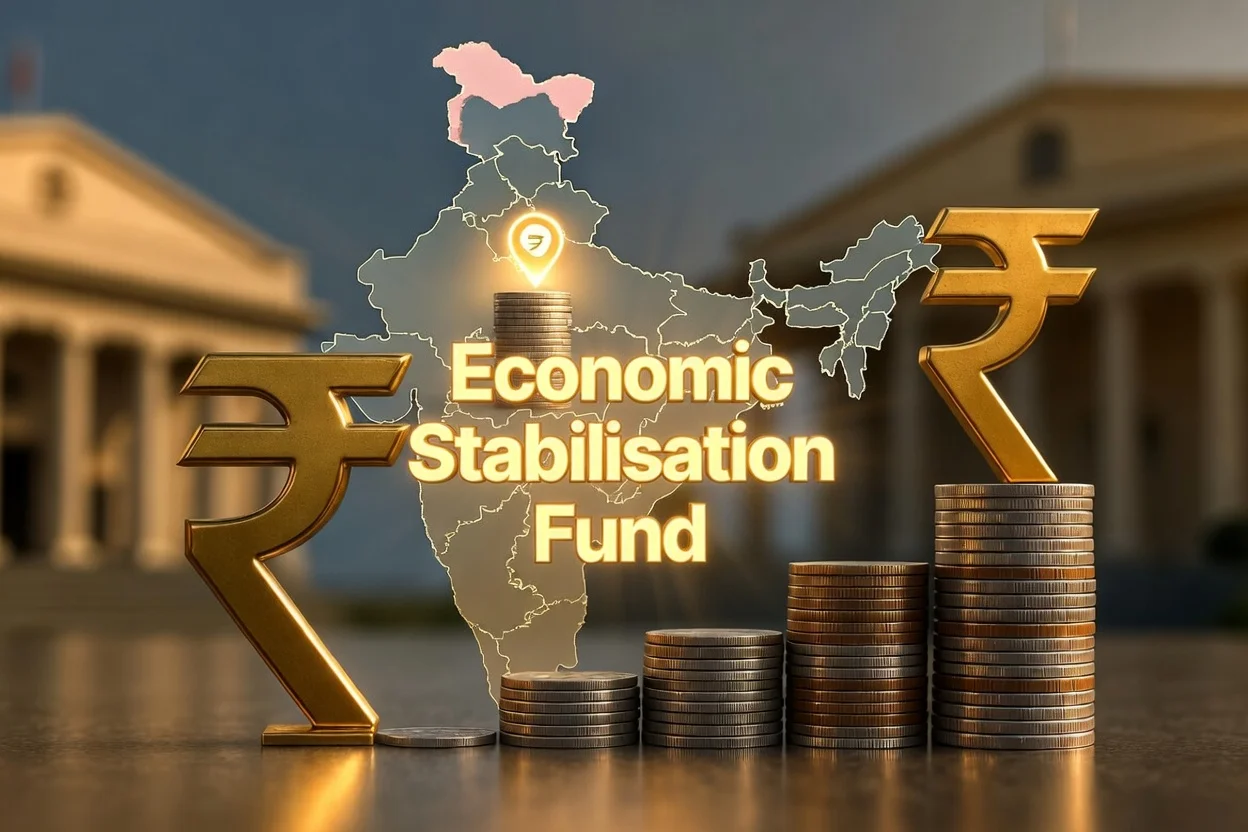
The Economic Stabilisation Fund is a new economic tool by the Indian government that is expected to start with an initial fund corpus of ₹1 lakh crore (about $12 billion). For the FY 2025-26 supplementary grant proposals, the Centre made a case to the Parliament for the first time to establish the Fund with a net cash outgo of ₹57,381.84 crore (about $6.2 billion). The rest of the corpus will be created via internal savings and fund shifts from other ministries.

During the budget presentation, Finance Minister Nirmala Sitharaman stated that the fund would create fiscal headroom- the ability to respond to and manage economic pressures quickly and easily - and ensure that the government will be able to absorb costs that arise from unexpected situations without compromising on the fiscal deficit target. The Minister also made a point to assure Parliament that the new spending would be neutral to the revised fiscal deficit projection of 4.4% of GDP for FY26.
This fund will serve as a contingency fund and differ from regular budgetary allocations as it will be able to mitigate risks caused by global economic uncertainties, such as;
- Unpredictable increases in the price of commodities like oil and fertilizers.
- Unanticipated supply chain disruptions.
- Geopolitical crises that affect trading and energy security.
- Specific shocks to certain sectors of the economy that affect the Indian industry.
The government is allocating a certain amount of money to create a contingency fund to assist vulnerable groups immediately. This includes farmers, consumers, and people in the lower-middle class by shielding them from the repercussions of inflation, such as by aiding imports or providing direct subsidies to them.
Why India Needs This Fund Now
The economy of the world is unstable. With the conflicts in West Asia, and oil-dependent countries like India, the risks of energy shortages and an increase in Bengaluru's import bill are high. India’s import bill will significantly increase as long as crude oil is about $100 a barrel. This will also be a big concern in terms of the balance of payments and will increase inflation.
The economy of India is one of the strongest in terms of growth, but it is also very vulnerable to global changes. Previous instances, such as the 2022 conflict between Russia and Ukraine, COVID-19, and shocks in oil supply, have shown us how fast the global economy can turn. A headwind in the global economy almost always causes fuel price increases, a decrease in the value of the rupee, and supply chain disruptions.
The Economic Stabilisation Fund is a means to counter these risks directly. It is a fiscal tool balancing domestic stabilisation using India’s impressive foreign exchange reserves built over the last several years. This will not be a sovereign wealth fund that will make long-term foreign investments. Instead, it will be a mechanism similar to commodity-exporting countries, particularly the Chilean Stabilisation Fund, adjusted to an economy that is a net importer like India.
The fund will operate alongside other safeguards, such as strategic petroleum reserves and diversified trade partnerships. It shows India is shifting from a reactive crisis approach and moving towards proactive resilience.

Benefits of the Economic Stabilisation Fund
1. Increased Flexibility in Fiscal Policy
The fund creates fiscal headroom, allowing government responses to shocks without the need to borrow or cut expenditures. This helps to maintain the growth momentum throughout shocks.
2. Mitigation to Supply Chain Disruptions
The fund will help mitigate production and employment losses as it can finance emergency imports or provide assistance to the affected sectors.
3. Economic Protection for The Most Vulnerable
Global economic uncertainty is largely unpredictable and places a heavy burden on vulnerable groups. Timely intervention in the form of subsidies on fertilizers, fuels, or food will be required. The fund supports these groups, particularly farmers, the rural population, and low-income consumers, who bear the most severe consequences of price volatility.
The importance of fiscal discipline
The government has the ability to avoid ad-hoc borrowing that would increase public sector deficit spending. Sitharaman has once again shown that the fiscal target for FY26 remains unchanged, supporting the confidence of the investors.
Helping confidence
Buffers, markets, and rating agencies. All three are positively influenced. By providing good policies, it helps India’s ability to pay its debts and increase international investment.
How the Fund fits with India’s Overall Economic Policy
India has experienced extremely rapid growth as one of the largest economies. India’s growth has followed the global pandemic. Policies such as the Make in India initiative along with the PLI and push for new infrastructure have reduced reliance on imports. There are still international risks, however.
The Economic Stabilisation Fund is defensive in nature and adds to the current strategy of positioning India’s economy against global risks. The Economic Stabilisation Fund works in conjunction with reserves for stable currencies, RBI’s inflation-targeting framework, and the new trade agreements to protect and diversify energy resources. Collectively, they create a stable framework for the global risks India faces.
Potential Challenges and the Way Forward
Although there is potential, advancing the fund will need more specific details, including:
- Clear governance and operational guidelines to reduce the likelihood of misuse.
- Timely updates to the operational governance to reflect current risk trade-offs.
- Cross-compatibility with current frameworks, such as the Price Stabilization Fund (for essential commodities).
The government has assured there will be no fiscal slippage, and some critics question the strategic spending on defense, rural employment, and subsidies. In a recessionary environment, it is better to prevent than to react.

Conclusion: A Step Toward a Resilient Future
India's Economic Stabilisation Fund is a responsible reaction to an evolving crisis. It is positive that the government is allocating ₹1 lakh crore as a fiscal buffer to not only react to ongoing crises, but also anticipate future crises.
In the words of Finance Minister Nirmala Sitharaman, this fund will "provide fiscal headroom to allow India to respond to global headwinds, such as the recent crisis, unanticipated supply chain disruptions, unexpected shocks to sub-sectors in the Indian economy, and any other event that may have significant fiscal implications."
With global economic uncertainty still being a major concern, this initiative solidifies India's economic structure as a safe, strong, and resilient economy. It safeguards growth and it shows the world that India will confidently and strategically handle any problems that may come.
This bold initiative is likely to be the starting point of India's protective economic systems in the years to come and will prevent external economic challenges from hindering India's continued progress to achieving developed economy status.

DISCLAIMER: This blog is NOT any buy or sell recommendation. No investment or trading advice is given. The content is purely for educational and information purposes only. Always consult your eligible financial advisor for investment-related decisions.









 72.jpg)