Investing in India is becoming more advanced and selecting a mutual fund can seem daunting as markets remain uncertain as we approach 2026. Many people are searching for a potential Nifty Index Fund vs Balanced Advantage Fund showdown and making the best mutual fund investments for 2026. The index fund vs balanced advantage funds debate is growing among Indian investors.
Investors planning long-term wealth creation through index funds can also explore SIP planning strategies and estimate future returns using a SIP Calculator before investing in NFOs or mutual funds.
This Indian mutual fund comparison focuses on two popular fund types: passive Nifty Index Funds and Dynamic Balanced Advantage Funds (BAFs). We are answering the question: Which fund is best in 2026 and which fund is the best balanced advantage fund to choose? We are looking at data in 2026 to guide on risks, costs, and real-world performance to evaluate the returns of your passive vs dynamic funds.
Nifty Index Fund vs Balanced Advantage Fund
What Is a Nifty Index Fund?
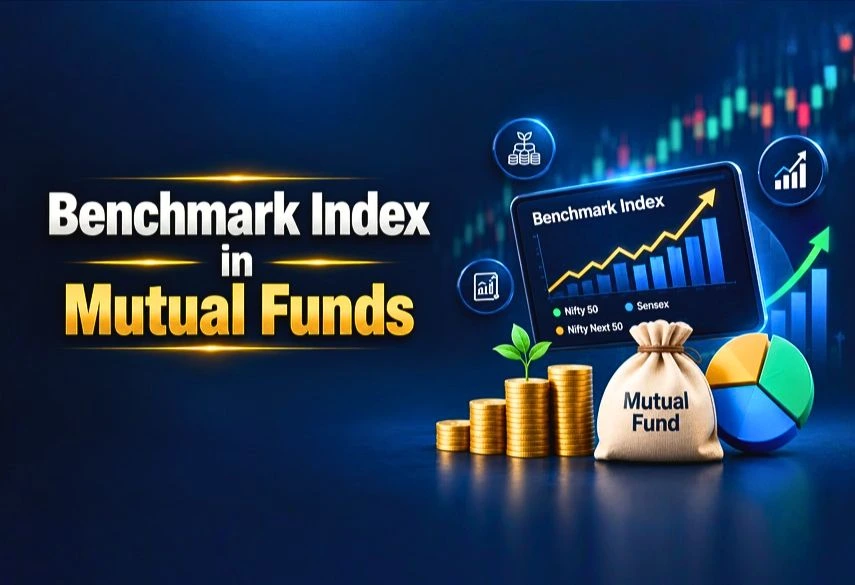
Investing in a Nifty Index Fund is a form of passive investing with the goal of mirroring the Nifty 50 index. The Nifty 50 index is a collection of India’s top 50 companies by market capitalisation. The fund does not employ a fund manager to make individual stock selections; rather, the fund is required to maintain the same stock allocations as the index.
Notable index funds as of 2026 include HDFC Nifty 50 Index Fund, UTI Nifty 50 Index Fund, ICICI Prudential Nifty 50 Index Fund, and Motilal Oswal Nifty 50 Index Fund. These funds, as of early 2026, exhibit robust 3-year annualised returns of about 12% and 5-year returns of approximately 10.8% to 11%. One-year returns have averaged around 7-8% due to the recent correction in the market.

What are the biggest advantages? First, they have outrageously low expense ratios (often 0.10-0.30%). Second, there are no hidden funds or funds within funds. The passive nature of index funds means that market returns are obtained in-state and without the cost of poor stock-picking.
More pure equity exposure means more volatility. In a bull run, the Nifty Index Funds are great, but in a downturn (like the corrections of late 2025), one could drop 20-30% or more. Better for long-term investors (7+ years) with a high risk appetite. People who believe “the market always wins eventually” are most suited to this product.
What are Balanced Advantage Funds
Funds in the Hybrid category, more specifically in the Balanced Advantage Funds (or dynamic asset allocation funds) category, look and function differently from typical balanced funds. These fund managers increase or decrease the amount of equity (usually between 30-80%) and debt in the fund depending on market valuations, by looking at a range of factors (such as Price to Earnings (PE) ratios or something similar).
Some of the most successful funds in 2026 have been HDFC Balanced Advantage Fund (AUM greater than ₹1,06,000 crore), ICICI Prudential Balanced Advantage Fund, Nippon India Balanced Advantage Fund, and SBI Balanced Advantage Fund. These funds have shown great returns, as HDFC BAF has demonstrated 3-year returns between 16-17% and 5-year returns between 16.5-19.6%. ICICI BAF has shown 3-year returns between 12-13% and has proven to be steadier and has shown less volatility than its competitors.
The unique element here is the flexible strategy. When managers think equity markets are overvalued, they will reduce stock exposure and shift to bonds instead, or use derivatives to achieve equity-like returns in a tax-advantaged way. The rebalancing also provides some downside protection. Many BAFs were down only 8-10% in the 2020 crash compared to Nifty’s 30%+ drop.
The expense ratios (0.7-1%) are active management costs, so they are higher than straight index funds, but they are still less than a straight equity active fund. BAFs are a good fit for moderate risk investors who want equity growth but with a safety net.
Comparison Between an Index Fund and a Balanced Advantage Fund
Now, I will present some of the most important nifty index fund vs balanced advantage funddifferences, as of March 2026 (ET Money, Groww, Value Research data).
Returns
Nifty Index Funds are designed to provide investors with returns in connection with the market. The last 5 years of market conditions have been classified as sideways, so a market-linked strategy would have resulted in 5 years of “average” returns. Over the last 5 years, mostly the categories have averaged around 10.8%.
Meanwhile, the best Balanced Advantage Funds have achieved returns on a risk-adjusted basis. In fact, HDFC BAF achieved an astounding 5-year CAGR of 16-19%! Analyzing the rolling 3-year returns (data set 2013-2024 extended), BAFs outperformed Nifty 50 in average returns, median returns, minimum returns and also in consistency.
Risk and Volatility
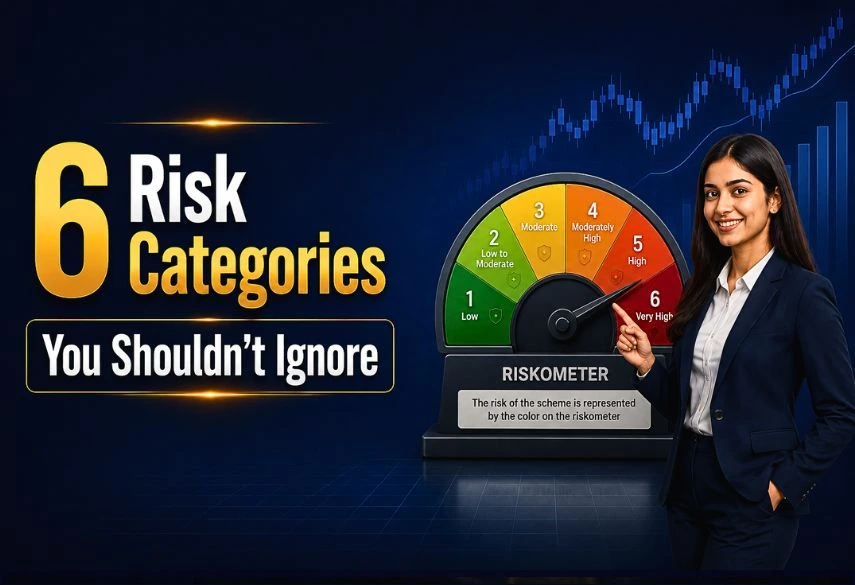
Passive and active funds look quite different and manage risk and volatility very differently. Nifty Index Funds are considered to have “very high” risk, with a standard deviation often exceeding 12%.
On the other hand, BAFs have “high” or “moderate” risk because of their dynamic shifts, with a standard deviation of 5-9%. For BAFs, Sharpe ratios are typically greater, which allows BAFs to take more risk to generate more return, and makes BAFs better for those more nervous about volatility.
Costs
Index funds are the clear winners here with ratios as low as 0.10%. BAFs have ratios in the 0.7-1.0% range, but management of better protection of the downside and better compounded returns have historically made the active management worthwhile.
Asset Allocation and Flexibility
Nifty Index Funds are 100% equity (the Nifty 50 stocks). In comparison, BAFs are 30-80% equity and have the flexibility to use debt and derivatives. This ability to be flexible really comes in handy when there is a lot of volatility, especially in the 2025 to 2026 time frame, when funds that are exclusively equity had a lot of difficulty.
Taxation
Due to BAFs maintaining equity exposure over 65% (using derivatives when necessary), both BAFs and Nifty Index Funds are subject to equity taxation after a period of a year (long-term capital gains exceeding ₹1.25 lakhs incurred at 12.5% are levied).
Minimum Investment and Liquidity
Both have low barriers to entry (which can be as low as ₹100-500 via SIPs) and provide a high level of liquidity as there are no lock-in periods.

India Market Cycles: Passive vs. Dynamic Funds
India is seeing an increase in the debate over passive vs. dynamic funds. In 2025, passive funds showed significant profit with 76% gains in certain categories, proving to be an advantage during strong large-cap rallies. However, over the past ten years, SPIVA India reports show that most large-cap funds are not achieving benchmark goals. Balanced Advantage Funds (one of the unique dynamic hybrids) are an exception to this.
Why is that? It is due to dynamic allocation, not being stock picking, but rather strategic rebalancing. When the equity market is expensive (high PE), BAFs reduce their equity to 30-40% and ride the storm. Once the market cycles to cheap valuations, they increase their equity to 70-80%. The historical data of 2013-2024 shows that BAFs have consistently provided greater minimum 3-year returns with a lower standard deviation than the Nifty 50.
In 2026, with a lot of uncertainties regarding when interest rates will be increased or decreased, dynamic funds such as the BAFs have begun to show more promise. The Economic Times Report in February 2026 focused on BAFs for their “Consistency, Downside Protection, and Risk-Adjusted Returns.” For risk-averse, long-term investors willing to hold out through a 20-30% market crash, passive Nifty Index Funds and BAFs remain the best option.
Best Mutual Funds 2026: What Can We Expect For 2026?
- Nifty Index Fund is great for young investors because they get low-cost exposure to the market at its core. If you’re a young investor building a portfolio, you may be able to achieve 12-15%+ annualised returns if you invest during a long-term bull market from 2023 to 2033.
- Choose the Balanced Advantage Fund for when you want protection with your equity upside. Good for moderate-risk investors or retirees and those with short-term goals.
Most BAFs are the best mutual funds 2026 due to the overall market conditions. Many retail investors have welcomed the overall market corrections throughout 2025 and uncertainty during 2026 and beyond. This is why BAFs are recommended for novice investors because they help avoid the risk of poor timing.
Factors that affect the performance of Mutual Funds in India
In any mutual fund comparison India, it is important to consider more than the returns:
- Your profile and age.
- Investment horizon.
- Portfolio diversification (never commit to one category).
- Expense ratio in a matter of decades.
- Fund house reputation and the stability of AUM.
- Regular reviews should be performed but don't switch funds too often.
At first, you may consider a 60:40 split, with 60% in a Nifty Index Fund for growth and 40% in a Balanced Advantage Fund for defensive growth to achieve that stability. With the options you choose, SIPs will help you with cost averaging.

The Bottom Line
In the end, the debate between balanced advantage funds and nifty index funds boils down to philosophy: do you believe in clever allocation (dynamic) or the market (passive)?
Balanced Advantage Funds are the better option for the typical Indian investor looking for growth and peace of mind in 2026 and beyond. They stand out among the top mutual funds 2026 because of their superior risk-adjusted returns, demonstrated stability in passive vs. dynamic fund showdowns, and capacity to manage volatility.
DISCLAIMER: This blog is NOT any buy or sell recommendation. No investment or trading advice is given. The content is purely for educational and information purposes only. Always consult your eligible financial advisor for investment-related decisions.












.webp "growth-vs-idcw-mutual-fund")