Initial public offerings can produce impressive gains, but they can also expose investors to unusually high volatility, uncertain valuations, limited trading history, and sudden price declines.
That is why successful IPO investing should not begin with the question, “How much can this stock rise?”
A better question is:
“How much am I prepared to lose if my investment thesis is wrong, and is the potential upside large enough to justify that risk?”
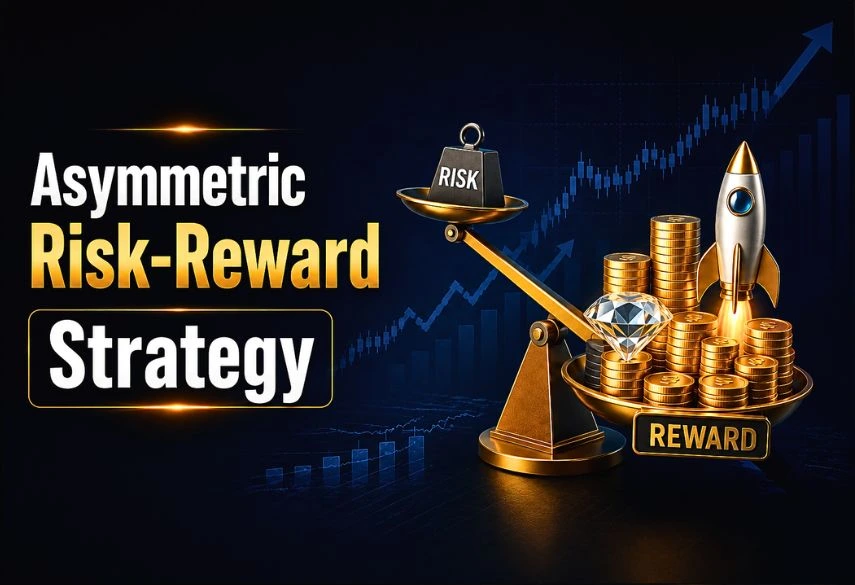
This is the principle behind an IPO risk-reward strategy.
An asymmetric risk-reward setup aims to keep the potential downside controlled while leaving enough room for significantly larger potential gains. It does not eliminate investment risk, and it does not guarantee profits. Instead, it creates a structured framework for deciding which IPO opportunities may be worth taking and which should be avoided.
The SEC describes IPOs as potentially risky and speculative investments and recommends reviewing the prospectus and independently verifying important information before investing.
What Is an Asymmetric Risk-Reward Strategy in IPO Investing?
An asymmetric risk-reward strategy means the potential reward is meaningfully larger than the amount of capital an investor is prepared to risk. For example, assume an investor is considering an IPO stock trading at $40 per share.

The investor identifies:
- Entry price: $40
- Risk-management exit level: $36
- Potential loss per share: $4
- Potential upside target based on valuation/thesis: $52
- Potential gain per share: $12
The potential reward is therefore three times the planned risk. Reward-to-risk ratio = $12 ÷ $4 = 3:1. This does not mean the investor is guaranteed to lose only $4 per share.
A stock can gap below an intended exit price, liquidity can disappear, or unexpected news can cause a significant overnight decline. Risk controls reduce exposure, but they cannot completely eliminate market risk.
That distinction is particularly important with newly listed companies.
Why IPOs Can Create Asymmetric Opportunities
IPOs can sometimes create unusually large upside because newly listed companies may be entering a rapid-growth phase, expanding into large markets, or gaining investor attention for a differentiated product or business model.
But the same characteristics that create upside can create significant downside. Newly public companies may have:
- limited operating histories
- aggressive valuations
- uncertain profitability
- low public floats
- concentrated ownership
- limited trading history
- changing investor sentiment
- and large numbers of restricted shares that may eventually become tradable
Research compiled by University of Florida finance professor Jay Ritter shows how wide IPO outcomes can be.
For U.S. operating-company IPOs in his dataset, the average first-day return from 1980 through 2025 was approximately 19%. In 2025 alone, the average first-day return was substantially higher at approximately 29.3%.
Strong opening-day performance, however, does not mean every IPO becomes a successful long-term investment.
Ritter's updated data set covering 9,195 operating-company IPOs from 1975–2021 found that, when three-year returns were measured from the first closing market price, the median return was approximately -25.7%. Around 38.5% of the IPOs in that sample declined by more than 50% over the measured three-year period.
This wide distribution is exactly why risk management matters.
The Biggest Risks of Investing in IPOs
Before looking for upside, investors should understand how an IPO investment can fail.
1. Valuation Risk
A strong company can still be a poor investment if investors pay too much for it. During periods of high market optimism, IPOs may be priced using aggressive growth expectations.
If the market expects revenue to grow 50% but the company eventually delivers only 20% growth, the stock can fall even though the business itself is still expanding.
2. Limited Trading History
Established public companies may have years of price history, earnings calls and market reactions available for analysis.
A newly listed company does not.
Investors therefore have less information about how the stock behaves during:
- earnings announcements
- market corrections
- analyst downgrades
- insider selling
- or changes in growth expectations
3. Limited Public Float
Only a portion of a company's total shares may initially be available for public trading. When demand is high and the tradable supply is limited, the stock price can move sharply.
The SEC notes that limited trading volume after an IPO can contribute to significant price movements.
4. Lock-Up Expiration
Company founders, employees, early investors, and other insiders are often restricted from selling shares for a specific period after an IPO. Many traditional IPO lock-up agreements have historically lasted around 180 days, although the exact terms vary by offering.
When the lock-up expires, additional shares can become available for sale. Investors may anticipate this new supply, potentially putting pressure on the stock price. The actual lock-up terms should therefore be checked in the company's prospectus.
5. Profitability Risk
Fast revenue growth does not automatically create shareholder value. Investors should determine whether growth requires continuously increasing expenses or whether the company has a realistic path toward sustainable cash generation.
6. Gap and Liquidity Risk
One of the most important weaknesses of a simple stop-loss strategy is that an exit price is not always guaranteed.
- Suppose an investor enters at $50 and intends to exit at $45.
- The stock opens the next day at $39.
- The intended maximum loss was 10%, but the realized loss could be significantly larger.
- Risk-management plans should therefore consider position size as well as exit levels.
How to Evaluate an IPO Before Investing
A serious IPO investment strategy should begin with fundamental research rather than listing-day excitement.
Here are some of the most important areas to investigate:-
1. Revenue Growth
Look at revenue growth across several reporting periods.
2. Gross Margin
Gross margin can help reveal the underlying economics of the business. Improving margins may suggest scale advantages, while declining margins may indicate pricing pressure or increasing competition.
3. Profitability and Cash Flow
A company does not necessarily need to be profitable at the time of its IPO. However, investors should understand:
- operating losses
- free cash flow
- cash burn
- operating leverage
- and the expected path to profitability
“Growth now, profits later” is only attractive when the economics support the possibility of meaningful future profitability.
4. Competitive Advantage
Ask what prevents competitors from copying the company. Potential advantages could include:
- network effects
- proprietary technology
- strong brands
- switching costs
- regulatory barriers
- economies of scale
- or unique distribution
Without a durable advantage, high growth may attract aggressive competition.
5. Customer Concentration
Check whether a significant percentage of revenue comes from only a few customers. Losing one major client can materially damage a newly public company.
6. Use of IPO Proceeds
The prospectus should explain how the company expects to use the money raised. Capital raised primarily to strengthen and expand the business may carry a different implication than an offering dominated by existing shareholders selling their positions.
7. Insider Ownership
Study how much equity founders, executives, and existing investors will continue to own after the IPO.
Significant retained ownership may align insiders with long-term shareholders, although ownership structure should always be evaluated alongside governance rights and share classes.
8. Valuation
Do not evaluate an IPO in isolation. Compare it with publicly traded companies in the same industry.
For an early-stage technology company, for example, P/E may be meaningless if the company has no earnings. Revenue multiples and future margin potential may be more informative.
How to Calculate Position Size for an IPO
Position sizing can be more important than predicting exactly where an IPO stock will trade. Consider an illustrative portfolio worth $50,000.
Suppose the investor decides that one position should not expose more than 1% of the portfolio to planned risk.
Maximum planned risk:
$50,000 × 1% = $500
Assume:
Entry price = $40
Planned exit level = $36
Risk per share = $4
Maximum number of shares based on the planned risk:
$500 ÷ $4 = 125 shares
Total position value:
125 × $40 = $5,000
The position represents $5,000 of capital, but the investor's planned risk is $500 if the intended exit can be executed near $36.
Again, real losses can exceed this amount because stocks can gap through an intended exit level.
The percentages used here are examples for explaining the calculation rather than universal portfolio recommendations. Appropriate exposure depends on an investor's objectives, portfolio structure, financial situation, and risk tolerance.
Should You Buy an IPO on the First Trading Day?
There is no rule that investors must buy immediately. Opening-day trading can be heavily influenced by:
- hype
- limited supply
- institutional allocations
- speculative demand
- media coverage
- and short-term traders
The SEC also notes that underwriters may engage in certain price-support activities during the early trading period. Once that support ends, the market price can decline.
Therefore, missing the first day's price movement is not automatically a missed investment opportunity.

A Practical IPO Risk-Reward Framework
Before purchasing a newly listed company, work through the following process.
Step 1: Understand the Business
If you cannot clearly explain how the company makes money, continue researching.
Step 2: Read the Prospectus
For U.S. IPOs, important information is generally available through the company's SEC registration filings and prospectus.
Review:
- risk factors
- financial statements
- use of proceeds
- major shareholders
- management
- customer concentration
- share structure
- lock-up terms
- and dilution
Step 3: Compare the Valuation
Identify several comparable public companies. Determine whether the IPO is trading at:
- a discount
- a similar valuation
- or a significant premium
If it deserves a premium, identify exactly what justifies it.
Step 4: Define the Investment Thesis
Write down why you believe the company can outperform.
For example:
Revenue is growing rapidly, gross margins are improving, customer concentration is declining, and the company's valuation is reasonable relative to similar businesses.
Avoid vague theses such as:
Everyone is talking about this stock.
Step 5: Define What Would Prove You Wrong
An investment thesis should have invalidation conditions.
Examples include:
- revenue growth falling materially below expectations
- worsening unit economics
- major customer losses
- deteriorating cash flow
- governance concerns
- or valuation becoming disconnected from fundamentals
Step 6: Determine Position Size
Decide how much portfolio damage you can tolerate if the thesis fails. Position sizing should come before thinking about potential profits.
Step 7: Evaluate Potential Reward
Estimate realistic upside scenarios based on:
- revenue
- margins
- comparable-company valuation
- and future business performance
Do not choose a price target simply because it creates an attractive risk/reward ratio. The valuation thesis should determine the potential reward—not the other way around.
Step 8: Monitor the Company After Listing
An IPO investment is not complete after buying the stock. Monitor:
- quarterly results
- management guidance
- insider transactions
- analyst estimates
- lock-up expirations
- cash flow
- dilution
- and changes in valuation
If the original thesis changes, reassess the investment.
Common IPO Investing Mistakes
Buying Because of Listing-Day Hype
A sharp opening gain can create fear of missing out. Price momentum alone does not prove that the underlying valuation is attractive.
Investing Too Much in One IPO
Even excellent research cannot eliminate company-specific risk. Concentrating a large percentage of a portfolio in a newly listed company can turn one incorrect thesis into a significant portfolio loss.
Ignoring Valuation
A great product is not automatically a great stock. Investors ultimately receive returns based partly on the price they pay.
Ignoring the Prospectus
Social media discussions and financial news summaries cannot replace the company's regulatory filings. The prospectus provides important information about risks, ownership, financial performance, and the structure of the offering.
Treating a Stop-Loss as Guaranteed Protection
An intended exit can help control risk, but it cannot guarantee an exact maximum loss. Gap risk, volatility, and liquidity must also be considered.
Confusing First-Day Performance With Long-Term Performance
A successful IPO launch does not necessarily predict superior long-term returns. Ritter's long-run data demonstrates how widely outcomes vary after the initial trading period.
IPO Risk-Management Checklist
Before investing, ask:
- Do I understand how the company makes money?
- Have I read the latest prospectus?
- Is revenue growing consistently?
- Are margins improving or deteriorating?
- Is the company profitable or moving toward profitability?
- How much cash is it burning?
If several of these questions cannot be answered, more research may be appropriate before making an investment decision.

Final Thoughts
IPO investing should not be treated as a search for the next overnight winner. A stronger approach begins by identifying what can go wrong.
Research the business, study the prospectus, understand the valuation, examine insider ownership and lock-up terms, define the investment thesis, and control portfolio exposure before focusing on potential returns. The real benefit of an IPO risk-reward strategy is not that every investment will succeed.
It is that each opportunity is evaluated through a repeatable framework in which potential upside must justify the underlying risk.
(Sources: Nasdaq, Blackrock, Livemint, The Hindu Business Line)

DISCLAIMER: This blog is NOT any buy or sell recommendation. No investment or trading advice is given. The content is only for educational purposes. Always discuss with your SEBI-registered financial advisor for investment-related decisions.







.webp "technical-analysis-vs-algorithmic-trading-2026")