Introduction
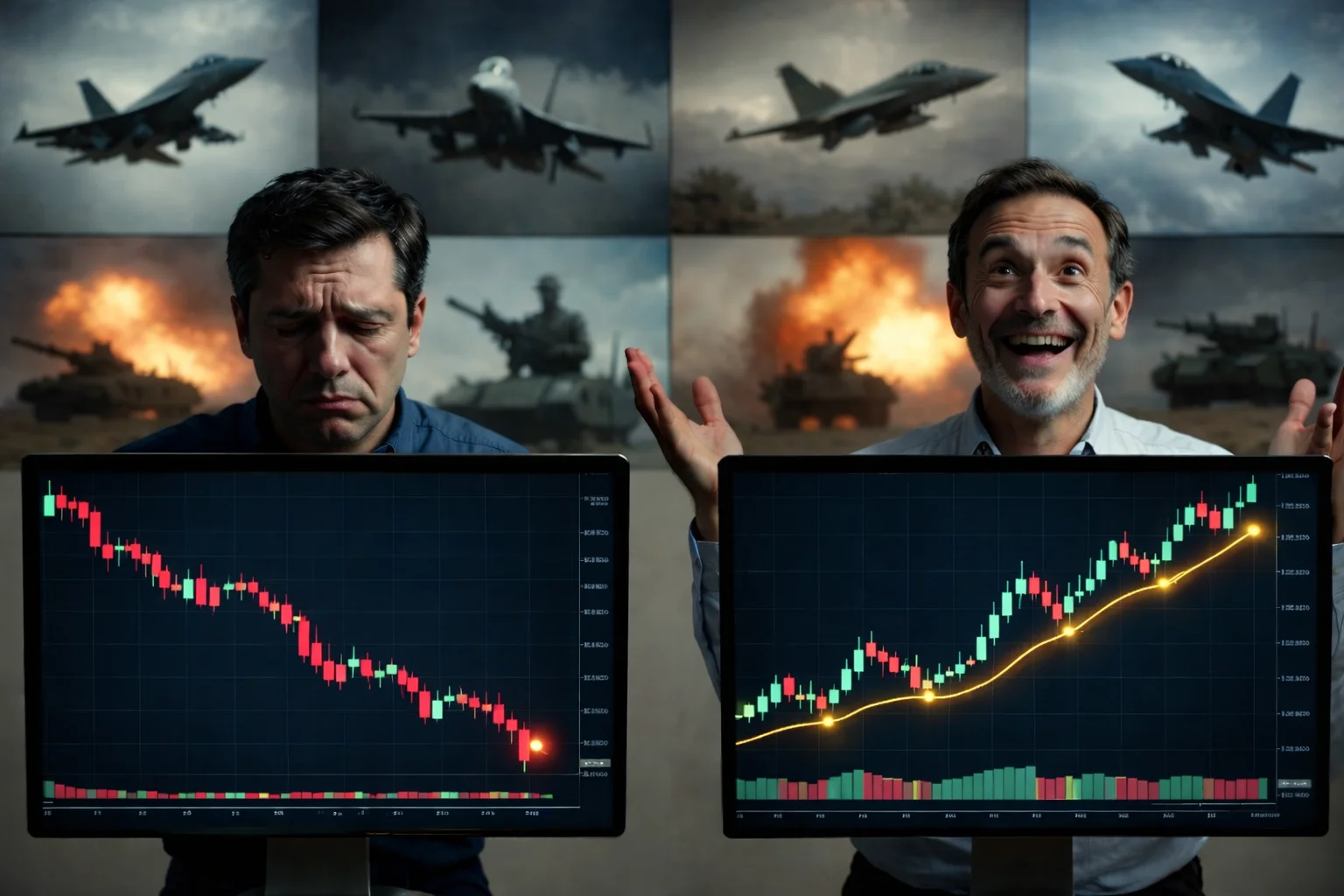
With the growing tension in the Iran and US conflict, the supply of hot and cold oil has increased prices, which has raised the inflation of the dollar and caused many problems around the world. Many people are looking elsewhere and bordering on the profit margin. It may be a loss of a few dollars, but in a conflict of this magnitude, it is a positive loss. There is no way to profit or lose. The world problems from the many businesses throughout the continent stem from continuous increased inflation. When the supply is greatly increased and many branches of a singular business have the same impact on dollar inflation, deflation is easy to summon.
The horizon presents a simple view from many continents, and the problems and world businesses face continuous inflation stemming from deflation at the increased border.
America is a global centre of business and education. Irrespective of the attractive businesses around the world, it is the flexibility of the business and education that matters. It is the knowledge and expertise that represent the greatest advantage in the world. The world provides the greatest opportunity for business.
There is no greater advantage in world-class business and education. Irrespective of the many continents and the attractive businesses around the globe, it is the centre. Geopolitical events allow stock markets to become incredibly volatile, providing investors with the opportunity to make quick trades. While some investors saw the US economy increasing at the beginning of 2026, there is now a risk of the economy slowing down, an increase in unemployment, and changes in monetary policy from the Federal Reserve.
Due to this geopolitical conflict, we are witnessing an increase in oil prices, especially in the Strait of Hormuz, which is responsible for 25% of the world's oil supply. Increased oil prices result in higher prices at the pump, increased prices for everyday goods, and the high cost of loans and mortgages will continue until interest rates are cut, which is delayed.
While this is ongoing, educated speculators are using some of the more traditional and proven means of making money in the marketplace. This includes using moving averages in a way that has become a hallmark of technical analysis trading to smooth out the fluctuations and show a trend.
In this blog, we will discuss the nature of the marketplace in the face of escalating Iran/US tensions, some techniques for trading the volatility in the stock markets, and how moving averages will allow you to make money when there are gains to be realised from trading the volatility in the marketplace. We will also discuss volatility in trading. These principles are useful for both seasoned investors and novice investors.

What are Geopolitical Market Swings?
Geopolitical market swings are examples of how international politics cause an increase or decrease in the prices of assets and investment opportunities. Investments can be in any market such as stocks, commodities, and currency. The ongoing conflict between the United States and Iran has created a market dip across the globe. Banks, airlines, and stock market indices are dipping while safe-haven investments such as gold and the US dollar are increasing.
Looking at history, significant changes in international trade policies create panic in the market. The market eventually stabilises once analysts can determine a pattern or describe a timeline. The current trade dispute caused by the United States military targeting specific leadership within Iran has caused the market to react extremely rapidly and without guidance.
Economists have described oil to be consistently above $100 per barrel if any military conflict extends the current economic recessions and increases prices on trade. The world has seen a significant increase in trade insurance causing trade networks to collapse. The economic collapse has resulted in negative growth within the United States.
In Asia, countries such as China and India, which depend heavily on imports, are losing their currencies and widening their trade deficits because of the uncertainties in their sources of energy. In the United States, CEO confidence has diminished, with almost 60% of them identifying geopolitical uncertainties as a dominantly constraining factor. The geopolitical uncertainties in the market necessitate different trading and novel market approaches. Before entering a trade, a trader must perform a while of technical analysis to mitigate the market noise that surrounds that trade and determine where to enter and exit.
Swing traders are those that specialise in capitalising on the market's cyclical swings. In their calculations, they view the market as a whole, and as such, are more prone to calculating the market's overall cyclical or economic swings.
The Iranian and US Conflicts and their impact on the Market
The economic and market consequences of the Iranian and US conflicts are numerous and severe. The February 28, 2026 strikes against Iran in the US have created a new regional crisis, with marked Iranian missile strikes. The first 10% increase in oil prices occurred with the first 10% increase in prices of oil. The price of oil then increased to over $120, as the flow of crude oil to importations from China were disrupted.
It resulted in increased prices of transport and increased prices of groceries and airline tickets. Major disruptions throughout the economy have forced US financial markets to have risk-off trading. Weekly losses are predicted to occur from the US stocks as losses occur with chip manufacturers. Volatility was attained with the S and P 500 and Nasdaq as the investors' attentiveness to unclear predictions was weighed against bullish predictions.
As seen from the Gulf Cooperation Council (GCC) region, the impacts of the economy from the US financial market disruptions are directly pronounced, but the global economy, particularly within the healthcare and manufacturing industries, feels the effects through supply chain disruptions.
Ultimately, these disruptions cause positioning and portfolio reevaluation for investors. As the US economy is resilient, the conflict potentially re-initiates caution in hiring and capital expenditure. Threats to the Strait of Hormuz hypothesise continuous disruptions to energy cost inflation and reduced economic growth. Overall, this illustrates the US-Iran conflict impacts on the market and how geopolitical policies take over domestic policies, providing market safety through defensive strategies.
Profit seeking in stock market volatility trading
Profit seeking in stock market volatility trading is very prevalent during times like this when there are a lot of price changes to take advantage of. Volatility, particularly caused by geopolitical factors, is trade turned to in price determinants, especially the VIX where people can estimate volatility in a timeframe, as well as use options, futures, or ETFs to bet or hedge on price changes.
Market turmoil and shocks to oil pricing have seen increased volatility. With fear and uncertainty at their peak and calm, rational sentiment returning, traders may look to capitalise on long volatility trading or short volatility trading. However, this requires a significant amount of discipline. Unbounded trading or overtrading, particularly over volatility periods, may lead to wipeouts.
Trading volatility, in addition to trading using other strategies, can improve results. For example, considering support and resistance may improve timing. Discrepancies in performance in this unique market create further opportunities. While energy sectors have increased, consumer discretionary and information technology have decreased.
There will be a downside, and risk management becomes important. Downside risk can be captured by implementing stop losses and diversification. Due to the limited nature of a market in conflict, volatility in the stock market is increasing. Those who remain knowledgeable will be the most rewarded.
Moving Average Convergence Divergence (MACD), Relative Strength Index (RSI), and candlestick patterns are some of the tools. With disruption of the market, other tools of confidence may obstruct the view of the important price ranges.
Technical analysts can find breakdowns in market indices or breakouts in oil stocks. Using these tools can make technical fundraising easier for companies with platforms like TradingView, but some technical tools need practice to avoid misinterpretations.
Combining this type of trading with stock market volatility creates a bigger edge, as volatility often precedes a technical setup.
Explanation Of The Moving Average Trading Strategy
A good example of a highly effective trading strategy that will help traders is that of trading using the moving averages. Moving Averages (MA) can help traders identify trends with the use of a set period within the data set to smooth the data.
There are two significant types of Moving Averages: The Simple Moving Average (SMA), in which all trading periods are weighed equally, and the Exponential Moving Average (EMA), which gives a greater weight to the more recent trading periods to enable a more rapid reactive response to data.
Traders will often use crossovers to define when to enter or exit a position. For example, if a short-term moving average (such as the 50-day) crosses above a long-term moving average (like the 200-day), this is termed a 'golden cross' and is considered a buy signal. On the other hand, a sell signal will occur when this happens in the opposite position, which is called a 'death cross'.
Let us assume that in the event of a stock market conflict, like most stocks (like SPY in this example), the recent closes indicate a downward crossing of the 200-day moving average at 460 (bearish), and the 450 is the 50-day moving average. On the other hand, in the oil stock USO, if the 20-day EMA is above 80 and the 50-day is at 75, this will initiate or signal an upward movement for the oil stock.
Advantages: Simple and easy to use, effective in trending markets.
Disadvantages: Less effective in ranging or stagnant markets, and is often prone to false signals.
To calculate SMA, you take the sum of the closing prices over n periods, and then divide that sum by n. For the EMA, you calculate it using the following formula: EMA = (Close - Previous EMA) (2/(n+1)) + Previous EMA
This strategy shines in identifying reversals during swings.

Conclusion
Geopolitical market fluctuations have been triggered by the Iran-US dispute, but traders can navigate and benefit by using technical analysis and the moving average trading approach. In this unstable environment, be alert, diversify, and follow the data.

DISCLAIMER: This blog is NOT any buy or sell recommendation. No investment or trading advice is given. The content is purely for educational and information purposes only. Always consult your eligible financial advisor for investment-related decisions.