IDFC First Bank Fraud: ₹590 Crore Missing - Should Investors Worry?
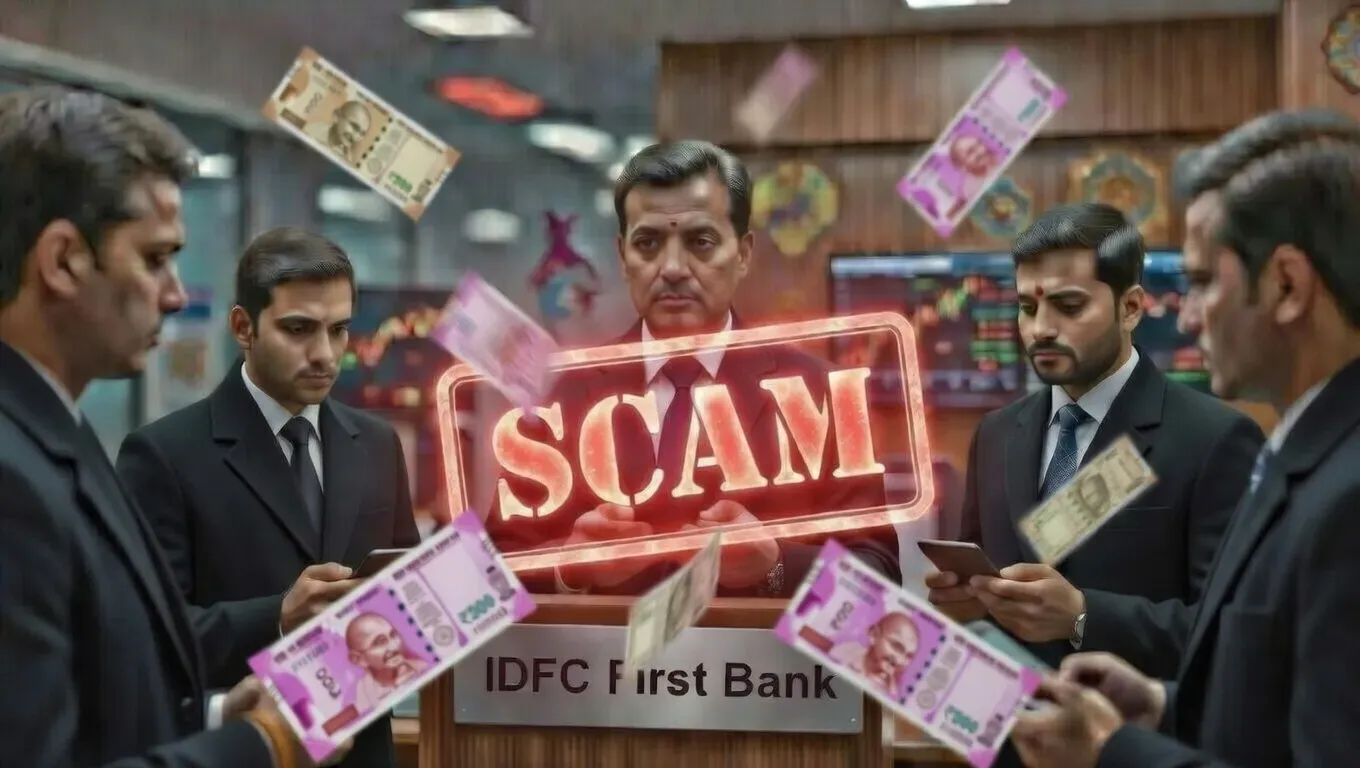
IDFC First Bank Fraud has created another instance of banking fraud in India. In addition to the ever-increasing number of instances of banking fraud in India, the fraud of around 590 crores has created questions regarding governance and internal controls.
IDFC First Bank Fraud: ₹590 Crore Missing
With the details still unfolding, there seems to be an unprecedented variance in discretion associated with the bank’s Chandigarh branch, and investors are curious about the impact of the bank fraud on the stock market. In this investor alert, India, we will try to break down the incident and discuss the implications, risks, and guidance on the banking fraud.
Fraud linked to the Haryana government was discovered during the normal process of reconciling records and was noted to have increased by almost ₹590 crore. A major private bank in the country, IDFC First Bank, attributed the problem in its case to a lack of clarity, alluding to the issues of Karnataka Bank and Punjab National Bank, which had several missing records.
This opens the debate about whether the banking system is functioning well, or whether simpler frauds are indicators of more systemic issues. Is there reason to believe it is closed or a cover for deeper issues? In this detailed blog, we will analyse the details, the impact, and the opinions of experts to arrive at some conclusions.
IDFC First Bank Fraud: How was it done?
Discrepancies relating to the IDFC First Bank fraudhave occurred in its Chandigarh branch, which holds accounts of some of the departments in the Haryana government. We initially estimated the fraud to be around ₹490 crore, but our own investigations showed a further ₹100 crore, making it a total of ₹590 crore. This news about the ₹590 crore fraudcame to light when the bank discovered irregularities during its reconciliations with the government.
Bank officials say the recent case of alleged bank fraud is not the result of high-tech cyber hacking or sophisticated digital schemes, but rather, old-school cheque fraud. Allegedly, fake cheques were used to commit fraud by circumventing the digital verifications that banks use to protect themselves. Fraudulent cheque activity is often not detected for a period of time, and the bank's employee collusion has been cited as the reason for the fraud being procedural and not just a bank oversight.
With regards to bank fraud in India, this reignites a pattern of concerning insider bank fraud. In response to the rogue transactions detected within the Ist Financial Bank of the Haryana state government, the bank reported the fraud to the Haryana chief minister, promising that the “money will come back.” Although this optimism is the result of bank fraud prevention measures, it is also an indicator of how sensitive the government’s accounts are to bank fraud.

How was the ₹590 crore fraud executed?
To get a better understanding of how the IDFC first fraudworks, one must first understand how it was conducted. The fraud targeted the Chandigarh branch and took advantage of the branch's manual processes. The digital transactions will leave a permanent record; however, manual processes such as writing cheques and debit processes without the appropriate authorisations and without digital cross-checks would leave no record. This allowed the fraudsters to pull money a little at a time and avoid detection.
VV Vaidyanathan, the bank's CEO, described this as an "employee fraud" where there was collusion with outsiders, noting it was limited to one branch and one client group. Four employees have been suspended, and the bank has invited KPMG to conduct a forensic audit to determine how the money was lost.
The news about the 590 crore fraud indicates the bank's lack of internal checks and suggests collusion with an outside agency, likely the government. In general terms, this type of banking fraud in India takes advantage of the banking system's hybrid banking systems that are both manual and fully digital.
While banks have made significant investments in the automation of fraud detection systems, experts state that threats from within the organisation are more difficult. Double verification systems are more critical in government banking accounts of high value.
Steps Taken By The IDFC First Bank Fraud
In relation to the IDFC First Bank fraud, the lender was the first to respond in order to reduce fears and restore confidence. IDFC First Bank has been the first to suspend the employees involved and take legal actions, including complaints to the appropriate authorities concerning the fraud. There is an optimistic forecast from the CEO Mr. Vaidyanathan, to the insiders of the Bank, believing that the bank will earn a profit despite sustaining some reputational damage.
As a result of an employee's dishonesty and fraud, IDFC First Bank will be collecting ₹35 crores from its employee dishonesty insurance policy, thereby limiting its loss. The Governor of the Reserve Bank of India, Sanjay Malhotra, states that there is "no systemic issue here" and assures that the bank has adequate capital. This is a great relief to the markets, considering the loss to the bank of ₹590 crore due to fraud.
Furthermore, the bank has promised to improve its internal controls, including increased internal audits, and updated internal controls to monitor these audits. For investors, this level of transparency is important. It shows the bank has a decent governance framework that is capable of managing these types of crises.
The Stock Market Effect: A Severe But Short-Lived Decline?
The market response to the IDFC First Bank fraud was immediate and severe. On the day of the fraud disclosure, the value of the bank's shares fell by 20%. This loss of market value was the most significant loss the bank has suffered. It experienced a small recovery the next trading session, as the Stock opened at ₹70.37, with an increment of 0.47%. Such volatility is a representation of the investors' nervousness about the expected fraud provisions and the resultant reputational loss.
The sharp decline of the IDFC First Bank market value is considered by many as a knee-jerk reaction. However, market analysts believe that as the fraud allegations against IDFC First Bank are being overblown, the significant market loss is being overblown as well. The bank has retained all of the requirements of the regulatory bodies and the fraud amount is only a small portion of the bank.
The bank is estimated to have an asset base of 2.5 lakh crores and, in banking fraud in India, this amount is small. Other banks that have experienced fraud similar to IDFC First Bank have also experienced a significant loss of market value; however, the market value recovered fully as soon as the investigations were completed.
Forecasting stock market impacts, we'd like to bring to your attention some historical data regarding fraud disclosures. We've noticed short-term dips and long-term recoveries in well-managed company fraud disclosures. This investor alert India reports you may have to look at quarterly reports to see the effects of provisioning, though, overall, the bank's growth trajectory in both retail and corporate lending is positive.
An Investor Alert: Should Investors Worry?
As an investor, alert India, an even bigger question is the IDFC First Bank fraud; should you be worried? Sure, the ₹590 crore figure is concerning, but it should be put into context. This seems to point in the direction of a singular event, not a systemic problem. The rapid disclosure from the bank along with the positive confirmation from the RBI suggests the incident was well managed.
Fraud in banking in India, like other banking frauds, has the potential for fraud behind the veil. This kind of event could easily erode employee trust. Composite measures should be taken to combat a bank-specific institutional trust break. From a strategic perspective, many analysts view a hold or buy in a dip strategy as positive for long term investors of IDFC First Bank, especially with the bank's digital initiatives and expansion strategy.
Deeper lapses found in the forensic audit may result in regulatory fines and increased stock market impact. For retail investors, this should be a reminder to examine bank statements and choose insured deposits. Overall, panic is unwarranted. Focus is on the fundamentals.
Wider Implications for India Banking Fraud
With over ₹1 lakh crore in fraud over the previous five years, the IDFC First Bank scam highlights the ongoing problems with banking fraud in India. It draws attention to the necessity of more stringent KYC, AI-powered anomaly detection, and staff development. Previously thought to be secure, government accounts now require closer examination.
Calls for regulatory changes, such as requiring real-time monitoring for manual transactions, are also fueled by the occurrence

Conclusion: Don't be alarmed, stay informed
Although the IDFC First Bank scam serves as a sobering warning of the dangers in the financial industry, a recovery is likely given the bank's and authorities' robust countermeasures. Due diligence in the face of stock market influence is emphasized for investors by this investor alert India. Watch for developments, and never forget that knowledge is more powerful than fear.
(Source: India Today)

DISCLAIMER: This blog is NOT any buy or sell recommendation. No investment or trading advice is given. The content is purely for educational and information purposes only. Always consult your eligible financial advisor for investment-related decisions.