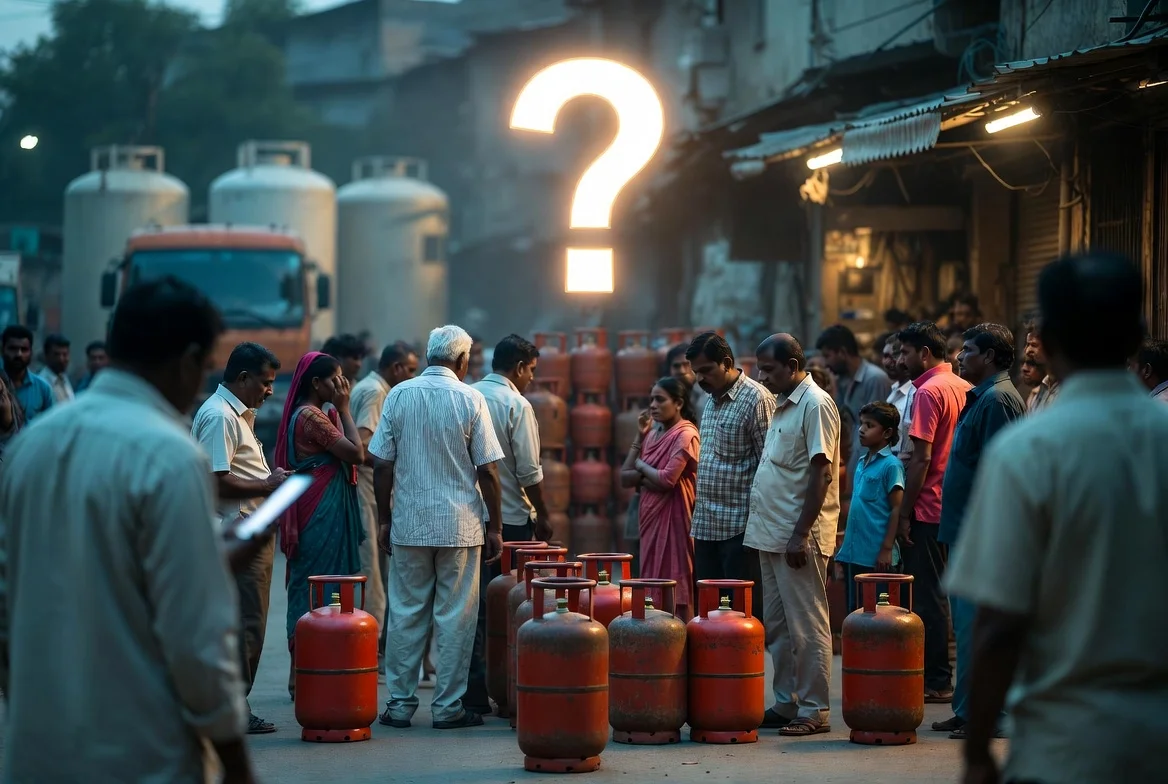
The current state of India's LPG Shortage has affected households, restaurants, and street-food vendors. In all major cities, from Mumbai to Bengaluru to Chennai, commercial kitchens are altering their menus to serve only cold items or shutting down altogether. There are reports of stock and distributor shortages, panic bookings, and in response to all of this trouble, many are changing their menus. Is this all a response to the LPG Supply Crisis India, or is it just the result of irrational fear? In this guide, I will break down the cause, the facts, and most importantly, the real reason for this blown-out fear.
Analyzing the Causes of Supply Fears in India
The LPG Shortage in India as of March 2026 is real, but highly targeted. The Government has advised the people of India that the supply of household bundles is secured. However, the commercial 19-kg cylinders have become unavailable in all of the major cities. Mumbai has restaurants that have lost their vada-pav and samosa stalls. Hotels in Bengaluru have had to remove certain items from the menu that require the use of LPG, and in Chennai, canteens are no longer serving tea and are only serving lemon water.
India's annual propane demand is documented as being between 31.3 and 33.15 million metric tonnes each year. With 33 crore (330 million) active domestic connections, India is the second-largest importer of propane globally. Currently, domestic refineries only meet 40% of the LPG demand India. This means that 60% of the demand is satisfied through imports, and 85 - 90% of those imports travel through the Strait of Hormuz.
The start of the supply crunch coincided with increasing geopolitical tensions in West Asia. Import delays and shipping disruptions have affected the supply significantly. In the case of the commercial sector of the economy, stock that previously lasted 25 - 30 days is no longer available and is under a lot of stress. In a move meant to streamline and maximize the refining of propane into the most efficient use of propane for cooking gas for customers, the government, on 8 March 2026, exercised its operational control of the emergency plan to maximize the refined delivery of propane to the most domestic commercial use.
Over five days, production was increased by 25 - 28%, and the whole domestic output is now being prioritized for the refined propane for cooking gas to households.
Reasons for the Continued Increase of LPG Demand in India
LPG demand India has been increasing for over ten years and is now considered to be a constant. One of the plans by the Pradhan Mantri Ujjwala Yojana was to connect tens of millions of economically disadvantaged residences, and as a result, the use of clean cooking fuel increased from 21.6 million tonnes in the 2016 - 2017 period to over 31 million tonnes currently. Other factors that have increased the demand for clean cooking fuel use include the increasing number of urban centers in India, the increasing number of small, nuclear families within those urban centers, and the increasing use of cloud-based commercial kitchens and the quick commerce delivery of food to customers. These factors have created another layer of pressure on the use of clean cooking fuel.
Commercial users include hotels, restaurants, hostels, and street vendors, and they constitute around 10–13 % of total consumption, but use larger 19-kg and 47.5-kg cylinders. Their demand increased after the pandemic because the hospitality industry bounced back. Along with seasonal festivals and wedding seasons, LPG demand in India often exceeds the supply infrastructure during peak periods.
The quick rise in demand does not fully explain the spree seen in March 2026. Although consumption was at an all-time high, India was able to sustain supply through the previous years via diversified imports and buffer stocks. Something else has unnaturally driven the current LPG supply crisis India.
Bottlenecks in LPG Distribution India: Infrastructure and Geopolitics Intersect
LPG distribution India is an intricate system of oil marketing companies (IOCL, BPCL, HPCL), bottling plants, and thousands of distributors. While everything is working, the system has some weaknesses:
- Indian infrastructure is designed to support long-term storage of several weeks, and then they are out.
- A single point for most of the sea imports: the Strait of Hormuz, and all of them rely on it.
- Crisis mode: When refineries are instructed to prioritize C3/C4 streams for LPG, the commercial supply is the first to be cut.
To prevent hoarding, the urban households' booking gap is increased to 25 days, while for rural households, it is 45 days. Commercial cylinders are also restricted, and now only 20% of the average monthly commercial requirement is being released with strict monitoring. While these measures have stabilized household supply, they have put restaurant supply in disarray.
Impact of the Crisis on LPG Pricing in India
LPG Pricing in India has suffered, and on 7 March 2026, the Non-subsidised 14.2-kg Domestic Cylinders increased by ₹60 in all states. It is now priced in Delhi at ₹913, in Mumbai at ₹912.50, in Kolkata at ₹939, and in Chennai at ₹928.50. Commercial 19-kg cylinders have increased by ₹114-115, which causes the price in Delhi to be about ₹1,883-1,884.
For Ujjwala beneficiaries, the price increase is absorbed by the government via a direct benefit transfer. However, middle-class families using non-subsidised cylinders and commercial establishments are left to pay the full price. The increase in price is a reflection of greater import costs and supply being tight.
Maxar Analysis of India's LPG Crisis
The shortage of LPG in India and the crisis in LPG supply are due to severe geopolitical shifts and not due to the demand or production in India.
Over the course of the US-Israel-Iran conflict, the Strait of Hormuz, one of the most important facilitation points for international trade, has been impacted. Currently, in terms of the supply of LPG to India from the Middle Eastern nations, including Saudi Arabia, Qatar, and the UAE, 85 to 90% of the supplies are blocked. While India has been able to divert some of its crude oil imports (approximately 30% now go through the Strait), the impact of the conflict on India's LPG imports has been far greater.
After the end of February, imports through the Strait of Hormuz have been reduced to almost nothing. Although the Indian government implemented emergency measures to mitigate the conflict, including cargo arrangements with the US and alternative routes, the estimated time of arrival for the shipments is several weeks, resulting in an overwhelming reliance on domestic production. In the case of LPG, domestic production and prioritization of shipments on the basis of HHS have been implemented, resulting in the relinquishment of HHS.
The media has been able to capture the public's fear by portraying several of India's geographical areas as the center of the chaos (social media panic buying, isolated rumors, unabated hoarding, 398 cylinders of hoarded gas in Madurai, etc.), resulting in the suspension of commercial activities (feeble media Images of closed restaurants and abandoned godowans) from which the public can conclude that in a nationwide commercial standstill, domestic use of LPG has been undisturbed and is still available as the government has confirmed.
To briefly summarize the LPG supply crisis India, the issue is an external supply shock rather than an internal crisis. This is important because it signifies that the issue is likely temporary, as supply chain issues should improve in the near future.
Government Response: Steps Taken to Protect Consumers
The Ministry of Petroleum and Natural Gas has responded quickly with:
- The LPG Control Order (8 March 2026) that instructs refineries to direct C3/C4 streams only to OMCs for domestic use.
- 25 to 28% increases in refinery LPG outputs in a matter of days.
- Creation of grievance committees for state-level monitoring.
- Warnings for black market and false rumor sales.
- The limited release of commercial cylinders to hospitals, schools, and other essential service providers.
- Conservation appeals to the public to discourage panic booking.
These measures have shown an immediate effect. Many oil marketing companies reported availability improvements in the previous 48 hours.
Impact on Households vs. Businesses
Households with regular connections have been receiving cylinders, but wait times are longer. The most significant impact has been on:
- Street food vendors and small restaurants that are losing money.
- Medium hotels that have had to cut menus by 20-30%.
- Delivery kitchens and cloud operations are struggling with volatile supply chains.
As restaurants look for alternatives, demand for induction cooktops has surged 25× on e-commerce sites.
Practical Tips for Dealing with the LPG Shortage in India
There are things that each consumer can do while we wait for things to fully stabilize.
1. With the new 25/45-day gaps, book only when it is necessary.
2. Use an LPG flame that is as small as possible, try to use covered cookers, and use pressure cookers.
3. Consider other options, such as induction cookers for boiling water or tea and, where it is possible, use solar cookers.
4. Report any black marketing or hoarding to district authorities.
5. For emergencies, it is advisable to keep one spare gas cylinder, which is the legal limit.

Conclusion
India is experiencing a real but controllable LPG supply issue. The actual cause of the anxieties is not a domestic failure but rather an abrupt disruption in global supplies brought on by the conflict in West Asia. Prices have somewhat increased, households are still protected, and distribution is being intensively rationalized.
Every citizen can contribute to reducing the length of this brief crisis by saving LPG, avoiding panic, and supporting government initiatives. Cooking will continue to be the primary national preoccupation in the kitchens of 33 crore Indian families.