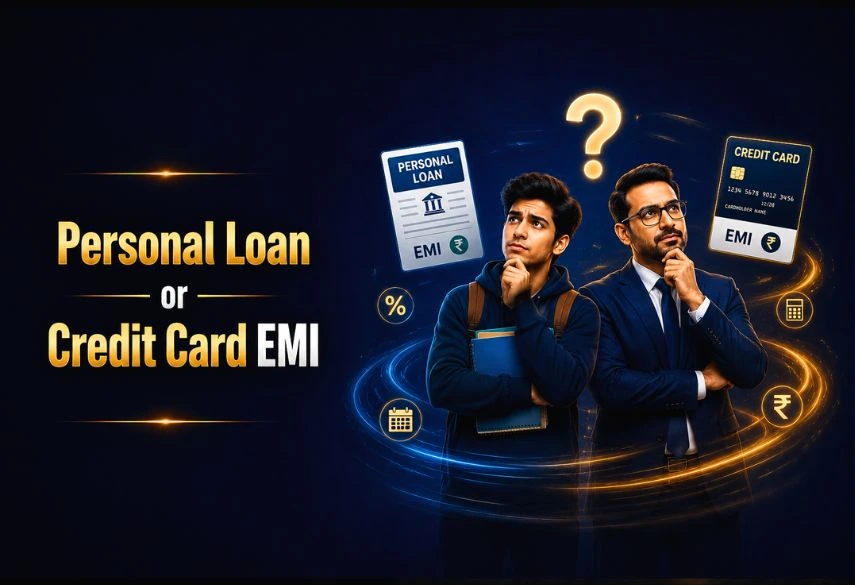
With more and more purchases being made on credit cards, understanding how to manage these cards has become an integral part of many Indian consumers. Credit cards allow you to buy everything from last-minute tickets to trips, and new phones, to handle cash crunches. However, large purchases can stretch your monthly budget impacting functionality. Then, the ability to convert credit card purchases to EMI is a useful feature to manage your budget. If you ask, "Can you turn credit card purchases into EMIs?", the ability to convert purchases to EMIs is a feature to manage your budget.
In this detailed guide, we will discuss everything you need to know about credit card EMI conversion and how these convert purchases to EMIs work within credit card EMI India. We will discuss eligibility, benefits, and what you can do to avoid the pitfalls along with some essential credit card payment tips. By the end of this guide, you will be able to confidently use the credit card bill EMI option.
Understanding Credit Card EMI: What It Means for You
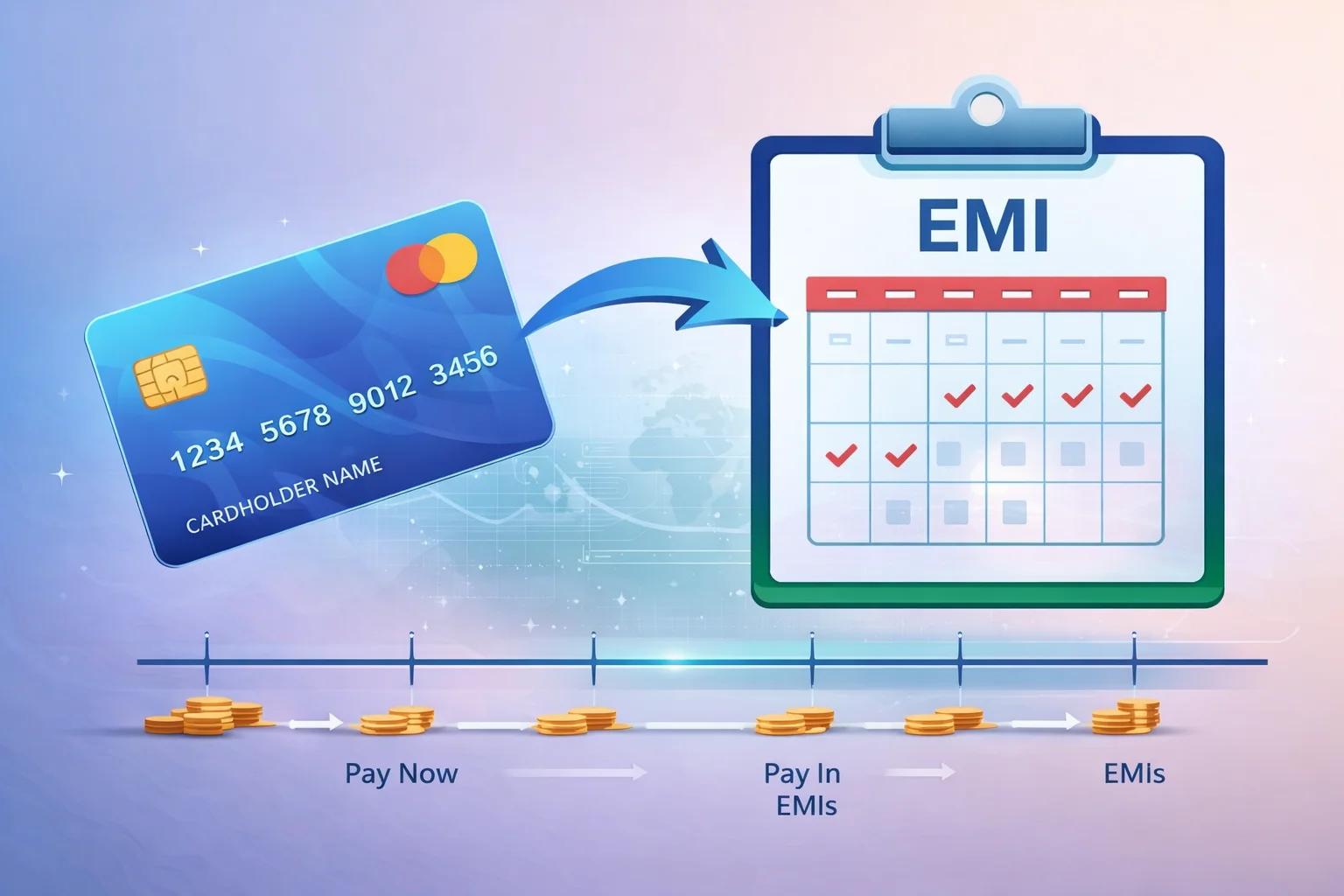
EMIs are Equated Monthly Installments which allow you to pay back a loan or purchase in fixed monthly amounts over a certain period. For credit cards, it means that you are able to pay for a transaction in installments rather than in one full payment.
In India, almost all major banks such as HDFC, ICICI, SBI, Axis etc. have it. For example, it is useful for purchases that are worth above a certain threshold which is typically between ₹5,000 to ₹10,000 depending on the bank. With the rapid rise of digital banking, credit card EMIs in India have advanced significantly, allowing you to easily access this feature in your banking app.
How is EMI better than paying the whole bill? Most importantly, it lessens the strain on your monthly budget. Let’s say you buy a laptop worth ₹50,000 on your credit card. The billing cycle has not ended so you do not have to pay the entire amount. You can convert credit card purchases to EMI for 6, 12 or even 24 months. This allows you to use that money for something else that is important.
There can be drawbacks though, as Equated Monthly Installments (EMIs) come with their own set of costs, ranging anywhere between 12 - 18% per annum, unless stated otherwise through promotional offers.
Benefits of Converting Credit Card Purchases to EMI
Credit card EMI conversion allows you to start using the card much quicker and start owning what you initially purchased, amid what some may assume is short-term insanity, and allows for various other benefits. There are many advantages to consider, including:
- Cash Flow Control: You Gain a Normalized Spending Pattern: Without making an impulse buy, the EMIs will prevent uncontrolled spending.
- Lower Interest Rates: The burden of payment can quickly become an emotional and mental strain. Credit cards, as a personalised payment option, should be used as a last resort.
- Everything Still Applies: (Cashback and Rewards) (all at once).
- Time to Pay: Keep the term contract to your preference. There is the ability to customise from 3 to up to 36 months. The less time remaining on your term, the less interest you will be charged.
- No New Loans Needed: No need to apply for new loans when you can use your credit card. Using your card may require no new paperwork or documentation.
Consider Raj, a software engineer in Mumbai. He used his card to buy a smartphone worth ₹1 Lakh. He chose to convert credit card purchases to EMI for 12 months at 14% interest. He has to pay only ₹9,000 monthly, which means he can pay it off at his own pace. This means his purchase will not restrict or limit his salary.
Even though this can be an appealing offer, you should be careful not to rely on EMIs too often. Overusing EMIs can lead to more debt. You should also follow the tips for good credit card payment.
Who Can Convert a Credit Card Purchase to EMI?
- Here's how it works for credit card EMI India:
- Minimum Purchase Amount: As mentioned, most transactions must be above ₹5,000, which you can find categorised through the different bank branches.
- Available Credit Limit: You need to have at least a bit of credit left on your card after the purchase to qualify. This means that if you have a closed or low credit balance for the card, it may make it impossible to convert debt or credit limits.
- Credit score: Your CIBIL score needs to be 700 and above. Banks analyse your repayment history to decide whether to grant your EMI requests.
- Type of Card/ Banker: Usually, the more premium the card the more advantageous the EMI offers. This includes more options for the length of time you have to pay, and the amount you have to pay.
- When to Request: Following the purchase you should be aware of the time limit as most requests have to be done within 7-30 days. There are some banks where you can convert to EMI even after the bill posts using the credit card bill EMI option.
You can also increase your chances of approval by reducing your credit card utilisation, making timely payments, and improving your credit score. If you are planning a large purchase, check your eligibility with your bank.
Steps to Convert a Credit Card Purchase to EMI
If you are ready to convert credit card purchases to EMI, the process is almost seamless with the availability of credit card EMI India. Follow the steps below before you carry out the Purchase:
1. Complete the Purchase: Check to see if your card is eligible for EMI.
2. Navigate to Your Bank's Portal/App: Most banks have a partner for EMI conversion, for example, ICICI (iMobile) or HDFC (NetBanking).
3. Choose Your Transaction: Go to 'Credit Card' > 'EMI Conversion' (or whatever terminology is applicable) and select your most recent transaction.
4. Select Your Tenure and Rate: The options run something like these examples: 6 months at 13% or 12 months at 15%. You will see the EMI amount, total interest, and processing fee (1-2% typically).
5. Hit Send: Look over everything, type your OTP if needed, and send it. Normally it’s instant.
6. EMIs: If you want to avoid fees, then the EMIs will have to be paid at the specific times that are shown on the statements.
For other, more direct methods, you can go to a bank, call customer service, or go to a shop that sells electronics and provides instant EMIs.
If your bill has already been sent out, then you can select the credit card bill EMI option to help you if you missed the first option.
Credit Card EMI Conversions
- Interest: The rate can be anywhere from 12% to 18% in a year (it can be less or more than a year based on the offer) and it is deducted on a reducing balance. If you see 0% interest, it’s a promotional offer and has a chance to have other costs in it.
- Processing Fee: 1-3% of the amount you are credited and can be waived.
- Prepayment Charges: If you settle your principal early, you will incur a cost of around 2-3% of the remaining principal.
- GST on Interest and Fees: The total cost gets affected by an 18% tax.
Let's say you bought something for ₹20,000 and opted for a 6-month EMI at 14%. You will probably pay around ₹3,500 a month, and will incur around ₹1,000 in Interest and Fees.
Use EMI calculator and check other banks to get the best rate.

Conclusion
In conclusion, it is possible to convert credit card purchases into EMIs, and being aware of the procedure enables you to make prudent use of this instrument. We've covered everything in the Indian context, from the fundamentals of credit card EMI conversion to sophisticated credit card payment advice.
For large purchases, converting credit card purchases to EMI can be a life saver if done correctly. But make sure it fits within your budget by always calculating the entire prices. For specific guidance, speak with your bank, and keep in mind that cards are instruments rather than traps.

DISCLAIMER: This blog is NOT any buy or sell recommendation. No investment or trading advice is given. The content is purely for educational and information purposes only. Always consult your eligible financial advisor for investment-related decisions.

.webp)