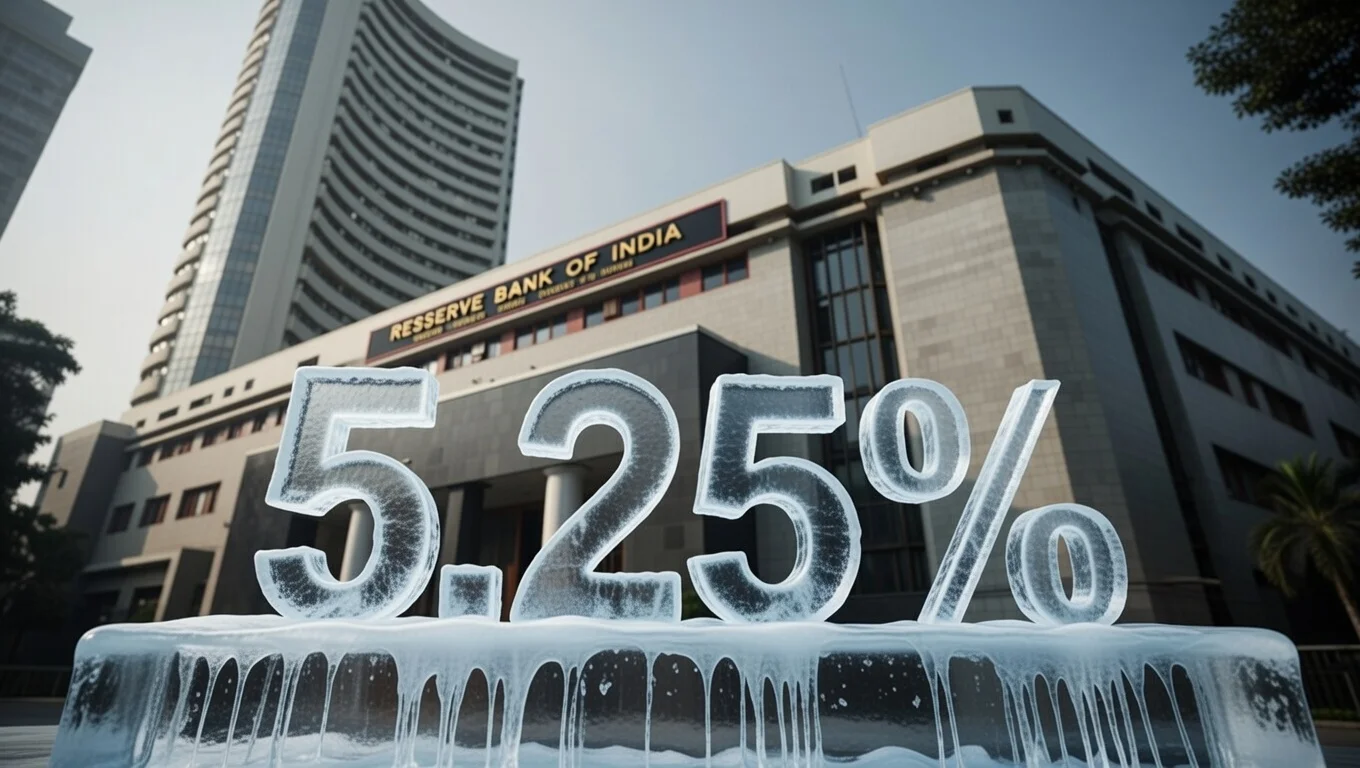
The Reserve Bank of India (RBI) is a crucial part of India's economic stability. Keeping the repo rate at 5.25% has made a lot of people, including economists, investors, and everyday borrowers, share their thoughts. This was announced on 6th February 2026, and is following a 25 basis point cut in December 2025. This is particularly concerning, considering the growth forecast is positive and inflation is low.
The repo rate decision directly impacts financial planning for home, car, and personal loans. At first, it seems like it’s good news, but clearly it could be a warning. In this blog, we will dissect what it means, the implications on loans, and the interest rate situation. Our analysis will be useful to first-time borrowers and experienced investors. Understanding this will help in planning for the future.
Understanding the RBI Repo Rate: The Basics
What is the RBI repo rate? The repo rate is the rate at which the RBI lends money to commercial banks for a short term, and the banks give the RBI government securities in return. The RBI's policies affect the cash flow, and therefore the inflation and interest rate control of an economy.
If the RBI cuts the repo rate, the bank's borrowing cost is lower, and they pass that benefit to consumers. Currently, the repo rate is at 5.25%, which is relatively low when compared to the previous average of the last 23 years. The interest rate in India has seen a lot of fluctuations between 4% to 14.5%. We can attribute the low rate to the steps taken to control the economy after the pandemic and the resilient economy.
To understand this better, the historical chart of the RBI repo rates can help us understand the trends over the years:
The repo rate has a downward trend, which has shown the RBI's effort to maintain an accommodating stance to boost growth, as shown in the chart. However, the hold at 5.25% indicates a shift in the RBI to neutrality and balancing growth with the associated risks.

What is the RBI Policy Decision that was made in February 2026?
The outcome of the February 2026 MPC meeting was led by Governor Sanjay Malhotra, who was given a unanimous decision to keep the repo rate at 5.25%, as this remains the same. Along with this policy decision, the RBI retains the SDF at 5.00 and MSF at 5.50%, with policy stance at neutrality, unlike the accommodative stance before, showing how the RBI is confident in the economy.
As stated in the report, the GDP growth forecast revision for FY2025/26 has risen to 7.4% due to the various aspects influencing the economy, such as government expenditure, domestic demand, and trade agreements. The inflation rate is predicted to be 2.1%, which is just 1.33% outside the RBI inflation range of 2-6%, which is very good considering the 2% RBI inflation target is given. Governor Malhotra stated the Indian economy has shown resilience and has performed well in the face of increasing FDI and good export services.
The RBI has seen an external weakening of the economy, which has seen the value of the Indian rupee to the US dollar at around 90. As stated in the title, the "Loan Impact" of the decision can be seen in the most immediate manner. The decision to impact the Loan Impact decision has shown an impact most directly.
Borrowers with floating-rate loans like home loans linked to the External Benchmark Lending Rate (EBLR) will keep their EMIs the same for the time being. This is good because their EMIs will not increase like they could during a period of rate hikes. The repeated rate cuts of 1.25% since 2025 have lowered the EMIs. For example, for a home loan of Rs. 50 lakh with a tenure of 20 years, the EMIs are reduced by Rs. 1,500-2,000 a month, depending on the bank's margin.
Looking at the home loan rates of new borrowers, they will have rates of 8-9%, which is a good rate considering the previous rates of home loans were in the double-digit numbers. However, this also means that the freeze will not give any further cuts in the foreseeable future, which will make it hard to purchase a home or a car. The rates of personal loans and credit cards are also not changing, despite the rates being at 10-15%, hitting the people who are reliant on unsecured loans.
Considering the viewpoint of the borrowers:
Interest rates being stable in India is beneficial for real estate because people are more likely to buy properties when the rates are stable. However, if inflation increases due to the prices of primary commodities increasing, the RBI would increase the rates, which would mean higher EMIs.
Interest Rates in India: Broader Economic Context
To understand the implications of the repo rate freeze at 5.25%, we first need to understand interest rates in India. Currently, the country's benchmark rate is at a multi-year low, which encourages investment and spending. As of January 2026, the growth in bank lending is at 13.1% YoY, which indicates a good demand for borrowing.
However, a low-rate environment also has downsides. FD rates sit at 6-7%, which is disadvantageous to those saving money in fixed deposits, especially senior citizens. Borrowers also face a double-edged sword: while low rates mean easier repayments, a prolonged period of low rates means low inflation (expected to be around 2.1%), which could mean low spending and therefore low demand, leading to a recession.
Some other things to note are the external factors. The trade deals with the US and India will increase the exports and therefore, the RBI’s neutral stance will be to prevent the rupee from losing value. India’s interest rates will be impacted if the rest of the world’s interest rates increase, as we will need to raise our rates for investment purposes.

Borrowers' Outlook: Good News or Subtle Warning?
RBI’s decision impacts borrowers positively; however, it still poses a risk. Positively, the borrowers' outlook remains stable. The current repo rate freeze at 5.25% means no hikes to EMIs in the immediate future, making budgeting for the cost of living easier. A 7.4% GDP growth means that inflation, job security, and income growth mean that debt servicing is secured.
But the warnings. The neutral stance means RBI is watching for geopolitical tensions, commodity shocks, and inflation. Borrowers with variable loans may face increased EMIs, and a weak rupee will likely raise consumer prices through increased import costs.
Diversifying is key when the outlook is long-term. Closing debts will reduce future interest costs; set the debt to be paid off with a rate increase to a fixed rate. The experts seem to suggest that the RBI’s actions will be set quarterly, so it is best to keep track.
Pros for Borrowers:
- Stability in EMIs: No changes mean predictable payments.
- Lower Overall Rates: Benefiting from prior cuts.
- Economic Boost: Strong GDP supports income growth.
Cons and Warning:
- No Further Cuts: Delayed relief for high-debt-level individuals.
- Inflation Risks: Potential future hikes.
- Global Uncertainties: May start changes to the policies.

Conclusion: Moving Carefully into the Future
The RBI made a well-balanced decision by freezing the repo rate at 5.25%, acknowledging potential risks but expressing optimism about India's economic story. In the near run, it's generally excellent news for borrowers because of consistent loan EMI impacts and advantageous interest rates in India. The prognosis for debtors, however, necessitates caution, remaining aware, handling debt sensibly, and being ready for any changes.
This policy decision by the RBI highlights the significance of flexible financial methods as India's economy continues to flourish. Speaking with a financial counselor might offer tailored insights, whether you're considering a loan or analyzing one that already exists.

DISCLAIMER: This blog is NOT any buy or sell recommendation. No investment or trading advice is given. The content is purely for educational and information purposes only. Always consult your eligible financial advisor for investment-related decisions.