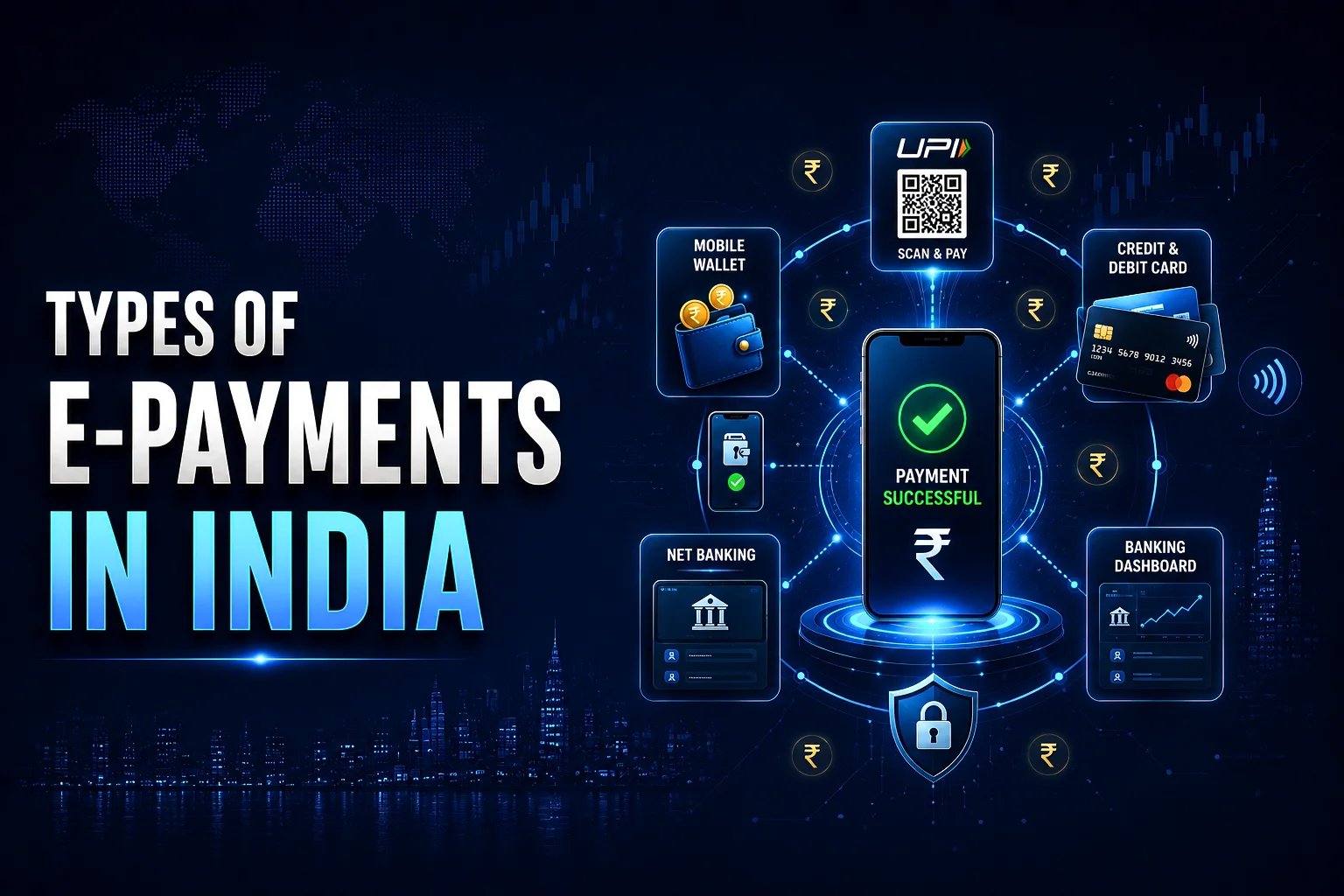
India has become one of the world's largest digital payment ecosystems. From scanning a QR code at a local store to paying for enterprise software subscriptions online, digital transactions are now a part of everyday life.
For businesses, understanding the different types of e-payments available in India is critical. Customers expect flexibility at checkout, and the absence of a preferred payment option can lead to abandoned purchases and lost revenue.
This guide explains the major electronic payment methods used in India, how they work, and when businesses should offer them.
What Are E-Payments?
Electronic payments, commonly known as e-payments, are transactions completed digitally without the use of physical cash. These payments are processed through banking networks, payment gateways, cards, mobile applications, and digital wallets.
E-payment systems allow individuals and businesses to send, receive, and manage money quickly and securely from virtually anywhere.
Today, India's digital payments ecosystem includes UPI, cards, net banking, mobile wallets, recurring payment mandates, and bank transfer systems such as NEFT, RTGS, and IMPS.
Different Types of E-Payments Available in India
1. UPI (Unified Payments Interface)
UPI is currently the most popular digital payment method in India. It allows users to link their bank accounts to mobile applications and make instant payments using a UPI ID, mobile number, or QR code.
Money is transferred directly between bank accounts in real time and is available 24x7, including weekends and holidays.
How UPI Works
- Customer selects UPI at checkout
- Choose a UPI app
- Approves the payment request
- Funds are transferred instantly
Benefits
- Instant settlement
- Easy user experience
- No need to enter bank details repeatedly
- Widely accepted across online and offline merchants
Best For
- Everyday purchases
- E-commerce payments
- Utility bill payments
- Subscription payments through UPI AutoPay
UPI AutoPay extends the functionality further by enabling recurring payments through e-mandates, making it ideal for subscriptions, memberships, and recurring bills.
2. Debit and Credit Cards
Debit and credit cards remain a preferred payment option, particularly for larger purchases. Card networks such as Visa, Mastercard, and RuPay enable secure online and offline transactions.
Credit cards are especially valuable because they provide access to EMI options, rewards programs, and international transactions.
How Card Payments Work
- Customer enters card details or uses a saved card token
- Authentication is completed through OTP or other verification methods
- Payment is processed through the card network
Benefits
- Suitable for high-value transactions
- Supports EMI payments
- Global acceptance
- Additional rewards and cashback opportunities
Best For
- Large purchases
- Travel bookings
- International transactions
- EMI-enabled shopping
To improve security, card payments in India are tokenised, replacing sensitive card information with secure tokens for future transactions.
Explore credit cards from Finowings and save your money.
3. Net Banking
Net banking enables customers to make payments directly through their bank's online banking portal.
During checkout, customers choose their bank, log in securely, authorize the transaction, and complete the payment without using cards.
Benefits
- Direct payment from bank accounts
- Trusted by customers who prefer bank-led authentication
- Supports large-value transactions
Best For
- One-time purchases
- Large online transactions
- Customers who prefer banking channels over cards
Many payment gateways support 50+ banks through a single integration, making net banking accessible to a broad customer base.
4. Mobile Wallets
Mobile wallets store prepaid funds that customers can use for online and offline transactions. Popular wallets allow users to add money to their wallet balance and make payments quickly without entering banking details every time.
Benefits
- Fast checkout experience
- Convenient for repeat purchases
- Suitable for low-value transactions
Best For
- Food delivery
- Mobile recharges
- Entertainment subscriptions
- Frequent online purchases
Wallets remain popular among users who prefer keeping a balance for daily spending.
5. EMI (Equated Monthly Installments)
EMI allows customers to divide a purchase into smaller monthly payments instead of paying the full amount up front.
This payment method is widely used for expensive products and services.
Benefits
- Improves affordability
- Increases purchase confidence
- Helps merchants improve conversion rates
Best For
- Electronics
- Appliances
- Travel bookings
- Educational programs
- Healthcare services
EMI options are typically offered through credit cards and select lending partners.
6. Buy Now Pay Later (BNPL)
Buy Now Pay Later services allow customers to make a purchase immediately and pay later through installments or deferred payment schedules.
Unlike traditional EMI programs, BNPL often requires minimal onboarding and can be used even without a credit card.
Benefits
- Lower upfront payment burden
- Faster approval process
- Improved checkout conversions
Best For
- E-commerce
- Fashion retail
- Consumer electronics
- Lifestyle purchases
BNPL has become increasingly popular among younger consumers looking for flexible payment options.
7. Bank Transfers: NEFT, RTGS, and IMPS
Bank transfer systems remain essential for account-to-account payments and business transactions.
NEFT (National Electronic Funds Transfer)
NEFT processes transactions through the banking infrastructure and is commonly used for routine transfers.
Best For:
- Vendor payments
- Invoice settlements
- General fund transfers
RTGS (Real Time Gross Settlement)
RTGS is designed for high-value transactions and settles payments individually in real time.
Best For:
- Large-value business payments
- Corporate fund transfers
- High-priority settlements
IMPS (Immediate Payment Service)
IMPS enables instant money transfers 24x7, including weekends and holidays.
Best For:
- Urgent transfers
- Small and medium-value transactions
- Immediate account transfers
Quick Comparison of E-Payment Methods in India
|
Payment Method |
Settlement Speed |
Best Use Case |
|
UPI |
Instant |
Everyday purchases |
|
Credit & Debit Cards |
Instant |
Large purchases and EMI |
|
Net Banking |
Instant |
Direct bank payments |
|
Mobile Wallets |
Instant |
Repeat purchases |
|
EMI |
Monthly repayment |
High-value purchases |
|
BNPL |
Deferred payment |
Flexible consumer spending |
|
NEFT |
Scheduled processing |
Business transfers |
|
RTGS |
Real-time |
High-value payments |
|
IMPS |
Instant |
Urgent transfers |
|
AutoPay |
Automated |
Recurring subscriptions |
Why Businesses Should Offer Multiple Payment Methods
Offering a single payment option may limit conversions and customer satisfaction.
-
Higher Conversion Rates
Customers are more likely to complete a transaction when their preferred payment method is available.
-
Reduced Cart Abandonment
Many customers leave checkout pages because they cannot find their preferred payment option.
-
Better Customer Experience
Providing multiple payment choices creates a smoother and more convenient checkout journey.
-
Wider Customer Reach
Different customer groups prefer different payment methods. Supporting a broad range of options helps businesses serve more customers.
-
Increased Revenue Opportunities
A flexible payment experience can directly contribute to higher sales and improved retention.
Which E-Payment Methods Should Businesses Offer?
The practical answer is simple: offer as many relevant payment methods as possible.
An ideal checkout experience should support:
-
UPI
-
Debit cards
-
Credit cards
-
Net banking
-
Mobile wallets
-
EMI options
-
Buy Now Pay Later services
-
AutoPay for recurring payments
Instead of integrating each payment method separately, businesses can use a payment gateway that combines multiple payment options into a single integration and dashboard.
This simplifies reconciliation, reporting, and payment management while providing customers with greater flexibility at checkout.

Conclusion
Digital payments have transformed the way consumers and businesses transact in India. From UPI and card payments to wallets, BNPL, and bank transfers, every payment method serves a unique customer need.
For businesses, the goal is not choosing one payment method over another—it is offering the right mix of options that aligns with customer preferences. A flexible payment experience can improve conversions, reduce cart abandonment, and create a smoother checkout journey.
As digital adoption continues to grow, businesses that provide convenient, secure, and diverse payment options will be better positioned to meet customer expectations and drive long-term growth.
Simplify Digital Payments for Your Business
Whether your customers prefer UPI, cards, net banking, wallets, EMI, or recurring payments, offering multiple payment options can help improve conversions and customer satisfaction.
Cashfree Payments enables businesses to accept 100+ payment methods through a single integration, helping create a seamless and scalable payment experience.

DISCLAIMER: This blog is NOT any buy or sell recommendation. No investment or trading advice is given. The content is only for educational purposes. Always discuss with your SEBI-registered financial advisor for investment-related decisions.





.jpeg "Mortgage Loans")


.jpeg "SoftBank?")