RBI Mis-Selling Rules 2026: Your Refund Rights and Complaint Process
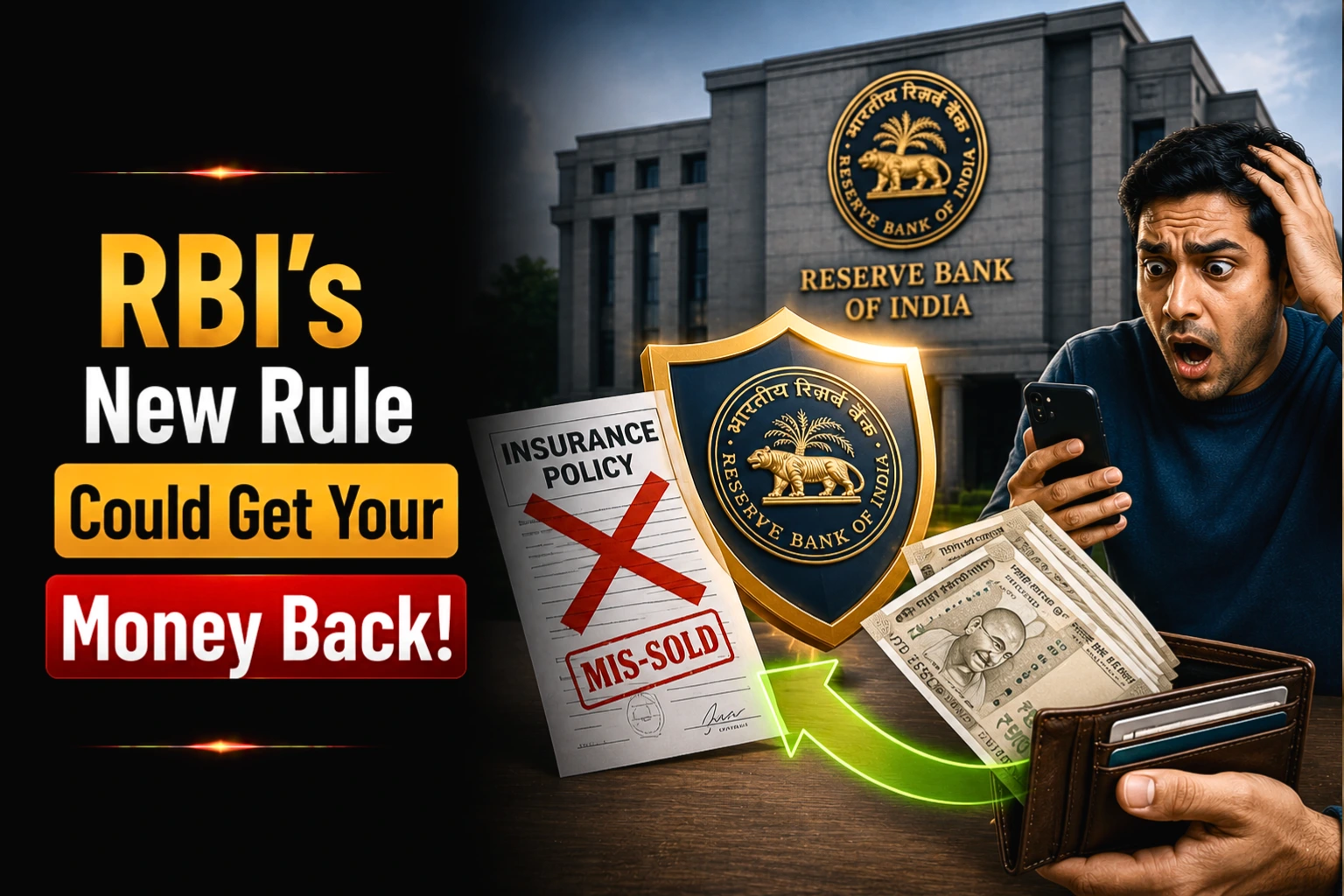
The RBI Mis-selling Rules 2026 strengthen customer protection when banks, NBFCs, and other regulated financial institutions advertise, market, or sell financial products and services.
The Reserve Bank of India issued the final amendment directions on June 15, 2026. However, the relevant provisions will come into effect on January 1, 2027. Therefore, customers should not assume that every requirement under the new framework is already operational in 2026.
Under the new directions, regulated entities will have to obtain explicit customer consent, clearly disclose important product information, assess whether certain products are suitable for the customer, and avoid compulsory bundling.
If you want to protect yourself from banks’ mis-selling, then we have come up with a blog that will cover RBI mis-selling rules, changes under the RBI Mis-Selling framework, how you can file a complaint, documents needed for a Mis-Selling complaint, and some key points by which you can protect yourself from mis-selling product schemes.

RBI Mis-Selling Rules 2026: Key Facts at a Glance
|
Particulars |
Details |
|
Final directions issued |
June 15, 2026 |
|
Effective date |
January 1, 2027 |
|
Main objective |
Prevent mis-selling and improve responsible sales practices |
|
Important requirements |
Explicit consent, proper disclosures and suitability assessment |
|
Forced product bundling |
Restricted under the new directions |
|
Digital dark patterns |
Prohibited |
|
Refund |
Full amount where mis-selling is established |
|
Compensation |
Based on the regulated entity’s approved policy |
|
Bank complaint escalation |
RBI Ombudsman, where the complaint is maintainable |
|
Insurance complaint escalation |
Insurer grievance team, Bima Bharosa or Insurance Ombudsman, as applicable |
The RBI issued separate amendment directions for different categories of regulated entities, including commercial banks, small finance banks, payments banks, regional rural banks, co-operative banks, NBFCs, housing finance companies and All India Financial Institutions.
Is Financial Product Mis-Selling?
Where mis-selling is established, the bank will have to refund the amount paid by the customer, cancel the sale wherever applicable, and compensate the customer for eligible losses according to its approved policy. The refund is not automatic merely because a customer is unhappy with a product; the mis-selling allegation must first be examined and established.
Mis-selling occurs when a financial product or service is sold in an improper, misleading or unsuitable manner. Under the RBI’s 2026 directions, the sale of a financial product or service may be treated as mis-selling in circumstances such as:-
- The product is unsuitable or inappropriate for the customer’s profile, even where the customer provided consent.
- Correct or complete information was not provided.
- Misleading information was given at the time of sale.
- The product was sold without the customer’s explicit consent.
- Another product or service was compulsorily bundled with the requested product.
- The sale involves another practice defined as mis-selling by the relevant financial-sector regulator.
Possible situations include:
- A bank employee says that an insurance policy is compulsory for loan approval.
- Insurance is added to a loan application without clearly informing the borrower.
- A traditional insurance policy is presented as being equivalent to a fixed deposit.
- Important exclusions, surrender charges or lock-in conditions are hidden.
- A high-risk or long-term product is recommended without assessing the customer’s income, age or financial needs.
- An additional financial product is selected by default in an online application.
- A customer is pressured to sign immediately without receiving clear product information.
Whether a particular incident legally qualifies as mis-selling will depend on the evidence and applicable regulations.
What Will Change Under the RBI Mis-Selling Framework?
Explicit consent will be required. Banks will have to obtain specific, informed and unambiguous consent before selling a product or service. Consent may be collected through:
- A signed physical or electronic declaration
- OTP-based approval
- Digitally recorded confirmation
- A clearly separated consent section in an agreement
- Another recorded affirmative action
Where multiple products are included in one form, each product must be clearly listed. Customers must be allowed to select only the products they actually want. The default digital option for customer consent should be “No” or “I do not agree,” rather than a pre-selected approval. Important product information must be disclosed.
Before obtaining consent, the bank must prominently communicate key product details, including:
- Fees
- Interest rate, where applicable
- Financial risks
- Customer payment obligations
- Lock-in conditions
- Exit terms
- Cancellation conditions
- Applicable penalties.
Where a regulator has prescribed a specific disclosure format, such as a Key Facts Statement or Most Important Terms and Conditions, that format must be used. Ability must be assessed
Certain products cannot simply be sold to every customer without considering whether they are appropriate.
The bank may have to assess factors such as:
- Customer’s age
- Income
- Financial literacy
- Risk tolerance
- Product complexity
- Risk-and-return characteristics
- Investment or payment duration
- Product charges.
A customer’s signature alone may not protect the seller where the product was fundamentally unsuitable for the customer’s profile. Compulsory bundling will be restricted. Under the new directions, a bank cannot compulsorily bundle a third-party product with its own product or service.
For example, a bank should not insist that a customer purchase insurance from the bank’s partner merely to obtain a loan.
Where a third-party product is genuinely required as a risk-mitigation measure, the customer must be given the option to purchase it from another provider. Voluntary packages and genuinely complimentary products may still be offered. Banks cannot finance an additional product without consent.
A bank cannot use part of a sanctioned loan to pay for another financial product or service without the customer’s explicit consent.
For example, the cost of an insurance policy should not be silently included in a loan amount without clear customer approval. Patterns will be prohibited.
Banks and their sales partners must not use deceptive digital designs that manipulate customers into purchasing unwanted products.
Examples include:
- Pre-selected insurance options.
- Hidden additional charges.
- Misleading countdown timers.
- Difficult cancellation processes.
- Confusing opt-out language.
- Repeated pop-ups that pressure a customer.
- Making the bank-preferred option more prominent while hiding alternatives.
Digital interfaces must also be tested and periodically audited to identify unfair features and dark patterns. Bank Forces You to Buy Insurance With a Loan?
Under the new directions effective from January 1, 2027, a bank cannot make a third-party product compulsory merely because the customer is applying for one of the bank’s own products.
This means a bank should not say: “You must purchase this particular insurance policy from our partner, otherwise your loan will not be approved.”
There is an important exception. A lender may require a risk-mitigation product in certain circumstances. However, the customer must be given the freedom to purchase that product from another eligible provider instead of being forced to buy from the bank’s preferred insurer. Bank to provide the following information in writing:
- Whether insurance is actually mandatory.
- The legal or contractual basis for the requirement.
- Whether you can select another insurer.
- The premium and coverage.
- Whether the premium is being added to the loan.
- What happens if you decline the policy.
Do not rely only on a verbal statement made by a salesperson.
Can You Get a Full Refund for Mis-Sold Insurance?
A full refund may be available where the bank establishes that the financial product or service was mis-sold. In such a case, the bank will have to:
- Refund the entire amount paid by the customer.
- Inform the customer that the sale has been cancelled, where cancellation is applicable.
Compensate the customer for loss arising from the mis-selling; according to the bank’s approved compensation policy, a refund is not guaranteed merely because:
- The product did not generate the expected return.
- The customer changed their mind.
- An insurance claim was rejected in accordance with valid policy terms.
- The customer did not read documents that were properly disclosed.
- The product later became unaffordable due to changed personal circumstances.
The customer should demonstrate how the product was sold improperly, without consent, through misleading information, by coercion, through compulsory bundling or without an appropriate suitability assessment.

How to File a Complaint for a Mis-Sold Financial Product
The correct complaint route depends on whether the grievance relates mainly to the bank’s sales conduct or the insurer’s actions.
Complaint against the bank
Use this route where:
- The bank forced insurance with a loan.
- The bank financed the premium without proper consent.
- A bank representative gave misleading information.
- The product was added without permission.
- The bank failed to disclose important terms.
- The bank sold an unsuitable financial product.
Step 1: Submit a written complaint to the bank
Send the complaint to the branch manager, customer-care department, or designated grievance redressal officer.
Your complaint should mention:
- Name and contact details
- Loan, account or policy number
- Date and place of sale
- Name or designation of the salesperson
- What the salesperson told you
- Information that was hidden or misrepresented
- Why you believe the product was unsuitable
- Amount paid or financed
- Financial loss suffered
- Relief requested.
Ask for a complaint acknowledgement and reference number.
Step 2: Preserve the bank’s response
Keep copies of:
- Original complaint.
- Complaint acknowledgement.
- Emails and letters.
- Bank response.
- Call recordings, where lawfully available.
- Messages exchanged with the salesperson.
Step 3: Escalate to the RBI Ombudsman
A complaint must first be made to the regulated entity. A customer may approach the RBI Ombudsman where:
- The regulated entity has not replied within 30 days or the longer timeline prescribed by an applicable RBI, NPCI or card-network guideline; or
- The customer has received a reply but is dissatisfied with the resolution.
The RBI Ombudsman complaint must generally be filed within 90 days from the expiry of the applicable response period or from the last communication received from the regulated entity, whichever is later.
Complaints can be submitted through the RBI Complaint Management System, by email to the Centralised Receipt and Processing Centre, or through physical submission. The RBI Ombudsman process is free.
Use this route where the grievance relates mainly to:
- Insurance policy terms
- Claim rejection
- Delay in claim processing
- Incorrect policy issuance
- Insurer service deficiency
- Conduct of an insurance intermediary
- Cancellation or policy servicing issues.
First submit the complaint to the insurer’s grievance redressal officer.
Where the insurer does not provide a satisfactory response, the policyholder can register or escalate the complaint through IRDAI’s Bima Bharosa grievance system. A complaint registered through Bima Bharosa is sent to the concerned insurer and can be tracked using the allotted reference details.
RBI Ombudsman or Bima Bharosa: Which One Should You Use?
|
Nature of complaint |
First complaint |
Possible escalation |
|
Bank forced insurance with a loan |
Bank grievance officer |
RBI Ombudsman |
|
Premium added to loan without consent |
Bank grievance officer |
RBI Ombudsman |
|
Bank employee misrepresented a policy |
Bank grievance officer |
RBI Ombudsman and/or Insurance route, depending on facts |
|
Incorrect insurance policy issued |
Insurer grievance officer |
Bima Bharosa |
|
Insurance claim rejected |
Insurer grievance officer |
Bima Bharosa or Insurance Ombudsman |
|
Delay in insurance claim settlement |
Insurer grievance officer |
Bima Bharosa or Insurance Ombudsman |
|
Dispute involves both bank and insurer |
Complain separately to both |
Appropriate regulator or ombudsman for each issue |
Filing a complaint with the wrong authority can delay the process. Clearly separate the bank’s conduct from the insurer’s conduct when describing the grievance.
Documents Needed for a Mis-Selling Complaint
Collect as many of the following documents as possible:
- Loan application form
- Loan sanction letter
- Loan agreement
- Insurance proposal form
- Insurance policy document
- Key Facts Statement
- Premium receipt
- Bank account statement
- Loan disbursement statement
- Signed consent form
- SMS or OTP records
- Emails and WhatsApp messages
- Promotional brochures
- Call recordings, where lawfully obtained
- Written statement from a witness
- Complaint acknowledgement
- Bank or insurer response.
- Claim-rejection letter, where relevant.
Also prepare a clear timeline showing:
- When you applied for the loan or financial product
- What the salesperson told you
- When the additional product was issued
- When the premium was paid or financed
- When you discovered the alleged mis-selling
- When you complained
- What response you received.
A clear, evidence-based complaint is stronger than a general allegation that the policy was “useless.”
How Soon Should You Complain?
Under the new RBI directions, a customer can lodge a mis-selling complaint within the timeline specified by the relevant financial-sector regulator.
Where no specific timeline has been prescribed, the directions state that the complaint may be lodged within 30 days of receiving the signed copy of the terms, conditions or agreement. day provision should not be confused with the separate RBI Ombudsman rule.
For an Ombudsman escalation, the customer must first complain to the regulated entity and normally allow it up to 30 days to respond, unless an earlier unsatisfactory response is received. Should complain as soon as they identify a problem rather than waiting until the end of a possible limitation period.
Do the RBI Mis-Selling Rules Apply to Policies Sold Before 2027?
The final amendment directions come into effect on January 1, 2027. The article should therefore not claim that the new provisions automatically apply retrospectively to every policy sold before that date.
The authority considering the complaint may examine:
- Date of sale
- Regulations applicable on that date
- Nature of the representation
- Consent documents
- Product disclosures
- Applicable limitation period
- Whether the same dispute is pending before another forum
- Whether the complaint is maintainable under the relevant scheme.
For an older policy, avoid writing that the 2027 refund requirement definitely applies. Instead, explain the facts and ask the bank, insurer or relevant authority to examine whether mis-selling or service deficiency occurred.
How to Protect Yourself From Financial Product Mis-Selling
Before purchasing an insurance, investment or loan-linked product:
- Ask whether the product is compulsory or optional.
- Request the requirement in writing.
- Ask whether you can purchase from another provider.
- Read the product name carefully.
- Check whether it is insurance, investment, deposit or a hybrid product.
- Understand the premium or payment commitment.
- Check the policy term and lock-in period.
- Review surrender charges and cancellation conditions.
- Read exclusions and claim conditions.
- Do not share an OTP unless you understand what you are approving.
- Do not sign blank or incomplete forms.
- Keep a copy of every document.
- Verify whether the premium has been added to your loan.
- Review all emails and messages received after the sale.
If the product does not match what was verbally promised, complain immediately in writing.

Conclusion
From January 1, 2027, regulated entities covered by the directions will face clearer obligations concerning customer consent, product suitability, transparent disclosures, compulsory bundling and digital dark patterns.
Always complain first to the concerned bank or insurer, preserve the acknowledgement, and use the appropriate RBI or IRDAI escalation route where the grievance remains unresolved.

DISCLAIMER: This blog is NOT any buy or sell recommendation. No investment or trading advice is given. The content is only for educational purposes. Always discuss with your SEBI-registered financial advisor for investment-related decisions.