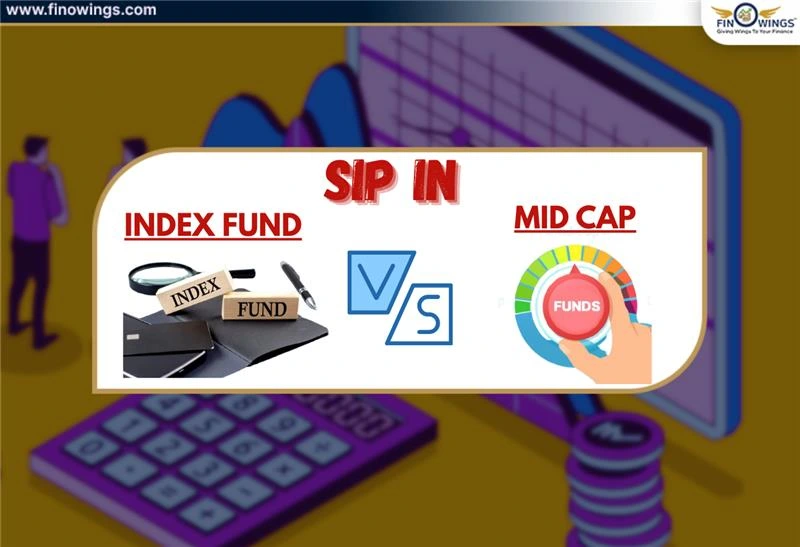
With SIP mutual funds, investors have many options, including SIP in Mid-Cap Funds and SIP in Index Funds. Although these funds have performed well and created wealth over the years, they do behave differently during the different cycles of the market.
So the most important question to consider is which of these funds is a better investment, a SIP in Index Funds or a SIP in Mid-Cap Funds?
Investors planning long-term wealth creation through index funds can also explore SIP planning strategies and estimate future returns using a SIP Calculator before investing in NFOs or mutual funds.
This guide will give you everything you need to know in order to make a good choice focused on the details of the investment: How much will you earn? How much will you lose? How much will they fluctuate? How long do you need to invest? Ultimately in the end, which fund aligns with your financial objectives?
Importance of Systematic Investment Plans (SIPs)
Investing in a mutual fund using a Systematic Investment Plan (SIP) allows an investor to choose how much money will be invested on a regular basis, such as monthly, quarterly, etc.
Advantages of an Investment via a SIP
- Investing with a lower average cost.
- Consistent investing.
- Compounding over time in the invested amount.
- Avoiding the need to guess the market.
Investing using a mid cap fund SIP or an index fund SIP, the investment will yield the most over the long term.
What Is Index Fund SIP?
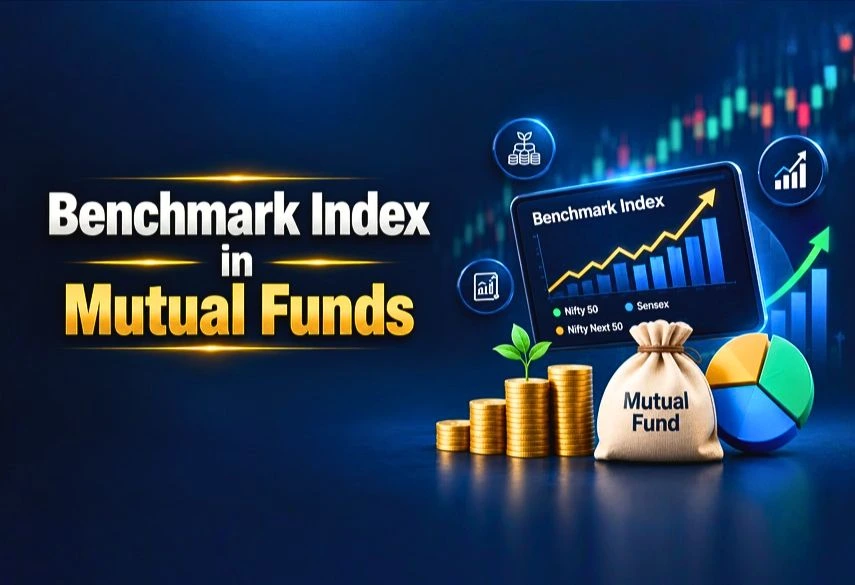
An index fund SIP puts money in a mutual fund that invests in a specific market index, such as Nifty 50 or Sensex. The mutual fund just reproduces the index
Index Fund SIP Features
- The style of investment is passive.
- Very low cost.
- Returns similar to index.
- Low fund manager risk.
Index funds do not try to beat the market; they try to be the market.

What Is a Mid-Cap Fund SIP?
Mid cap fund SIP invests in companies that are in the range of 101 to 250 in terms of market cap.
These companies are:
- Bigger than small-caps.
- Smaller and more agile than large-caps.
- In a strong growth phase.
Features of the Mid-Cap Fund SIP
- Actively managed.
- Higher return potential.
- Higher volatility.
- Requires patience and a long holding period.
Index Fund SIP vs Mid-Cap Fund SIP: Core Difference
Investment Philosophy.
- Index fund SIP→ Stability, predictability.
- Mid cap fund SIP→ Growth, outperformance potential.
SIP Comparison Table: Index Funds vs Mid-Cap Funds
|
Phase |
Index Funds |
Mid-Cap Funds |
|
Bull Market |
Steady rise |
Explosive returns |
|
Bear Market |
Lower fall |
Sharp fall |
|
Recovery |
Faster stability |
Slower but strong rebound |
Returns Comparison: Index Fund SIP vs Mid-Cap Fund SIP
Index Fund SIP Returns
Historically, Indian indices have delivered:
- 10–12% CAGR over long periods.
- Consistent wealth creation.
- Lower drawdowns during market crashes.
Mid-Cap Fund SIP Returns
Mid-cap funds have shown:
- 12–16% CAGR over long cycles.
- Sharp rallies in bull markets.
- Deep corrections in bear markets.
Key Insight: Mid-cap funds can outperform index funds, but only if you stay invested through volatility.
Risk & Volatility: What Sets Them Apart
Index Fund SIP Risk Profile
- Stock-specific risk has less impact.
- The downside risk is less due to index diversification.
- Good fit for investors with emotional conservativeness.
Mid-Cap Fund SIP Risk Profile
- Mid-caps go down harder during market crashes.
- Recovery is often slow.
- Strong risk tolerance is needed.
If you get anxious during market drops, mid-cap fund SIP might not be for you.
How Expense Ratios Reduce SIP Returns
Returns are directly affected by the expense ratio.
Index funds: ~0.2%–0.4%
Mid-cap funds: ~1.0%–1.8%
This differential can lead to lakhs of rupees difference in corpus in a 20 year time frame.

Who Should Choose Index Fund SIP?
Consider an index fund SIP if you:
- Are new to investing.
- Like to invest for predictable returns.
- Want to invest at a lower cost.
- Dislike fund manager risk.
- Want to build wealth over the long-term.
Ideal for:
- Salaried professionals.
- Investors who are doing this for the first time.
- People who are planning for retirement.
Who Should Choose Mid-Cap Fund SIP?
Choose mid-cap fund SIP if you:
- Do not be afraid of the risk involved.
- Can stay invested even during market downturns.
- Want to see the aggressive growth of your wealth.
- Are in for the long-term (7–10+ years).
Ideal for:
- Young investors.
- High-income earners.
- For people who want to grow their portfolios.
SIP Investment Guide: Smart Allocation Strategy
You don’t have to choose only one. Balanced SIP Strategy (Recommended)
60–70% in Index Fund SIP (stability).
30–40% in Mid-Cap Fund SIP (growth).
This combination:
- Keeps volatility low.
- Enhances risk-adjusted returns.
- Accumulates long-term wealth hassle-free.
Index Fund SIP vs Mid-Cap Fund SIP During Market Downturns
|
Phase |
Index Funds |
Mid-Cap Funds |
|
Bull Market |
Steady rise |
Explosive returns |
|
Bear Market |
Lower fall |
Sharp fall |
|
Recovery |
Faster stability |
Slower but strong rebound |
Emotional discipline is a major factor in mid-cap SIPs.
Taxation: Same for Both
Both index funds and mid-cap funds are:
Equity mutual funds.
LTCG tax: 10% above 1 lakh (holding >1 year).
STCG tax: 15%.
Taxation does not differentiate the two.

Final Verdict: SIP in Index Funds vs SIP in Mid-Cap Funds
Choose Index Fund SIP if:
- You want peace of mind.
- You prefer consistency over excitement.
- You’re building long-term financial foundation.
Choose the Mid-Cap Fund SIP if:
- You can handle volatility.
- You want higher growth.
- You can stay invested for a decade.
Best Approach?
Use both. Let index funds provide stability and mid-caps deliver growth.
Conclusion
The debate of SIP in index funds vs SIP in mid-cap funds is not about which is better, but which is better for you. A disciplined SIP, long time horizon, and emotional control matter far more than fund category selection. Start early. Stay consistent. Let compounding do the heavy lifting.

DISCLAIMER: This blog is NOT any buy or sell recommendation. No investment or trading advice is given. The content is purely for educational and information purposes only. Always consult your eligible financial advisor for investment-related decisions.












.webp "growth-vs-idcw-mutual-fund")