In the rapidly growing Indian investment ecosystem, new offerings provide investors with options above mutual funds but below the complexity of portfolio management services (PMS) or alternative investment funds (AIFs). One of these new offerings is DynaSIF, 360 ONE's first equity long-short fund, which is set to capture investor interest.
Under the new Specialised Investment Fund (SIF) category introduced by SEBI, this first-of-its-kind equity long-short fund is capturing investor interest by virtue of its claim to generate alpha across all market cycles.
In the event you queried the meaning of “DynaSIF,” here are the details: the name is derived from the Greek word “dynamis,” meaning power, strength, and potential. This provides a fitting description for the flexible nature of this investment strategy.
Investors planning long-term wealth creation through index funds can also explore SIP planning strategies and estimate future returns using a SIP Calculator before investing in NFOs or mutual funds.
In this guide, we will provide an expansive treatment of everything you need to know about DynaSIF, 360 ONE SIF, equity long-short fund, SIF funds India, asset allocation, strategy, benefits, risks, and suitability. This is likely to be a significant addition to your investment portfolio, whether you are a high-net-worth individual or an accredited investor.
Specialised Investment Funds (SIF Funds India)
SIF funds India are a product of a new kind of regulation. In 2015, the SEBI (Securities and Exchange Board of India) changed the Mutual Funds Regulations of 1996 to include Specialised Investment Funds (SIFs). These funds are different from regular mutual funds and PMS/AIFs (Portfolio Management Services / Alternative Investment Funds).
Some key characteristics of SIF funds India include the following:
- Minimum investment of ₹10 lakh (₹ 1 lakh for accredited investors).
- Flexibility for strategies such as long and short equity, rotation of sectors, tactical allocations, and naked shorting (limited to 25% via derivatives).
- Structures that are open-ended, closed-ended, or interval-like.
- Categories that include equity, debt, or hybrid alternatives.
- Daily and interval liquidity, good governance, and mutual fund-like tax efficiency.
- Operate under a brand name that distinguishes them from mutual fund schemes.

SIF funds in India are aimed at experienced investors who want institutional-grade instruments, as they require less capital than PMS (Portfolio Management Services) or AIF (Alternative Investment Funds). For example, SIF funds India do not have a ₹ 50 lakh investment upper limit, or a ₹ 1 crore investment lower limit. In addition, SIF funds in India allow limited naked shorting and broader derivative strategies for hedging and alpha generation, which is a huge advancement for products that can be accessed by retail investors.
360 ONE SIF and DynaSIF Platform
360 ONE Asset Management (previously known as IIFL Wealth) has always emphasised innovative and outcome-driven solutions. With 360 ONE SIF, they’re launching their first Specialised Investment Fund platform called DynaSIF.
DynaSIF isn’t just one fund - it’s a complete platform for multi-strategy, multi-asset investing. The first strategy is called the DynaSIF Equity Long-Short Fund, which gives 360 ONE a foothold in SIF funds India. The platform offers a unique combination of mutual funds and PMS, and also ensures dynamic allocation to equities, derivatives, debt, REITs, InvITs, and select private instruments.
According to Raghav Iyengar, CEO of 360 ONE Asset Management, “As market leadership and cycles shift more frequently, alpha generation may increasingly depend on adaptability, risk awareness, and differentiated investment thinking.” Recognising the SIF structure, Anup Maheshwari, Co-Founder & CIO, emphasised “the SIF structure embodies institutional-grade risk management and outcome-oriented strategies while also ensuring the tax and governance efficiencies of mutual funds.”
DynaSIF Equity Long-Short Fund in Details
The DynaSIF Equity Long-Short Fund is an open-ended equity long-short fund, and for long-term capital appreciation, it takes long and short positions in listed equities and equity derivatives.
Investment Objective
The goal is to create alpha through structural, cyclical, and tactical investing and also by using hedging or shorting underperforming stocks.
Asset Allocation (as per Scheme Information)
- Equities & equity derivatives: 80-100%.
- Debt & money market (for cash management): 0-20%.
- InvITs (if opportunities arise): 0-20%
- Short exposure via equity derivatives: Up to 25% (limited naked shorting allowed under SEBI SIF rules).
The fund is completely sector, market, and style neutral, meaning it can go long on high conviction ideas and short on all businesses failing regardless of size or sector.
Benchmark
BSE 500 TRI (for broad-market reference).
Risk Profile
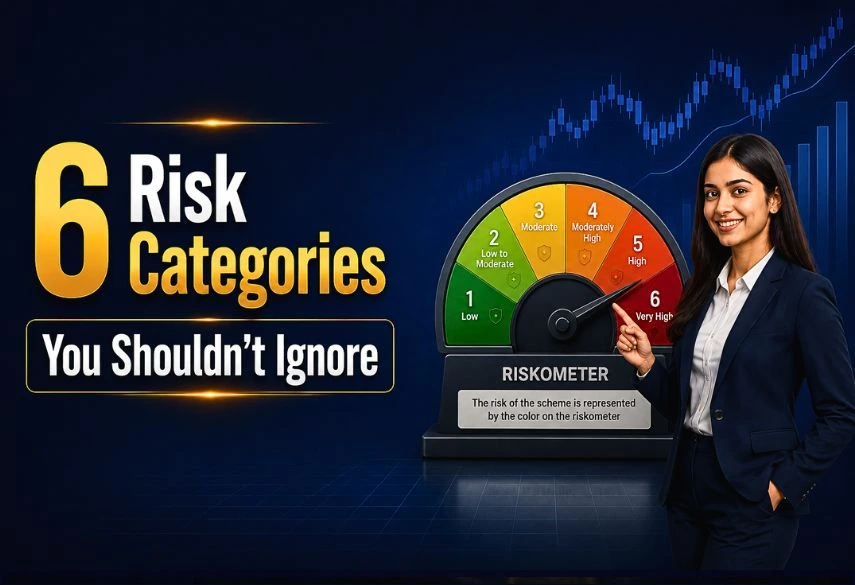
Risk Band Level 5 (high risk) - applicable only to those with knowledge of derivatives, volatility, and long/short balance.
Key Operational Details (NFO Period Ongoing as of Feb 10, 2026)
- NFO opens: 06 February 2026
- NFO closes: 20 February 2026
- Minimum investment: ₹10 lakh (₹1 lakh for accredited investors).
- Exit load: 0.5% if redeemed within 3 months; Nil thereafter.
- Fund Manager: Harsh Agarwal (nearly two decades in long-short and multi-asset strategies).
- Liquidity: Open-ended (daily NAV and redemption, subject to scheme rules).
Harsh Agarwal says, “The ability to go both long and short provides flexible positioning and better risk management. These are complemented by fundamental research, quantitative approaches, and disciplined factoring of derivatives.”

Core Pillars and Investment Philosophy of DynaSIF
DynaSIF is established on five potent pillars:
1. Smart, Dynamic Allocation- Dynamic portfolios that align with changing market conditions.
2. Balanced Across Markets- Multi-asset diversification (equities, debt, derivatives, REITs, and private instruments) for balance.
3. Focus on Consistent Compounding- Emphasis on sustainable growth versus short term speculative approach.
4. Active Risk Management- Use of tactical long/short strategies + strong hedges to protect capital and reduce risk.
5. Research-Driven Selection- A combination of fundamental and quantitative research that rigorously institutionalises high-probability convictions.
The goal is to provide an opportunity to construct a multi-strategy, multi-asset approach with full flexibility to shift allocations toward the best risk-adjusted alpha opportunities, even in the shorting of long positions.
Benefits of Investing in the Equity Long-Short Fund
- Starts in all market conditions. Positively correlated with long positions in a rising market. Negatively correlated in a declining or overvalued market segment.
- Lower correlation with the market. Smoother potential returns than in a long-only equity fund.
- Tax efficiency: Long-term capital gains after a 12 month holding period are taxed at 12.5% and short-term capital gains are taxed at 20%.
- Professional management 360 ONE’s processes and expertise.
- Liquidity and transparency, Mutual fund style reporting, and Daily NAV. Open-ended structure.
- Additional diversification beyond traditional mutual funds. Regulated framework with limited shorting and multi-asset flexibility beyond traditional mutual funds.
No investments are without risk. The DynaSIF Equity Long-Short Fund has Market and counterparty risks, in addition to derivatives risk and volatility. The potential for short-side losses. A higher expense ratio due to the complexity of the fund. The risk of limited liquidity in stressed markets.
Suitable only for investors with a high risk appetite and an investable surplus of ₹10 lakh or more. Please consult your advisor and read the SIDs for more information.
Who Should Invest in DynaSIF?
Is great for:
- Accredited or high-net-worth individuals comfortable with ₹10 lakh minimum investments.
- Anyone looking for equity exposure with downside risk protection.
- Investors looking for a change from long-only strategies with a high degree of volatility in sideways or bear markets.
- Those who wish to diversify their portfolios from traditional mutual funds or indexed products.
First-time investors or those looking for guaranteed returns are not suitable for DynaSIF.
How Does DynaSIF Contrast with Mutual Funds, PMS & AIFs?
DynaSIF finds the sweet spot - complicated strategy, simple mutual fund operation.
DynaSIF Investment & KYC
The NFO is open from now to 20 February 2026. Go to the website 360.one/dyna-sif, do your KYC, pick between growth or dividend payout options and invest. After NFO, units will remain available to purchase.

Conclusion: Is DynaSIF Pioneering Indian Investment?
DynaSIF and its leading equity long short fund have taken the first step for SIF funds India. 360 ONE, for the first time, gives investors a way to stay invested in equities with built-in protection and without exposing them to volatility during bear markets, while providing alpha potential during all market cycles. Investors are given long-short strategy funds with the simplicity of a mutual fund in a tax-efficient way.

DISCLAIMER: This blog is NOT any buy or sell recommendation. No investment or trading advice is given. The content is purely for educational and information purposes only. Always consult your eligible financial advisor for investment-related decisions.










.webp "growth-vs-idcw-mutual-fund")