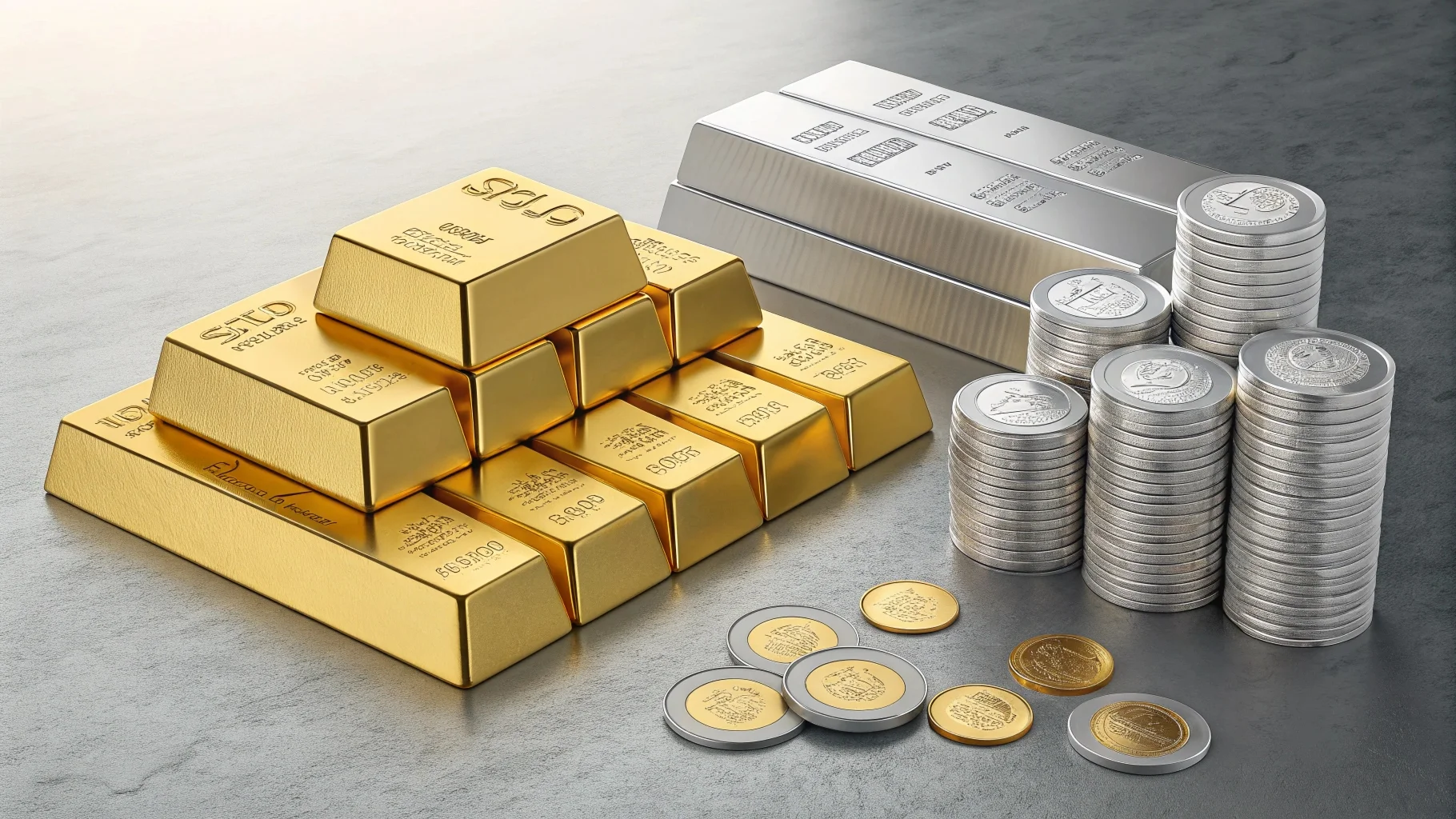
With the ongoing geopolitical crisis, inflation, and the depreciating Rupee, investors in India are currently looking at safe-haven assets. Gold ETFs and Silver ETFs are new, hassle-free and accessible ways to invest in precious metals, which are also gaining popularity amongst investors.
However, with rising geopolitical tensions, uncertainty in global markets, and increased Central Bank purchases, there are rising questions about the potential for a new inflation rally. Should you invest in gold and silver ETFs now?
This article will provide you with the landscape for gold ETFs in India, the outlook for silver ETFs in India, and help you with a market prediction on whether investing in silver and gold ETFs at this time is a good choice.
Investors planning long-term wealth creation through index funds can also explore SIP planning strategies and estimate future returns using a SIP Calculator before investing in NFOs or mutual funds.
You will receive credible research and data on tier and non-tier gold ETF investments, recommended gold ETF mutual funds, and strategies to build a gold and silver ETFs in an inflation protection, whether you are a seasoned trader, a mutual fund investor, or a new investor interested in commodities.
Why Gold and Silver ETFs Are Gaining Popularity in India
Gold and silver have always been a huge part of India’s culture, and over the last decade, gold ETF India have really modernized this tradition. The Nippon India ETF Gold BeES were launched in 2007 and have since then created these ETFs in India. They allow their customers to track prices of Gold and Silver in India and are a low-cost, liquid, and transparent alternative to physical bullion.
The ETFs are held in physical metal in vaults, unlike physical jewellery or coins. They can be purchased on the NSE or BSE just like stock. ETFs also come with annual fees of 0.5 to 1% and a far better cost than physical gold, which has storage fees of 5 to 10%.
Recent trends underscore their appeal:
- Gold prices hit ₹78,000/10g in late 2025, up 25% YoY, per MCX data.
- Silver climbed 30% amid industrial demand from solar panels and EVs.
- Gold and silver ETF investment volumes on Indian exchanges jumped 40% in 2025, per NSE reports.
Gold has delivered over 12% CAGR for 10 years straight, making it a great investment. Gold ETFs are a better investment during a rupee depreciation.
Current Market Dynamics: Rally Signals Building?
Global cues are signalling toward positive movement as we head through January 2026. Recent US Fed rate cuts (currently 4.25-4.5%) have weakened the US dollar, resulting in increased prices for metals. China's gold purchases have seen a jump in 2025, surpassing 300 tonnes, with India also showing growth in gold buying with 800 tonnes for the same period.
Gold ETFs in India have prices closely matching gold's spot price, including the MCX Gold futures pricing gold at 76,500 rupees for 10 grams. HDFC Gold ETFs have tended to trade for a premium of 0.2%. There is momentum in the gold market as HDFC offered silver at 92,000 rupees/kg.
|
Metal |
2025 Peak Price (₹) |
YTD Return |
Key Driver |
|
Gold |
78,000/10g |
+25% |
Safe-haven demand |
|
Silver |
95,000/kg |
+30% |
Industrial use |
A brighter outlook is anticipated for Silver ETFs, especially for those who are willing to take more risk. Immediate demand for silver is expected to increase. India is targeting 500GW of solar by 2030. The Silver Institute forecasts demand growth of 15% p.a. due to increased construction of solar plants and silver used in wires.
Silver and gold demand have South-facing libras, increased construction projects in solar plants and silver wire. These plans would tend to create a burden on demand. The expected increase would be in a stronger USD or a major recession in the US.
Analysis of the Best Performing Gold ETFs in India
India has more than ten options when it comes to gold ETFs in India. Below is a list of some of the best performers (all ETFs are ranked by their net asset value (NAV) as of January 22, 2026.
One-year return data from National Stock Exchange (NSE):
- Nippon India ETF Gold BeES: AUM of 15,000 Crores, Expense Ratio 0.79%; 1-Year Return: 28%. This ETF has the best liquidity, as evidenced by a daily volume of more than 500 Crores.
- HDFC Gold ETF: AUM of 8,000 Crores, Expense Ratio: 0.59%. This fund tracks the Multi-Commodity Exchange (MCX) fairly closely which makes it ideal for long-term holders.
- ICICI Prudential Gold ETF: AUM: 5,500 Crores, Expense Ratio: 0.50%. This fund has the most impressive tracking error of less than 0.1%.
As a group, these funds invest over 95 % of their net assets in physical gold, which helps to ensure the purity of gold. Studies show that Gold ETFs return, on average, 2 to 3 % more than physical gold because Gold ETFs are not subject to manufacturing costs, which is a problem for physical gold purchases.
Gold ETFs advantages are:
- High liquidity: You can buy and sell their shares as if they were a stock at any time of the trading day.
- Tax Efficiency: The long-term capital gains (LTCGs) tax after two years (post the 2024 budget) will be 12.5 %.
- No hassles of tax deduction at source (TDS) and Goods and Service Tax (GST).
The major cons are:
- No physical gold delivery.
- The fund can be sensitive to tracking errors during periods of high volatility.
Silver ETFs in India: High-Risk, High-Reward Outlook
Silver ETF outlook showcases some serious opportunities in diversifying a portfolio. There are fewer options, but the options available hold significant value.
- ICICI Prudential Silver ETF: AUM 2,200 Crores, Expense Ratio: 0.50%; one-year return: 35%. This fund tracks MCX Silver.
- Nippon India Silver ETF: has an AUM of ₹1,800 Cr, with an expense ratio of 0.56%. The ETF was launched in 2023 and has shown strong inflows.
- HDFC Silver ETF: AUM worth ₹900 Cr.
Silver's dual role of 50% jewellery/industrial and gold's 90% investment drives volatility. Silver was also able to outperform gold during the pandemic, with 5% in a year, thanks to increased demand for EV batteries.
Silver ETFs come with the following perks:
- Ability to leverage industrial growth, focusing on electronics and renewables.
- Units can be purchased for as little as ₹100.
- Bull cycles can yield potentially high returns upwards of 20% annually.
Risks:
- Quantified beta above 1.5, meaning greater volatility compared to gold.
- The cost of storage can lead to margins being eaten.
For Gold and Silver ETF investments, one has to maintain an allocation ratio of 60:40 with gold being the higher component.

Gold-Silver ETF Investment Strategies: Timing the Rally?
Is it the right time to invest? Analysts Kotak predict gold will be at ₹85,000 by mid 2026, providing an upside of 12%, and silver at ₹1,10,000, presenting a 20% upside. Timing investments can be tricky, so utilise these strategies.
1. Dollar-Cost Averaging (DCA)
Invest the same amount of money for a certain time period (in this example, monthly investments of gold ETF India worth ₹10,000), and over 5 years, you will obtain a 15% yield using this strategy, as opposed to the lump-sum 12% yield.
2. Technical Indicators
Watch for crossovers of the 50-DMA. Gold's 50 DMA recently crossed above the 200 DMA (often referred to as a "golden cross"), suggesting a bullish outlook. The relative strength index (RSI) for silver is at 55, which indicates that it has some room to rally.
3. Portfolio Allocation
Diversify 10-15% of your total investments into Gold-Silver to maintain the ratio, and pair it with equities as a hedge. Gold has a negative correlation of -0.3 with Nifty.
To help with your trading and investing in ETFs, here are some suggestions. Consider investing through systematic investment plans (SIPs) with services like Groww or Zerodha.
4. Event-Based Triggers
Buying opportunities on dips: Federal Reserve meetings, Indian budget (February 2026), or U.S. elections aftermath.
|
Strategy |
Best For |
Expected Return Boost |
|
DCA |
Beginners |
+3-5% over lump-sum |
|
Technical |
Traders |
10-15% in rallies |
|
Allocation |
Long-term |
Risk reduction 20% |
Trade Gold ETFs: Risks and Tax Implications for Indian Gold ETF
All assets have some level of risk. A Gold ETF may have an opportunity cost if equities are doing extremely well (Nifty up 18% in 2025), and with Silver ETFs, you have to worry about their industrial counterpart keeping them at risk during a slowdown.
Key risks:
- Gold ETFs have currency risk. A 10% fall of the rupee increases your Gold ETF returns by approximately 8%.
- A Gold ETF may have poor liquidity in bear markets.
- Regulatory risk with SEBI imposing limits on how much of an ETF you can hold and the total amount of an ETF.
Tax (after the Finance Act 2024):
- Short-term capital gains (STCG < 2 years): 20%.
- Long-term capital gains (LTCG > 2 years): 12.5% over 1.25 lakh.
- Silver ETFs have the same tax implications as Gold.
To have more stability, diversify your investments across Gold ETFs, Silver ETFs, and debt.

Before the Rally, Is It Wise To Purchase Gold and Silver ETFs?
Definitely, if you are looking to hedge against inflation (CPI at 5.5%) and wanting to make 10-15% profit while having little to no correlation with stock market fluctuations. Gold ETF Indiaworks well for someone with a conservative risk appetite, while the silver ETF outlook entices those with a more aggressive risk appetite.
Begin with a small investment, track the performance on MCX, and implement a DCA strategy. These ETFs are at an optimum point. Please speak to a SEBI-registered advisor before you make any investments. The upcoming rally may be similar to the 2020 rally, which was 40%. The next rally may be similar to 2020's next 40% rally. These ETFs are primed with a ~25% CAGR growth with an AUM increase.

DISCLAIMER: This blog is NOT any buy or sell recommendation. No investment or trading advice is given. The content is purely for educational and information purposes only. Always consult your eligible financial advisor for investment-related decisions.











.webp "growth-vs-idcw-mutual-fund")