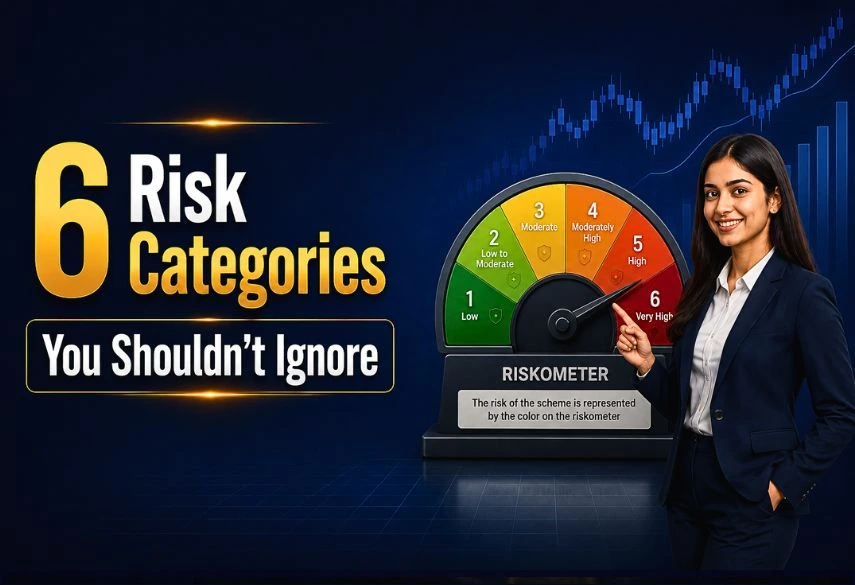
Flexi Cap funds have been the favourite among investors looking for short-term growth opportunities. These funds have the ability to invest in any cap range, from large to small, so investors are able to maximise earnings. Entering 2026, some investors are suggesting one of the biggest changes to investing in Flexi Cap funds. This brings us to Dividend Yield Funds.
Dividend Yield Funds are projected to be the top performer in 2026. These funds invest in established companies that are consistently paying dividends. These dividends will provide a source of regular earnings. Dividends will provide a more stable earning stream with less investment risk than Flexi Cap funds, which are more growth-oriented.
Investors planning long-term wealth creation through index funds can also explore SIP planning strategies and estimate future returns using a SIP Calculator before investing in NFOs or mutual funds.
In this article, we will discuss the differences between dividend yield funds and flexi cap funds, analyze the best dividend yield funds for 2026, and examine the returns of dividend yield funds that will help you strategise how to invest your money.
This year, more than any before, Dividend Yield Funds are an excellent investment option for both new investors and those with more experience.

What Are Dividend Yield Funds?
Dividend Yield Funds are mutual funds that focus on equities that pay out above-average dividends. As per SEBI guidelines, Dividend Yield Funds must invest at least 65% of their assets in equity and equity-related instruments, and focus on companies that profit and give back to their shareholders.
These funds prioritise “quality-first” equity. Rather than buy high-growth high-valuation stocks, these funds invest in mature companies in banking, fast-moving consumer goods market (FMCG), energy, and automobiles.
Here are the main benefits of these funds:
- Regular income: even in growth options, the dividends from the underlying companies provide stability to the fund.
- Less risk: the stocks in these funds are defensive stocks.
- Compounding: dividends are reinvested and returns are expected to rise over time.
In times of uncertainty like projected global interest rate changes or domestic valuation concerns in early 2026, Dividend Yield Funds are an option to buy equities with a protective layer compared to pure growth funds.
Flexi Cap Funds: Drivers of Diverse Growth
Flexi Cap Funds are the ultimate flexible players. They can move between large caps for strength, mid caps for stability, and small caps for maximum high return. As long as they allocate a minimum of 65% to equities, they have no restrictions on market-cap allocations. They have high-stakes, high-risk flexibility.
In this soft market, top Flexi Cap Funds can capture significant returns as they follow momentum in fast-growing sectors like tech, capital goods, and consumption. This flexibility has made them hugely popular. The higher the potential return, the higher the risk. The risk is high with Flexi Cap. The Flexi Cap portfolios may be top-heavy with expensive growth stocks, leading to high downdrafts as sentiment softens.
Many experts believe the Indian markets will be mean-reverting in 2026, after trading at premium valuations into their 10th year of strong performance. This offers the argument for a more balanced, less risky alternative.
Dividend Yield Funds vs Flexi Cap Funds
In the Dividend Yield Funds and Flexi Cap Funds comparison, the results are particularly impressive, especially in the medium to long-term range. Here’s a quick snapshot based on category averages (as of late February 2026):
|
Parameter |
Dividend Yield Funds (Avg) |
Flexi Cap Funds (Avg) |
|
10-Year CAGR |
~16.5% |
~14.75% |
|
5-Year CAGR |
~21.55% |
~20.80% |
|
3-Year CAGR |
~21.45% |
~21.74% |
|
Volatility (Standard Deviation) |
Lower (more defensive) |
Higher |
|
Typical Portfolio Focus |
High-dividend, quality stocks |
Growth across market caps |
|
Ideal For |
Moderate risk, income + growth |
High risk tolerance, pure growth |
Independent research consistently places Dividend Yield Funds ahead of the pack when it comes to 5-year and 10-year returns and downside protection. For example, during times of heightened market volatility, dividend-yielding stocks tend to keep paying dividends which helps protect investors' portfolios.
Pros of Dividend Yield Funds
- Great risk-adjusted return.
- Built-in income buffer.
- Primarily invest in fundamentally sound companies with strong balance sheets.
Cons
- They tend to lag during powerful bull markets where growth stocks lead.
- They tend to have slightly less upside during hyper-growth phases.
Pros of Flexi Cap Funds
- Potential for high growth due to flexible allocation
- Potential to invest in the next emerging market leaders
Cons
- Increased risk and volatility and therefore the potential for significant loss
- Over-dependence on market momentum.
As we enter 2026, the Dividend Yield Funds are once again leading the pack. Even though the expected economic growth is strong, the possibility of headwinds globally makes Dividend Yield Funds a safe and wise investment for most investors, as they provide income and stability.

Why Are Dividend-Yield Funds Going to be the Best Investment in 2026
2026 is going to be the year of “quality over quantity.” Indian GDP growth is still good, but there are a lot of out-of-balance equity valuations in different parts of the economy. In Flexi Cap portfolios, growth stocks, especially in the mid and small-caps, are going to be in a position to get corrected if there are disappointing earnings.
Dividend Yield Funds shine in these scenarios:
- Resilience in volatility: It is the cash-rich and less leveraged firms that can pay dividends consistently.
- Attractive valuations: High-yield stocks are undervalued in terms of P/E ratio in comparison to the high growth stocks.
- Income in a high-interest world: With bank FDs giving a return of 6-7%, and in addition to the 2-4% yield dividends, there is a reasonable capital growth. This makes a good return in comparison.
- Proven outperformance: In the last few years, the Dividend Yield category funds have been giving better 5 year returns than the average in Flexi Caps.
When investors are looking for the best dividend yield mutual funds 2026, they are looking for stability with equity upside. In 2026 there will be a lot of “buy the dip” and these funds give dividend powder to average down in a position.
Dividend Yield Fund Returns: Track Record and Reputation
Let’s break down the dividend yield fund returns.
Here's what category leaders have provided based on the date provided
- 1-Year Returns (as of Feb 2026)- Up to 25.5% (Tata Dividend Yield Fund).
- 3-Year Annualized- 19-25% from top performers.
- 5-Year Annualized- 18-24%.
ICICI Prudential Dividend Yield Equity Fund: ~20.5% (1Y), 25.0% (3Y) & 24.1% (5Y);
Tata Dividend Yield Fund: ~25.5% (1Y), 21.0% (3Y)
UTI Dividend Yield Fund: ~17.1% (1Y), 21.4% (3Y) & 17.9% (5Y).
These dividend yield fund returns consistently outperform inflation, fixed deposits and many hybrid options, all while offering growth similar to equities. In 2026, if we have steady and slow growth again, we project 15-20% category returns from dividends and moderate growth dividend yield funds.
Best Dividend Yield Mutual Funds 2026
These are the top outperformers for best dividend yield mutual funds 2026 based on consistency, low expense ratio and high AUM.
1. ICICI Prudential Dividend Yield Equity Fund- AUM: ₹6,370 Cr | Expense Ratio: 0.57% | Returns: 20.5% (1Y), 25.0% (3Y), 24.1% (5Y) Rationale: Great performance history, great value, high quality dividend.
2. Tata Dividend Yield Fund- AUM: ₹1,004 Cr | Expense Ratio: 0.60% | Returns: 25.5% (1Y), 21.0% (3Y) Rationale: Good performance, low cost.
3. LIC MF Dividend Yield Fund- AUM: ₹649 Cr | Expense Ratio: 0.77%, Returns: 19.1% (1Y), 23.4% (3Y), 18.6% (5Y)
4. HDFC Dividend Yield Fund- AUM: ₹5,862 Cr | Expense Ratio: 0.78%, Returns: 16.1% (1Y), 19.4% (3Y), 19.6% (5Y) Why? Backed by a trusted name and solid long-term numbers.
5. UTI Dividend Yield Fund- AUM: ₹3,880 Cr | Expense Ratio: 1.45% ,Returns: 17.1% (1Y), 21.4% (3Y), 17.9% (5Y)
These funds stand out for their ability to deliver consistent dividend yield fund returns with disciplined stock selection.
How to Invest and Build Your Portfolio
Investing is straightforward through platforms like Groww, Zerodha Coin, or direct AMC apps. Start with SIPs of ₹5,000-10,000 monthly for rupee-cost averaging. Consider allocating 30-50% of your equity portfolio to Dividend Yield Funds in 2026, keeping the rest in Flexi Caps or large-cap funds for diversification.
Always review your risk profile and consult a certified financial advisor. Past performance is no guarantee of future results, but the structural advantages are clear.
Risks to Understand
Unfortunately, there are no completely risk-free investments. Strong growth-led rallies can cause Dividend Yield Funds to underperform. Sector concentration (regarding financials and energy) and shifts in corporate dividend policies affect funds. For dividends, taxation applies as per equity rules: one year LTCG above ₹1.25 lakh is taxed at 12.5%.

Conclusion
There will always be room for aggressive growth in Flexi Cap funds. Dividend Yield Funds, however, provide a better risk-reward balance for 2026 because they have lower volatility, steadier dividend yield fund returns, and a protective edge in an unpredictable market.
You should not put all of your eggs in the Flexi Cap basket. You can set yourself up for long-term wealth accumulation with consistent income potential by investing in or switching to the top dividend yield mutual funds of 2026.
Sources:
1. https://groww.in/mutual-funds/category/best-dividend-yield-mutual-funds
2. https://www.indmoney.com/mutual-funds/equity/dividend-yield
3. https://www.angelone.in/mutual-funds/category/dividend-yield-funds
5.https://www.etmoney.com/learn/mutual-funds/dividend-yield-funds-vs-flexi-cap-funds-which-is-better
7. https://trendlyne.com/mutual-fund/mf-all?category=Dividend+Yield&plan=Regular
8. https://finity.in/funds/equity/Dividend_yield
10.https://www.moneycontrol.com/mutual-funds/performance-tracker/returns/dividend-yield-fund.html

DISCLAIMER: This blog is NOT any buy or sell recommendation. No investment or trading advice is given. The content is purely for educational and information purposes only. Always consult your eligible financial advisor for investment-related decisions.












.webp "growth-vs-idcw-mutual-fund")