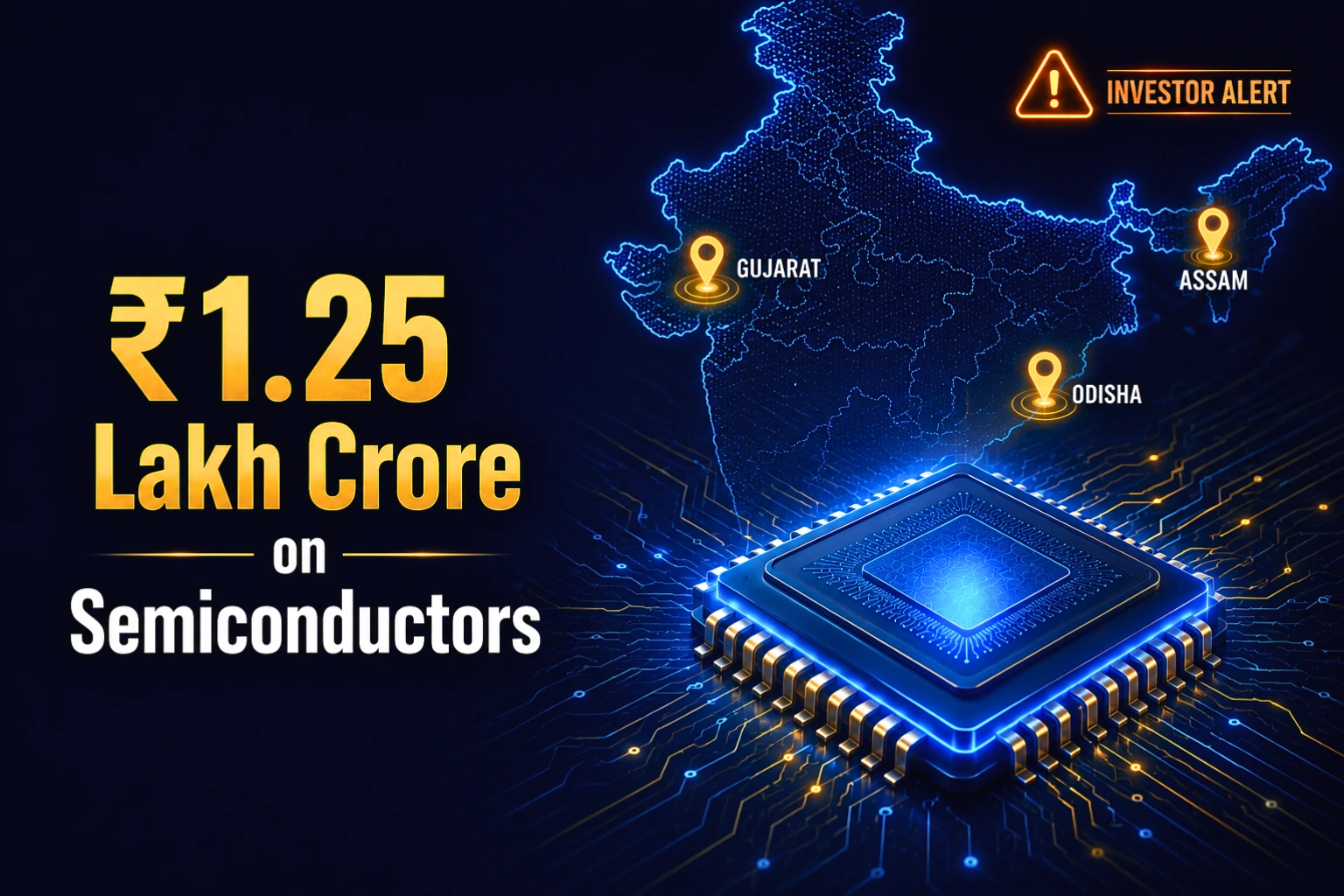
India Semiconductor Mission is delivering a practical solution to reduce chip imports and build self-reliance. With the approval of a ₹1.25 lakh crore push for ISM 2.0, India is creating a full domestic ecosystem covering design, manufacturing, equipment, materials, and supply chains.
This semiconductor investment will generate high-tech jobs, strengthen electronics and defense sectors, and help India capture a bigger share of the global chip industry. In short, it moves the country from heavy dependence on foreign chips to becoming a producer and innovator.
Imagine your phone, car, or hospital equipment running on smarter, more secure Indian-made chips. This isn't a distant dream — it's unfolding now. Let's explore the full story.
Why India Needed the India Semiconductor Mission
For decades, India excelled in software but imported nearly all semiconductors — the tiny chips powering modern life. Global shortages during COVID highlighted the risks: factory shutdowns, higher prices, and supply vulnerabilities. The India Semiconductor Mission (ISM), launched in 2021, addresses this by building a complete local industry.

Latest Official Status of ISM 2.0 (as of mid-2026)
ISM 2.0received major momentum in the Union Budget 2026-27. The Expenditure Finance Committee cleared a ₹1.25 lakh crore outlay, significantly higher than the initial ₹76,000 crore for ISM 1.0.
It focuses on equipment & materials production, full-stack Indian design IP, resilient supply chains, and R&D. A provision of ₹1,000 crore was made for FY 2026-27 initially, with broader ecosystem support.
As of December 2025 (latest detailed figures), 10 projects worth ₹1.60 lakh crore were approved across six states under ISM 1.0, with more approvals in 2026, including Crystal Matrix and Suchi Semicon. Several facilities have seen groundbreaking and commercial production starts.
Key Terms Explained for Beginners: Fab, ATMP, OSAT, and Packaging
Understanding the India chip industry is easier with these basics:
- Fab (Fabrication Plant): The "factory" where silicon wafers are turned into actual semiconductor chips using advanced processes (front-end manufacturing). This is the most complex and capital-intensive part.
- ATMP (Assembly, Testing, Marking, and Packaging): Back-end processes where chips from the fab are packaged, tested, marked, and made ready for use. Often includes advanced integration.
- OSAT (Outsourced Semiconductor Assembly and Test): Similar to ATMP but provided as a service by specialized companies to multiple clients (outsourced model).
India is building strength across these stages, starting strongly with ATMP/OSAT while progressing toward full fabs.
Complete List of Major Approved Projects
Here is an updated overview of key projects under India Semiconductor Mission:
- Tata Electronics projects in Gujarat and Assam (major fab and packaging investments).
- Micron Technology ATMP facility in Sanand, Gujarat (commercial production started).
- Kaynes Semicon OSAT in Sanand, Gujarat (commercial production commenced).
- CG Power and partners in Gujarat.
- Crystal Matrix Limited (CML): Integrated compound semiconductor fab and ATMP in Dholera, Gujarat.
- Suchi Semicon: OSAT facility in Surat, Gujarat.
- Other units in Odisha, Uttar Pradesh (HCL-Foxconn JV), and more.
These span fabs, compound semiconductors, and packaging, with cumulative investments exceeding initial targets.

India vs Taiwan, US, and Korea: A Realistic Comparison
Taiwan dominates advanced chip manufacturing (over 60% global share, nearly 90% for cutting-edge). South Korea (Samsung) and the US (Intel, design leaders) lead in technology and scale. India is an emerging player focusing on design strengths, back-end (ATMP/OSAT), and select manufacturing.
Strengths for India: Lower costs, huge talent pool in design, government incentives, and democratic stability for trusted partnerships. Challenges include catching up in advanced nodes (Taiwan/US are at 2-3nm; India progressing). By 2029-2030, India targets meeting 70-75% of domestic needs, aiming for top-tier status by 2035.
This positions India as a reliable alternative in global supply chain diversification.
Challenges: Water, Power, Talent, and Technology Transfer
Balance requires acknowledging hurdles:
- Water and Power: Fabs need ultra-pure water and reliable, cheap electricity — addressed via state incentives and infrastructure.
- Talent: Need for specialized engineers; DLI scheme and training programs are scaling up (67,000+ students using design tools).
- Technology Transfer: Partnerships (e.g., with US, Japan, Taiwan firms) help, but advanced IP remains guarded. Indigenous R&D under ISM 2.0 is key.
Government and industry are actively tackling these for sustainable growth.
Timeline: 2021 to 2030 and Beyond
- 2021: ISM launched with ₹76,000 crore framework.
- 2022-2024: Schemes modified; early MoUs and projects approved.
- 2025: Multiple FSAs signed; market growing to ~USD 45-60 Bn.
- 2026: ISM 2.0 push; new approvals, production starts (Micron, Kaynes).
- By 2029-2030: Significant domestic production capacity; market potentially USD 100-180 Bn.
- 2035: Aim to be among global leaders with full value chain.
Government Schemes Under ISM
- Semiconductor Fabs Scheme: Up to 50% fiscal support.
- Compound Semiconductor / ATMP / OSAT: 50% capex support.
- Display Fabs: Similar incentives.
- Design Linked Incentive (DLI): Support for chip design, IP creation (24+ startups already benefited, attracting VC funding).
Businesses can access incentives, infrastructure support, and investor portals.
Enhanced Data Table: Progress Snapshot
|
Aspect |
Status (as of Dec 2025 / 2026) |
Targets / Projections |
|
Government Outlay (ISM) |
₹76,000 Cr (1.0) + ₹1.25 lakh Cr (2.0) |
Full ecosystem build |
|
Approved Projects |
10+ projects, ₹1.60 lakh Cr+ |
More in fabs, ATMP, design |
|
Market Size (India) |
~USD 45-60 Bn (2025) |
USD 100-180 Bn by 2030-34 |
|
Employment (Projected) |
Thousands direct + indirect |
Lakhs in high-skill roles |
|
Design Achievements |
24+ startups, thousands using EDA tools |
50+ fabless companies |
Opportunities in Semiconductor Stocks India
The momentum benefits listed semiconductor stocks in design, electronics, and manufacturing (e.g., CG Power, Tata Elxsi). Research thoroughly, as this is a high-growth, volatile sector.

Conclusion
The India Semiconductor Mission and ISM 2.0 represent India's strategic bet on the future. With strong government backing, international partnerships, and private investment, the semiconductor investment is building lasting capabilities. Challenges remain, but progress is real and accelerating.
(Sources: ISM, PIB, ISM Scheme).

DISCLAIMER: This blog is NOT any buy or sell recommendation. No investment or trading advice is given. The content is only for educational purposes. Always discuss with your SEBI-registered financial advisor for investment-related decisions.