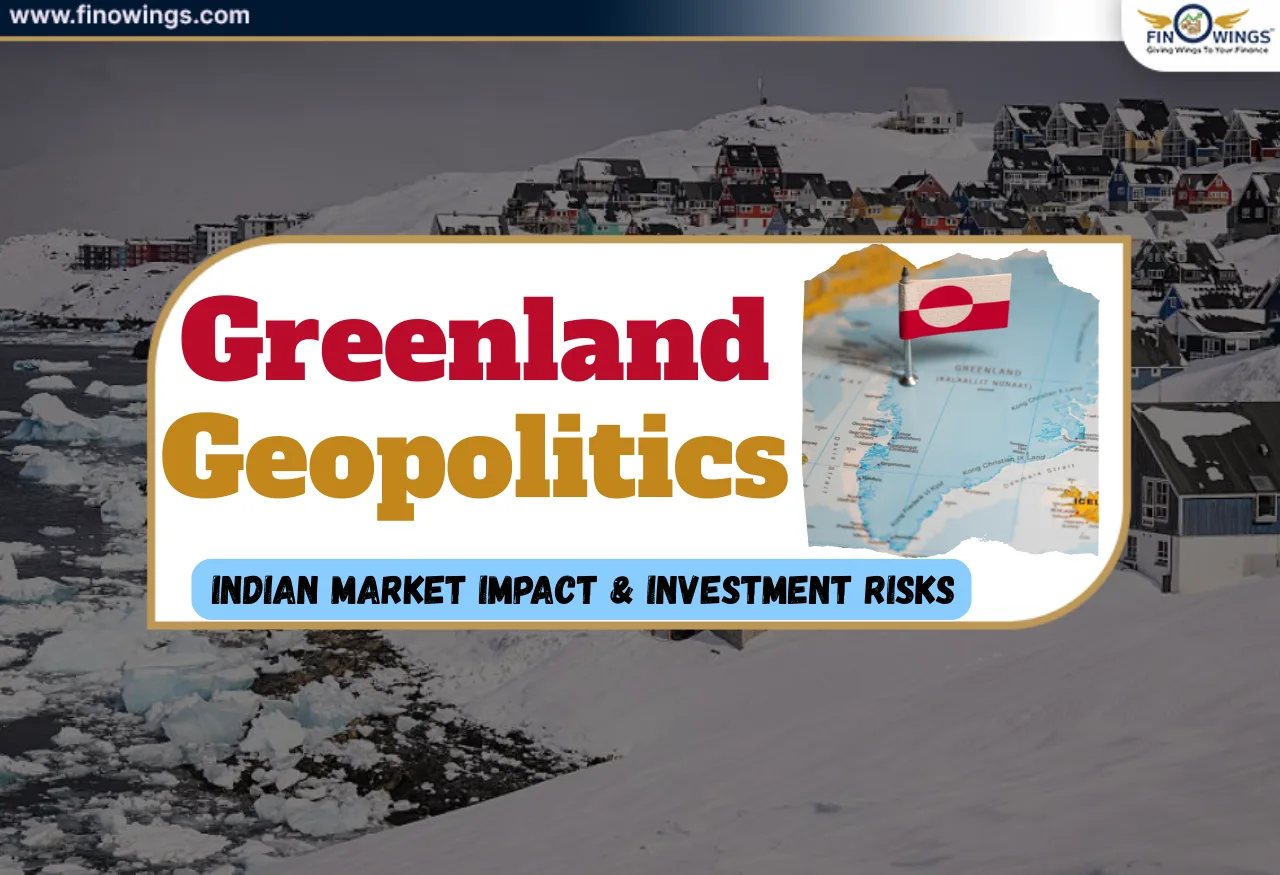
In the last couple of years, Greenland has transitioned from being a remote Arctic territory to becoming a significant player in global geopolitics. Formerly viewed only as a frozen, insulated piece of land, it has started to become the centre of contention between the United States, Denmark, China, and emerging geopolitical players like India.
From Donald Trump’s questionable interest in acquiring Greenland to increasing discussions around Narendra Modi and the Arctic interests of India, the geopolitics of Greenland is in the spotlight. This affects the global economy, commodities, supply-chain management, and Indian stakeholders.
This blog post addresses:
What was Trump Greenland global news.
What is the position of Modi Greenland in India’s Arctic Focus?
What does Greenland investment risk explain?
What does Arctic geopolitics mean for the economy?
What is the significance of the US, Denmark Greenland conflicts for India?
What is Trump Greenland?
In 2019, Donald Trump suggested that the US buy Greenland from Denmark, which is the controlling nation over the island as an autonomous territory.
Greenland Geopolitics: video breakdown detail
Why Trump Was Interested
Rare Earth Minerals: Large quantities of unexploited minerals enhance the island's value in the production of electric vehicles, semiconductors, and defence systems.
Strategic Military Location: The Thule air base, the US’s largest base in the Arctic, is in Greenland. The base is crucial to US operations in Arctic surveillance and missile defence.
Arctic Trade Routes: The Greenlandic Arctic is the location of new shipping lanes as a result of climate change. These lanes are important for trade between Europe, Asia, and North America.
Denmark’s complete dismissal of the US offer as “absurd” resulted in tensions for the US, Denmark, and Greenland. This emphasises the geopolitical significance of Greenland, as the US offered this to Denmark due to Greenland’s strategic value.
Key takeaway for investors: the value of Greenland has been increasing due to its natural resources and rare minerals caused by the new Arctic front.

Modi Greenland: India’s Quiet Arctic Strategy
India’s Arctic strategies have been the complete opposite of the US. India’s approach has been quiet, diplomatic, and long-term. India has been a member of the Arctic Council since 2013 as an observer and has continued to participate in climate change, Arctic research, and geopolitics.
Explain Why India is Concerned About Greenland
Mineral Security: India relies on other countries for imports of lithium, cobalt, and rare earths.
China Risk Hedging: China controls rare earth processing, and India is looking for other options.
Climate & Trade: The melting Arctic will affect the monsoons, global trade routes, and will impact the cost of energy.
Undoubtedly, India has not announced direct investments in Greenland; however, Modi Greenland talks demonstrate India’s intention of increasing relevance in the geopolitics of the Arctic.
Arctic Geopolitics Effect Markets: The Facts
The Arctic has started to transform from a frozen wasteland into a battleground for economies.
Affected Major Market Channels
1. Commodities
Rare Earths - Lithium, Nickel and Cobalt
Oil and Natural Gas - Any instability in Greenland will rock the prices and will affect Indian businesses reliant on imported raw materials.
2. Shipping & Logistics
Now, the Arctic routes have the potential to cut the shipping time from Asia to Europe by 30-40%. It can also threaten traditional routes like the Suez Canal.
This is necessary for Indian exporters, shipping companies, and logistics stocks.
3. Defence & Aerospace
-
Escalated militarisation in the Arctic.
-
Increased defence spending by allies and NATO.
-
It’s possible to observe an indirect benefit for Indian defence suppliers from global demand cycles.
4. US Denmark Greenland Tensions: Why They Matter Globally
From a legal perspective, Greenland is a part of Denmark, but it is also geopolitically heavily influenced by the US.
Key Issues
-
Denmark wants to defend Greenland’s self-governance.
-
The US seeks to gain strategic dominance.
-
Greenland wants to improve its economy without losing its self-governance.
The US Denmark Greenland tensions cause a lack of clarity about:
-
Mining licences.
-
External funding.
-
Rules of engagement regarding the environment.
In addition to business risk, this creates policy risk for investors.
5. Greenland Investment Risk: What Investors Must Understand
Although Greenland is thought to be a location with a lot of potential investment resources, it is also a place where investment is highly uncertain and highly risky.
Major Investment Risks
1. Political Risks
-
Unexpected changes in the regulations governing mining.
-
Influence from powerful countries.
2. Environmental and ESG Risk
-
Opposition from local people.
-
Delays of projects due to climate activism.
3. Infrastructure Risks
-
Severe weather.
-
Expensive operations.
-
Few ports and limited transportation.
4. Geopolitical Risks
-
Rivalry between the US and China.
-
Tensions between NATO and Russia, and how they impact policy in the Arctic.
For investors in India, the investment risks in Greenland emerge indirectly as:
-
The volatility of prices of commodities.
-
A drop in global equities.
-
Disruption in the supply chain.
6. Influence of the Indian Stock Market, Sector By Sector
1. Mining and Metals
-
Increased prices of rare earths result in higher costs for Indian manufacturers.
-
Potential for domestic recycling and exploration activities.
2. EVs and Renewable Energy
-
Battery costs may become unpredictable.
-
Indian manufacturers of EVs might experience unstable profit margins.
3. Aerospace and Defence
Indian defence exporters will benefit from higher global defence spending.
4. Shipping and Logistics
Innovative or disrupted routes will impact freight pricing
5. FMCG and Inflation
Inflation in the prices of commodities will increase costs, and margins will compress.
6. Indian Investors' Strategy
Investors should start thinking about strategic thinking instead of reacting to event-based thinking, as in the instance of Trump and Greenland.
Smart Investor Checklist
-
Invest in diversified funds, not single-commodity bets.
-
Monitor global commodity ETFs & indices.
-
Stay away from speculative foreign mining stocks until you do an in-depth analysis.
-
Pay attention to policy movements in the US, EU, and China.
-
Greenland geopolitics is a slow-burn theme, not something you trade in and out of.
Long-Term Outlook: Greenland as a Global Market Variable
In the next 10 years, we can expect Arctic geopolitics to affect the markets more regularly and predictably. Greenland could likely emerge as a critical minerals hub. India’s strategic involvement will likely increase, but probably in an indirect way. From the Indian perspective, Greenland is not just foreign investment - it’s also about geo-macro risk.

Conclusion: Why Greenland Matters for Your Portfolio
-
Greenland is no longer just an icy island - it is a strategic lever in global economics.
-
Trump Greenland underscored US strategic immediacy.
-
Modi Greenland captures India’s quiet yet serious long-term thinking.
-
US, Denmark, Greenland tensions add policy uncertainty.
-
Greenland investment risk is part of global commodity volatility.
-
Arctic geopolitics impacts markets, including India.
For Indian investors, the emphasis is not on fear, but geo-macro breadth and diversification. The world’s geopolitics is the best risk mitigator and value creator for portfolios today.

DISCLAIMER: This blog is NOT any buy or sell recommendation. No investment or trading advice is given. The content is purely for educational and information purposes only. Always consult your eligible financial advisor for investment-related decisions.