Money laundering is the process of disguising money earned from crime - such as drug trafficking, corruption or fraud - so that it appears to come from a legitimate source. It typically happens in three stages: placement (putting dirty cash into the financial system), layering (moving it through complex transactions to hide its origin) and integration (bringing it back as apparently clean money). In India, money laundering is a criminal offence under the Prevention of Money Laundering Act, 2002 (PMLA), enforced by the Enforcement Directorate (ED), with imprisonment of 3-7 years (up to 10 years in drug-related cases). Globally, the UNODC estimates USD 800 billion to 2 trillion is laundered every year - about 2-5% of world GDP.
Money laundering is the illegal process of converting 'proceeds of crime' (dirty money) into assets or funds that appear legitimate (clean money), thereby concealing their criminal origin. Under Section 3 of India's PMLA, anyone who directly or indirectly indulges in, knowingly assists, or is actually involved in any process connected with proceeds of crime - including its concealment, possession, acquisition or use - and projects it as untainted property, commits the offence of money laundering.
Introduction
Every large financial crime leaves behind a trail of 'dirty money' - and criminals cannot spend that money freely until they hide where it came from. That hiding process is money laundering. From the hawala networks of the 1990s to shell companies, benami properties and now cryptocurrency wallets, laundering methods keep evolving, but the goal never changes: make illegal money look legal.
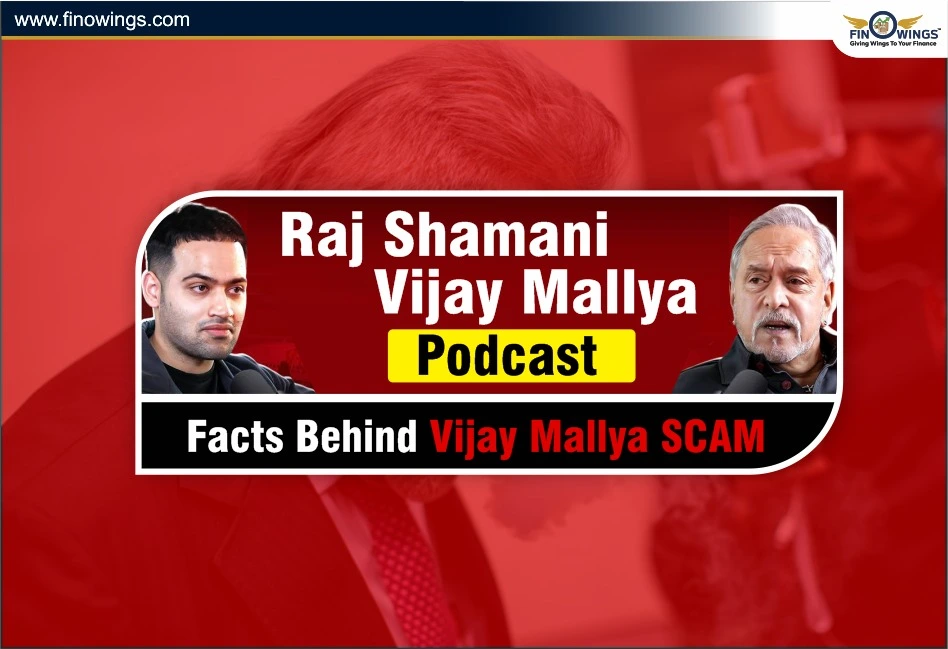
For Indian readers, this is not an abstract concept. Cases like the Nirav Modi -PNB fraud, the Vijay Mallya loan default and numerous chit-fund scams all involved laundering of proceeds of crime, and the Enforcement Directorate today registers thousands of cases under the PMLA. This guide explains what money laundering is, how it works stage by stage, the methods criminals use, how digital laundering has changed the game, and the laws that fight it in India and globally.
How Money Laundering Works: The 3 Stages
|
Stage |
What Happens |
Typical Example |
|
1. Placement |
Illegal cash is introduced into the financial system for the first time |
Depositing drug cash in small amounts into bank accounts; mixing it with a cash business's daily takings |
|
2. Layering |
Money is moved through multiple transactions, accounts, companies and countries to break the audit trail |
Wire transfers across borders, buying and selling art, luxury cars, gold or property through shell firms |
|
3. Integration |
The now-distanced money re-enters the economy looking legitimate |
Fake invoices to a real business, 'salary' from a front company, sale proceeds of an over-valued property |
At the placement stage, launderers avoid attention by depositing small amounts over time instead of one large sum. During layering, funds are often routed through jurisdictions with weak anti-money laundering enforcement. By integration, the money has 'lost' its connection to crime - a criminal may set up a fake charity that pays them a lavish board fee, or run a genuine business that issues bogus invoices. A real business used this way is called a front: it blends illegal cash with legitimate revenue into one set of reported earnings, making the two nearly impossible to separate.
A Simple Example
A couple earning large sums from drug trafficking needs to hide their income source. They buy a restaurant. Every day, they inflate the recorded sales - adding drug cash to genuine customer billing. On paper, the restaurant looks unusually profitable, but the income is 'explained'. Over time, the drug money merges into legitimate business income, taxes are even paid on it, and the couple can spend freely. The dirty money has been washed clean - which is exactly why cash-heavy businesses like restaurants, bars, car washes and salons are classic laundering fronts.

Common Methods of Money Laundering
• Smurfing: Splitting large sums into many small deposits across multiple accounts and banks to stay below reporting thresholds. Also called structuring.
• Shell companies: Companies that exist only on paper, with no real business, used to route funds and hide beneficial ownership.
• Cash mules & couriers: People who physically carry cash across borders to deposit it in jurisdictions with lax regulation.
• High-value assets: Buying gold, gemstones, artwork, luxury cars, boats and real estate - assets that store value and can be resold, often across borders. In India, benami property has historically been a major channel.
• Casinos: Buying chips with dirty cash, gambling minimally, and cashing out with a casino receipt as 'winnings'.
• Trade-based laundering: Over-invoicing or under-invoicing imports and exports to move value across borders disguised as trade payments - one of the hardest forms to detect.
• Hawala: Informal value-transfer networks that move money across borders without any physical or formal banking movement of funds.
Note: crimes like counterfeiting, drug trafficking or corruption are predicate offences - they generate the dirty money. Laundering is the separate, subsequent crime of disguising those proceeds.
Digital & Crypto Money Laundering
The internet has given an old crime a new face. Peer-to-peer transfers, anonymising software, proxy servers, online gaming platforms, gambling websites and online marketplaces all allow value to move with minimal identity trails. Illegally obtained funds are converted into digital value and cycled back as usable 'clean' funds.
Cryptocurrencies added another layer: while most blockchains are actually traceable (every transaction is recorded on a public ledger), pseudonymous wallets, mixers and privacy coins have been exploited for extortion, darknet drug markets and ransomware.
India Update: Crypto is Now Under PMLA (March 2023)
Via Notification dated 7 March 2023, the Ministry of Finance brought all transactions involving Virtual Digital Assets (VDAs) - as defined under Section 2(47A) of the Income Tax Act - within the ambit of the PMLA.
Crypto exchanges and VDA service providers are now 'reporting entities': they must register with FIU-IND, conduct KYC of users and beneficial owners, monitor transactions, maintain records and file Suspicious Transaction Reports.
FIU-IND has also acted against offshore exchanges operating in India without registration, requiring global platforms to register and comply before serving Indian users.
Money Laundering Laws in India
The PMLA Framework
| Component |
Details |
|
Primary law |
Prevention of Money Laundering Act, 2002 (PMLA) - in force since 1 July 2005; amended in 2005, 2009, 2012, 2019 and expanded via notifications in 2023 |
|
Enforcement agency |
Enforcement Directorate (ED) - investigates, attaches proceeds of crime, arrests and prosecutes before Special PMLA Courts |
|
Intelligence agency |
Financial Intelligence Unit-India (FIU-IND, est. 2004) - receives, analyses and disseminates suspicious transaction information |
|
Punishment (Sec. 4) |
Rigorous imprisonment 3 to 7 years + fine; up to 10 years where proceeds relate to NDPS (drug) offences |
|
Property action |
ED can provisionally attach properties believed to be proceeds of crime; confiscation follows adjudication |
|
Reporting entities |
Banks, financial institutions, intermediaries, casinos, real-estate agents, dealers in precious metals, VDA/crypto service providers, and (since May 2023) CAs/CSs/CWAs performing specified financial transactions for clients |
|
Related laws |
Fugitive Economic Offenders Act, 2018 (offenders fleeing India with Rs 100 crore+ cases); FEMA; Benami Transactions (Prohibition) Act |
Two legal developments are worth knowing. First, in Vijay Madanlal Choudhary v. Union of India (2022), the Supreme Court upheld the ED's core powers of arrest, attachment, search and seizure under the PMLA, while some aspects remain under review. Second, 2023 amendments tightened the net further - adding definitions of Politically Exposed Persons (PEPs) and non-profit organisations, and extending obligations to professionals who manage client money or companies.
India's Global Standing: FATF Rating 2024
The Financial Action Task Force (FATF) - an inter-governmental body established by the G7 in 1989, whose mandate expanded after 2001 to cover terrorist financing - is the global standard-setter for anti-money laundering. India became a FATF member in 2010. In its Mutual Evaluation Report adopted in June 2024 (published September 2024), the FATF placed India in the 'regular follow-up' category - the highest rating tier, shared by only a handful of G20 countries such as the UK, France and Italy. The report recognised India's high technical compliance while recommending faster money laundering trials and better monitoring of PEPs. India's next progress report is due in 2027.
Key Global & US Laws
• US Bank Secrecy Act: Enacted 1970 - requires financial institutions to report cash transactions above USD 10,000 and file Suspicious Activity Reports with FinCEN.
• Money Laundering Control Act, 1986: The first US law to make money laundering itself a federal crime.
• USA PATRIOT Act, 2001: Passed after the 9/11 attacks - expanded anti-money laundering tools to terrorism financing investigations.
• UNODC: Estimates global laundering at USD 800 billion to 2 trillion per year - roughly 2-5% of world GDP - though the clandestine nature of the crime makes precise measurement impossible.
How Money Laundering Affects Business & Society
For banks and financial institutions, reputation for integrity is among their most valuable assets. If criminal funds can pass through an institution easily - whether because staff were bought off or controls simply failed - the institution risks becoming part of the criminal chain itself, inviting regulatory penalties, loss of correspondent banking relationships and customer distrust. At a macroeconomic level, unchecked laundering causes unexplained shifts in money demand, prudential risks to bank soundness, contamination of legitimate transactions, and volatility in capital flows and exchange rates.
The social costs run deeper. Successful laundering is what makes crime pay: it lets organised crime buy into banks, capture sectors of the economy, corrupt officials and weaken democratic institutions and the rule of law. That is why AML enforcement is treated not merely as financial regulation but as a matter of national security - a point India's own enforcement agencies and courts have repeatedly emphasised.
How Money Laundering is Prevented
• KYC norms: Banks, brokers, insurers and crypto exchanges must verify customer identity and beneficial ownership before onboarding.
• Transaction reporting: Reporting entities file Suspicious Transaction Reports (STRs) and Cash Transaction Reports (CTRs) with FIU-IND, which shares intelligence with the ED, CBI, SEBI, RBI and other agencies.
• Enhanced due diligence: Higher scrutiny for high-risk customers such as PEPs, NPOs and non-face-to-face relationships.
• Regulatory supervision: RBI, SEBI and IRDAI issue sector-specific AML guidelines and can penalise non-compliant institutions.
• International cooperation: FATF standards, mutual evaluations, and cross-border intelligence sharing between financial intelligence units.

Conclusion
Money laundering is the life-support system of organised crime - and cutting it off is one of the most effective ways to fight crime itself. India has built one of the more comprehensive frameworks among large economies: the PMLA's expanding scope (now covering crypto and professional enablers), an assertive Enforcement Directorate, FIU-IND's intelligence network, and international validation through the FATF's top 'regular follow-up' rating in 2024. Challenges remain - slow trials, low conviction rates and ever-evolving digital techniques - but the direction is clear: it is getting steadily harder to make dirty money look clean in India.

DISCLAIMER: This blog is NOT any buy or sell recommendation. No investment or trading advice is given. The content is purely for educational and information purposes only. Always consult your eligible financial advisor for investment-related decisions.