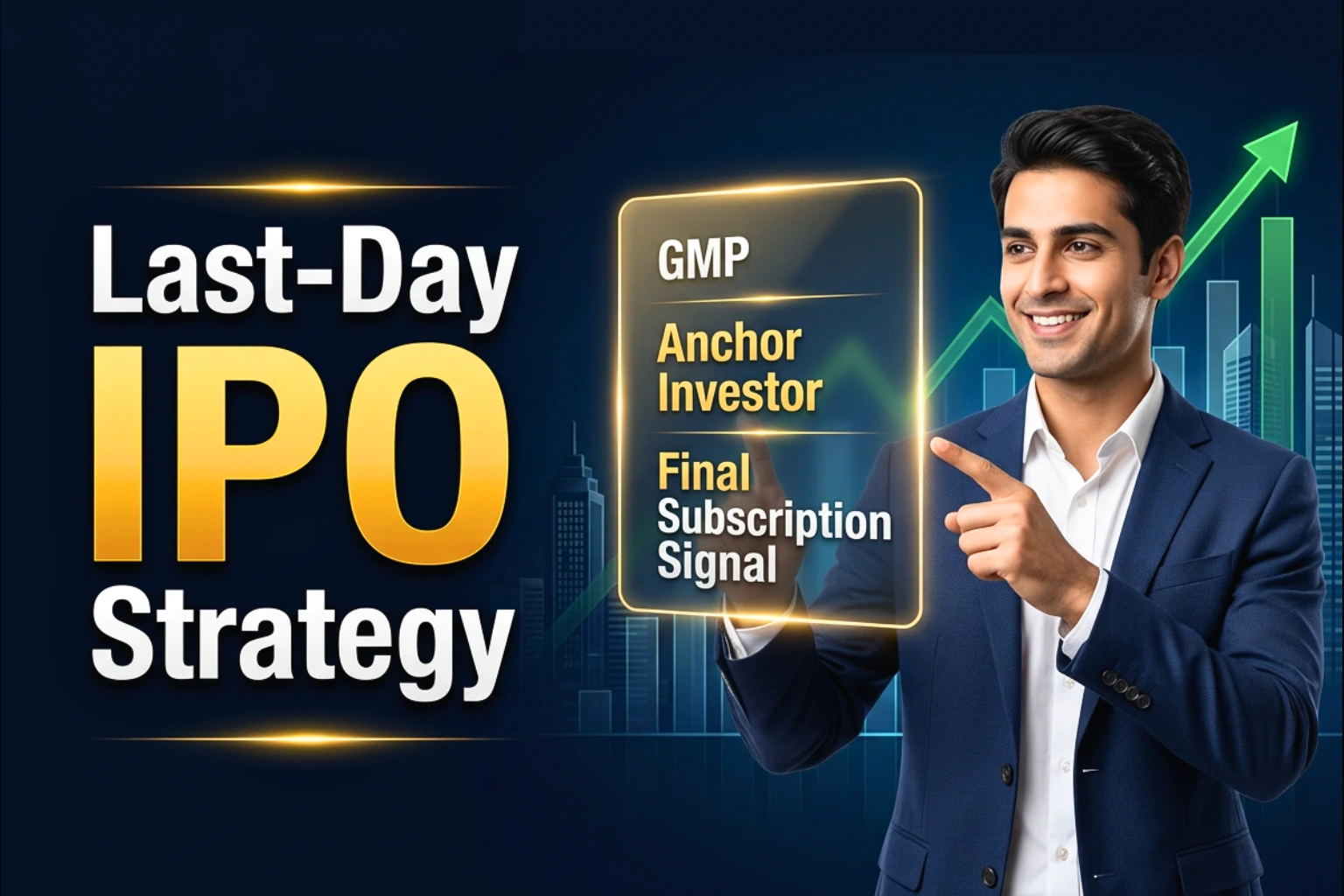
On the final day of subscription, review the latest IPO GMP, anchor investors' participation, full IPO subscription numbers, and key details from the RHP, like use of proceeds, financial ratios, promoter background, and risks.
Combine these with basic valuation checks before applying. This balanced approach boosts your IPO analysis, improves IPO allotment odds in promising issues, and supports smarter IPO investment decisions while reducing blind hype risks.
Picture this: It’s 4 PM on the last day of a buzzing IPO. Rahul, a young IT professional, stares at his screen. GMP is positive, but something feels off. Last time, he jumped in early on hype and regretted it when the stock listed flat.
This time, he pauses, digs into the Red Herring Prospectus (RHP), checks anchors and subscription trends, and makes a calculated call. That small change turned his IPO journey around.
Many beginners lose money chasing quick listing gains without deeper IPO analysis. This guide shares a practical, storytelling-driven last-day IPO strategy using real examples, simple explanations, data tables, and actionable steps.

Why the Last Day Matters: Rahul’s Turning Point
Rahul’s first IPO was exciting but costly. High buzz led him to apply without full checks. The stock opened modestly but dropped soon after. His colleague Priya, who profited consistently, explained her method: “I wait for the last day.
I look at GMP for sentiment, anchors for institutional trust, subscription for demand, and then dive into the RHP for the real story – fresh issue vs OFS, where the money goes, promoter track record, financial health, and risks.”
Rahul started following this. In one recent case, it helped him avoid a weak issue and catch a stronger performer. Real-world signals beat hype every time.
IPO GMP on the Last Day
IPO GMP (Grey Market Premium) is the unofficial premium at which IPO shares trade before listing. If the issue price is ₹200 and GMP is ₹40, it suggests possible listing around ₹240.
On the last day, track GMP movement. Rising positive GMP with strong fundamentals is encouraging; fading or negative GMP signals caution. Remember, GMP is unregulated and can be volatile.
Real Example: Knack Packaging IPO (July 2026)
- Issue price: ₹161-170 range.
- Final day GMP: Around ₹15-17 (signaling ~10% potential gain).
- The issue saw massive subscription (83x overall). It listed positively, rewarding patient investors who checked all signals.
GMP alone isn’t enough – pair it with deeper checks.
Anchor Investors: Institutional Validation
Anchor investors are big institutions (mutual funds, FIIs) that subscribe one day before the public offering opens. Their commitment signals confidence.
Strong anchor response, especially from reputed names, often leads to better stability. Check the portion they take and the quality.
In high-anchor IPOs, listing performance tends to be steadier. Always verify in the RHP or exchange updates.
IPO Subscription Signals
IPO subscription shows how many times the issue is oversubscribed. Final numbers on the last day are key.
Healthy demand across QIB (institutional, including anchors), NII, and Retail categories is ideal. Extreme oversubscription reduces IPO allotment chances via lottery but often boosts listing pop.
Real Subscription & Performance Table (Recent 2026 IPOs)
|
IPO Name |
Overall Subscription (x) |
QIB Subscription |
Listing Gain |
Post-Listing Trend (short-term) |
Source Notes |
|
Knack Packaging |
83x |
Very High |
Positive (~10-15% est.) |
Stable |
Economic Times, July 2026 |
|
Avience Biomedicals |
Strong |
High |
+101% |
Strong performer |
IPO performance trackers |
|
Aastha Spintex |
4.64x |
Moderate |
-4.41% |
Discount on listing |
Market reports |
Data highlights why balanced signals matter. A high subscription with weak GMP or anchors can disappoint.

Deeper IPO Analysis: Beyond Surface
On the last day, while monitoring GMP and subscription, open the RHP (available on SEBI or company sites). Here’s what to check simply:
1. Fresh Issue vs OFS
- Fresh Issue: The company issues new shares; money goes to the company for growth, debt repayment, or expansion. Positive for future potential.
- OFS (Offer for Sale): Existing promoters/investors sell shares; money goes to them, not the company. High OFS may signal partial exit.
Prefer issues with a good, fresh issue component if growth looks solid.
2. Use of Proceeds
Read where the money will go. Clear plans for capacity expansion, working capital, or R&D are good. Vague “general corporate purposes” need caution.
3. Promoter Background & Track Record
Check promoters’ experience, past ventures, and any controversies. Strong, ethical promoters with skin in the game (retaining a stake) build trust.
4. Financial Ratios & Valuation Checks
- P/E Ratio: Compare with industry peers. Too high may mean overvalued.
- ROE/ROCE: A higher value shows efficient profit generation.
- Debt Levels: Lower debt-to-equity is safer for most sectors.
- Revenue & Profit Growth: Consistent growth over 3-5 years is ideal.
Look for a reasonable valuation relative to peers. High growth justifies a premium; stagnant businesses don’t.
5. Risk Factors
RHP lists risks honestly – competition, regulatory issues, raw material costs, etc. Weigh them against opportunities. Every business has risks; understand if they are manageable.
Listing Day Exit Strategy & Allotment Tips
IPO allotment usually happens via lottery for retail (min lot size). Check status on registrar sites a few days post-closure.
On listing day:
- If strong pop (above 20-30% with good volume), consider partial booking to secure profits.
- Hold if fundamentals are strong and you believe in the long-term story.
- Set a stop-loss mentally to limit downside.
Markets can be volatile – don’t get greedy.
Real Case Insight: In Avience Biomedicals (listed June 2026), strong signals and fundamentals led to over 100% listing gain, rewarding those who analyzed beyond GMP.
Your Last-Day IPO Checklist (Actionable)
- Morning: Review GMP trend and anchor details.
- Afternoon: Analyze final subscription and RHP sections (proceeds, ratios, promoters, risks).
- Valuation: Is the price fair vs. peers and growth?
- Decision: Strong combined signals + reasonable valuation? Apply (early in the day).
- Post-apply: Track allotment and plan listing exit.
This last-day IPO strategy helped Rahul avoid traps and spot opportunities.
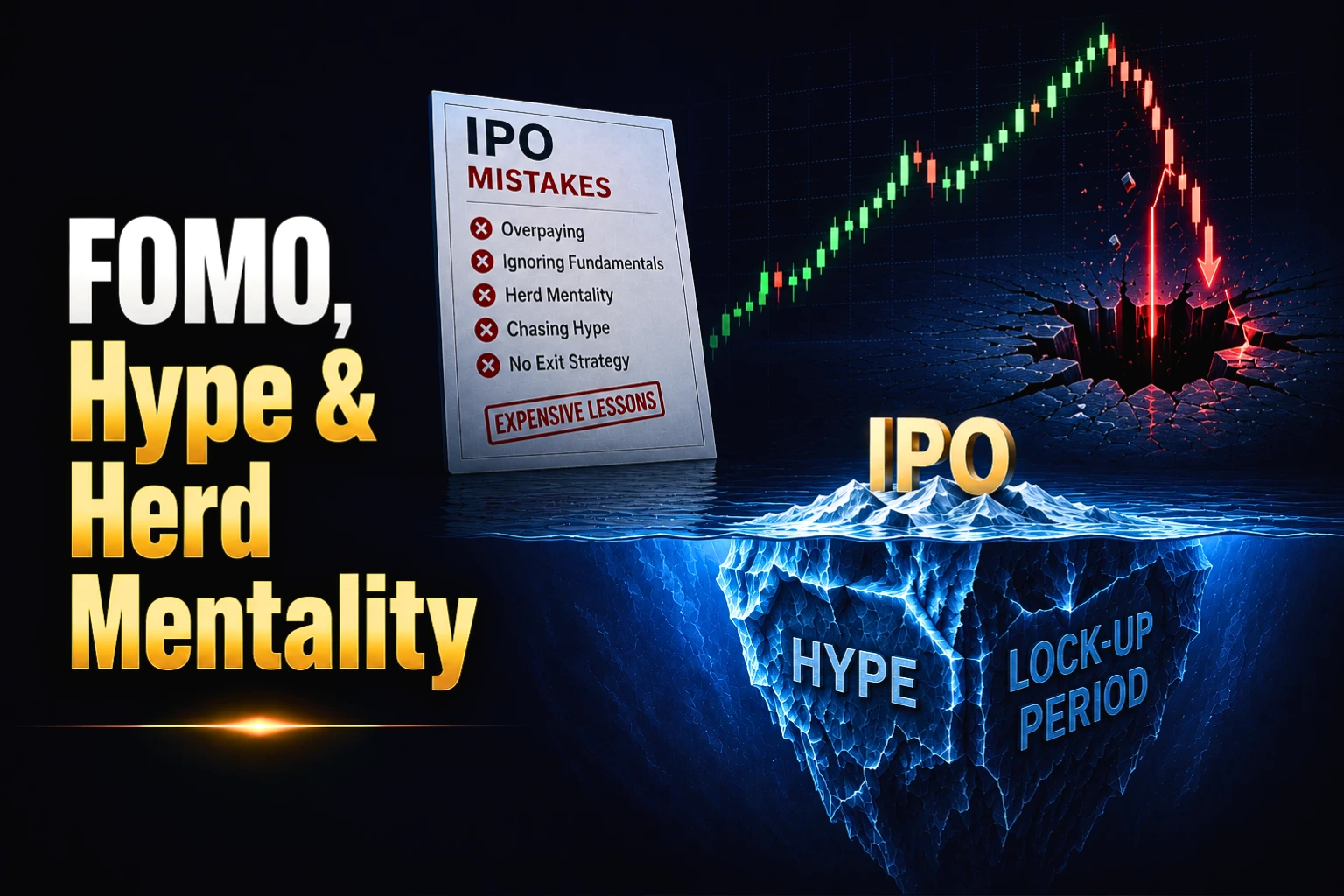
Common Pitfalls to Avoid
- Relying only on social media hype or GMP.
- Ignoring high OFS with promoters exiting heavily.
- Overlooking debt or weak profitability.
- Investing more than 5-10% of your portfolio in one IPO.

Conclusion
Mastering this last-day IPO strategy turns IPOs into an educational, potentially rewarding part of your journey. Always verify the latest data, read full documents, and consider your risk tolerance. Consult a financial advisor if needed.
(Sources: Economic Times, ICICI Direct, Zerodha, Indmoney, PMC)

DISCLAIMER: This blog is NOT any buy or sell recommendation. No investment or trading advice is given. The content is only for educational purposes. Always discuss with your SEBI-registered financial advisor for investment-related decisions.