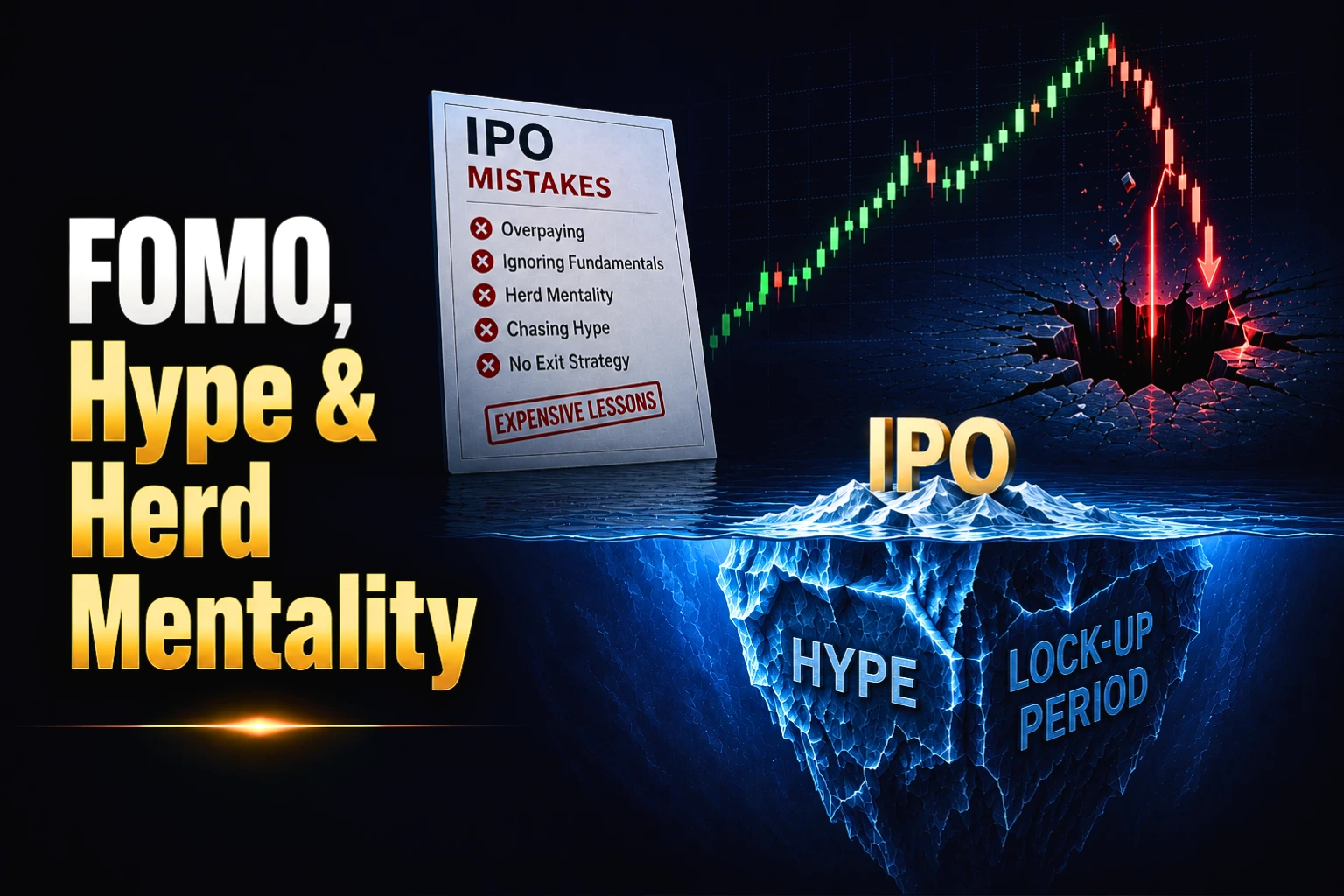
The smart way to approach IPOs is simple: ignore the hype and FOMO in IPO investing. Instead, focus on the company's real business fundamentals, financial health, valuation, and your own long-term goals.
Do thorough research using the DRHP, set clear rules, and only invest money you can afford to lose. This rational strategy helps you avoid emotional investing traps and build wealth steadily.
Imagine this: It's a busy evening. Your phone buzzes nonstop with messages from friends and family. "The latest tech IPO is the next big thing!" Social media floods with success stories, experts predicting massive gains, and everyone applying. Your heart races with fear of missing out.
You apply without deep checks, and for a few days, the stock rises—you feel like a genius. But weeks or months later, prices correct, and excitement turns to regret. This is the classic story of fomo IPO investing driven by herd mentality and IPO hype.
In this beginner-friendly guide, we'll use simple words to explore these mistakes, share real stories with numbers, provide practical tools like checklists, and teach you how to read key documents. By the end, you'll invest smarter.

What is FOMO IPO Investing and Why Does It Hurt Beginners?
FOMO (fear of missing out) pushes people into retail chasing IPOs without analysis. Emotional investing and crowd psychology amplify it—everyone buys, so it must be good. But behavioral finance shows this leads to buying high and potential losses.
Real Stories with Numbers: Hype vs. Reality
Take Zomato (2021 IPO, offer price ₹76). It listed at around ₹115-130 (listing gains ~50-70% for allottees). But by late 2022-early 2023, it corrected significantly before recovering on business improvements. Many who chased post-listing faced volatility.
Paytm (2021, offer ₹2,150) raised ~₹18,300 crore. It listed with modest gains but fell over 60-70% within a year for many holders due to profitability concerns. From highs near ₹1,950+ post-list, it dropped sharply.
Recent data (FY 2025-26): 108 mainboard IPOs raised ~₹1.76 trillion. Average listing premium was around 35-59% oversubscription context, but long-term performance varies widely. Many show initial pops followed by corrections.
These examples highlight overconfidence and excessive risk-taking.
IPO Performance Data Table (Updated Insights)
|
Metric (Recent Periods) |
Listing Day Avg Gain |
1-Year Performance Trend |
Notes (2025-26 Data) |
|
Mainboard IPOs |
~8-35% premium |
Mixed; many underperform the market |
108 IPOs, ₹1.76 Tn raised |
|
SME IPOs (2026) |
Varies |
~64% listed with gains |
81 listed, funds ~₹3,843 Cr |
|
Long-term (3+ years general) |
- |
60-70% underperform benchmarks |
Top 10% outperform big |
(Data from NSE/BSE trends and analyses. Always check the latest on official sites).
IPO Valuation Basics (Simple Explanation)
Valuation shows what the company is "worth" per share. Companies and bankers use methods like:
- P/E Ratio (Price to Earnings): Share price ÷ Earnings per share. High P/E means paying more for each rupee of profit—common in growth companies but risky if no profits.
- EV/EBITDA: Enterprise Value ÷ Earnings before interest, taxes, etc. Good for comparing companies with debt. Lower can mean better value.
- Comparable Companies: Compare to similar listed firms.
Example: If a peer trades at 25x P/E and your IPO projects ₹10 EPS, an offer price around ₹250 might seem fair—but check growth and risks. Overvalued IPOs (e.g., high multiples without profits) often correct.
Difference Between Listing Gains and Long-Term Investing
Listing gains are short-term pops on debut day (e.g., 20-50% for lucky allottees). Many flip for quick profit.
Long-term means holding 3-5+ years for business growth. Most IPOs underperform the market long-term for retail buyers entering late. Focus on the latter for real wealth.
How to Read DRHP in Simple Language
DRHP (Draft Red Herring Prospectus) is the company's detailed report to SEBI (~300 pages). Don't read every word—focus on key parts:
- Company Overview: What they do, history, products.
- Risk Factors: Biggest section—read first. Lists problems like competition, losses, and legal issues.
- Financials: Last 3-5 years' profit/loss, balance sheet, cash flow. Look for growing sales and profits (or path to it).
- Objects of the Issue: How they'll use raised money (e.g., expansion vs. paying old investors—OFS is a red flag if too high).
- Management: Experience of promoters.
Tip: Skim summaries, tables, and notes. Compare numbers year-over-year. Use simple tools like Excel for ratios.
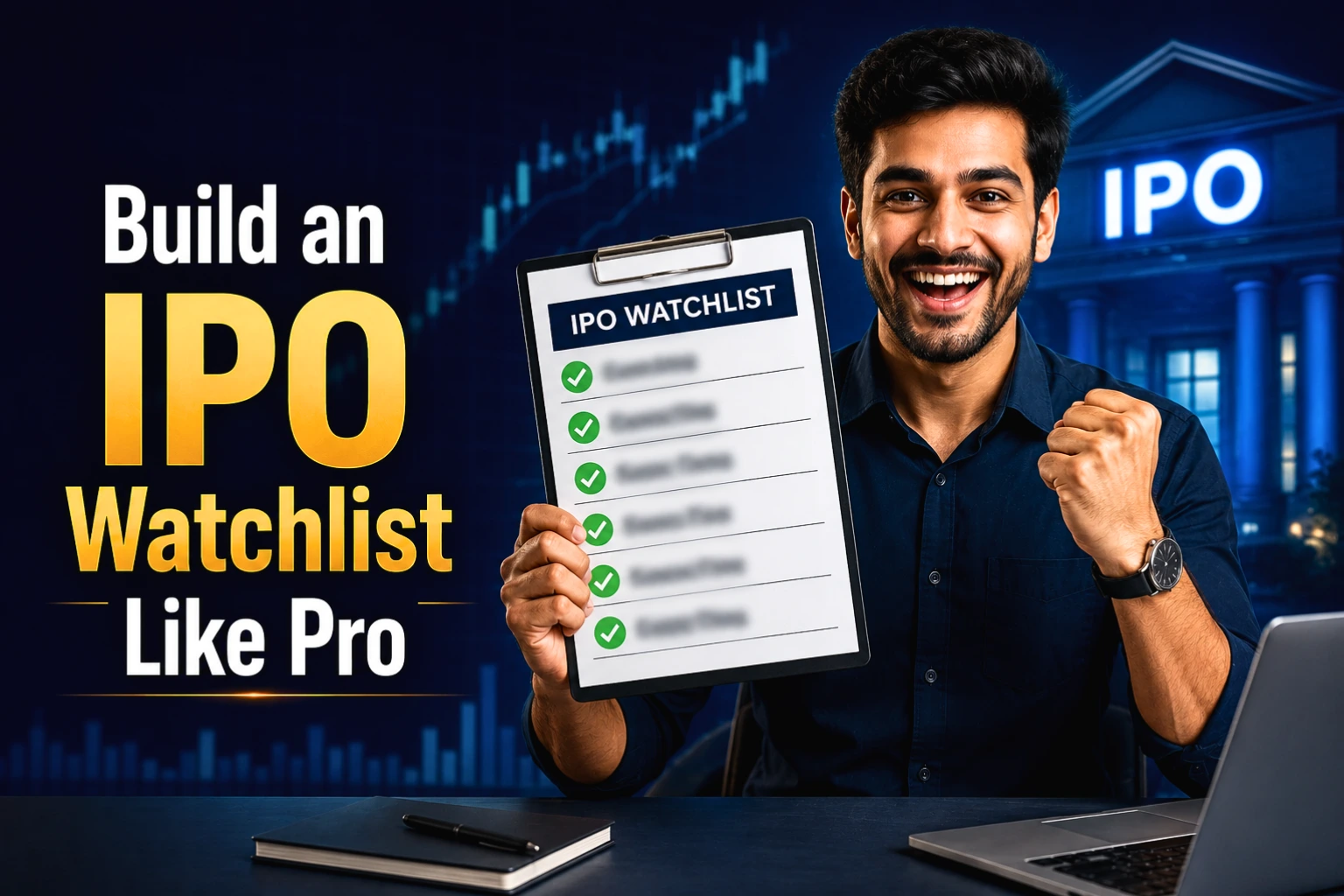
Proper IPO Checklist (Print and Use!)
- Business model clear and growing?
- Revenues and profits trending up? (Check numbers)
- Reasonable valuation (compare P/E, EV/EBITDA to peers)?
- Risks manageable for you?
- Promoters selling too much (high OFS)?
- Use of proceeds for growth (not just debt repayment)?
- Strong industry position?
- Your portfolio fit and risk level?
Score 7+/10 before applying.
Red Flags Before Applying for an IPO
- Consistent losses with no clear profitability path.
- High OFS (promoters/investors cashing out heavily).
- Unclear or vague use of funds.
- Aggressive broker hype or "guaranteed" gains.
- Very high valuation vs. peers without strong justification.
- Many related-party transactions or governance issues.
- Poor oversubscription from institutions (QIBs).
Example: If a company has ₹100 Cr revenue but a ₹500 Cr valuation with losses, think twice.
How to Avoid Bias and Build a Rational Strategy
Pause during hype. Use bias control: Journal your reasons. Diversify. Wait post-listing if needed. Educate on behavioral finance, anchoring bias, IPO, and price-bias investing. Combine with mutual funds for balance.
Step-by-Step Evaluation:
- Read DRHP summary and risks.
- Analyze financial numbers.
- Check valuation.
- Review checklist.
- Decide allocation (small % of capital).

Final Thoughts
Avoiding fomo IPO investing, herd behavior investing, and emotional IPO decisions is about discipline. Use the checklist, understand the DRHP and valuation, watch red flags, and focus on the long term. Real updated data from NSE/BSE shows opportunities exist but require care.
(Sources: NSE India, Trendlyne, HDFC Sky, JM Financial Services)