Investing is different today than it was before. Previously, investments would start with a SIP (Systematic Investment Plan), and one would have to conduct research or consult with a financial advising professional. With the advancements in technology, automation, and the introduction of Artificial Intelligence into the investment world, the industry has adopted a different approach to investments, now referred to as AI SIP.
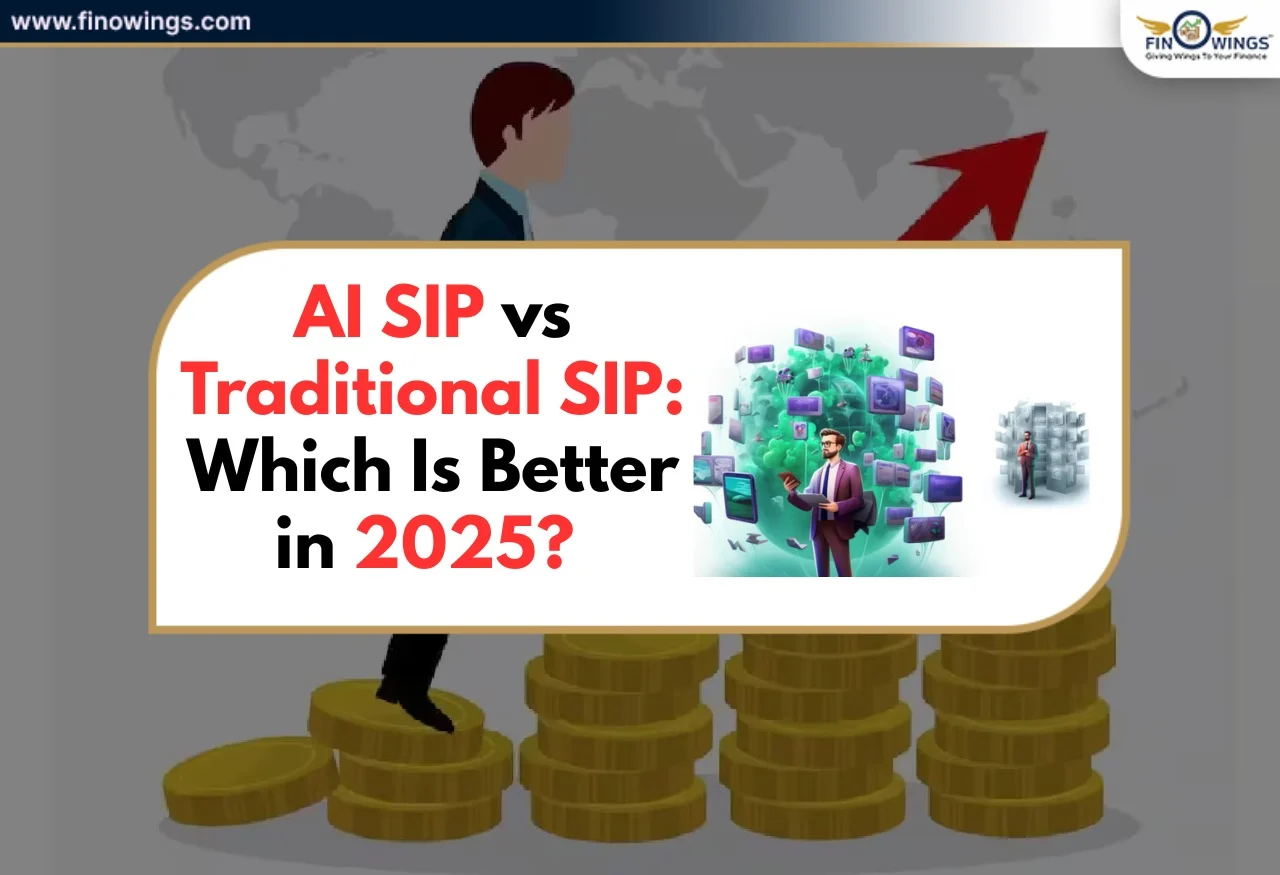
Investors are now asking, AI SIP or Traditional SIP, which will be better in 2026?
Investors planning long-term wealth creation through index funds can also explore SIP planning strategies and estimate future returns using a SIP Calculator before investing in NFOs or mutual funds.
This article will explore the features of each type of investment and help identify the pros, cons, risks, and suitability of each to better strategise for your SIP Investment 2026.
What is True of a Traditional SIP?
Cohesion and unity are the goals for every investment. A classical SIP is a monthly investment that goes into a mutual fund for a specified period, getting diversified as it goes in. First, you have to choose one of the three options:
- A specified amount to invest.
- A calendar day to invest.
- A duration to invest.
Features of Traditional SIPs.
- Investing every month.
- Making a predetermined commitment.
- Long-term wealth building.
- Ideal for equity mutual funds.
- Traditional SIP considers the time spent investing to be more important.

AI SIPs - What are They?
AI SIP invests using machine learning algorithms, predictive models, and market signals to make decisions about how much to invest, when to invest and where to invest.
Unlike traditional SIPs, AI SIPs adjust the investment allocations up or down based on predetermined market conditions, rather than sticking to a fixed amount.
Features of AI SIPs
- Investing based on data.
- Machine Learning systems.
- Automatically adjusts investment size.
- Invests more on down days.
- In other words, AI SIPs are able to enter investments more optimally than traditional SIPs, acting like a smart automated investing system.
AI SIP vs Traditional SIP - Core Difference
|
Feature |
Traditional SIP |
AI SIP |
|
Investment Amount |
Fixed monthly |
Variable |
|
Timing |
No change |
AI-based timing |
|
Decision maker |
Investor |
Algorithm |
|
Data usage |
Historical performance |
Market prediction + data |
|
Flexibility |
Low |
High |
|
Risk |
Market dependent |
Data dependent |
|
Returns |
Moderate |
Potentially higher |
How does AI SIP work?
AI models look at the following:
- Market valuations
- Price trends
- Volatility Index
- Global Indices
- Sentiment Analysis
When the market is expensive, investments decrease. When the market is cheaper, investments increase.
Example:
- Market down = invest ₹10,000
- Market stable = invest ₹5,000
- Market overheated = invest ₹3,000
This helps average better pricing over time.
Advantages of Traditional SIP
- Simplicity- Just start and forget. This is ideal for beginners.
- Disciplined investing- Investing a fixed amount every month helps build long-term wealth.
- Low stress- No need to monitor the markets. Traditional SIPs have provided wealth creation opportunities for millions of investors.
AI SIP Benefits
- Smart Investment Timing- Invest more during corrections and crashes.
- Cost Averaging- Reduced average buying price over a period of time.
- Global Market Signals- The allocation of investment is more strategic.
- Improves Long Term ROI- In volatile markets, AI SIP is likely to outperform SIP.
Traditional SIP Risks
- No dynamic strategy.
- Average returns with flat markets.
- Lacks active intelligence.
AI SIP Risks
- Depends On The Algorithm.
- Possible Model Failure.
- Unsuitable Emotional Investors.
- Excessive Automation.
Which Provides Better Returns?
No one answer fits all. However, traditionally -
- Long Bull Markets - Traditional SIP Performs Best
- AI SIP - In Highly Volatile/Uncertain Markets
SIP Investment 2026 has a likelihood of high volatility due to:
- Global Recession Fears
- Political Changes
- Interest Rate Fluctuations
- US Election Cycle
- Commodity Inflation
Thus, 2026 is expected to provide better chances for AI SIP.

Long-Term Best Options
Traditional SIP is best if:
- You prefer being hands-off.
- You don't follow market trends.
- You want to avoid emotional investing.
AI SIP is best if:
- Getting advanced tech is a plus.
- You seek advanced levels of investing.
- You can follow along with the market trends.
Who is Ideal for Traditional SIP?
- Novices.
- People investing for the long haul.
- People with steady monthly allocations.
- Investors are going for a hands-off approach.
- People are planning for retirement.
Who is Ideal for AI SIP?
- People are investing directly in the assets.
- New investors.
- Investors are willing to take risks.
- Users who are comfortable with new tech.
- People who want to invest in market swings.
SIP Comparison (2026 View)
|
Criteria |
Winner |
|
Ease of use |
Traditional SIP |
|
Cost averaging |
AI SIP |
|
Timing |
AI SIP |
|
Stress-free |
Traditional SIP |
|
Potential returns |
AI SIP |
|
Long-term consistency |
Traditional SIP |
|
2026 Volatility Benefit |
AI SIP |
2026 Market Expectations
Economists predict:
- Inflation is to be decreased.
- Interest rates increase to be lesser extent.
- Equity market to be stabilised.
- The market will be more volatile.
- This means that in 2026, AI strategies could be more beneficial.
Is AI SIP Safe?
AI SIP aims to manage timing risk but does not eliminate market risk. It is not a certainty.
Taxation
Both of them operate under the same rules of mutual fund taxation. There is no difference in the taxation thresholds.
Costs & Fees
Some AI SIP platforms might hit you with extra fees, advisory fees and platform fees. There are usually no advisory fees for Traditional SIPs.
Which SIP Should You Go With in 2026?
There’s a simple answer:
- If you prefer simplicity & discipline → go with Traditional SIP.
- If you prefer smart timing, AI support & better averaging → go with AI SIP.
Best Strategy for Investors
Go for a hybrid approach:
- 70% Traditional SIP.
- 30% AI SIP.
You get the best of discipline and the best of smart investing.

Final Thoughts
Both SIP formats are some of the best methods of investing. The real question is not AI SIP vs Traditional SIP but rather which one fits your investing style best. For a lot of investors, the best option might be a combo of both for the best balance in SIP investment 2026.
DISCLAIMER: This blog is NOT any buy or sell recommendation. No investment or trading advice is given. The content is purely for educational and information purposes only. Always consult your eligible financial advisor for investment-related decisions.












.webp "growth-vs-idcw-mutual-fund")