Mid cap mutual funds are among the options for investors who want to exceed the growth of large-cap funds, yet want the stability of not going down to small-cap funds. With India entering 2026 with robust domestic consumption, capex revival and sectoral rotation, mid cap funds India are back in focus for long-term wealth creation.
Investors planning long-term wealth creation through index funds can also explore SIP planning strategies and estimate future returns using a SIP Calculator before investing in NFOs or mutual funds.
In this guide, we will look into some of the top-performing mutual funds in the mid-cap space and focus on the mutual fund returns with a view to using the best mid cap funds 2026for a long-term mutual fund strategy.
What are Mid Cap Mutual Funds
Mid cap mutual funds are a type of equity mutual fund that invests in a portion of the shares of mid-sized companies, which would be companies ranked between 101 and 250 in terms of market capitalisation.
Importance of mid-cap companies:
-
They are beyond the risky startup phase.
-
They still possess large untapped growth opportunities.
-
Many ultimately become future large-cap leaders.
Due to this equilibrium, historically, mid cap mutual funds have offered greater long-term returns relative to large caps, albeit greater volatility.
Why Mid Cap Funds Are Attractive in 2026
Some structural and cyclical trends make the best mid cap funds 2026 especially compelling:
1. India’s Domestic Growth Story
The three primary benefits of mid-cap firms are:
-
Increasing consumption.
-
Manufacturing push (Make in India).
-
Increasing infrastructure spending and capex.
2. Earnings Catch-Up Phase
Margins have historically been thin and for some years, mid-cap firms in each of these sectors have seen:
-
Margin expansion.
-
Strong Balance sheet improvement.
-
Strong earnings visibility.
3. Reasonable Valuations vs Small Caps
Compared to the inflation the value of small-cap and mid cap funds India provides a superior risk-reward balance.
Prior Performance of Mid-Cap Mutual Funds
Mid-cap mutual funds are historically strong performers, providing significant mutual fund returns over long time horizons
|
Time Period |
Average Mid-Cap Returns |
|
5 Years |
15% – 18% CAGR |
|
10 Years |
14% – 17% CAGR |
|
15 Years |
16%+ CAGR |
Returns are customisable and depend on the fund and market conditions. This characteristic makes them suitable for long-term mutual funds for investors who anticipate market fluctuations.
Mid-Cap Mutual Funds 2026 Expectations
Here are top top-performing mutual funds in the mid-cap space that investors are monitoring for 2026. These funds are recognised for their last 1 year returns as per Live Mint.
1. ICICI Prudential midcap fund direct growth: The position achieved an absolute return of 12 % in the previous year. Mint data shows that on 2 January 2026, Muthoot Finance, BSE and Jindal Steel are all the best of the fund. Its major exposure is on investment services, iron and steel and chemical manufacturing.
2. Mirae Asset Midcap Fund Direct Growth: It was able to provide an absolute return of 10% last year. As of 2 January 2026, the most creative Lupin, Federal Bank and Bharat Forge are part of the top list of funds, according to Mint data. It has the greatest exposure in Biotechnology and drugs, regional banks and Software.
3. Invesco India Mid Cap Fund Direct Plan Growth: The fund recorded the highest performance in mid-cap equity mutual funds with an absolute return of 7.6 in 2011. The top holdings are Federal Bank, AU Small Finance Bank, and L&T Finance, whereas its top sectoral exposures are the regional banks, healthcare facilities, and consumer financial services according to Mint data on 2 January 2026.
4. It is HDFC Mid Cap Fund - Direct Plan: It has given an absolute 7.5% in 2025. The best holdings and regional banks are Treps - Tri-Party Repo, Max Financial Services, and AU Small Finance Bank. According to Mint data on 2 January 2026, the best sectoral exposures are software and programming, biotechnology and drugs.
5. Tata Mid Cap Fund Direct Plan Growth: It achieved an absolute return of more than 7 % last year. Its top holdings include the XAU Small Finance Bank, Indian Bank, and UPL, as compared to regional banks, chemical manufacturing and biotechnology and drugs as the top sectoral exposures.
How to Evaluate Mid Cap Mutual Funds
1. The Stability of Returns Over Time
Investing in funds that perform well in only one year can be harmful to your investment. You should check for:
- Performance over the past 5 and 10 years.
- What the fund did in market crash scenarios.
2. The Quality of the Portfolio
Evaluate for:
- Overexposure to low-quality stocks.
- Under-diversification in a single sector.
3. The Track Record of the Fund Manager
For long term mutual funds, it is necessary to have an experienced and consistent fund manager.
4. The Expense Ratio
Increasing your activity in mid caps may increase costs. A lower expense ratio increases your net mutual fund returns.
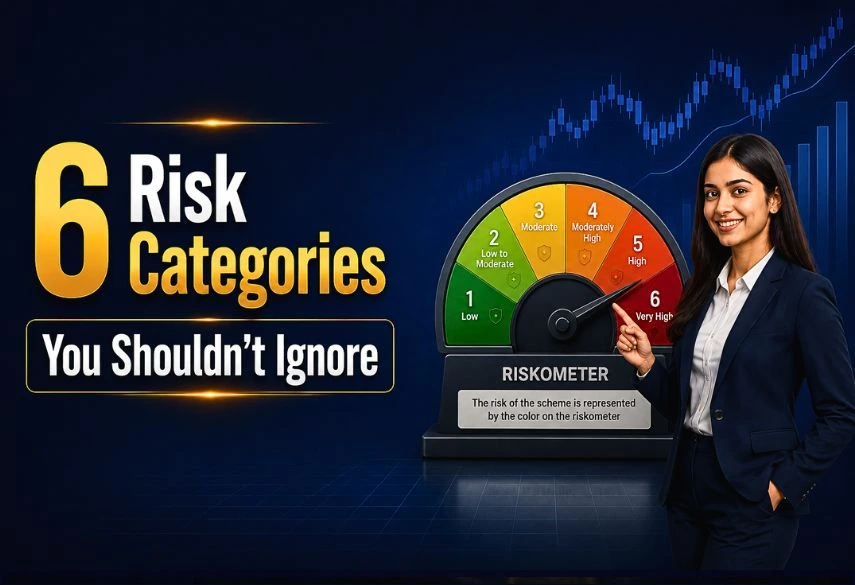
The Risk of Investing in Mid Cap Funds
Mid-cap funds offer an opportunity to make your money grow, but there are also risks:
- More fluctuation than large-cap funds.
- More frequent and stronger declines during bear markets.
- Risk of not being able to trade in the current market conditions.
Warning
These funds are not for short-term goals.
Who Should Consider Investing in Mid Cap Mutual Funds?
Fundamental Mid-cap funds work for:
-
The investor has a 5-10 year pulse.
-
Already has exposure to large-cap funds.
-
An investor in SIP who can handle volatility.
-
Investor looking to grow their portfolio above index returns.
-
If you panic during corrections, mid-caps may be unsuitable.
SIP vs Lump Sum: What Works Better?
For most retail investors, SIP is the preferred approach mid cap funds India because:
-
Elimination of timing risk.
-
Inherent smoothing of market volatility.
-
Promotion of discipline.
-
Ideally,lump-sum come-sip investments should be made during market corrections.
Ideal Portfolio Allocation to Mid Cap Mutual Funds
A balanced allocation strategy:
|
Investor Profile |
Mid-Cap Allocation |
|
Conservative |
10–15% |
|
Moderate |
20–30% |
|
Aggressive |
35–40% |
Never allocate 100% to mid-caps.
Taxation of Mid Cap Mutual Funds
-
Equity taxation applies.
-
Short-term capital gains (STCG):15% (holding < 1 year).
-
Long-term capital gains (LTCG):10% above ₹1 lakh per year.
-
Tax efficiency makes them attractive long term mutual funds.

Final Thoughts
Investors with a willingness to be patient can view mid cap mutual funds as a fantastic wealth generation opportunity. Investors need to keep in mind how important it is to stay invested. This entails choosing quality funds and keeping the investment goals in the long term. Investors who can withstand the volatility and have a long term investment focus, the best mid cap funds 2026 should be a worthwhile investment to include in your portfolio.

DISCLAIMER: This blog is NOT any buy or sell recommendation. No investment or trading advice is given. The content is purely for educational and information purposes only. Always consult your eligible financial advisor for investment-related decisions.












.webp "growth-vs-idcw-mutual-fund")