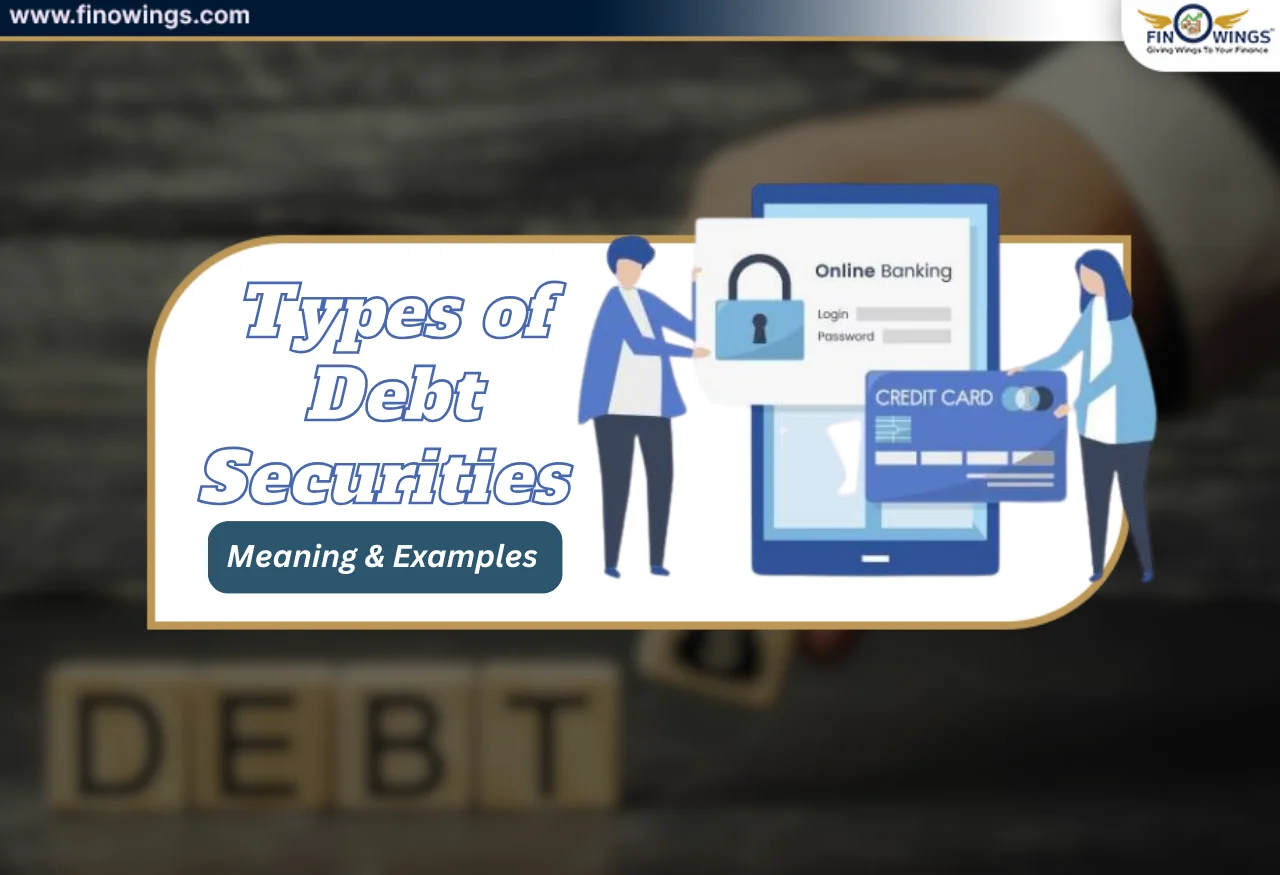
The world economic system is highly dependent on the issuance of debt securities in order to stabilise the economic system. Instruments that are bought and sold as a way of raising capital or covering operational costs are in the form of debt by companies and governments. To investors, debt securities guarantee predictable income, reduced risk and insurance against the volatility in the stock market.
Investors planning long-term wealth creation through index funds can also explore SIP planning strategies and estimate future returns using a SIP Calculator before investing in NFOs or mutual funds.
In this guide, we shall define the meaning of debt securities, discuss various types of debt securities, discuss various types of bonds, and give an example of debt instruments e.g. corporate debt securities and government securities. The article is composed using simple English and deals with SEO, hence it can be used with novice and intermediate investors.
Debt Securities Meaning
- A sale of a debt security gives the investor a predetermined payment of a fixed interest in the future. At the time of maturity of the debt security, the investor gets the principal.
- The investor will receive money, or principal, when the bond reaches its maturity date (in 5 years).
- The company will pay interest on this bond every 6 months until it matures.
The investor is thus, the party on which the company is undertaking a contractual promise (obligation). In contrast to equities, debt securities are contracts, as the principal repayment is guaranteed.
Common issuers include:
- Governments.
- Corporations.
- Financial institutions.
- Municipal bodies.

How Debt Securities Work
When an issuer needs funds, it issues a debt security with:
- Face value (principal amount).
- Coupon rate (interest rate).
- Maturity period.
- Payment schedule.
Investors earn returns mainly through interest income and sometimes through capital appreciation if the security is traded in the secondary market.
Why Are Debt Securities Important?
Debt securities are important because governments fund public projects without raising taxes. Companies expand without diluting ownership. Investors get predictable income and financial markets maintain stability. Debt securities act as a balance to high-risk equity investments.
Types of Debt Securities (Detailed Classification)
Debt securities can be classified in many ways. Below is the most detailed breakdown of types of debt securities.
1. Government Securities
Government securities are issued by central or state governments to finance fiscal needs such as infrastructure, defence, and welfare programmes.
Characteristics
- Financial risk is minimal.
- Interest can be fixed or flexible.
- Maturity may be long-term.
- In numerous markets, they can be sold or purchased.
Types of Government Securities
- Treasury Bills (short term).
- Government Bonds (Intermediary (medium-term) maturity).
- Sovereign Bonds.
- Inflation-Indexed Bonds provide capital safety for conservative investors.
2. Corporate Debt Securities
Corporate Debt Securities are used by companies to raise money, for operational funding, expansion, or to refinance existing debt.
Characteristics
- Moderate to high credit risk and potential financing from the government.
- Higher returns than governmental securities.
- Private or public companies issue them.
- Credit ratings are important.
Common Instruments used by Corporations
- Corporate Bonds
- Commercial Papers
- Debentures
- Non-Convertible Debentures (NCDs).
Corporate debt securities attract investors who are prepared to invest at some risk to achieve higher returns.
3. Types of Bonds
Bonds are the single largest portion of debt securities and next, we will look at the most prominent types of bonds.
a) Fixed Rate Bonds
The rate of interest capitalised is the same for the entire amount for a fixed duration. This is a prediction that interest rates will drop.
b) Floating Rate Bonds
The interest rates, capitalised, change that may worsen for the underlying floating duration, to which the benchmark rates will then change.
c) Zero-Coupon Bonds
They are purchased for less than their redemption value, and no periodic interest payments are made.
d) Inflation-Linked Bonds
Investment return is adjusted for inflation.
e) Callable and Puttable Bonds
Callable: Issuer can redeem early
Puttable: The Investor can exit early
4. Debt Securities Based on Maturity
Short-Term Debt Securities
- Maturity is less than 1 year.
- Less risk and less returns.
Examples: Treasury bills, commercial paper.
Medium-Term Debt Securities
- Maturity is from 1 to 5 years.
- Balanced risk and return.
Long-Term Debt Securities
- Maturity is more than 5 years.
- More interest rate risk.
Examples: government bonds, long-term corporate bonds.
5. Secured vs Unsecured Debt Securities
Secured Debt Securities
- Backed by collateral
- Less risk
- Less interest rate
Unsecured Debt Securities
- Not backed by collateral
- More credit risk
- More interest rate

Investors should carefully assess creditworthiness when investing in unsecured instruments.
6. Convertible and Non-Convertible Debt Securities
Convertible Debt Securities
These can be converted into equity shares after some time. They have lower interest, but provide an upside prospect.
Non-Convertible Debt Securities
Instruments that are purely debt, can be structured with fixed interest, and have no option for equity conversion.
7. Municipal and Public Sector Debt Securities
These are bonds issued by local authorities or public sector entities for the financing of development projects.
Characteristics
- Moderate risk
- Potential tax benefits
- Stable income
Examples of Debt Instruments (Real-World Use Cases)
A practical debt instrument example is a business loan.
There are also several more common debt instruments examples used by investors:
- Parking surplus funds in Treasury Bills.
- Earning a higher income with Corporate Bonds.
- Investing for the medium term with Debentures.
- Receiving more tax-efficient returns with Municipal bonds.
- Obtaining safety for the long term with Sovereign bonds.
Debt Securities Risks
Although considered safer, debt securities are still risky.
- Credit risk
- Interest rate risk
- Inflation risk
- Liquidity risk
- Reinvestment risk
Investors benefit from understanding these risks.
Benefits of Investing in Debt Securities
- Predictable income.
- Capital preservation.
- Portfolio diversification.
- Lower volatility.
- Suitable for retirement planning.
Debt Securities vs Equity Securities
|
Feature |
Debt Securities |
Equity Securities |
|
Risk |
Lower |
Higher |
|
Returns |
Fixed |
Variable |
|
Ownership |
No |
Yes |
|
Priority |
High |
Low |
|
Income |
Interest |
Dividends |
Who Should Invest in Debt Securities?
Investors who are more likely to benefit from debt securities include:
- Conservative Investors
- Retirees
- Income Focused Investors
- Risk Averse Investors
- Portfolio Diversifiers
How to Choose the Right Debt Security
Investors should research the following factors before making any investments:
- Liquidity.
- Interest Rate Environment.
- Maturity Period.
- Tax Consequences.
- The Financial Condition of the Issuer.
- Credit Rating.
Effective research keeps risk lower and boosts potential returns.

Conclusion
Knowing the different kinds of debt securities available to you is a great first step towards creating a balanced and robust investment portfolio. These range from government securities, which grant you the most safety.

DISCLAIMER: This blog is NOT any buy or sell recommendation. No investment or trading advice is given. The content is purely for educational and information purposes only. Always consult your eligible financial advisor for investment-related decisions.












.webp "growth-vs-idcw-mutual-fund")