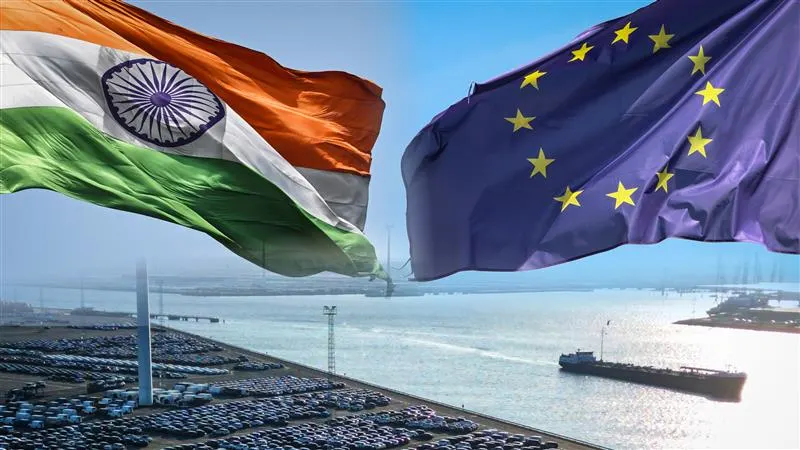
The India-EU Trade Deal 2026is being described as a rare economic phenomenon. It is an agreement not just to end up in a cabinet. It will be a game changer for India’s exports, streamlining the reduction of reliance on the US market and creating the potential for economic growth and new jobs, as well as potential growth in the stock market.
The European Union-India Free Trade Agreement (India-EU FTA)is being described as the “Mother of All Deals” and is seen as a complement to the European Union.
In this post, we will break down what the India-EU trade deal isand why it is important in 2026, which sectors are likely to be most positively impacted, and which stocks are likely to be most positively impacted, in a simple and structured SEO-friendly format.
Why The India EU Trade Deal Is A Big Deal
Consider, for a moment a single trading framework that connects:
-
India’s 1.4 billion consumers
-
EU’s 450 million consumers
That is a trading framework for a total market of 2 billion consumers.
Negotiations for the India-EU FTA started in 2007 but stalled for several years as both sides could not agree on issues surrounding tariffs, agriculture, labour, and IP. After almost two decades, the two sides have aligned. This is due to changes in geopolitics, supply chain disruptions, and a changing global order.
India-EU Trade Deal 2026 Video Explained
The FTA will likely be formally finalised around the India-EU Summit on 27 January 2026. This date will have both symbolic and economic significance as it will be shortly after India’s Republic Day.
What Are India-EU Free Trade Agreements
The India-EU FTA, in broad terms, aims to:
-
Eliminate or reduce customs duties (tariffs) on merchandise exports and imports
-
Streamline business and compliance rules
-
Boost Foreign Direct Investment (FDI)
-
Enhance the mobility of trade in servicesand professionals
-
Economically empower MSMEs and exporters.
India and the EU’s trade is currently a whopping USD 140-190 billion. After the FTA is signed, the rampant barriers to trade and market access will see this amount increase significantly.
Importance of the 2026 Timelines
This deal is coming at a critical moment. The complexities of India’s trade relationship with the United Stateshave continued to evolve, and the growing pressures of the labour-centric exports of textiles, leather, and MSME goods have started to create risks in US dependencies. Europe emerges as a natural alternative growth partner.
For India, this is less about trade volumes and more about export diversification, economic resilience, and long-term strategic balance.
Key Export Sectors That Will Benefit
Textiles and Garments: A Job Creation Engine
The labour-intensive nature of India’s textile and apparel sector has been dampened by the Western market’s high tariff structures.
Currently, the EU imposes tariffs of up to 10% on Indian garments. In the proposed trade deal, these tariffs could fall to zero or near-zero, thus dramatically increasing India’s competitiveness in the sector.
This could lead to:
-
Revitalisation of textile hubs.
-
Strong growth in exports of garments.
-
Creation of a large number of jobs.
For investors, this is a welcome turnaround for a sector that has been under a lot of pressure for years.
Leather, Footwear, and MSME Exports
The following products have significant demand in the European market.
-
Leather shoes
-
Leather bags
-
Leather accessories
-
Seafood
The new trade deal will also facilitate small and medium-sized Indian exporters in accessing the European markets due to the lowered tariffs. For MSMEs, this is especially important as they have been squeezed financially by having to rely on US-centric trade routes.
The impact of trade dealsis more important than merely phrased headlines. What matters is the potential increase in levels of exports, particularly at the grassroots level.
Pharma and Chemicals: High-Value Exports Rise
Generic medicinesare one of many sectors where India is a top global competitor. The new EU FTA introduced regulations, under which we can expect:
-
Regulatory collaborations to improve the standard of product acceptance and access.
-
An increase in the level of acceptance of Indian pharma products in the EU market.
-
All of the aforementioned will result in more lucrative exports, in addition to the already anticipated growth in exports generated from volume.
-
India can expect to gain from the free access to the EU, particularly in the chemical sector, including specialty and industrial chemicals.
Automobile and Auto Components
This has to be one of the more strategically important sectors. India is active in the export of the following automobile products:
-
Engines
-
Auto spare parts
-
Tyres
-
Mechanical components
India's automobile industry will be able to penetrate the European market more readily with the lowered trade barriers. There is already positive speculation surrounding potentially premium brands, BMW and Audi, where the expectation is a higher likelihood of expansion into manufacturing operations in India.
All of this positively contributes to the level of employment in the country and subsequently will give India the ability to export in higher volumes.
Machinery and Refined Petroleum Products
India is already excelling in the export of refined petroleum. The deal might mean:
-
Buyers from Europe for the long haul
-
Consistent demand
-
Increased demand for pricing
In the same way, industrial machinery exports are likely to benefit from fewer obstacles in overseas trade.
IT, Telecom, and Financial Services: The Silent Winner
The most overlooked advantage may be in the trade in services. The deal looks to:
-
Streamline work visa
-
Permit Indian IT workers to engage in the EU work
-
Less reliance on US technology contracts
-
Due to this, it is predicted that services exports could increase 3-5% every year.
This extends India’s services capability further than Silicon Valley.
What Europe Gains From the Deal
Trade deals are never one-sided and Europe has good reasons too.
Lower Duties on Premium Automobiles
Luxury cars have always come with exorbitant import tariffs (over 300%) from India. In the future, the reduction of tariffs may result in European cars being less expensive in India.
Premium Consumer Goods, and Alcohol and Wine
Currently, European wines and spirits are subject to over 100% import tariffs. The phased elimination of tariffs would:
-
Add to India’s expanding premium alcohol market.
-
Add more choice and competition.
-
Be highly beneficial to European exporters.
Market Entry for European Exporters.
Access to India’s large and growing middle-class will be particularly beneficial to European companies in:
-
Renewable Energy
-
Biotechnology
-
Infrastructure
-
Logistics
-
Advanced manufacturing
This collaboration furthers India’s Make in India and green initiatives.
The Challenges and Risks of Negotiations
While there is room for optimism, there will most certainly be challenges. Agriculture and Dairy are sensitive sectorsfor India, and protecting local farmers is seen as politically and economically vital. This means:
-
The elimination of tariffs will be phased.
-
Negotiations will be intricate.
-
The final outcomes will take some time to realise.
However, the direction is cleareven if the rate of change is slow.
Anticipated Effects of the Trade Deal on Stocks in 2026
For investors, there is the potential for thematic opportunities rather than for day trading. The optimal areas to focus on are:
-
Exporters of textiles and garments
-
Manufacturers of automotive components
-
Exporters of pharmaceuticals
-
Providers of IT services to European companies
-
Providers of logistics and infrastructure.
The potential of these markets will likely evolve over years, not weeks, making them a strong structural growth theme for long-term investors.

Final Takeaway: More Than a Trade Deal
Once concluded, the India-EU trade deal will:
-
Diversify India’s export base.
-
Create large-scale employment.
-
Strengthen India’s position in the world economy.
-
Establish a Strategic Partnership with Europe.
This is not just about tariffs and trade flows. It is about India’s next growth phase and where the country stands in the global order. What do you think? Is 2026 going to be the year India gets the ‘Mother of All Deals’ or will execution challenges dampen the spirit of the deal?

DISCLAIMER: This blog is NOT any buy or sell recommendation. No investment or trading advice is given. The content is purely for educational and information purposes only. Always consult your eligible financial advisor for investment-related decisions.