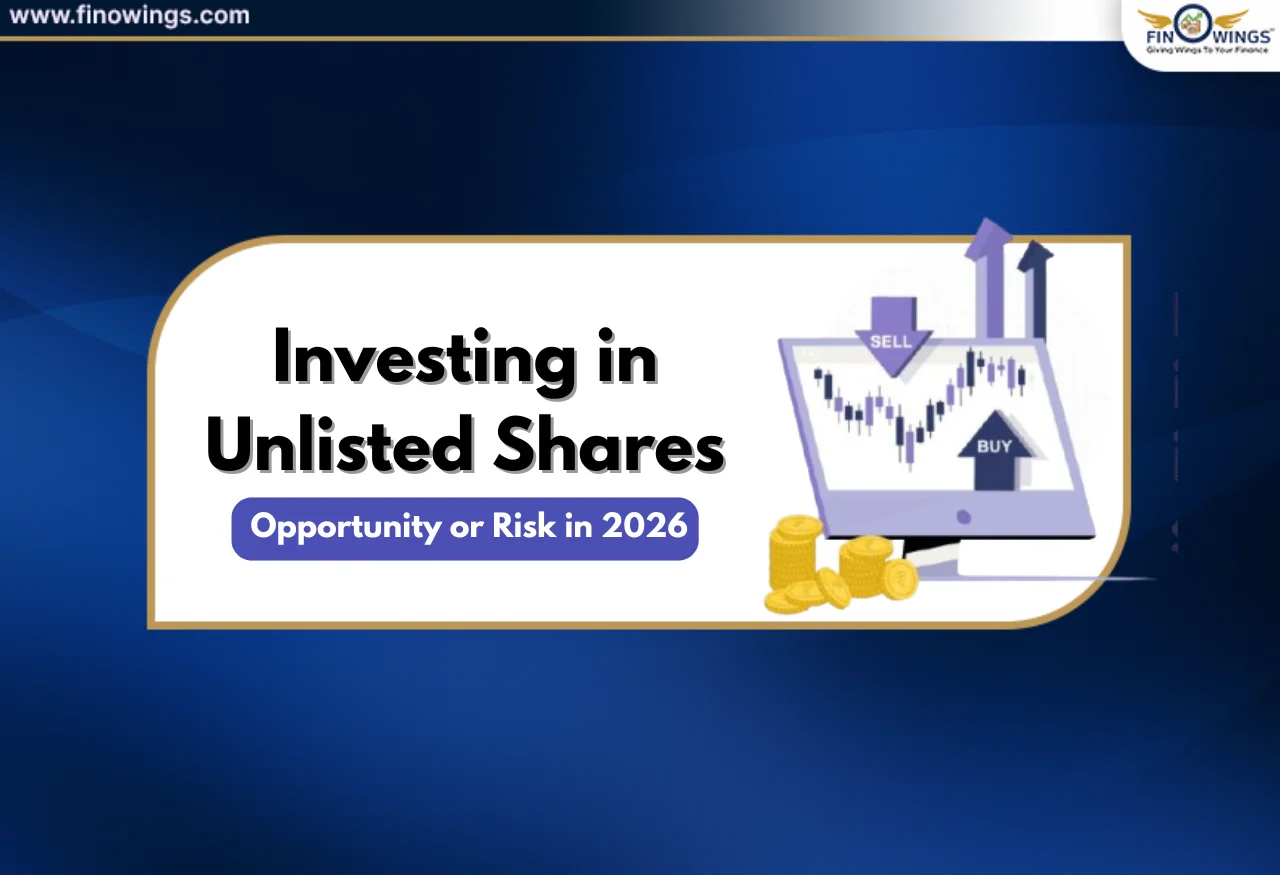
From a niche activity only discussed among private equity players, investing in unlisted shares has become a mainstream topic of conversation among retail and high-net-worth investors. Investing in unlisted shares is more prominent due to longer IPO pipelines in 2026, evaporating valuations in listed markets, and wealthy investors searching for the “next big thing.”
However, the question must be asked. Is investing in unlisted shares an actual opportunity in 2026, or is it a high-risk scam with unliquidated shares and other issues?
This will be an extensive tutorial describing the most important aspects of unlisted shares, including the valuation logic, risk, scams, legal structure, and practical decision-making frameworks to help you make a more objective decision on the unlisted shares you wish to invest in to minimise your financial risk.
What are Unlisted Shares?
Companies unlisted on stock exchanges (for example, NSE or BSE) have unlisted equity shares. Such unlisted firms can be:
- Startups planning an IPO.
- Privately held firms that remain unlisted.
- Subsidiaries or group firms of listed companies.
- Companies that cancelled or postponed IPOs.
Unlisted equity shares are not traded like listed shares. Trading occurs through private transactions, dealers, brokers, wealth managers, or transfers approved by the company.

What’s Causing Growth in Investment in Unlisted Shares in 2026?
Macro and micro factors contributed to the high interest in unlisted shares among investors in 2026. Since previous years, investors focused on unlisted shares due to competition. Companies today remain private not only to avoid market pressures, but to combat any regressive attraction that may be created, through unresolved policies or in virtue of the company, over time.
A private investor can enter prior to a listing event, capturing the anticipated attraction.
Investment in unlisted equity shares is typically comparable to private equity ownership, meaning that an investor can anticipate similar profit margins as one would with a Private Equity venture.
Investors today remain private not only to avoid market pressures, but to combat any unregulated attrition created through company policies over time. New unregulated policies create an attraction that is typically comparable to private equity ownership, meaning that the investor can expect similar margins as one would in a venture with Private Equity.
How Unlisted Shares Investment Works
Before investing, it’s important to understand how unlisted shares work. The purchase of unlisted shares has to go through:
- Approved brokers.
- Private wealth management companies.
- Direct seller to buyer transfers (unlikely for retail investors).
The transaction involves:
- Negotiated pricing (no screen-based trading).
- Share transfer via Demat accounts (mostly mandatory).
- Stamp duty and Companies Act compliance.
Compared to listed markets, pricing transparency is more limited, and this is where both opportunity and risk begin.
Benefits of Investing in Unlisted Shares
1. Early Entry Advantage
Investing in shares before an Initial Public Offering (IPO) allows you to enter at an earlier growth echelon. This way, business scale success creates value at a high magnitude.
2. IPO Upside Potential.
Investors most commonly fixate on gains from listing day. This is a fair result, especially since they will realise gains on their holdings, ifthe IPO’s derived value is greater than the cost to have acquired the unlisted shares.
3. Access to Unlisted Companies.
Some strong companies remain unlisted for strategic purposes. With unlisted shares investing, you gain access to companies you wouldn’t be able to on the stock markets.
4. Lower Short Term Volatility
Because unlisted shares do not have daily trades, they are not at the mercy of daily market fluctuations. For long-term investors, this can minimise emotional trades.
Unlisted Shares Risk
Most of the time, unlisted shares riskis unspoken. It is much easier to write a positive story and post it on a social platform, ignoring the risk of the unlisted shares.
Investing in Unlisted Companies
The biggest risk is exit uncertainty. It is an exit riskand an illiquidity risk. When investing in unlisted shares, especially in a private company, there is no guarantee for when you would be able to profit from the investment. The investment gets locked for some period of time, and it could even be years.
Unlisted Shares’ Valuation Risk
Determining the value of the unlisted company shares is a risk in itself. The price of unlisted company shares is really just a valuation expectation. Investing in an unlisted company that has a really positive predicted value for its IPO and then the IPO ends up being a total failure would cause a loss of investment.
Unlisted Shares Risk: Information Asymmetry
Just like investing in a company, there is always a risk in the decisions made. When a company is unlisted, there is not a lot of information provided, and that is why this risk is called information asymmetry risk.
Unlisted Shares Risk: Regulatory Risk
There is a risk that the rules can change even within the scope of an unlisted company, such as regulations around taxation, IPOs, and SEBI. These rules can cause a change when it comes to the available time someone has to work on an exit, as well as cause a change in the value of the exit.
Unlisted Companies Scam: A Rising Concern in 2026
As unlisted shares become more popular, there has been a rise in unlisted shares scams. Common scam patterns often include the following:
a) Selling fictitious shares without the company's authorisation.
b) Selling shares at inflated prices based on fictitious IPO rumours.
c) Selling shares of companies that have no definitive plan for IPOs.
d) Brokers vanish after the funds are received.
Many scammers leverage the fear of missing out (FOMO) by touting that this company is the next big IPO.
A legitimate investment in unlisted shares will include the following:
a) Legitimate unlisted share ownership documentation.
b) Demat credit evidence.
c) Identifiable, accessible and approvable company and seller (if applicable).
The risk is extremely high when any of these elements are missing.

How to Evaluate Unlisted Shares in 2026
Always employ a systematic framework before investing.
Business Fundamentals
Focus on:
a) consistency in revenue growth.
b) profitability or a clear path to attain profitability.
c) market share and a sustainable competitive advantage.
Management Quality
Recognising that data is scarce, management credibility takes precedence over the quantity of the data.
Potential for IPO
Companies that are not public yet are not guaranteed to become public in the future. Consider the following:
- Indications of the company's intent to IPO?
- Do they have the necessary auditors, bankers, and compliance structures?
IPO Speculation
Studies have shown that the hype surrounding IPOs doesn't typically correlate with the valuations of the company. Analyse the following:
- Valuation of your company against other public comparables.
- Growth versus Pricing.
Taxation of Unlisted Shares Investment
The tax implications of unlisted shares are not the same as those of listed shares.
- Shares are classified as long-term if they are held for more than 24 months.
- Long-term capital gains are taxed at 20% with indexation.
- Short-term gains are taxed according to your income slab.
Proper tax planning is especially important in the absence of concrete IPO timelines.
Who is Likely to Invest in Unlisted Shares in 2026?
Investing in unlisted shares is not for everyone. It may suit:
- Long-term investors (5–7 years).
- Individuals with surplus capital.
- Individuals with a risk appetite and knowledge of valuation.
It may not suit:
- Traders with short-term involvement.
- Individuals new to investing.
- Individuals who require access to their invested capital.

Conclusion: Potential Opportunities and Risks for 2026
Are unlisted shares investing a potential opportunity or risk for the year 2026? The truth is, it is a combination of both of these options.
Unlisted shares might give amazing returns if:
- You pick quality businesses.
- You stay away from valuation hype.
- You understand liquidity risk.
But they might destroy capital if:
- You get caught in unlisted share scams.
- You disregard fundamentals.
- You invest unnecessary money.
Investing in unlisted shares in 2026 should be considered a satellite allocation. Core portfolio strategies must be something else. Due diligence, discipline and patience define whether this turns out to be an opportunity or a costly mistake.

DISCLAIMER: This blog is NOT any buy or sell recommendation. No investment or trading advice is given. The content is purely for educational and information purposes only. Always consult your eligible financial advisor for investment-related decisions.