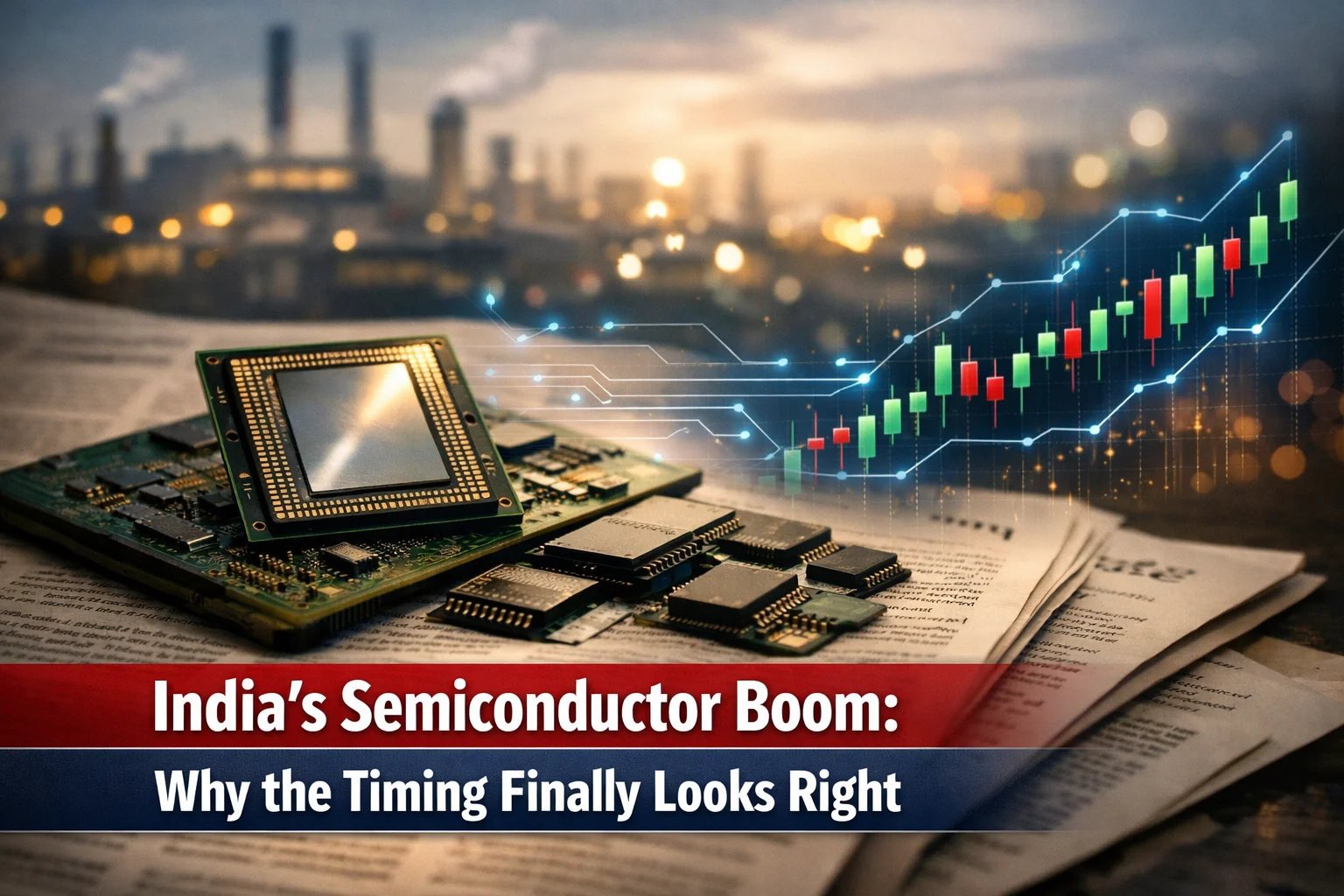
Imagine using a laptop, operating an electric vehicle, or accessing your smartphone; all of these tasks rely on microscopic chips known as semiconductors. These are the intelligent "brains" found in contemporary electronics. India was a great chip designer for a long time, but the majority of them had to be imported. That is rapidly changing now.
In 2026, India is witnessing strong semiconductor manufacturing growth in India. Real factories are starting production, creating jobs, and reducing dependence on foreign supplies. This India chip boom feels like the perfect moment because global companies want reliable new partners, and India has talent, policy support, and growing local demand.
In this beginner-friendly blog, we’ll walk through the full story using simple words, clear tables, and the latest 2026 updates. You’ll understand the semiconductor push in India, why it matters, and what it means for the future.
What Are Semiconductors and Why Do They Matter So Much?
Semiconductors control the flow of electricity in devices. Without them, there would be no fast phones, electric vehicles (EVs), AI tools, or modern defence systems. India uses billions of these chips every year. Earlier, almost all were imported. Now the focus has shifted to making them locally, from design to final packaging.
India already hosts nearly 20% of the world’s semiconductor design engineers. The big leap in 2026 is actual manufacturing on Indian soil. (Source: ISM)

India’s Semiconductor Journey: 2021 to 2026 Timeline
The progress didn’t happen overnight. Here’s a simple timeline:
|
Year |
Key Milestone |
Simple Meaning for Beginners |
|
2021 |
Semicon India Programme launched (₹76,000 crore) |
The government starts big subsidies for chip factories |
|
2022-2024 |
First 10 projects approved |
Companies like Micron, Tata, Kaynes sign agreements |
|
2025 |
Pilot production begins in several plants |
Testing chips at a small scale |
|
2026 |
Commercial production starts in multiple plants |
Real chips made in India for daily use |
(Source: PIB)
This journey shows India’s steady chip sector expansion. As of early 2026, one plant has started full commercial production, three more are in the pilot stage, and others are close behind.
Interestingly, this entire semiconductor push is backed by massive government spending — in fact, India has already committed billions to this sector. We’ve explained this in detail in India Announces $11 Billion on Semiconductors — Is This the Next Big Opportunity?.
Latest Government Incentives: A Quick Summary Box
India Semiconductor Mission (ISM) Incentives at a Glance (2026)
- Up to 50% capital subsidy on project cost for fabs, ATMP/OSAT units (central government support).
- Additional state-level benefits: cheaper land, power tariff rebates, and training subsidies.
- ISM 2.0 (announced in Union Budget 2026): Extra focus on equipment manufacturing, raw materials, full-stack chip design, R&D, and skill centres. Initial push includes ₹8,000–40,000 crore outlay for ecosystem development.
- Total investment committed so far: around ₹1.6 lakh crore across 10 approved projects.
These incentives make it safer and cheaper for companies to set up plants – a major reason behind the current momentum.
Easy Guide: Fab vs OSAT vs ATMP
Beginners often get confused by these terms. Here’s a simple comparison:
|
Type |
Full Form |
What It Does |
India’s Current Focus in 2026 |
|
Fab |
Semiconductor Fabrication Plant |
Makes the actual silicon wafer (chip base) |
Starting stage (Tata’s Dholera project) |
|
OSAT |
Outsourced Semiconductor Assembly & Test |
Packages and tests finished chips |
Most active right now |
|
ATMP |
Assembly, Testing, Marking & Packaging |
Advanced packaging for memory and auto chips |
Memory chips (Micron leading) |
Most projects starting in 2026 are OSAT and ATMP because they can begin faster and meet immediate demand for phones, cars, and electronics.
The India Chip Boom in 2026: Plants Starting Production
This is the most exciting part. Union Minister Ashwini Vaishnaw has confirmed that four semiconductor plants are set to begin or expand commercial production in 2026. One (Micron) has already started, and others are ramping up quickly.
Here’s an updated look at key semiconductor manufacturing companies in India:
|
Company |
Location |
Type |
Investment (₹ crore) |
2026 Status |
Main Focus |
|
Micron Technology |
Sanand, Gujarat |
ATMP |
22,516 |
Commercial production started |
Memory chips (DRAM & NAND) |
|
Kaynes Semicon |
Sanand, Gujarat |
OSAT |
3,300 |
Starting mid-2026 |
Advanced packaging |
|
CG Power + Renesas |
Sanand, Gujarat |
OSAT |
7,600 |
Commercial in 2026 |
Auto, power & industrial chips |
|
Tata Electronics |
Morigaon, Assam |
OSAT |
27,000 |
Mid-to-late 2026 |
EV, consumer & defence chips |
Chip plants in Gujarat, India, especially in Sanand, are becoming a major hub. By the end of 2026, daily production capacity is expected to rise significantly.

Semiconductor Market in India (2026)
The semiconductor market in India in 2026 is growing rapidly. Industry estimates place the current market size around $50-60 billion, with projections to reach $100-175 billion by 2030-2035 at a strong CAGR.
If you want a deeper breakdown of individual opportunities, you can explore our detailed guide on Best Semiconductor Stocks in India (2026) | Finowings Analysis, where we cover key companies, growth drivers, and long-term potential.
Demand Sectors Breakdown:
|
Sector |
Key Need for Chips |
Growth Impact in 2026 |
|
Smartphones & Consumer Electronics |
Faster processors, better cameras |
Very High |
|
Electric Vehicles |
Battery control, motor systems |
High |
|
Defence & Aerospace |
Secure systems, radars |
High |
|
Data Centres & AI |
Powerful servers |
Very High |
|
Renewable Energy |
Smart inverters & grids |
Medium-High |
This local demand, plus global supply chain shifts, is fuelling the semiconductor industry's growth in India.
How India Compares with Other Countries
- Taiwan & South Korea: Leaders in advanced (3nm/2nm) chips.
- China: Large scale but facing restrictions; India offers a stable alternative.
- United States: Strong in design; partnering with India.
- Vietnam: Good for basic assembly but lacks India’s deep talent pool and policy push.
India’s strengths are its young engineers, huge domestic market, and democratic stability. While we are still building advanced capabilities, 2026 marks a solid foundation for the semiconductor sector's future in India.
Semiconductor Stocks in India
Many listed companies are directly or indirectly benefiting from this boom. Here’s a clear table of key players:
|
Company |
Main Connection to Semiconductor Boom |
Why It Matters in 2026 |
|
Kaynes Technology |
OSAT plant in Gujarat |
Direct beneficiary of new production |
|
CG Power & Industrial |
OSAT joint venture with Renesas |
Auto & power electronics focus |
|
Bharat Electronics (BEL) |
Defence electronics & chips |
Strong government orders |
|
Tata Elxsi / Tata Electronics |
Design + manufacturing ecosystem |
Full value chain play |
|
Dixon Technologies |
Electronics manufacturing services |
Indirect but growing exposure |
Why invest in semiconductors in India?
Long-term growth potential, government backing, and rising demand. However, these stocks can be volatile.
For a quick and beginner-friendly list, you can also check our curated article on Top 5 Semiconductor Stocks in India, which highlights the most relevant companies benefiting from this boom.
Risks for investors
High dependence on power and water, global chip price cycles, skill gaps in advanced areas, and long gestation periods for full fabs. Consider your risk appetite and consult an advisor. Long-term investors (5+ years) who believe in India’s tech story may find opportunities, while short-term traders should be cautious.
Key Takeaways
- 2026 is a landmark year with multiple plants starting commercial output.
- Strong policy support through India's semiconductor policy and India's semiconductor mission subsidies is making things happen.
- The boom will create high-skilled jobs and strengthen supply chains.
- Focus remains on steady, long-term growth rather than overnight success.

Conclusion: A Bright Semiconductor Sector Future in India
The India semiconductor boom in 2026 is not just about factories – it’s about self-reliance, new careers, and India’s rising role in global technology. With clear policy, real production beginning, and strong demand, the timing finally feels right.
This semiconductor push will power everything from your daily devices to national security. The story is still in its early chapters, but 2026 has given it a strong start. What are your thoughts on India’s chip journey? Will this boom create more opportunities for young engineers and investors? Share in the comments below!
Stay curious and keep watching this exciting space – India’s chip story is just heating up!

DISCLAIMER: This blog is NOT any buy or sell recommendation. No investment or trading advice is given. The content is purely for educational and information purposes only. Always consult your eligible financial advisor for investment-related decisions.
Manthan Kushwaha - seo expert in Lucknow and digital marketer


.webp)