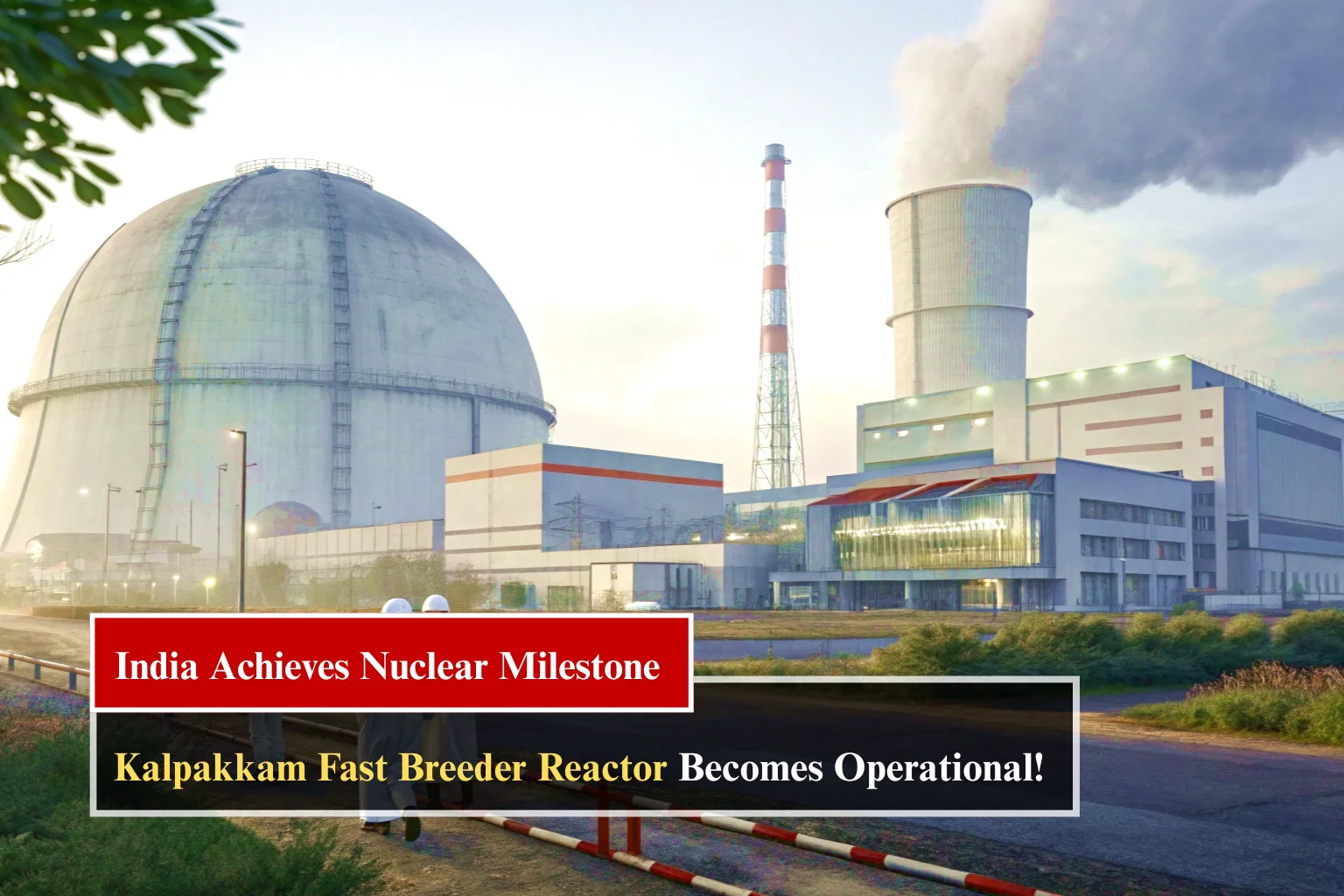
India’s Prototype Fast Breeder Reactor (PFBR) at Kalpakkam achieved first criticality on April 6, 2026. This means the reactor has started a self-sustaining nuclear chain reaction, but full commercial electricity generation is expected later in September 2026.
Prime Minister Narendra Modi described it as a “defining step” in India’s clean energy journey and congratulated the scientists and engineers involved. This breakthrough shows India’s growing capability in advanced nuclear technology.
For anyone new to the topic, this is exciting news. The PFBR is India’s first large fast breeder reactor. Unlike regular nuclear plants that only use fuel, this one can produce more fuel than it consumes while generating electricity. It brings the country closer to energy self-reliance using our own resources. Let’s understand the full story in simple, beginner-friendly language.
Source: [PM India - Prototype Fast Breeder Reactor at Kalpakkam attains criticality]
[NDTV - India's most advanced atomic reactor reaches milestone]
Nuclear Milestone: Kalpakkam Fast Breeder Reactor
India’s Three-Stage Nuclear Programme: The Big Picture
Scientist Homi Bhabha designed India’s nuclear roadmap many decades ago. India has limited uranium but plenty of thorium in its coastal sands. The plan has three stages to make the best use of these resources.
Stage 1- Uses Pressurised Heavy Water Reactors (PHWRs) that run on natural uranium. These plants produce electricity and also create plutonium as a by-product.
Stage 2- Involves fast breeder reactors like the one at Kalpakkam. These reactors use plutonium and can “breed” extra fuel.
Stage 3- Will use thorium to generate power for thousands of years.
The advanced nuclear reactor in India at Kalpakkam is the key bridge to Stage 2. It proves we can recycle nuclear fuel efficiently and reduce dependence on imported energy as per The Hindu - India's prototype fast-breeder reactor note.

What Makes This Breeder Reactor Special?
Most nuclear reactors consume fuel and produce radioactive waste. A fast breeder reactor works differently. It uses fast-moving neutrons and can convert non-fissile uranium-238 into useful plutonium-239. In simple words, it grows its own fuel while producing power.
The PFBR at Kalpakkam is a 500 MW reactor cooled by liquid sodium instead of water. Sodium allows neutrons to move faster, which improves breeding. It uses mixed oxide (MOX) fuel made from plutonium recovered from earlier reactors and natural uranium. Extra neutrons are captured in a surrounding blanket of uranium, creating fresh plutonium.
This design helps recycle spent fuel from Stage 1 plants and stretches India’s limited uranium supplies. It is a big step forward for India's nuclear power development.
If you want to understand how global deals are impacting India’s nuclear growth and which companies could benefit, you can explore our detailed analysis on the India–Canada Uranium Pact ($2.6 billion) and its impact on nuclear stocks.
Criticality vs Commercial Operations: What’s the Difference?
People often mix up these two important stages.
- First criticality (achieved on April 6, 2026): The reactor core has started a controlled, self-sustaining chain reaction. Scientists have confirmed the nuclear “engine” is running steadily. This is a major technical and safety milestone.
- Full commercial operations (expected by September 2026): The reactor will reach full power, connect reliably to the electricity grid, and supply power to homes and industries regularly. Right now, engineers are gradually increasing power levels and conducting careful tests.
This breeder reactor project has moved from testing to the next exciting phase as per India TV News note on Kalpakkam fast breeder reactor achieves criticality.
Project Timeline: A Story of Patience and Hard Work
-
- Construction started in 2004 by BHAVINI (Bharatiya Nabhikiya Vidyut Nigam Limited).
-
- Core loading began in March 2024.
-
- Fuel loading started in October 2025 after safety approvals.
-
- First criticality reached on April 6, 2026.
-
- Full commercial power expected in September 2026.
The project faced delays of over 20 years because it uses first-of-its-kind technology in India. Costs rose from the original estimate of ₹3,500 crore to around ₹7,700 crore. Indian scientists solved complex challenges indigenously, including issues with sodium systems and precision engineering. This shows the strength and dedication behind India’s first fast breeder reactor.
Why Fast Breeder Reactors Are Rare Worldwide
Only a few countries have tried building commercial-scale fast breeders. Russia operates the BN-800 reactor successfully. Other nations faced high costs, technical difficulties with sodium coolant, and public concerns. Sodium can react strongly with air or water, so it needs very careful handling.
India succeeded thanks to decades of experience with a smaller Fast Breeder Test Reactor at the same Kalpakkam site. The PFBR at Kalpakkam is now one of the most advanced reactors of its type globally.
Comparison with Regular PHWR Reactors
India’s current fleet mainly consists of PHWRs. These use heavy water as a moderator and natural uranium as fuel. They are safe and reliable, but consume fuel without breeding extra.
The PFBR uses fast neutrons, sodium coolant, and MOX fuel. It produces more plutonium than it consumes and helps recycle waste. Both types work together: PHWRs supply plutonium for the breeder, and the breeder extends fuel resources for the future.
Safety Features and Sodium Coolant Concerns
Safety is the top priority. The reactor has multiple layers of protection:
-
- Double-walled piping for sodium.
-
- Inert atmosphere to prevent fires.
-
- Passive cooling systems that work even without electricity.
-
- Continuous monitoring by the Atomic Energy Regulatory Board (AERB).
Indian engineers have safely operated sodium-cooled systems for many years in the test reactor. Every step follows strict international standards.
Source: Moneycontrol - India clears a major nuclear milestone.
India’s Nuclear Power Growth at a Glance
|
Year / Milestone |
Installed Capacity (MW) |
Annual Generation (approx.) |
Important Development |
|
2010 |
~4,500 |
~23,000 MU |
Steady PHWR expansion |
|
2020 |
~7,000 |
~45,000 MU |
International cooperation grows |
|
2024-25 |
8,780 |
56,681 MU |
Record generation year |
|
April 2026 (Criticality) |
8,780 (PFBR testing) |
- |
First criticality of a breeder reactor |
|
September 2026 (Expected) |
+500 |
Expected increase |
Full commercial power from PFBR |
|
Target by 2047 |
~100,000 |
Major jump |
Expanded nuclear contribution |
This table clearly shows steady progress in India’s nuclear capacity. The successful breeder reactor project will add momentum to future growth.
Source: [PIB data & World Nuclear Association]
What This Means for the Future
This milestone paves the way for two more 500 MW fast breeder units at Kalpakkam. It boosts confidence for private sector participation and small modular reactors. For the power sector, it means a more stable electricity supply that does not depend on the weather, unlike solar or wind.
It also supports India’s goal of reducing carbon emissions and achieving energy security. Long-term, it brings us closer to using abundant thorium reserves in Stage 3 reactors.

Conclusion: A Proud Moment for Indian Science
From Homi Bhabha’s vision to the successful criticality on April 6, 2026, this achievement highlights the dedication of India’s nuclear scientists and engineers. The Prototype Fast Breeder Reactor at Kalpakkam is more than a power plant — it is a symbol of self-reliance and innovation in an advanced nuclear reactor in India.
As full operations begin later this year, every Indian can feel proud. Cleaner, more efficient energy will help power our growing economy and future generations. This is a defining step toward a stronger, greener India.

DISCLAIMER: This blog is NOT any buy or sell recommendation. No investment or trading advice is given. The content is purely for educational and information purposes only. Always consult your eligible financial advisor for investment-related decisions.