Short Answer for Vedanta Shareholders: The Vedanta Demerger 2026 has created five separate listed companies (residual Vedanta + four new ones). Among the new entities, Vedanta Aluminium Metal stands out as the most promising based on consistent criteria like scale, margins, growth visibility, and analyst views.
However, final investment decisions depend on post-listing valuations, debt allocation, and your risk tolerance. Always review full financials and consult an advisor.
Imagine holding one share of a big family business and suddenly receiving ownership in five specialized companies. That’s the real story of the Vedanta Demerger. For many Vedanta Shareholders, this felt like turning a single investment into a diversified portfolio overnight. But like any big family split, success depends on how each new team performs on its own.
Before comparing companies or making investment decisions, it’s important to understand key IPO and valuation metrics. Metrics like P/E ratio, EV/EBITDA, ROCE, and debt levels help investors judge whether a stock is fairly valued or not.

The Story Behind Vedanta Demerger
Vedanta Limited, led by Anil Agarwal, grew into a massive conglomerate covering metals, oil, power, and more. While this brought scale, it also created challenges: high debt, complex valuation (often called a “conglomerate discount”), and slower decision-making.
In 2023, the company announced a major restructuring. After approvals, the Vedanta Demerger became effective on May 1, 2026 (also the record date). Vedanta Shareholders holding shares on or before the ex-date (April 30, 2026, considering T+1 settlement and market holiday) received 1 share each in the four new companies for every Vedanta share held. The residual Vedanta continues with Hindustan Zinc, base metals, and other assets.
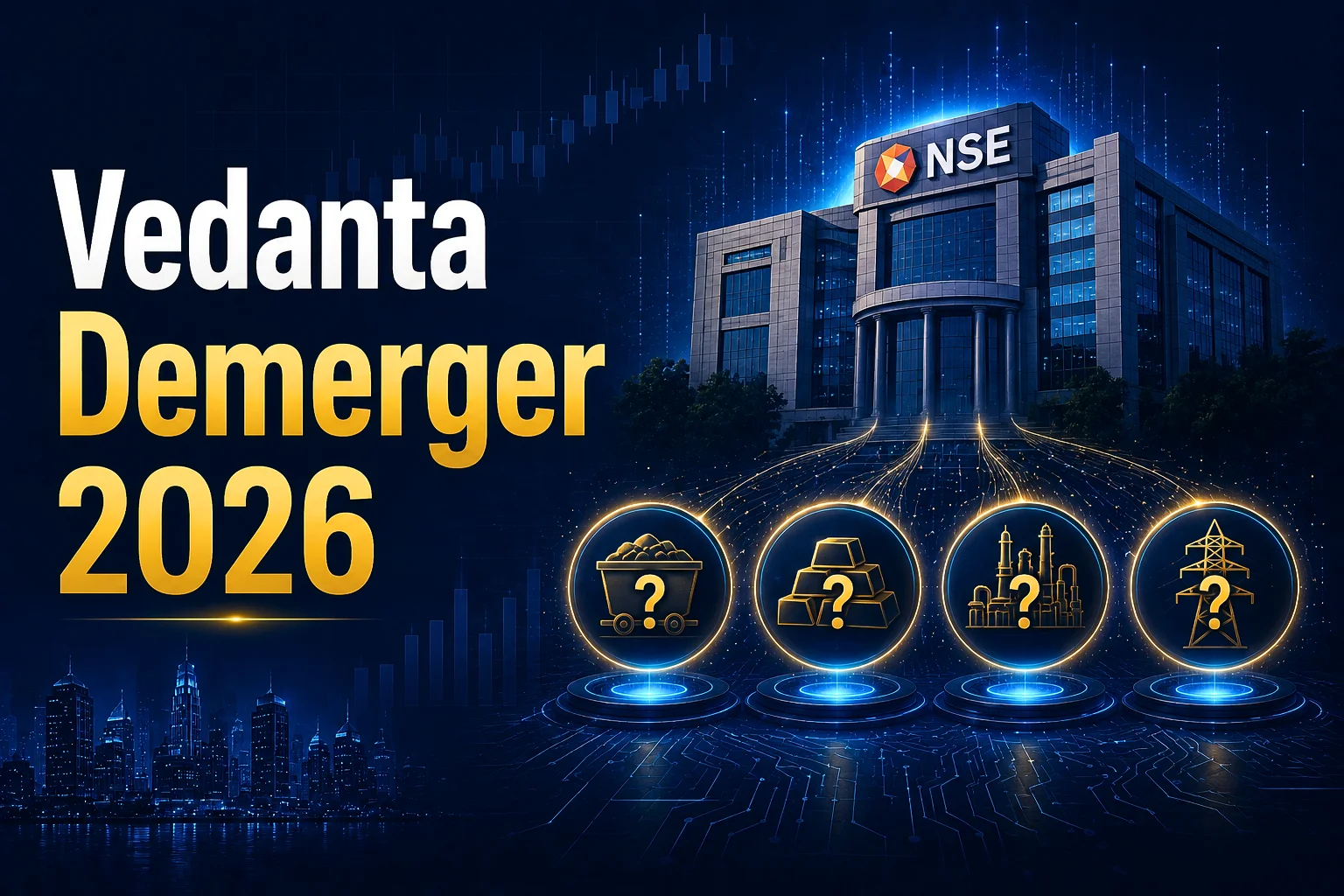
The four new companies — Vedanta Aluminium Metal, Vedanta Oil & Gas, Vedanta Power, and Vedanta Iron & Steel— are scheduled to list independently on June 15, 2026, initially in the Trade-to-Trade segment.
This split aims to give each business focused management, better access to capital, and clearer valuations for investors who prefer specific sectors.
Once corporate actions like IPOs or listings happen, investors often need to check their allotment or share credit status. You can track allotment status easily through BSE, NSE, or registrar websites using PAN or application number.
Comparison Framework: How We Evaluate the Companies
To avoid personal opinion, we compare all five entities (including residual Vedanta) using the same criteria important for investors:
- Operating Scale & Profitability: Revenue, EBITDA, margins.
- Growth Potential: Production growth, capex plans.
- Financial Health: Net debt allocation, repayment capacity.
- Risks: Commodity sensitivity, regulatory issues.
- Valuation Perspective: Sector multiples (pre-listing scenarios based on analyst estimates).
- Shareholder Returns: Dividend potential, ROCE.
Data is drawn from company reports, analyst notes, and filings (approximate FY26 or latest available; post-listing figures will clarify further).
Data Table: Key Financial & Operational Snapshot (Approximate FY26)
|
Company |
Main Business |
Aluminium/Oil/Power/Steel Production (FY26) |
EBITDA Contribution/Highlights |
Key Strengths & Analyst View |
|
Vedanta Aluminium Metal |
Aluminium |
~2.46 MTPA aluminium; ~2.9 MTPA alumina |
Strong margins; record production |
Capacity expansion to 3+ MTPA; analysts (SBI, ICICI Direct) highlight as top pick |
|
Vedanta Oil & Gas |
Oil & Gas (Cairn) |
~87k boepd average |
Steady cash flows |
Energy security focus: production stability |
|
Vedanta Power |
Power generation |
Captive + merchant plants |
Stable from industrial demand |
Renewables push; PPA visibility |
|
Vedanta Iron & Steel |
Iron ore & Steel |
Iron ore assets + ESL Steel |
Infra-linked |
Cyclical, but India's growth tailwind |
|
Residual Vedanta |
Zinc (HZL), base metals, etc. |
Major HZL stake |
Significant group value |
Dividend potential from HZL |
Note: Exact segment revenue/EBITDA breakdowns post-demerger will be available in individual company reports. Aluminium has historically been a strong contributor to group profitability.
Grey market premium (GMP) often gives an early signal of investor demand before official listing. However, GMP is unofficial and highly speculative, so it should not be the only factor for investment decisions.

Deep Dive into Each Company
- Vedanta Aluminium Metal (VAML): India’s largest aluminium producer with world-class smelters. Strong cost position, value-added products, and expansion plans make it attractive. Global supply tightness supports prices. ICRA upgraded ratings, citing firm LME prices and steady costs. SBI Securities and ICICI Direct see it as the standout.
- Vedanta Oil & Gas: Focuses on upstream production. Benefits from India’s push for domestic energy. Cash generative but sensitive to crude prices and reserve replacement.
- Vedanta Power: Provides reliable power with a mix of captive and merchant sales. Growth from rising electricity demand and renewables, but faces coal supply and tariff risks.
- Vedanta Iron & Steel: Linked to infrastructure boom. Benefits from iron ore integration but cyclical steel spreads and raw material costs add volatility.
- Residual Vedanta: Retains valuable Hindustan Zinc stake and other assets. Often seen as carrying significant value post-split.
- Verdict on Most Promising: Using the framework above, Vedanta Aluminium scores high on scale, margins, growth, and lower relative regulatory risk in the current environment. It combines operational strength with positive analyst consensus. That said, “best business” ≠ “best stock” at any price — watch listing valuations.
Valuation plays a key role in deciding whether a stock is worth investing in at listing.
It helps compare industry peers and understand whether growth expectations are already priced into the stock.
Debt Allocation & Financial Risks
Debt is a critical factor. Group debt is being allocated based on each entity’s cash flow capacity (not equally). Aluminium is expected to take a larger share due to its size and strength. Watch interest costs, parent guarantees, and capital commitments in upcoming filings. High leverage in cyclical businesses can amplify downturns.
Valuation Perspective (Pre-Listing Scenarios)
Before trading starts, valuations are indicative:
- Aluminium: Often valued on EV/EBITDA and EBITDA/tonne.
- Oil & Gas: EV/2P reserves, production metrics.
- Power: EV/MW, plant load factors.
- Steel: EV/tonne, integration benefits.
Analyst fair value estimates (e.g., from SBI Securities): Aluminium ~₹489, Power ~₹44, Oil & Gas ~₹42, Iron & Steel ~₹19 (as of recent reports; subject to market). Pure-play structures can improve price discovery, but higher multiples are not guaranteed.
Investors sometimes need to correct or cancel IPO applications before the issue closes.
Most brokers and UPI apps allow modifications within the IPO bidding window as per exchange guidelines.
Competitor Benchmarking
- Aluminium Vs. Hindalco, NALCO — Vedanta leads in scale.
- Oil & Gas Vs. ONGC, Oil India.
- Power Vs. NTPC peers.
- Steel Vs. Tata Steel, JSW — integration is a plus.
Company-Specific Risks
- Aluminium: Alumina/coal costs, LME prices, expansion execution, environmental norms.
- Oil & Gas: Production decline, exploration success, crude volatility, government sharing.
- Power: Coal supply, receivable risks, and regulatory tariffs.
- Iron & Steel: Steel spreads, coking coal prices, cyclical demand.
- General: Commodity cycles, execution on capex, residual group exposures.
Vedanta Shareholders benefit from choice and potential value unlock, but there is no automatic “free gain” — the original share price adjusts for separated assets.

Conclusion
The four new companies were listed on June 15, 2026. Monitor opening prices, volumes, management commentary, and first quarterly results. Short-term volatility is expected.
The Vedanta Demerger 2026 is an educational case study in corporate restructuring. It shows how focus and transparency can help businesses — and investors — thrive. Stay updated via official Vedanta investor pages and exchange filings.
ASBA (Application Supported by Blocked Amount) is a safe method for applying in IPOs.
In this process, funds remain in your bank account and are only debited if shares are allotted.
(Sources: Economic Times, Business Standard, Business Today, ICICI Direct)

DISCLAIMER: This blog is NOT any buy or sell recommendation. No investment or trading advice is given. The content is only for educational purposes. Always discuss with your SEBI-registered financial advisor for investment-related decisions.