Is there anything more fun than making money in your sleep? The stock market is one of the quickest ways to build wealth in India. To build wealth, you need to know the stock market, especially before investing money. Today, there are millions of individuals around the country investing in their wealth and the stock market. It is also the primary way to grow wealth.
What is the Stock Market?
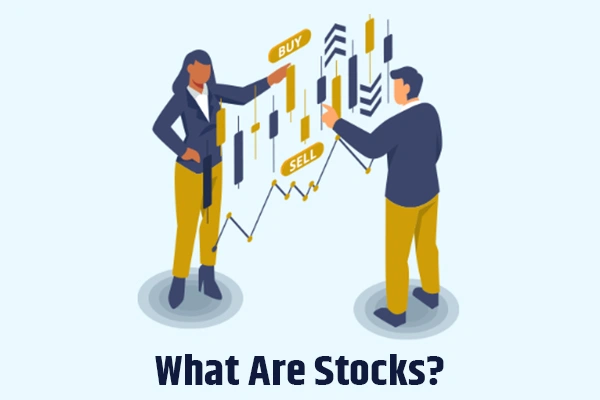
The stock market is the only place in the country to legally buy and sell pieces of a company. It is like buying a piece of the company; when you buy a company's stock, you make decisions with the money, you also buy it and you make that money grow. When you make a financial gain, you make a profit because making a profit is what it is all about. It is a digital market where you can buy and sell anything, but in this market, you are buying ownership of a company and can make financial decisions with your money.

The market is a place that connects people with the money to spend in where a company gets money to grow it, and people buy it to grow their money. It’s a place where people with money to spend connect with people who have growing their business. It’s a place where is a market connecting the two. It’s a place that is regulated by the Securities and Exchange Board of India (SEBI). It is there to make sure that business gets regulated.
What is the Stock Market and How Does It Work?
At first, learning how the stock market works may seem a bit tricky, but it is a relatively simple process. Getting to the bottom of how the stock market works, I will lay it out step by step.
The Basic Function
A company may use an IPO to sell its stock to the general public if it needs funding to expand. Once a company becomes public, its shares can be bought and sold on stock markets like the NSE or the BSE. Investors can use their own internet trading accounts or stock brokers to place buy and sell orders.
Investors can place buy and sell orders through stock brokers or their own online trading accounts. If a seller's asking price is the same as the buyer's offered price, a sell occurs. Prices of stocks can go up or down throughout the trading day depending on demand, how the company is doing, and how the economy and market as a whole are doing.
Major Market Participants
There are many different participants in the stock market for beginners and experienced alike. Stock exchanges such as the NSDL and CDSL are the storage depositories that keep electronic documents of the securities. SEBI is the stock market regulator and is responsible for maintaining the market's integrity by overseeing the entire system.
Exchange-traded companies must comply with certain transparency requirements, including the dissemination of their financial results within set deadlines, the occurrence of significant events, and any price-sensitive information that may alter their share price. This transparency is beneficial for decision-making by their stakeholders.

Types of Stock Market in India
The Indian financial system comprises several types of stock market segments with unique functions:
Primary Market
The primary market is that part of the financial market in which companies issue new securities for the first time. An IPO and Follow-on Public Offer (FPO) occur when you purchase shares directly from the company, and you are part of the primary market. The funds generated are for the company’s business undertakings, repayment of loans, and other business activities.
Secondary Market
Once the primary market transactions are complete, the shares are traded sequentially in the secondary market among the investors. This is where most of the daily trading takes place. The BSE and NSE are platforms for the secondary market where the shares are traded. The company does not engage in transactions with these market activities. Rather, the investors in the market trade with each other, and the price is set by the demand and supply in the market.
Equity Market
The Equity Market involves dealing with stocks that represent ownership in companies. People often refer to the stock market in India as the equity market. One can buy shares of companies like Reliance Industries, TCS, and also small and mid-cap companies.
Derivatives Market
This segment consists of trading in some contracts, the value of which can be stocks, indices, commodities, currencies, etc. Derivative instruments include options and futures. Derivatives are complex contracts, come with some risk, and are more suitable for advanced users. They are powerful when it comes to hedging and speculation.
Understanding Stock Exchanges
Understanding the part of the market system also has to do with the two main stock exchanges of the country. The BSE is the oldest stock exchange in Asia and has been since 1875. It has the Sensex, an index that tracks 30 of the most prominent companies. NSE was established in 1992 and is known for bringing electronic trading to India. It has the Nifty 50, which includes 50 stocks from various sectors and large market capitalisation.
Exchanges operate from Monday to Friday, 9:15 to 15:30. They have a pre-opening and post-closing period for order matching and settlement.
Basics of the Stock Market
Before you buy stocks in the stock market, you want to understand these basic concepts first:
Market Sensitive Indices
Sensex and Nifty 50 are market-sensitive indices and act as proxies for the overall market as they show the performance of certain stocks. As the Nifty rises, the mood of the market is positive.
Bear and Bull Markets
Bear and Bull are opposite sentiments. A Bull market is a phase when prices are rising and investors are feeling positive. On the other side, when prices are falling and investors are feeling negative, we are in a Bear market. Understanding these cycles in the market can help you decide where to place your money.
Market Capitalisation
Businesses are divided into three categories: small cap (< ₹5,000 crores), mid cap (between ₹5,000 and ₹20,000 crores), and large cap (> ₹20,000 crores). In general, small stocks can rise faster and are more volatile than large-cap firms.
Dividends and Capital Gains
When an investor sells a stock for more than they paid for it, they receive capital gains. A company's gains are distributed to its investors in the form of dividends. When creating your investment strategy, it's critical to comprehend both of these sources of revenue.
Why Invest in the Stock Market?
Several advantages come with the stock market in India. Always remember that in the long term, stock market investments yield better returns than fixed deposits and gold. For long periods of time, investments that grow at a rate faster than inflation preserve and boost the investor's buying power.
Over time, the market provides cash flow which allows investors to quickly convert investments to cash. Furthermore, investments in fractional shares, as well as systematic investment plans (SIPs) in equity mutual funds, allow those who wish to invest to do so with a limited amount of money.
Getting Started - Practical Steps for Beginners
To invest in the stock market for the first time, the first thing to do is to set out on the right path:
Open a Demat and Trading Account
You'll need a demat account to hold shares electronically and a trading account to execute buy/sell orders. Many brokers integrate both accounts. These accounts can be opened online using a PAN card, Aadhaar card, bank account information, and a photo.
Educate Yourself Continuously
It is easier than you think to learn about the stock market for beginners. Many resources can be found for free. There are so many books you can read, and you can also learn to follow the news for economic updates.
Understand the fundamentals of a company as well as some basic rules of analysis. Then think and remember that knowledge is your best protection against losses in the stock market.
Start Small and Diversify
Invest small amounts of money that you can afford to lose and "disrupt your lifestyle." Diversify across different companies and sectors so you minimise a portion of the risk you are taking.
A Long-term Strategy
Investing in the stock market requires patience. There will be volatile periods in the market, but if you stick to your investment for the long haul, you will most likely be rewarded.
Investing with Risks
Every investment you make will always come with a level of risk, and with "stock market basics," you are going to have to come to terms with this. There are always risks involved with a specific company, poor management, or a downturn in the overall market. Risks can come in the form of not being able to easily sell your stock, and not being able to control yourself in order to make consistent, logical choices in a market during a downturn.
These risks can be avoided by doing plenty of research on the stock or company you are investing in, putting limits on your stock to prevent new losses, and not investing any money you will need in the near future.

Common Mistakes to Avoid
- Newer investors tend to fall into the same traps repeatedly.
- First off, following 'hot tips' without doing your own research rarely works out.
- Then, trying to time the market is the same. Investors lose out in the long run.
- Also, checking your portfolio too often can lead to stressful situations.
- Ignoring tax consequences can lead to nasty surprises come tax time.
Conclusion
Your first step to creating wealth is understanding the fundamentals of the stock market. If you're in India, the stock market has plenty of possibilities for those who are disciplined, willing to learn, and invest in the long term. Everyone's journey to learning the stock market is lifelong, but starting off with the fundamentals also makes it easier in the long run.
Steady wealth over time is the goal of successful investing, not the opposite. This is a journey of constant learning, emotional discipline, and aligning your investments with your financial goals and risk tolerance. As the Indian economy shifts into higher gears, the stock market remains one of the best vehicles to benefit from the growth story. Be it individual stocks, mutual funds, or exchange-traded funds, the most important thing is to begin the journey prepared. Your future self will be grateful for the investment choices you make today.










.webp)