A CIBIL score continues to matter after retirement in India — it directly affects loan and credit card approvals, insurance premium pricing, and how easily a retiree can access emergency or relocation-related credit, even without a monthly salary.
Introduction
Retirement is often pictured as a finish line — the point where salary slips, EMIs on the mind, and credit checks stop mattering. In reality, your CIBIL score keeps working long after your last paycheque. It shapes the interest rate on a top-up loan, the premium an insurer quotes you, and even how smoothly you can downsize your home.
This matters more in India today than it did a decade ago. Retirees increasingly rely on a mix of pension income, the Senior Citizen Savings Scheme (SCSS), NPS or EPF withdrawals, and — when needed — credit. A weak credit profile at 62 can be just as costly as a weak one at 32, because retirees typically have less monthly cash flow to absorb a bad interest rate or a rejected application.
This guide covers exactly why your CIBIL score continues to matter after retirement, what score range actually counts as "good" today, and how to protect it using RBI-backed tools and habits.
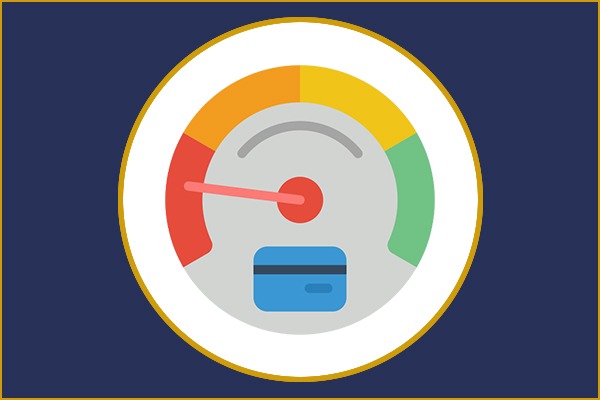
CIBIL Score: A three-digit number between 300 and 900, generated by TransUnion CIBIL Limited — one of four RBI-licensed credit bureaus in India (alongside Equifax, Experian, and CRIF High Mark) — that summarises an individual's credit repayment history and overall creditworthiness.

5 Reasons Your CIBIL Score Matters During Retirement
1. Lower Insurance Premiums
Indian insurers increasingly factor credit-based risk signals into how they price policies, alongside age, health history, and sum assured. A stronger CIBIL score signals financial discipline to an insurer — the same signal it sends a bank — and can translate into more favourable premium quotes on life, health, and even motor insurance renewals. Retirees on a fixed income benefit disproportionately here, since even a modest reduction in annual premium meaningfully eases a tighter monthly budget.
2. Easier Downsizing and Relocation
Many retirees look to move from a large family home into a smaller flat closer to children, a hometown, or better healthcare access. That transition often involves a bridge loan, a loan against property, or a top-up on an existing home loan to cover the gap between selling one property and buying another. Lenders lean heavily on the CIBIL score for these products precisely because retirees no longer have a salary slip to show — a strong score, steady pension credits, and a clean repayment history become the primary proof of repayment capacity.
3. Access to Reward-Bearing Credit Cards
Retirees who maintain a CIBIL score of 750 or above remain eligible for well-rated credit cards, including ones offering cashback, fuel surcharge waivers, and reward points on utility and medical bills — categories where senior citizens spend disproportionately. Used responsibly (paid in full each month), a credit card is also one of the simplest ways to keep a credit file active after regular salary-linked credit activity stops.
4. Faster Access to Emergency Credit
Medical emergencies, home repairs, or urgent family needs don't pause for retirement. Selling an asset like property or gold takes time; a personal loan or a loan against securities/FD often doesn't. A high CIBIL score is what allows a bank or NBFC to sanction that emergency credit quickly, at a reasonable rate, instead of routing the application through additional manual underwriting or rejecting it outright.
5. Freedom to Pursue Post-Retirement Ventures
A growing number of Indian retirees use the post-career years to start a small consultancy, a home-based business, or a franchise. Most of these ventures need some initial credit — equipment financing, a business loan, or simply a working-capital overdraft. A clean CIBIL history keeps that door open, letting retirees fund a long-deferred idea instead of depleting retirement savings to self-fund it.
What Counts as a "Good" CIBIL Score for Retirees? (2026 Ranges)
Lenders and bureaus use the following bands. The article's earlier reference to "650 or higher" as a strong score has been corrected — 650–749 is only "good," not top-tier.
|
Score Range |
Rating |
What It Typically Means |
|
300 – 549 |
Poor |
High rejection risk; very limited access to fresh credit |
|
550 – 649 |
Fair |
Approvals possible but with stricter terms and higher interest rates |
|
650 – 749 |
Good |
Reasonable approval odds; competitive but not the best rates |
|
750 – 900 |
Excellent |
Fastest approvals, lowest interest rates, highest credit limits |
How to Maintain a High CIBIL Score After Retirement
• Pay every credit card bill and EMI on or before the due date — payment history carries the single heaviest weight in the score calculation.
• Keep credit utilisation (balance vs. limit) below roughly 30% on any active credit card.
• Don't close old credit card accounts merely because they're unused; closing them shortens credit history and can raise your utilisation ratio.
• Limit new credit applications; each hard inquiry stays visible for 24 months and multiple inquiries in a short window can look like financial stress.
• Download your free full credit report once a year (from each of the four bureaus) and dispute any factual errors immediately — inaccurate entries are a common, avoidable drag on retiree scores.
Common CIBIL Mistakes Retirees Should Avoid
• Assuming retirement removes the need to track your credit score — lenders and insurers check it long after your last salary credit.
• Closing every credit card the day you retire, which can hurt both credit history length and utilisation ratio.
• Missing EMI or credit card due dates while adjusting to a pension-based income cycle.
• Co-signing or guaranteeing a loan for a family member without accounting for the risk it adds to your own credit file.
• Never reviewing the credit report for errors — outdated "settled" tags or incorrect DPD (Days Past Due) entries can silently suppress a score for years.
Retirement-Specific Financial Tools That Complement a Good CIBIL Score
A good CIBIL score works best alongside — not instead of — dedicated retirement financial planning. Three RBI/Government-backed options worth knowing:
• Senior Citizen Savings Scheme (SCSS): A government-backed, post-office/bank scheme for individuals aged 60+ (55+ for those retired under VRS/superannuation), currently offering 8.2% p.a. for the July–September 2026 quarter, paid out quarterly. Deposits up to ₹30 lakh are allowed, with a 5-year tenure extendable by 3 years, and contributions qualify for a Section 80C deduction up to ₹1.5 lakh.
• National Pension System (NPS): Continues to allow deferred, staggered, or lump-sum withdrawal after 60, and can be a source of steady post-retirement cash flow that supports on-time EMI and premium payments — which in turn protects your CIBIL score.
• EPF Withdrawal Planning: Structuring EPF withdrawals to avoid a sudden cash crunch reduces the temptation to miss a payment or take on high-cost credit shortly after retiring.

Conclusion
Retirement changes your income, not your creditworthiness requirements. Insurers, lenders, and even landlords continue to read your CIBIL score as a proxy for financial discipline — and for retirees living on fixed, pension-based income, that score can be the difference between a smooth downsizing move or emergency loan and a stressful, expensive one.
The good news is that maintaining a strong score after 60 takes fewer moving parts than building one from scratch: pay on time, keep at least one credit card active and lightly used, check your free annual credit report for errors, and pair it with dependable instruments like SCSS or NPS for income stability. Put together, these habits let you spend retirement on the things you actually planned for — not on cleaning up a credit file you stopped watching.

DISCLAIMER: This blog is NOT any buy or sell recommendation. No investment or trading advice is given. The content is purely for educational and information purposes only. Always consult your eligible financial advisor for investment-related decisions.









 72.jpg)