
1. Introduction
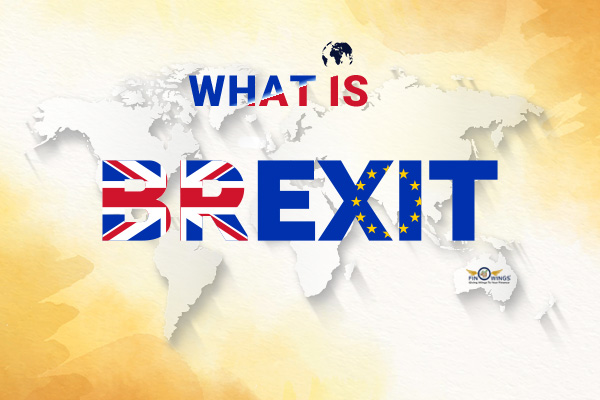
Brexit has been in the news in recent years. After Brexit, its impact is not only on the United Kingdom and the European Union but also on businesses and jobs worldwide. The United Kingdom is not just the name of a country but includes smaller countries. Scotland, England, Wales, and Northern Ireland are constituents of the United Kingdom. For the past few years, Brexit has become one of the most urgent tasks for the United Kingdom (UK), and most people in the UK were in support of Brexit.
Ultimately, December 31, 2020, was a historic day for the United Kingdom as the UK left the European Union (EU) on this day. Since the process of Brexit was very long, it made many headlines. Britain's two different prime ministers also lost their power due to Brexit. As a result, the United Kingdom's official ties with the EU are now completely over.
Today in this, you will learn in-depth about the process of Brexit and what the impact of Brexit on the global economy and brexit consequences on common life.
2. What Was Brexit?
For your information, the words Brexit combine "Britain" and "exit." Former lawyer Peter Wilding first coined the term in 2012. So Brexit means the divorce of the United Kingdom from the European Union.
If we talk about the history of the European Union and the UK, their partnership was not very sweet. For the past several decades, Britain wanted to get out of it. In 1975, a Brexit referendum was held in the UK, in which voters were asked whether they would remain in the European Union. The UK should and should not pursue its partnership with the EU. About 68% of people voted in favor of the European Union, which meant that most voters at that time were not in favor of leaving the EU.
In 2014, talks about the United Kingdom leaving the EU began to intensify when the United Kingdom Independence Party was formed. The main agenda of this party was that the United Kingdom would have to divorce the European Union; that is, the UK would have to Brexit. The party stood with this plan in the parliamentary elections of the European Union, in which they got 25% of the vote.
Then in the 2015 general elections, Britain's Conservative Party announced that they would hold a Brexit referendum, which would decide whether Britain should leave the EU. Their election promise led to a victory for the Conservative Party in the general election, and the UK found a new prime minister in David Cameron. As soon as he took office, he announced a referendum to decide on Brexit as soon as possible, and in 2016 he conducted a Brexit referendum in which 17.4 million or 51.9% of people voted to leave the European Union. However, the same 16.1 million, or 48.1%, did not favor Brexit. Thus got a majority in favor of leaving the EU.
3. The Brexit Deal Or Brexit Process
Brexit has been called a very long process because it took a few years to implement, even after the referendum. This is because article 50 of the Treaty of the European Union, signed in Lisbon, had to be applied for a country's exit from the EU even after the referendum. Under Article 50 of the EU, any country is required to notify the Union of the EU before leaving the EU.
This was the first time in the history of the European Union that Article 50 of the Treaty of Lisbon was being applied to a country. In March 2017, the UK signed a notification to be sent to the EU. Two years have been allotted to the European Union and the United Kingdom to negotiate their future relationship.
Even if no agreement is reached during the talks, the country can leave the EU.
The UK Parliament approved the Brexit deal between the UK and the EU in October 2019 in the following year, 2020. The agreement was then sent to the House of Lords, agreeing to the deal. This agreement was also accepted with royal consent. However, did you know that even after signing this agreement, the UK had to wait another 11 months to leave the EU officially?
4. About European Union
The European Union consists of 28 economically strong and independent European countries. Most European countries are part of this Union. You can also call it the organisation with the world's financial capital. The concept of a 'single market' was behind the foundation of the EU, under which Europe's trade is to be strengthened.
Citizens of EU member states are allowed to move freely in any other European country. The first meeting of the European Economic Community was held in Rome in 1957. In 1973, the UK ascended to membership in the European Economic Community, which in 1993 changed its name to the European Union. In 2012, the EU was awarded the Nobel Peace Prize for promoting peace and democracy in Europe.
-
Problems With The EU
The basic model and purpose of the European Union was the strong economic integrity for which it came into existence. However, the economic policies of the Union did not change over time. New economic policies in America and other countries have given birth to huge companies and posed a challenge to the EU. No new trade developed in Europe because of its old policies. Where America has become such a big economy alone, the EU, despite being such a big organization, cannot be overtaken by America even by combining the economies of all its countries.
The main reason is that America is paying special attention to technical areas like machine learning, while the European Union is far behind.
The EU has insisted on a single currency; the situation did not improve but worsened. The UK is also suffering a lot from all these problems; after joining the European Union, it lost instead of benefiting. Hence the idea of "‹"‹Brexit. Even today, the position of EU member states remains very weak.
5. What Were The Reasons Behind The Demand For Brexit?
-
The main reason the United Kingdom left the European Union was that after a few years of joining the EU, the UK realized that the country's decisions should be made within the country. The countries involved in the treaty cannot make economic decisions of their own accord; that is, membership of the EU means that the power to make decisions related to the country has now been vested in the European Commission.
-
The second most important reason for Brexit was the excessive bureaucracy involved in decision-making in the EU. Suppose a proposal comes in and has to go through many procedures and documentation. Many people in Britain believed that the UK economy was weakening only because of the EU.
-
The third reason for Brexit was that the EU took membership funds from all its member states. The EU used to charge membership fees based on the economic capacity of the countries. This amount seemed to the UK to be very large because it was not benefiting them at all.
-
The fourth reason for Brexit was that most British citizens did not want to lose their unique identity. That is, they were not happy with the citizenship of the EU, but they wanted the identity of their country Britain.
-
Immigration was one of the main reasons for Brexit. The EU had drawn up legislation regarding immigration for its member states, but the UK was not happy with this. Britain wants immigration to be around 100,000, not more than that. But according to EU law, its number was much higher. In this way, the population of immigration people in Britain was increasing continuously, due to which the local citizens were extremely upset.
-
Britain's argument for Brexit was that if they pulled out of the European Union, the UK had the potential to become an economic superpower in the future. Britain wanted a free trade market, which was impossible while staying in the EU. At the same time, the UK wants more trade with countries outside the EU.
6. Impacts Of Brexit On the United Kingdom And Global Economy
-
Britain will now be able to make its own decisions related to its country and will be able to make free trade.
-
The adverse impact of Brexit on the economy of the United Kingdom has been seen, and it will continue in the coming years. Britain's Gross Domestic Product (GDP) continues to deteriorate. Just a few days ago, it was reported that India had overtaken Britain to become the fifth-largest economy in the world.
-
Many economists have also predicted that the growth rate of Britain will slow down significantly for the next 15-20 years.
-
In a setback to the United Kingdom, the UK will no longer be a shareholder in the European Investment Bank after Brexit.
-
After Brexit, many European countries have expressed reluctance to trade with Britain, severely damaging Britain's international trade. A serious employment crisis would be in the coming years.
-
Along with this, the adverse effect of Brexit will also be seen in the European Union. Since the UK was the second largest contributor to the EU in terms of funds, this is likely to increase the burden on other member states.
-
After leaving the EU, the United Kingdom will no longer be a member of the Common Agricultural Policy. After Brexit, the UK could make its policies for the farmers.
-
The United Kingdom has also abandoned the EU's Common Fisheries Policy. It will affect their fishing business.
-
Britain often relied on the EU for its research and academia, as the EU provided good funding to Britain. Now the research field of Britain will be much affected. There may be a crisis of students and money for efficient research.
-
The UK may face security-related problems because the EU stands united against terrorism and security threats to all its member states. But this will no longer be the case for Britain.
-
The UK will be able to issue its policies on immigration. Now Britain will be able to make decisions keeping in mind the interest of their country. Immigration to the UK is expected to be low.
7 Conclusion
The impact of Brexit is still being seen in markets around the world. Brexit has been a bold move for the UK as they know its adverse effects will be for the UK in the long run. The Brexit referendum is not a legal vote but only a means of seeking public opinion. Brexit has not only affected the business of Britain but also negatively affected trade in Europe.







 72.jpg)