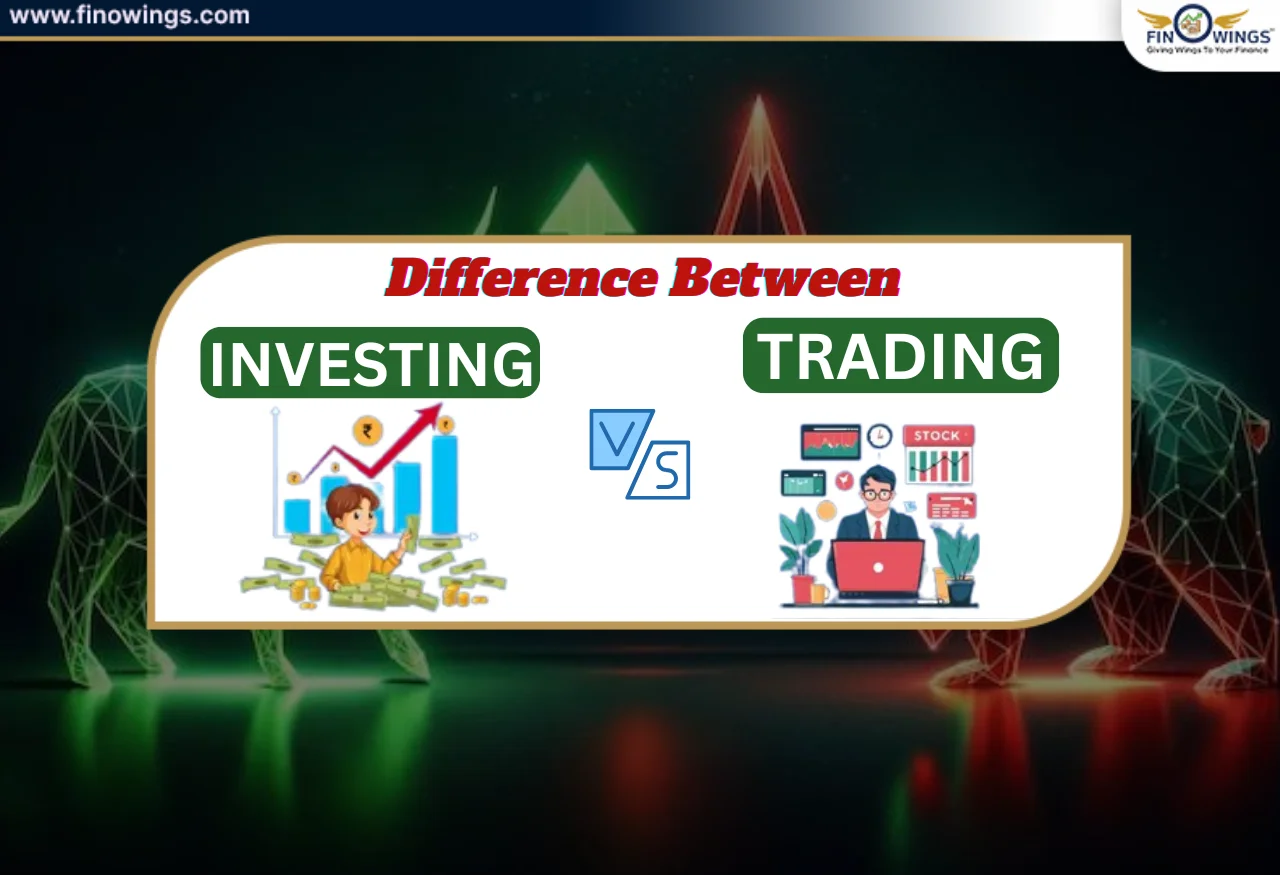
One of the most frequent misunderstandings among novices in the stock market is the distinction between trading and investing. Although the terms "stock trading" and "stock investing" are frequently used interchangeably, they actually relate to two quite different methods of generating wealth.
Some people want to profit by buying and selling stocks as often and as quickly as possible, while others like to hold on to good quality companies for many years and let compounding work its magic. This is the essence of the trading vs investing debate.
In this guide, we will help better understand trading vs investing, their meaning, potential returns, risk levels, time to commit and which approach is better for different kinds of investors.
What Is Trading?
Trading is the activity of buying and selling financial instruments (stocks or other assets) a number of times in a given time frame to achieve short-term gains in a given period of time.
In trading, the longer-term growth of the company is irrelevant. What matters is the focus on price trends, volume, momentum, and market psychology.

Kinds of Trading
The different kinds of stock trading include:
- Intraday Trading- Selling and buying stock on the same day.
- Swing Trading- Selling and buying stock within days or weeks.
- Positional Trading- Selling and buying stock within weeks or months.
- Options and Futures Trading- Making gambles on contracts.
Trading relies heavily on technical analysis, as opposed to stock trading and investing. A plethora of charts, indicators, and a stringent risk management system are employed.
What is Investing?
Investing means to put funds in stock assets to hold them for a long time, which could extend to years and even decades. Investors analyse the company's fundamentals, the growth in business revenue and profit, the quality of management in the company, and its competitive advantage.
The essence of long-term investing and trading is that time in the market has more significance than timing the market.
Types of Investing
Investing styles include:
- Long-term equity investing.
- Index investing.
- Dividends and growth investing.
- Value investing.
- Mutual fund investing.
And unlike trading, investing does not benefit from numerous compounding opportunities, paid dividends, and the growth in business over time.
Trading vs Investing: Key Differences
The purpose of this article is to highlight the major differences between trading and investing.
1. Time Horizon
Trading:
- Short-term.
- Timeframes can last from minutes to months.
- Decisions need to be made frequently.
Investing:
- Long-term.
- Positions need to be held for years or even decades.
- Focus on patience and consistency.
This is one of the largest differences in investing vs trading.
2. Objective and Mindset
Trading Objective:
- Profit from any movement in prices.
- Focus on volatility
- Timing is essential to determine when to buy and sell.
Investing Objective:
- Wealth building.
- Increasing the capital.
- Securing finances in the long term.
- In trading vs investing, traders think in terms of price movement, whilst investors think in terms of business growth.
3. Analysis Method
Trading:
- Technical analysis.
- Uses charts, indicators, and patterns.
- Sets levels for buying and selling.
Investing:
- Fundamental analysis.
- Understands and examines the financial statements.
- Uses ratios to assess the value and determine how quickly the growth is.
- In stock trading vs investing, this difference in analytics is critical.
4. Returns Potential
Trading Returns:
- - Can be high in short periods.
- - Inconsistent and skill-dependent.
- - Heavily affected by emotions.
Investing Returns:
- - Moderate, but stable.
- - Grows steadily over time.
- - Power of compounding boosts wealth.
From a consistency standpoint, even though trading has attractive returns, long-term investing vs trading will see investing come out on top.
5. Risk Level
Trading Risk:
- - High risk due to leverage and volatility.
- - Emotional stress is common.
- - Losses can happen quickly.
Investing Risk:
- - Lower risk over long periods.
- - Quality businesses recover.
- - Market corrections smooth out with time.
From a risk perspective, investing vs trading is clearly the safer approach for most individuals.
6. Capital Requirement
Trading:
- - Often requires higher active capital.
- - Margin and leverage are common.
- - Frequent transaction costs.
Investing:
- - Can start with small amounts.
- - SIPs and systematic investing are possible.
- - Lower transaction frequency.
This is what makes investing far more accessible than trading.

7. Time Commitment
Trading:
- Daily screen time is needed.
- Monitoring the market is mandatory.
- Requires considerable mental energy.
Investing:
- Daily time commitment is minimal.
- Reviews do not have to be frequent.
- Great for busy professionals.
With busy schedules, trading vs investing favors investing.
8. Emotional Involvement
Trading:
- Pressure is very high.
- There are risks for fear, greed and over-trading.
- Hard to maintain discipline.
Investing:
- Much calmer.
- Decisions are made by the fundamentals.
- Greater control and consistency.
- The psychology involved is key to the difference between trading and investing.
9. Taxation Impact
Trading:
- There are short-term capital gains taxes, and they are higher.
- There are more taxable events.
Investing:
- Long-term capital gains taxes are lower.
- Taxes are more favourable, improving overall returns.
- Investing vs trading is affected by taxes in the most significant of ways.
Investing vs Trading Comparison Table
|
Factor |
Trading |
Investing |
|
Time Horizon |
Short term |
Long term |
|
Risk |
High |
Moderate |
|
Returns |
Fast but unstable |
Slow but consistent |
|
Analysis |
Technical |
Fundamental |
|
Stress Level |
High |
Low |
|
Time Required |
Daily |
Periodic |
|
Suitable For |
Full-time traders |
Most investors |
Who Should Choose Trading?
- You can dedicate full-time hours.
- You enjoy the market and charts.
- You have strong emotional discipline.
- You accept high risk.
However, statistics show that most retail traders struggle to remain profitable consistently.
Who Should Choose Investing?
- You want long-term wealth creation.
- You prefer lower stress.
- You have a job or business.
- You believe in compounding.
For most people, long-term investing vs trading clearly favours investing as a sustainable strategy.
Can You Do Both Trading and Investing?
Yes, many accomplished market participants use a hybrid method:
- Core portfolio for long-term investing.
- Small capital allocation for trading.
- This way, you achieve the balance of stability and opportunity, appreciating the difference between trading and investing.
Trade vs Invest: Myths
Myth 1: Trading makes you wealthier more quickly.
No, consistency above all else.
Myth 2: Investing is boring
No, investing is what actually creates real financial freedom.
Myth 3: Everyone can trade successfully.
No, trading is a skill that is earned and requires tremendous discipline.
Final Verdict: Trading and Investing – Which is Better?
It depends, but for most people, investing is the smarter, safer, and more sustainable option. Trading requires time, skill, and emotional control. Investing requires patience, discipline, and a long-term vision.
The difference between trading and investing leads you to the right strategy paired to your financial goals, risk, and lifestyle.

Conclusion
The debate of trading vs investing is not about which is superior, but which is suitable for you. Trading is more focused on the short term and carries more risk, while investing is more focused on the long term and involves less risk.
If you enjoy market activity and can manage risk effectively, trading may complement your strategy. Investing generally leads to greater peace of mind and financial stability. Trading, on the other hand, concentrates more on market activity. However, being skilled and professional at risk management is crucial in this context.
Consistency, discipline, and clarity are the key factors here.

DISCLAIMER: This blog is NOT any buy or sell recommendation. No investment or trading advice is given. The content is purely for educational and information purposes only. Always consult your eligible financial advisor for investment-related decisions.

.webp)