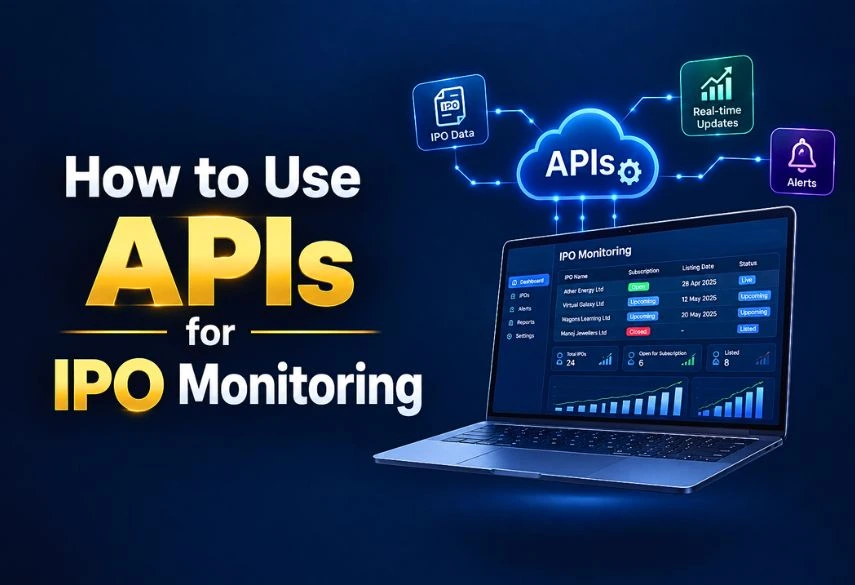
Keeping track of IPO activity has become increasingly difficult as investors and financial platforms need faster access to accurate market information. Checking multiple exchange websites, broker platforms, and financial news portals every day is time-consuming and often leads to delayed updates.
An IPO Monitoring API solves this challenge by providing structured IPO information directly to applications and systems. Instead of manually collecting data, developers can connect to an API and automatically receive details about upcoming IPOs, subscription status, grey market premium (GMP), allotment dates, and listing information.
For investors, an IPO data API helps track market opportunities. For fintech companies, it provides the foundation for building IPO calendars, investment dashboards, and automated alert systems.
This guide explains how IPO Monitoring APIs work, what features to look for, how to integrate them, and how businesses can use them to automate IPO tracking.
What Is an IPO Monitoring API?
An IPO Monitoring API is a technology interface that allows applications to access IPO-related information in a structured format, usually JSON.
Normally, users have to visit different websites to check IPO opening dates, subscription numbers, and listing details. An API removes this manual process by allowing software applications to request and receive updated IPO data automatically.

A typical IPO API can provide information such as company name, issue size, price band, subscription levels, opening and closing dates, allotment details, and listing information.
For example, a fintech app can use an IPO Monitoring API to display upcoming IPOs and automatically notify users whenever subscription numbers change.
Why Are IPO Monitoring APIs Important?
The IPO market moves quickly, and timing can influence investment decisions. When subscription data changes frequently, manually checking multiple sources becomes inefficient.
An IPO data API helps solve this problem by delivering updated information directly into applications.
For investors, this means easier tracking of upcoming IPOs and better access to subscription data. For businesses, it enables automation and allows them to create financial products without building a complete data collection system from scratch.
Companies can use IPO APIs to power:
- Investment platforms
- IPO tracking websites
- Financial dashboards
- Mobile applications
- Research tools
- Automated notification systems
How Does an IPO Monitoring API Work?
The process is simple. A user or application sends a request to the API server using an API key. The server processes the request and returns IPO information in a structured format.
For example, an application can request:
- All upcoming IPOs
- Currently open IPOs
- Subscription status of a specific IPO
- GMP updates
- Listing details
The application then displays this information through a website, mobile app, or internal dashboard.
This process allows developers to build real-time IPO tracking systems without manually scraping websites.
Important Features of a Good IPO Data API
Choosing the right IPO API provider is important because data accuracy directly affects user experience.
A reliable API should provide comprehensive IPO information, including issue dates, price bands, subscription details, and listing information.
For Indian markets, developers should look for APIs that support NSE and BSE IPO data because these exchanges are the primary sources for Indian IPO activity.
A good API should also provide:
- Real-time or frequently updated data
- Reliable uptime
- Clear documentation
- Secure authentication
- Flexible API limits
- Easy integration support
For businesses, additional features like historical IPO data and analytics can be valuable for creating advanced research platforms.
Best IPO Monitoring API Options
Different API providers focus on different markets and use cases.
Indian IPO-focused APIs generally provide information such as subscription numbers, GMP updates, and allotment details. These are useful for retail investors and Indian fintech applications.
Global IPO APIs may focus more on IPO calendars, company filings, and market research data.
Before selecting an API provider, businesses should compare pricing, documentation quality, update frequency, available data fields, and commercial usage options.
A simple comparison:
|
Feature |
Basic IPO API |
Advanced IPO API |
|
IPO Calendar |
Yes |
Yes |
|
Subscription Data |
Limited |
Detailed |
|
GMP Information |
Sometimes |
Usually Available |
|
Historical Data |
Limited |
Advanced |
|
API Limits |
Low |
Higher |
|
Business Usage |
Limited |
Suitable |
How To Use an IPO Monitoring API
Step 1: Select an API Provider
The first step is choosing an API that matches your requirements. A personal investor tracking upcoming IPOs may only need basic IPO information. However, a fintech company building an investment platform may require higher request limits, historical data, and reliable support.
Always check the API documentation before integration.
Step 2: Generate an API Key
Most providers require users to create an account and generate an API key. This key authenticates requests and allows the provider to track usage.
API keys should always be stored securely. Developers should avoid placing keys directly inside public code repositories.
Step 3: Test API Endpoints
Before building a complete application, developers should test available endpoints.
Common IPO API endpoints include:
GET /api/ipos
Retrieve IPO listings.
GET /api/ipos/open
Retrieve currently active IPOs.
GET /api/ipos/subscription
Retrieve subscription information.
Tools like Postman can be used to test API responses before development begins.

IPO API Integration Example Using Python
A basic Python integration can fetch IPO data using a simple API request.
python
import requests
url = "https://example-api.com/ipos"
headers = {
"Authorization": "Bearer YOUR_API_KEY"
}
response = requests.get(
url,
headers=headers
)
ipo_data = response.json()
print(ipo_data)
Once the data is received, developers can display it in applications, store it in databases, or trigger automated alerts.
Example IPO API Response
A typical IPO API response may look like this:
json
{
"company": "Example Technologies",
"status": "Open",
"price_band": "₹100-120",
"subscription": {
"retail": "4.5x",
"qib": "10x",
"nii": "7x"
},
"listing_date": "2026-02-15"
}
Applications can use this information to create IPO dashboards, comparison pages, and notification systems.
How To Automate IPO Monitoring
Automation is one of the biggest advantages of using an IPO Monitoring API. Instead of checking IPO websites manually, a system can automatically monitor changes and send updates.
For example, an automated IPO tracking system can notify users when:
- A new IPO opens
- Subscription crosses a certain level
- The closing date is approaching
- GMP changes significantly
- Listing information becomes available
This type of automation is useful for both individual investors and financial technology companies.
Real-World Use Cases of IPO APIs
An IPO Monitoring API can support many different applications. A retail investor can use it to create a personal IPO tracking dashboard that shows upcoming issues and subscription levels.
A fintech startup can integrate IPO data into its mobile application and provide users with real-time IPO updates.
Financial websites can use APIs to automatically publish IPO calendars and market information without manually updating every listing.
Research companies can analyze historical IPO trends and study relationships between subscription demand and listing performance.
Common Mistakes When Using IPO APIs
- One common mistake is sending too many API requests without considering rate limits. This can cause errors or temporary restrictions.
- Another mistake is ignoring security practices. API keys should always be protected because unauthorized access can increase costs or compromise systems.
- Developers should also implement proper error handling. APIs can sometimes return incomplete data, server errors, or delayed responses.
- Finally, relying on only one data source can create accuracy problems. Important financial information should always be verified through reliable sources.

Conclusion
An IPO Monitoring API provides a smarter way to collect and use IPO market information. Instead of manually checking multiple platforms, investors and businesses can access structured IPO data through automated integrations.
For developers, IPO APIs make it easier to build financial applications, dashboards, and alert systems. For investors, they provide faster access to important IPO updates. A reliable IPO data API combined with proper automation can transform IPO tracking from a manual process into a scalable technology solution.

DISCLAIMER: This blog is NOT any buy or sell recommendation. No investment or trading advice is given. The content is only for educational purposes. Always discuss with your SEBI-registered financial advisor for investment-related decisions.
Follow this WhatsApp Channel for the latest updates directly on WhatsApp.