Intraday vs Delivery Trading: Complete Comparison
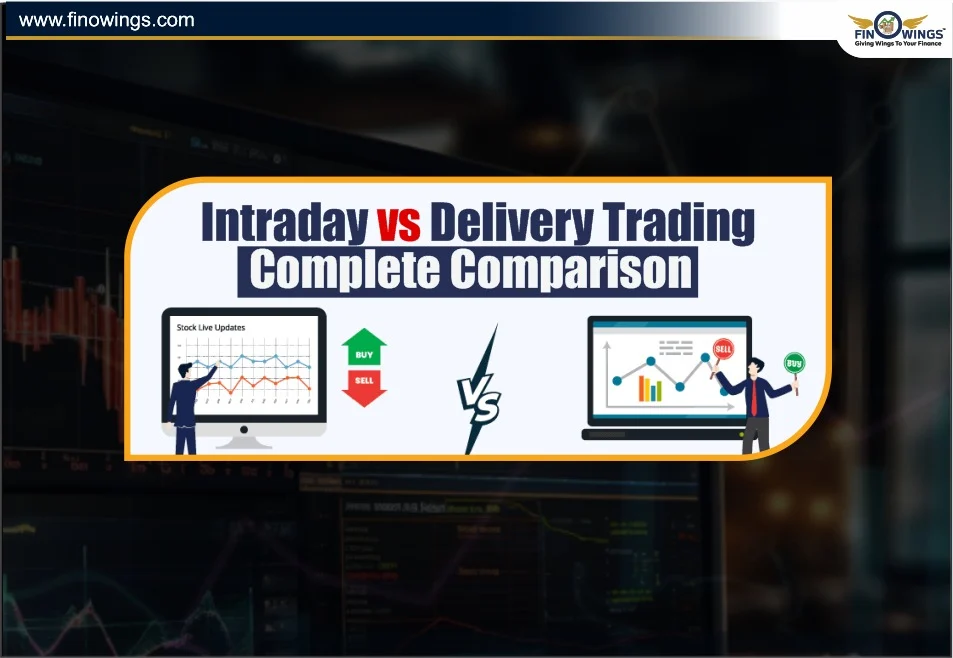
Trading in the stock market may be done in two broad categories: Intraday trading and Delivery trading. There exist advantages, disadvantages, duration, risks and plans of both. Nonetheless, many beginners get perplexed as a result of the difference between the delivery and intraday trading.
This highly comprehensive guide describes the distinction between intraday trading and delivery trading in the simplest terms possible so as to enable you to select the appropriate trading style based on your objectives, risks, and time frame.
Intraday Trading Explained
Intraday trading is trading in which stocks are bought and sold during a trading day. Before the markets close, you have to wind up. The primary aim is to make profits due to price movements that can take place very quickly, in several minutes or several hours.
Advantages of Intraday Trading.
-
Purchasing and selling stocks in a day.
-
No overnight holding.
-
Increased risk and possible gain come with increased price fluctuations.
-
Technical signals, market announcements, and market charts are followed closely.
-
Should be firm and focused when dealing with losses.
Most Suited For:
-
Those willing to trade actively.
-
Those willing to track markets live.
-
Individuals with a high risk tolerance.

What is Delivery Trading?
Delivery trading refers to buying shares and holding them for more than a single day. You can hold shares for a few days, months, or even years. This is the traditional investment style focusing on long-term value.
Core Characteristics of Delivery Trading
-
Shares are credited to your Demat account.
-
No obligation to sell shares on the same day.
-
Best for building wealth over the long term.
-
Less demanding than intraday trading.
-
No constant market surveillance required.
Most Suited For:
-
Those looking for long-term investments.
-
Individuals with a lower risk tolerance.
-
People are interested in building wealth over time.
Intraday vs Delivery Trading: All You Need to Know
This is the most important point for beginners to understand: the difference between delivery and intraday trading.
1. Holding Period
|
Aspect |
Intraday Trading |
Delivery Trading |
|
Holding Time |
Only for the same day |
Days, months, or years |
|
Compulsion |
Must square off by 3:15 PM |
No compulsion to sell |
Intraday profits are quick; however, delivery allows for long-term growth.
2. Risk Level
|
Aspect |
Intraday |
Delivery |
|
Risk Level |
High |
Low to Medium |
|
Reason |
Market volatility; large price swings |
Price fluctuations matter less in long term |
It is easy to lose your capital in intraday trading if you aren't careful. Delivery trading, on the other hand, allows for time to recover from losses.
3. Capital Requirement
|
Aspect |
Intraday Trading |
Delivery Trading |
|
Capital Used |
Less (margin/leveraged trading) |
Full payment required |
|
Margin Available? |
Yes, brokers offer leverage |
No margin facility |
Traders require less capital for intraday trading due to leverage, whereas delivery traders must pay the full price.
4. Brokerage Fees
Intraday– Cheaper brokerage fees
Delivery– Higher or sometimes zero brokerage (varies with brokerage firms)
Intraday brokerage fees are generally lower, but may accumulate significantly with frequent trading.
5. Earning Potential
|
Aspect |
Intraday |
Delivery |
|
Profit Speed |
Fast |
Slow (long-term compounding) |
|
Nature |
Speculative |
Wealth-building |
Intraday trading has the potential for rapid earnings but is also very risky, while delivery trading focuses on wealth accumulation over time.
6. Type of Analysis Needed
-
Intraday Trading.
-
Primarily uses technical analysis.
-
Involves various price charts, RSI, MACD, VWAP, etc.
-
Delivery trading.
-
Uses fundamental analysis mostly.
-
Company’s growth, earnings, management, and valuation.
-
This is one of the most obvious differences between intraday and delivery trading.
Benefits of Intraday Trading
-
Profitability is rapid.
-
Lesser brokerage fees.
-
Works well with lower amounts.
-
Suitable for quick market prospects.
Benefits of Delivery Trading
-
Best for investing long-term.
-
No pressure with time-based selling.
-
No margin penalties to worry about.
-
Compounding assists in growing your wealth.
-
Fits with SIP-shaped investing in stocks.
Risks of Intraday Trading
-
You may face high losses from market volatility.
-
You have to keep monitoring.
-
Margin trading will lead to more risk.
-
Emotional pressure and quick choices.
Risks of Delivery Trading
-
More capital is needed.
-
Returns will take time.
-
Stock can take a long time to perform.
-
Issue of high brokerage with some brokers.
Deciding What to Choose
Choose Intraday Trading if:
-
You have time to keep an eye on the market.
-
Knowledgeable in analysing with charts.
-
High risk is something you can handle.
Choose Delivery Trading if:
-
A steady and long-term result is your preference.
-
You want to keep the risk to a minimum.
-
You focus on the fundamentals of investing.
-
You aim to grow your wealth over time.
Most beginners opt for delivery trading first as it is the safer and experienced option of the two.
Delivery and Intraday Difference in a Line:
Intraday trading = Buy and sell on the same day for profits.
Delivery trading = Hold shares for a long time.

Conclusion
Intraday vs Delivery trading is among the first few very important decisions for any beginner starting their journey in the stock market. Understanding intraday and delivery difference allows you to determine the most suitable strategy for yourself based on the level of risk you are comfortable with, your capital, and the time you have available. While intraday trading is high risk and very fast, delivery trading is slow but offers the potential for long-term and consistent wealth creation. Choose any style that is in line with your goals and experience.

DISCLAIMER: This blog is NOT any buy or sell recommendation. No investment or trading advice is given. The content is purely for educational and information purposes only. Always consult your eligible financial advisor for investment-related decisions.