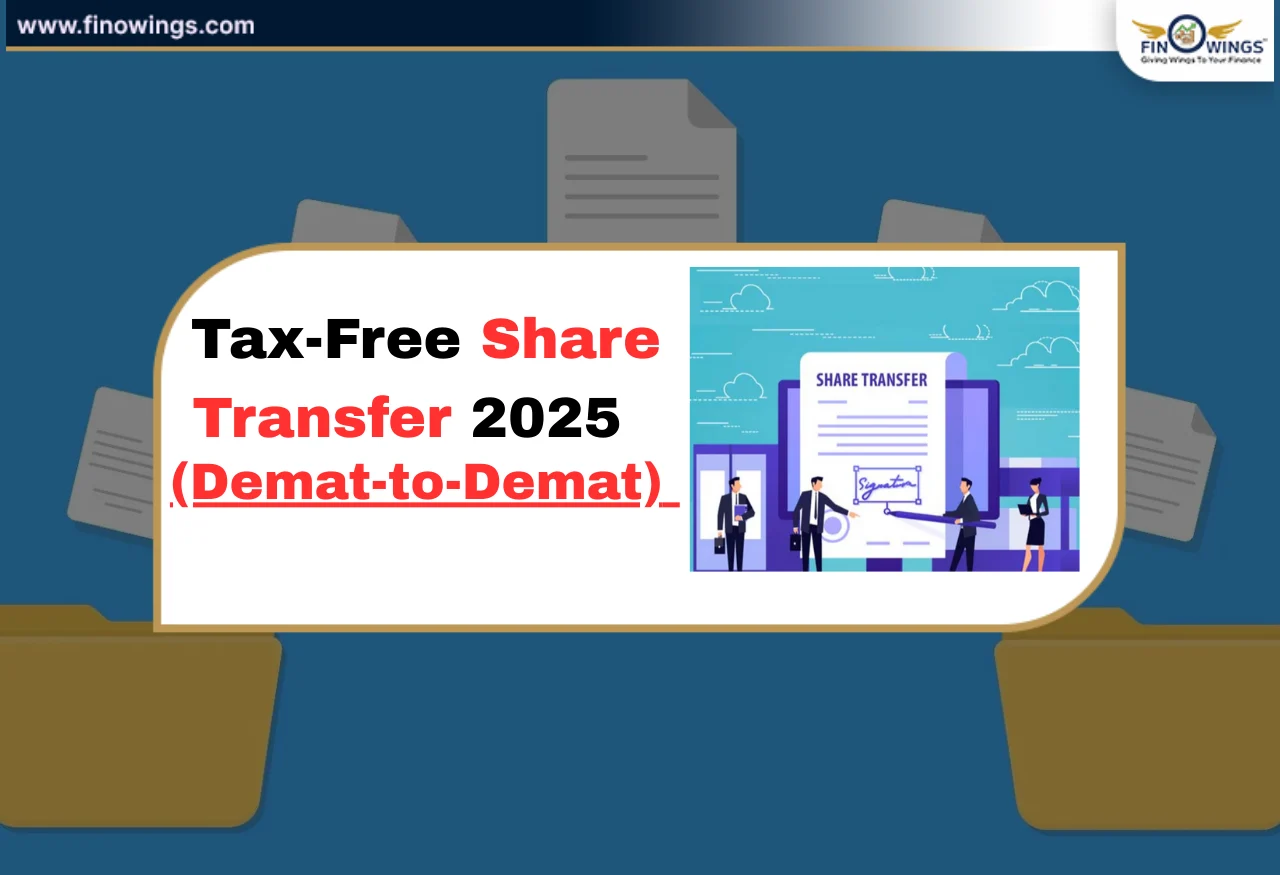
On the surface, the idea of transferring shares from one Demat account to another seems complex and overwhelming, but not everyone has the same reason to worry about the transfer of shares and Demat accounts in the same way. Most investors become concerned about tax liability, paperwork, the potential for capital gains, and the legal hoops to jump through.
What is often still not as well known as it should be is that a Demat to Demat share transfer indeed can be accomplished completely tax free, as long as you execute the transfer in the right way and have the correct paperwork following the transfer.
As such, in this blog, we’re going to discuss the tax-free share transfer 2025 regulations as well as the specifics of the tax-free share transfer process, and then provide you with the instructions to demat your shares and transfer them without triggering capital gains tax.
Because this blog is covering the tax-free transfer of shares, you’ll be in the right place if you’re planning to change/diversify to a different broker, giving family and friends the gift of shares, or if you’re in the tax-free transfer of shares from Demat to Demat.
Demat-to-Demat Share Transfer Video Breakdown
What Is a Demat-to-Demat Share Transfer
A Demat-to-Demat transfer is the transfer of shares from one Demat account to another, where you do not sell the shares in the market.
There is no buying and no selling involved in the transfer. Only the ownership is shifted.
Example Promo Codes
-
From Zerodha Demat to Upstox Demat
-
From father’s Demat to son’s Demat
-
From HDFC Securities to Angel One.
Why Are Investors Doing This More in 2025?
This multifaceted movement stems from several trends:
-
Shifting to low brokerage platforms.
-
Gifting shares to family.
-
Switching from a full-service broker to a discount broker.
-
Planning inheritance.
-
Portfolio consolidation.
-
Tax planning.
As more people learn the demat-to-demat share transfer method, stock market participation in India continues to rise.
Are Demat-to-Demat Transfers Taxable in 2025?
This is the biggest question asked by every beginner. If I transfer shares from one Demat to another, do I pay capital gains tax? Answer is NO. There is no capital gains tax because no “sell transaction” occurs. Meaning the transfer is tax free.
When Is Share Transfer NOT Tax Free?
There are tax rules you must know. If the transfer occurs in return for money, then it becomes a sale. If the transfer happens without a valid reason, the IT department may treat it as a sale. If the transfer happens to evade capital gains a tax notice may come your way.
So the key is to document the reason and maintain proof.
100% Legit Ways to Do Tax-Free Share Transfer 2025
There are many circumstances in which you can transfer shares without tax. This includes:
-
Family gifting
-
Inherited shares
-
Consolidation of portfolio
-
Change of demat account
-
Migration of the broker
-
Closure of joint account
-
If documented correctly, the transfer will be non-taxable.
Gifting Shares - Tax Free?
Yes, there is no tax incurred when shares are transferred as a gift. However, there are conditions the recipient must be a relative, it is recommended to have a gift deed, no money can be involved, relatives are defined as Parent, Child, Spouse, Siblings.
Gifting is one of the most effective tax-free share transfer methods.
Capital Gain Calculation After Transfer
The original holding period continues even after the shares are transferred.
Example:
You bought shares in 2020, you transferred them to your son in 2025, the holding period will still count from 2020. If he sells the shares later, it will be considered long-term capital gains (LTCG). This is a great tax planning method.
Required documents for tax-free demat transfer
-
Client Master Report
-
PAN
-
Gift deed (optional but recommended)
-
Relationship proof (optional)
-
Delivery Instruction Slip (DIS)
Demat to Demat Transfer Methods (2025)
There are two ways:
-
Online transfer through CDSL/NSDL- Easiest method.
-
Offline transfer using DIS slip- Broker route.
Both methods are offered by brokers.
Demat to demat share transfer process (Step-by-step)
Step 1: Log into your Demat Account
The easiest is CDSL
Step 2: Select ‘Transfer Shares’
Step 3: Add receiving Demat Account Number (BO ID)
Step 4: Select the stocks you want to transfer
Step 5: Confirm the transaction
Step 6: OTP verification
This is the official demat to demat transfer process.
Offline Procedures (Manual Procedures)
You fill out a Delivery Instruction Slip (DIS) and hand it to your broker. Details Required
• ISIN
• Stock's Name
• Number of Shares
• Receiving Demat ID
• Reason for Transfer
Is There A Fee For Demat Transfer?
Yes, normally between 10 rupees to 50 rupees per ISIN, which is very cheap compared to the cost of selling the shares!
Types of Transfers
|
Type |
Meaning |
|
Intra-depository |
Same system (CDSL to CDSL) |
|
Inter-depository |
CDSL to NSDL or vice-versa |
Can You Transfer Mutual Funds?
Yes, a Demat also allows for the transfer of mutual funds. And is still tax-free if there's no sale.
Warning - When Tax May Apply
Tax applies if you:
- sell and re-buy
- transfer as a sale.
- transfer with payment.
- transfer to non-relative for money.
Biggest Advantages of Tax Free Share Transfer 2025
|
Benefit |
Explanation |
|
No capital gains |
100% tax-free transfer |
|
No brokerage |
No sale, so no charges |
|
Long term benefits |
LTCG benefit continues |
|
Ownership flexibility |
Easy family planning |
|
Estate planning |
Easy inheritance process |
Best Use Cases in 2025
-
Skirting custodians of shares to discount brokers - Zerodha, Angel, Upstox.
-
Tax-free gifting shares to children.
-
Tax-free inheritance planning.
-
Transfer shares for tax savings.
Who Should Use Demat Transfer?
- Long-term investors
- Parents investing for children
- People switching brokers
- High-net-worth individuals doing tax planning
- Retiring investors
Practical Tax Example
Assume you’ve bought 100 shares at ₹100. Now price = ₹300. You transfer to your wife then no tax. Regarding the case when the original owner must sell later, the following must be considered:
Capital Gain: On the owner’s selling date.

Conclusion
Without breaking any laws and abusing the guidelines, Demat to Demat share transfer in 2025 will be both legal and tax-free, and properly documented. Investors can freely use the tax-free share transfer 2025 guideline when sharing shares as a gift, changing brokers, or merging portfolios. If you use the tax free transfer guide to initiate the share transfer process, you will not incur capital gains.

DISCLAIMER: This blog is NOT any buy or sell recommendation. No investment or trading advice is given. The content is purely for educational and information purposes only. Always consult your eligible financial advisor for investment-related decisions.


.webp)