Anthropic's New AI Tool Just Triggered a Massive Crash in Indian IT Stocks – Is the End of Outsourcing Near?
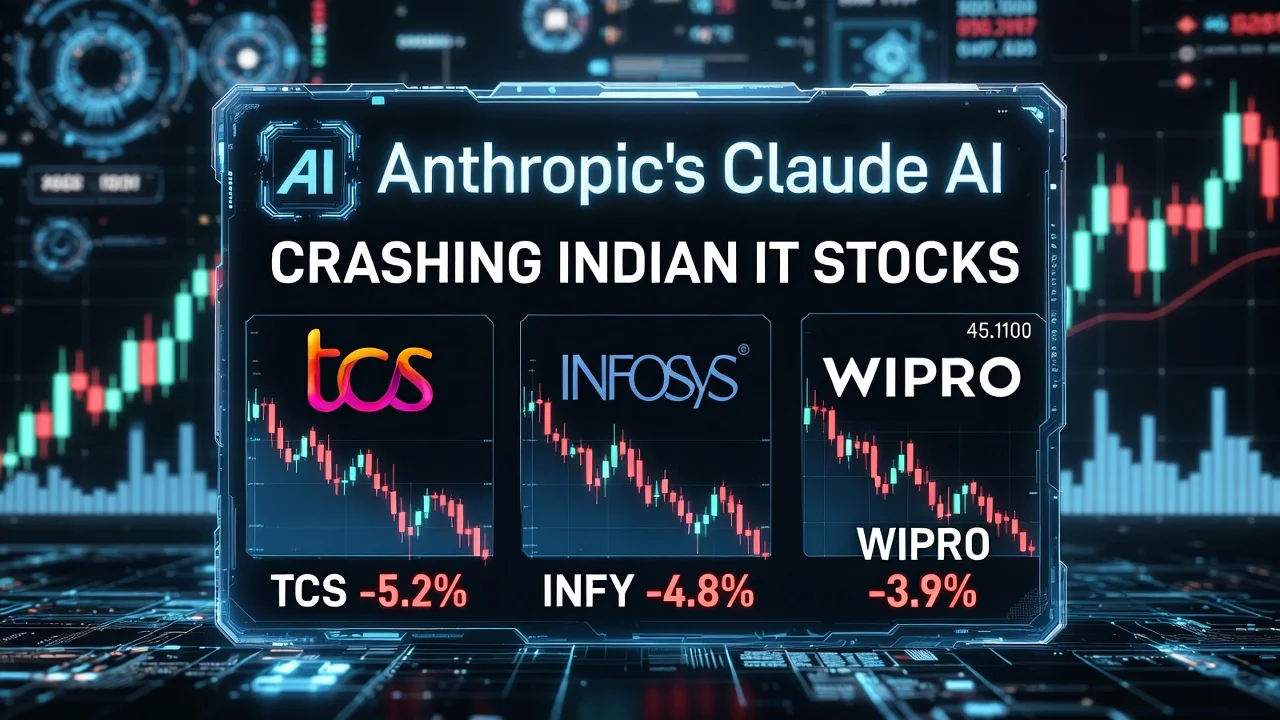
Anthropic's latest AI advancements, particularly the Claude Cowork suite with new plug-ins and automation capabilities, have sparked widespread fears of job and revenue disruption in the labor-intensive Indian IT sector. On February 4, 2026, the Nifty IT index plunged nearly 6%, with major players like Infosys, TCS, Wipro, HCLTech, and Tech Mahindra dropping 5-8% in a single day. This sell-off erased billions in market value and mirrored global losses in software stocks, as investors panicked over AI tools that could automate routine tasks traditionally outsourced to Indian IT firms.
Claude AI Crashes Indian IT Stocks
The core reason? Anthropic's AI agents now handle end-to-end workflows in legal, coding, sales, marketing, data analysis, and compliance — reducing the need for large human teams and challenging the headcount-based billing model that powers India's $283 billion IT industry.

What Is Anthropic's New AI Tool?
Inside Claude Cowork and Its Game-Changing Features
Anthropic recently expanded its Claude AI ecosystem with the Claude Cowork suite, introducing plug-ins and agents that go beyond simple chat assistance. These tools act as autonomous AI coworkers capable of executing complex, multi-step tasks with minimal human input.

Key features include:
- Legal automation — Contract reviews, NDA drafting, legal summaries, compliance monitoring, and routine document handling.
- Coding and development — Writing, testing, refactoring production-grade code, and automating development workflows.
- Sales and marketing — Lead generation, content creation, campaign automation, and customer interaction coordination.
- Data analysis and finance — Building financial models, analytics reporting, compliance checks, and internal data processing.
- Workflow orchestration — Coordinating tasks across departments independently, bypassing traditional software platforms like Salesforce or ServiceNow.
Unlike earlier AI assistants, these tools promise to replace repetitive white-collar work, not just support it — raising alarms about long-term disruption in software services and outsourcing.

Why Did Indian IT Stocks Crash?
The Direct Threat to the Sector's Core Model
Indian IT giants have built empires on large-scale staffing for client projects, billing based on headcount and hours. Anthropic's AI tools threaten this by automating high-margin, routine tasks at a fraction of the cost.
Major risks include:
- Reduced demand for entry-level roles — Routine coding, testing, data entry, and basic analysis can now be handled by AI agents.
- Pressure on billable hours and margins — Clients may opt for AI-driven solutions, squeezing vendor utilization rates and pricing power.
- Shift from human labor to AI efficiency — India's comparative advantage in cost-effective bulk work could erode if enterprises adopt these tools directly.
- Broader SaaS and software disruption — AI bypassing platforms threatens recurring revenue models, with ripple effects on IT service providers.
Analysts note that Indian IT firms, with their heavy reliance on staffing, face structural challenges. The Economic Survey 2025-26 warned of AI concentration risks, potentially hollowing out India's IT value proposition without rapid adaptation.
Stock Market Bloodbath: How Bad Was the Damage?
The reaction was swift and severe:
-
Nifty IT index — Dropped 5.9-6.3%, marking one of the worst days since March 2020.

-
Major Indian IT stocks:
- Infosys: -7.3% to -8%
- TCS: -5.8% to -7%
- HCLTech: -5.1%
- Tech Mahindra: -4.5% to -6%
- Wipro: -3.9%
-
Global impact — U.S. software stocks like Intuit (-10.89%), Accenture (-9.59%), Adobe (-7.31%), and Salesforce (-6.85%) led losses, wiping out over $280 billion in market cap. European legal software firms (e.g., RELX, Wolters Kluwer) fell over 10-15%.
This wasn't isolated — fears spread from AI optimism to anxiety, with investors repricing headcount-heavy models.
Expert Opinions: Is This a Temporary Dip or Long-Term Threat?
Analysts are divided but cautious:
- Systematix Group: Integration of Claude could reduce dependency on large vendor teams, squeezing margins and threatening entry-level talent.
- Jefferies: Dubbed it the "SaaSpocalypse," signaling potential obsolescence for traditional software-as-a-service models.
- Reuters sources: Indian IT faces unique vulnerability due to labor-intensive operations.
- Broader view: While AI enhances tools (as Nvidia's Jensen Huang argues), rapid advancements from players like Anthropic signal structural resets.
Many experts see overreaction, but agree adaptation is essential.
Unique Insights Missing from Other Reports: India's Path Forward and Hidden Opportunities
While most coverage focuses on the crash, key angles are overlooked:
- Historical parallels — Similar fears arose with cloud computing, yet Indian IT pivoted to cloud services and grew stronger.
- AI-native opportunities — Firms like TCS and Infosys are already investing in AI platforms; those that integrate tools like Claude could lead in AI consulting.
- Employment evolution — Short-term job displacement risks exist, but upskilling in AI governance, ethics, and deployment could create higher-value roles.
- Geopolitical angle — AI concentration in U.S. firms raises supply chain risks; India's talent pool positions it to develop sovereign AI solutions.
- Long-term resilience — Strong client relationships, scale, and domain expertise provide buffers — AI may augment rather than fully replace human oversight.

Final Thoughts: Adaptation or Extinction for Indian IT?
Anthropic's AI tool highlights accelerating disruption in IT services, but it's not game-over. The sector must accelerate AI adoption, reskill workforces, and shift toward value-added services. Investors should watch for companies leading in AI integration.
For more on AI trends, check our guide on AI Disruption in Outsourcing. Read the full Anthropic announcement here or Reuters coverage here.
Read Next: Best AI Stocks Companies in India (2026): Top Picks & Analysis
Read Next: AI Bubble: Impact on the Stock Market

DISCLAIMER: This blog is NOT any buy or sell recommendation. No investment or trading advice is given. The content is purely for educational and information purposes only. Always consult your eligible financial advisor for investment-related decisions.