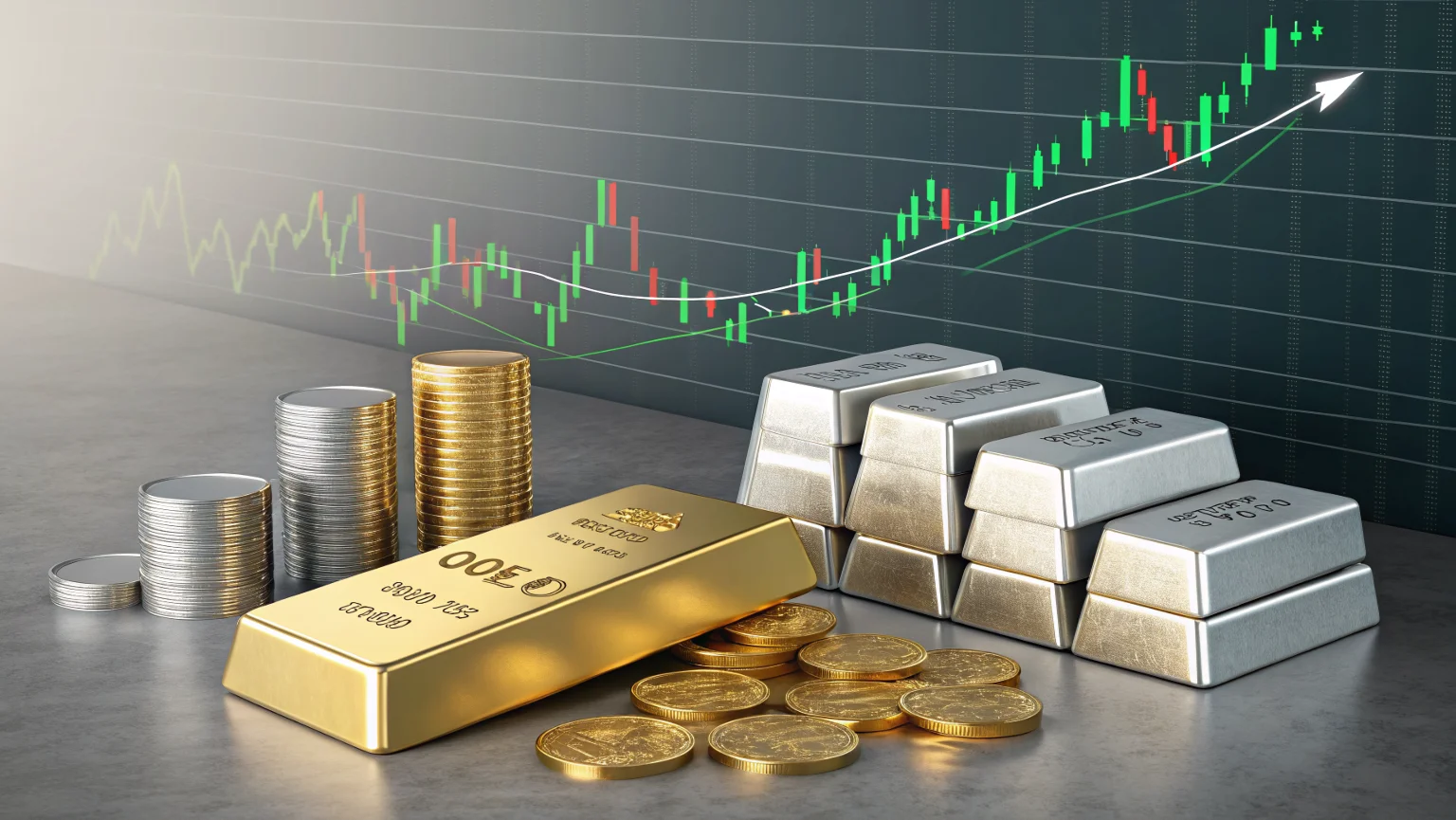
Precious metals began 2026 on a wild ride. Gold hit a peak price of $5,599 per ounce and Silver went over the $120 mark, setting the record on the same date. After setting these new records, however, the market fell dramatically. Gold fell over 20% and Silver fell over 30-40% in just a few days. Gold and Silver have shown renewed optimism, with Gold climbing over 6% and Silver over 12% in a single session. In addition, Gold also Silver also went up 2% on a few days in the meantime.
With these price movements, the debate in the precious metals community has been especially active. Is the uptrend in the prices showing that the worst has passed for Gold and Silver? What price movements should be expected going forward? From a price perception point of view, these price movements of Gold and Silver, and potential strategies for investing in Gold and Silver, drive the focus of the readers.
In this analysis, we shall determine the reasons for price volatility, assess price movements of Gold and Silver, and suggest possible strategies for investment in Gold and Silver.

The Recent Gold Silver Rebound: What Sparked the Jump?
The gold silver rebound occurred during a market recovery phase, following aggressive profit-taking and macroeconomic signal adjustments. Heavily selling precious metals was the result of dominant factor sell-offs such as the Fed chair nomination cycle and/or macro shock to the market with the Fed tightening and or Fed Chair speculative nomination.
Futures contract delivery on gold was recorded at $4,900-$4,974 on the recent exchanges, and silver was at $86-$88. The gains were recorded over a few days and posted significant spikes, $4,900- $4,974 were gains in the bond market, inflation and yields. In the silver market on the same days, a measured 2% increase was posted and even on days with a measured inflation and bond market yields of 2%.
The spike is in a pattern of precious metal spikes following correction, especially when the fundamentals remain positive, and we see the increased gold buying by central banks, the gold buying as a hedge against national currency collapses, increasing geopolitical tensions, and the decreasing real inflation rate in economies, especially the United States.
Precious Metals Analysis: What Fuels the Volatility?
In precious metals analysis, the central point is the interplay of numerous factors.
1. Macroeconomic Background- Gold and silver benefit from a market shift. The primary driver is the increased volatility of the debt market, which yields increasing inflation and a decreasing real interest rate.
2. Industrial vs. Investment Demand- Gold remains primarily a monetary asset. In contrast, silver is both an investment and has an industrial role (solar panels, electronics, EVs). The supply deficit of silver is widening, adding bullish pressure.
3. Geopolitical and Policy Risks- Global tensions and the central bank's international reserve purchases, especially from emerging markets, provide a floor for prices.
4. Market Sentiment- Extreme volatility in early 2026 saw liquidations, but the quick rebound suggests buyers stepped in aggressively at lower levels.
Gold Price Outlook for 2026 and Beyond
Drafting a gold price outlook remains predominantly bullish amongst the largest analysts. Many analysts estimate gold prices averaging 4,000 to 5,000 dollars per ounce in 2026, with a handful of estimates growing to lengths of 5,400 and 6,000 dollars in the longer run. Goldman Sachs and J.P. Morgan highlight central bank demand, investor hedging against policy risks, and sustained inflation as primary contributors (tailwinds).
Even though a price correction has recently transpired, the role gold has played in portfolio diversification is displayed in uncertain times. The price correction gold has recently faced has pulled back momentum, and with macro consensus demonstrating lower bound rates, easing geopolitical stability concerns, gold will likely test new heights as we close out the year.
Silver Price Outlook: Higher Volatility, Greater Upside?
The silver price outlook has changed continuously. Silver significantly outperformed gold during the end of 2025 and the beginning of 2026, and since then, an even steeper pullback from that gold price level has occurred. During that snowball pullback, analysts suggested that there were still strong fundamental reasons, such as the chronic industry supply deficits and the rapidly increasing demand from industry due to the Green demand. From that perspective, the price should rise to 100 dollars in 2026 because of these reasons.
The price for the remainder of 2026 is estimated to be between 56 and 65 dollars. From a fundamental standpoint, which means a price for silver that is no longer available, will be significantly above that stated price level (66 dollars and above). It has also been noted that silver outperformed gold by 2x to 3x, and with that noted, it will also be a significantly volatile price (high risk, high reward consumption/play). The rest of the recent increase in price has shown silver’s leverage again.

Is the Worst Over for Gold and Silver?
The strong corrective gold silver move does suggest, at least for now, that the outcome of this move is significantly far down the road. The symbol from the correction show that at some level, gold and silver prices likely do not move significantly to the upside. Over the stated time period analysed, there is some evidence that the stated price and the time period observed do appear to correlate. On the downside, gold prices have a level of support that corresponds with what you would expect from this scenario.
It is also very likely that the further you are away from that level, the pricing will stay the same due to that price level not being very elastic (gold price). For now, panic may have receded, but expect volatility to continue stemming from the US dollar, tightening monetary policies, and the flow of funds into safe havens.
It should be acknowledged that the broad structural bullish case, legal tender reserve accumulation, safe-haven demand, silver’s industrial consumption, and central banks buying more silver, for more panic, appear to reflect better conditions ahead for silver than the recent destructive period of selling. Getting to a more stable trading range remains ahead.
Expectations for the Long-Term Gold/Silver Investment Strategy
With the current ongoing risks and opportunities for those looking into gold and silver investment, consider the following strategies and guidelines that are sensible in the present circumstances. Gold/silver investment, alongside other strategies, gives an opportunity.
- Portfolio Diversification- Invest 5-15% in precious metals for diversification against inflation, currency, and market volatility. Gold is a cushion for price volatility; silver is a wild card for growth.
- Paper vs. Physical- Physical investment (coins, bars) may have storage and transaction costs, while keeping the investment is more illiquid. Financial investment in gold/silver mutual funds (ETFs) provides more liquidity and more cost efficiency, but less safety and weaker diversification.
- Market Order Liquidity- Gold/silver prices move to the best decimal places. Gold provides liquidity and is more stable in its price measure than other market soft instruments. An order for a market asset. Cost efficiency in storage is a deal for gold. Gold savings impact the market negatively (roadside).
- Market Order DCA- Invest a fixed amount after defined intervals in the market and feel less in the future after the recent very sharp price increase of gold and silver.
- Key Price Thresholds- Support may be seen in gold at around $4,600-$4,700 and silver around $80. Breaks may be seen at these prices to confirm the trend and give rise to support.
- Combination of Assets- Doing a focus on precious metals to balance and store safety may appear good, and more than is recommended, is doing of these, but focus on assets on the other side of the balance sheet.
Long-Term Perspective: If the fundamentals (debt levels, de-dollarisation, green energy transition) make sense to you, the current dip-turned-rebound may be a decent entry point.

Conclusion
The most recent jumps, 2% (or more), and increasing prices of gold and silver have reignited interest in precious metals. The gold and silver rebound, after experiencing a historic correction, shows possible stabilisation. Precious metals analysis shows the gold price outlook and silver price outlook for 2026 shows the upside. Investing in gold and silver requires a thought-out plan, with a focus on diversification, patience and presence of mind to the risks.
Whether you are a long-time holder or are thinking of entering the market, following macroeconomic trends is important. Precious metals have historically rewarded investors with a long-term perspective rather than quick trades. The worst may be over, but the road up is likely to be bumpy. Prepare yourself.

DISCLAIMER: This blog is NOT any buy or sell recommendation. No investment or trading advice is given. The content is purely for educational and information purposes only. Always consult your eligible financial advisor for investment-related decisions.