How to Analyze an IPO?
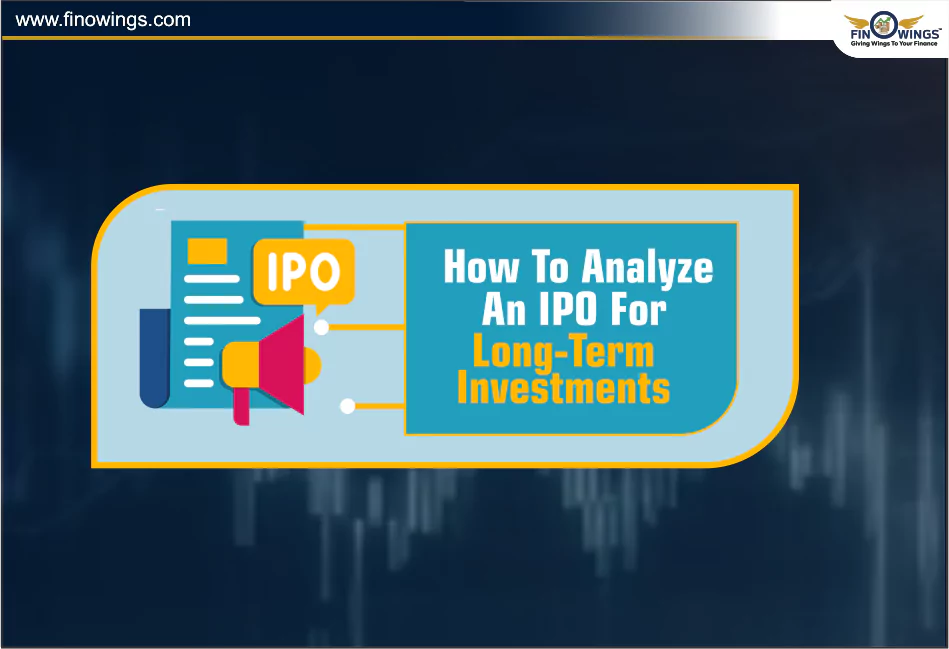
The last year saw an uncountable number of IPOs that have shaken both short-term and long-term investments. This is for people who want to invest money in an IPO for the long-term as an actual listing benefit; if this is you, then read on. In this guide, one will learn about how to analyze an IPO or simply figure out whether a particular IPO has a bright long-term prospect for returns.
Here are critical factors to analyze before investing in any IPO:

1. Analyse the Purpose of the IPO
Every IPO has its reason, which will be stated in the company's Red Herring Prospectus (RHP) or Draft Red Herring Prospectus (DRHP). Broadly speaking, IPOs could fall into the following 2 components:
Fresh Issue: The funds raised will be utilized for the company's business operations, expansion, or growth.
Offer for Sale (OFS): An existing investor, for example, a promoter or private equity, sells off its shares.
Key Insight:
It may be a red flag if the OFS portion is much greater than the fresh issue. This may mean that existing investors have less potential for growth in the company. A greater proportion of the new issue ratio is favorable because it indicates the company has been raising the money for operational growth or expansion.
2. Evaluation of Fund Use
However, in a fresh issue, how does the company propose to utilize the money collected from the issue? The moneys are earmarked as:
Expansion or Acquisitions?
This is a positive sign because it clearly shows growth-oriented objectives and allows you to invest further with positive expectations from your investment.
Example: Route Mobile's IPO in the year 2020 was for acquisitions, repayment of loans, and setting up new offices. Route Mobile IPO received a good response, and this stock has been continuously yielding high returns since its listing.
Debt Repayment?
When that is usually very serious, one needs to keep in mind the high debt-equity ratio of a company by also checking the interest coverage ratios of such companies as found in their RHP. It indicates the ability of that company to pay for the interests attached to the debts it has incurred.
Ideal Benchmark: An interest coverage ratio at least equal to or above 2 is optimal.
Example: In NTPC Green Energy's IPO, the interest coverage ratio was explicitly mentioned so that investors would know beforehand how healthy the company was financially.
3. Check for Working Capital Requirements
Some raise funds for working capital needs. This is common, but if operating cash flows are reported as generally below expectations, it may be inefficient. Be very careful!
On the other hand, if the company intends to use funds for strategic acquisitions or to expand its market dominance, normally it is a good signal.

4. Scrutinize Promoter and Investor Activity
On the other hand, if over-enthusiastic promoters or weighty shareholders are showing heavy sell signs from their main investments, one should ask:
Has the promoter lost interest in this company's operations?
Is it personal finance?
Large sell-offs of equities by promoters also leave behind an expectation of the growth of the company.
5. Get to know the Anchor Investor Data
They are institutional investors who allot their money in an IPO even before the actual public offer of it. Their investment in it provides heeding evidence on one side of the coin for the IPO. More data know-how in detail of anchor investors gives the impression of an added bolstering.
6. Be Open to Post-Listing Investments
In case you are unlucky not to get an allotment in the IPO, this does not mean that everything is over. You still have the opportunity to learn more about the company after its listing. If the fundamentals and growth opportunities remain strong, you might want to consider investing post-listing.
Conclusion
Steady investing long-term by IPO exploring needs serious analysis. Just understand the purpose of the company, its financial health, as well as red and green flags before investing. Short-term listing gains should not be confused with long-term investment tactics.
When in doubt, use the company's RHP and anchor investor data for informed decisions. It is important to remain alert and conduct proper research to make investment decisions.

DISCLAIMER: This is NOT any buy or sell recommendation. No investment or trading advice is given. The content is purely for educational and information purposes only. Always consult your eligible financial advisor for investment-related decisions.