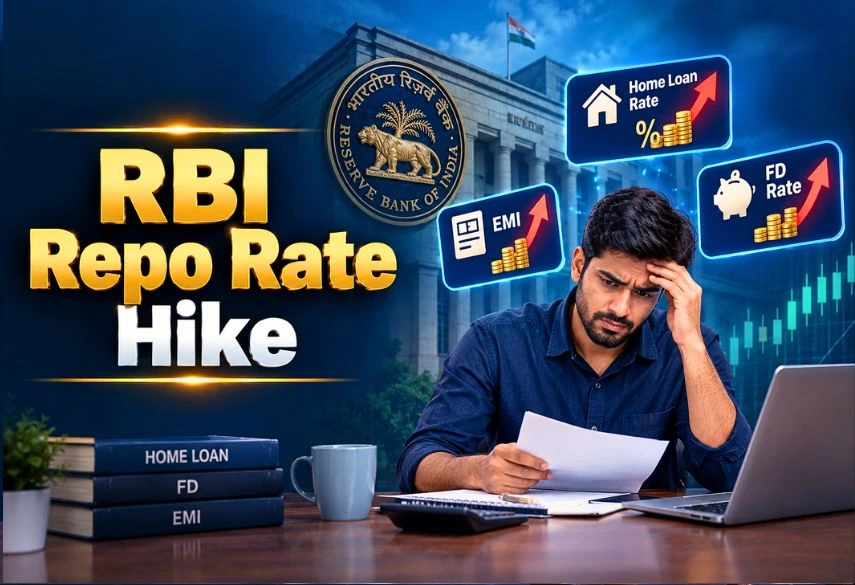
The Nifty 50 Stocks represent the biggest and most traded firms on the NSE and span industries such as consumer goods, energy, and finance. As a result, they are an essential part of doing business in India and are frequently used to describe the overall condition of the Indian market.
The following sections contain a list of the top 5 Nifty 50 stocks to invest in. We will also see the benefits & risks of investing, Nifty 50 companies' share details, their strengths, and weaknesses.
What Is the Nifty 50?
A free-float market-capitalization-weighted index is the Nifty 50. This means larger firms with more freely tradable shares carry more weight and have a greater impact on the index's movement. About 37% of the index is made up of financial services alone, with oil and gas, IT, cars, and FMCG following.
Although the index itself cannot be purchased, you can invest through Nifty 50 index funds or exchange-traded funds (ETFs) that attempt to replicate its performance. This approach is preferred by many long-term investors since it provides immediate diversity across the top Nifty 50 companies without the need to select winners one at a time.
Benefits of Investing in Nifty 50 Stocks
1. Diversification: By combining businesses from other industries, it lessens the impact of a single industry's bad performance.
2. Market Leaders: The index comprises the top 50 blue-chip and Nifty companies, all of which have strong earnings, outstanding management, and a proven track record of expansion.
3. Liquidity: Nifty 50 stocks are quite liquid, which is great for investors because purchasing or selling them won't have a big impact on their price.
4. Money Creation: It has already demonstrated steady growth, making it a sensible choice for long-term investors looking to build money.
5. Transparency: The criteria used to select stocks for the index are clear and available in the public domain, as managed by NSE (National Stock Exchange).

Risks Involved in Investing in Nifty 50 Stocks
-
Certain sectors like IT, oil, and banking may dominate the index and increase the risk level if there happens to be turbulence within those industries.
-
The Nifty 50 suffers because it is greatly affected by shifts in the global economic landscape, international events, and policy changes, all of which have negative impacts.
-
Over time, growth will slow as Nifty 50 companies are large-cap stocks, unlike mid-cap or small-cap stocks.
-
The performance of stocks added to or removed from an index may be unsatisfactory and affect returns.
Nifty 50 Stocks List
5 top Nifty 50 Stocks in 2026, as per ticker tape, are provided below with no buy or sell recommendation.
1. Reliance Industries Ltd. Share Details.
About
Reliance Industries Limited (RIL) is India's largest business group with diversified interests in petrochemicals, telecom (Jio), retail, digital services, and renewable energy. It is currently managed by Mukesh Ambani. RIL has major investments from Google, Meta, and foreign investors, which aid in India's most valuable company's expansion.
Reliance Industries Share Price is Rs. 1160 as of 13 Oct 2026, while writing this information.


Strengths
-
Petrochemicals, retail, telecom ('Jio'), and green energy development decrease Reliance's risk associated with dependent revenue sources.
-
Due to its large presence in telecom (Jio) and retail, this is among the largest companies in India; this gives Reliance its competitive advantage.
-
Reliance has high revenue generation and investor confidence. The company also puts a lot of investment into 5G and renewables.
Weaknesses
-
The company is at risk of financial loss because of heavy borrowing to expand its operations in Jio and retail.
-
Being a large conglomerate, Reliance faces considerable regulatory scrutiny, policies, and legal challenges.
-
The crude price volatility itself increases risk considerably to Reliance, which operates in oil and gas and its other major diversified sectors.
Reliance Industries Dividend History
The history of Reliance Industries dividend payment is shown below-

2. Bharti Airtel Ltd. Share Details
About
Representing India, Sri Lanka, and 14 African nations, Bharti Airtel Ltd is a prominent telecommunications service provider operating in 18 countries.
Airtel share price is Rs. 1799 as of 13 Oct 2026, while writing this information.


Strengths
-
Airtel has a vast network in both urban and rural regions, guaranteeing connectivity and reliable high-speed internet.
-
As a telecom provider, it serves mobile, broadband, DTH, and enterprise solutions.
-
Airtel has a comprehensive brand loyalty scheme, as it is one of the most as well as oldest and most dependable telecom brands in India.
Weaknesses
-
For price-sensitive customers, Airtel's plans compared to Jio's are often higher which is a major issue.
-
Although Airtel's coverage is extensive, there are still issues with network congestion in highly populated areas, causing slow internet access and frequent call drops.
-
Airtel gets a lot of its revenue from India, which is good because of the monopoly; however, it exposes the company to regulatory and competition risks.
Bharti Airtel Dividend History

3. HDFC Bank Ltd. Share Details
About
HDFC maintains its base in Mumbai and, as such, is an Indian company providing banking as well as financial services. HDFC is considered one of the biggest private banks in India in regard to assets owned, alongside being ranked 10th worldwide in market capitalization in May 2024.
HDFC Bank Share price is Rs. 714 as of 13 Oct 2026.


Strengths
-
It is said to be India's largest private sector bank, and the bank has a very high market share in retail and corporate banking.
-
It has a well-developed digital banking infrastructure with seamless access to online banking and mobile banking services.
-
The bank has shown an all-time steady rise in revenues, with very low NPAs (Non-Performing Assets) and impressive profitability over the years.
Weaknesses
-
It has become highly dependent on retail loans, wherein most of its revenues come from retail loans and hence goes through turbulent phases in times of recession.
-
Compared to global banks, HDFC Bank has a much smaller international picture.
-
Being the Fastest Private Bank, it has to deal with extreme regulatory activities and this does hamper a few operational functions with penalties now and then.
HDFC Bank Dividend History
The history of HDFC Bank dividend payments is shown below-

4. ICICI Bank Ltd. Share Details
About
ICICI Bank ranks as the second largest private bank in India and caters to retail, SME, and corporate customers. The Bank has an extensive network of branches, ATMs and other touchpoints.
ICICI Bank Share price is Rs. 1362 as of 13 Oct 2026 while writing this information.


Strengths
-
With numerous branches and ATMs all over the country, this private-sector bank is one of India's largest and most accessible.
-
The bank has robust mobile and web portals, allowing easy and quick online transactions. It is a leader in digital banking and offers various innovative fintech solutions.
-
ICICI is an all-in-one service provider that also deals with retail and corporate banking, investment banking, insurance, wealth management, and more.
Weaknesses
-
ICICI, like many Indian banks, has faced NPAs, which have been an issue, afflicting profitability and overall quality of assets.
-
The bank has been reported to take a long time to respond to clients, impose undisclosed fees, and overall delay providing service.
-
Large banks like ICICI have to deal with a lot of regulations, compliance, and strict laws, which limits operational flexibility and profit maximization.
ICICI Bank Dividend
The history of ICICI dividend payment is shown below-

5. State Bank of India Ltd.
About
State Bank of India is a Fortune 500 company and India’s largest bank by assets, deposits, and branch network. More than 22,000–23,000 branches and 60,000+ ATMs across India, plus 240+ overseas offices in nearly 30 countries.
The Government of India is the majority shareholder (around 55.5%). SBI is classified as a Domestic Systemically Important Bank (D-SIB) by the RBI, one of the “too big to fail” banks alongside HDFC Bank and ICICI Bank.
SBI Share price is Rs. 956 as of 13 Oct 2026, while writing this information.


Strengths
-
Largest Network & Scale – SBI has the biggest branch and ATM network in India (22,000+ branches and 60,000+ ATMs) plus a huge customer base of over 50 crore. This gives it unmatched reach, especially in rural and semi-urban areas.
-
High CASA (Current Account & Savings Account) ratio helps SBI raise money at a lower cost than many private banks, supporting better net interest margins.
-
Majority ownership by the Government of India and its status as a Domestic Systemically Important Bank (D-SIB) provide stability and trust among depositors.
-
Strong presence in retail, corporate, and treasury banking, plus profitable subsidiaries (SBI Life, SBI Cards, SBI Mutual Fund, etc.) that add non-interest income.
Weaknesses
-
Although improving, SBI still carries higher Gross and Net NPAs compared to top private banks, which can pressure profitability during economic slowdowns.
-
Larger workforce and older systems sometimes lead to a higher cost-to-income ratio and slower digital adoption compared to agile private sector peers.
-
Being a public sector bank, decision-making can be influenced by policy priorities, which may limit pure commercial flexibility at times.
-
Private banks are gaining market share in high-margin segments (retail loans, wealth management, digital banking) due to better customer service and technology.
SBI Dividend History
The history of SBI dividend payment is shown below-


Conclusion
The NIFTY 50 represents the performance of 50 prominent companies from various sectors of the Indian economy. The Nifty 50 stocks' composition and value are shaped by market conditions, economic factors, and the performance of individual companies. As the index is reviewed periodically, the Nifty 50 index constituents show the evolving dynamics of the Indian stock market.
(Sources: nseindia.com , dhan.co, tickertape, economictimes.indiatimes, Screener.in)

DISCLAIMER: This blog is NOT any buy or sell recommendation. No investment or trading advice is given. The content is only for educational purposes. Always discuss with your SEBI-registered financial advisor for investment-related decisions.
Follow this WhatsApp Channel for the latest updates directly on WhatsApp.

.webp)




 (1).webp)