Cryptocurrency adoption in India has grown rapidly over the last few years. Thousands of Indian investors now explore Bitcoin, Ethereum, altcoins, DeFi projects, and new token launches, hoping to find the next big opportunity.
However, this growth has also attracted scammers. Fake cryptocurrency projects, fraudulent investment platforms, and rug pulls are targeting Indian investors through Telegram groups, WhatsApp communities, YouTube promotions, fake apps, and social media influencers.
Many scams look professional at first. They have attractive websites, impressive whitepapers, fake partnerships, and promises of huge returns. Some even create fake trading dashboards showing imaginary profits to convince users to invest more money.
The biggest mistake investors make is trusting hype before research. A trending token does not mean it is genuine. Before investing in any crypto project, Indian investors should perform proper crypto project due diligence by checking the team, smart contract, tokenomics, liquidity, security audits, and actual product development.
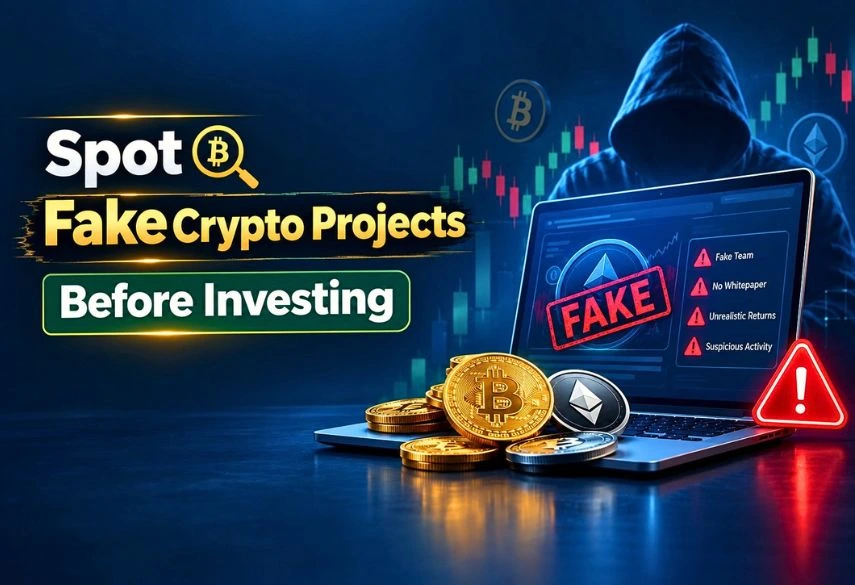
Learning how to spot a fake crypto project in India can help protect your money and prevent costly investment mistakes.
Why Crypto Scams Are Increasing in India
Indian investors are attractive targets for crypto scammers because the market has a large number of beginners entering digital assets for the first time. Scammers often use common psychological tricks:
- Fear of missing out (FOMO)
- Fake success stories
- Urgent investment opportunities
Many fraudsters create fake Telegram and WhatsApp communities where members pretend to make huge profits. New investors see screenshots of fake earnings and believe they are missing a profitable opportunity.
Real crypto projects focus on technology, development, and long-term adoption. Fake projects focus mainly on creating excitement and collecting investments quickly.
10 Fake Crypto Project Red Flags Indian Investors Should Know
1. Anonymous or Fake Founders
A legitimate crypto project should provide information about its founders, developers, and advisors. Before investing, research:
- Founder background
- LinkedIn profiles
- Previous projects
- Developer activity
- Company registration details (if available)
Some blockchain projects may have anonymous founders, but complete anonymity combined with unrealistic promises and no accountability is a major warning sign. A genuine project should have some level of transparency about the people building it.
2. Guaranteed Returns and Fixed Profit Promises
One of the biggest crypto investment scams in India involves guaranteed profit claims. Be careful if someone promises:
- Fixed daily income
- Monthly guaranteed returns
- Risk-free crypto investment
- Double money schemes
- Guaranteed 10x or 100x growth
Cryptocurrency prices are highly volatile. No genuine project can guarantee profits. Professional crypto projects explain risks and market conditions instead of promising unrealistic earnings.
3. Fake Crypto Investment Apps and Websites
Many Indian investors have faced scams through fake crypto platforms that look similar to genuine exchanges. These platforms may show:
- Fake account balances
- Fake trading profits
- Fake withdrawal options
- Fake customer support
The investor deposits money but cannot withdraw funds later. Always verify:
- Official website domain
- Company details
- App publisher
- User reviews
- Security reputation
Never install crypto apps from random links shared through WhatsApp or Telegram.
4. Suspicious Smart Contract
Every crypto token operates through a smart contract. Checking the contract before investing is an important part of crypto project due diligence. Important things to verify:
- Is the contract verified?
- Can developers mint unlimited tokens?
- Can they block selling?
- Are transaction taxes controlled by owners?
- Are there hidden functions?
Blockchain explorers and security scanners can reveal many technical risks. A token with dangerous owner permissions can allow developers to manipulate investors.
5. Unlocked Liquidity and Rug Pull Risk
A rug pull happens when project developers remove liquidity and abandon the token, causing investors to lose money. Before buying any new token, check:
- Liquidity lock status
- Lock duration
- Liquidity ownership
- Developer wallet activity
Projects with unlocked liquidity carry higher risk because developers may remove trading funds anytime.
6. Poor Token Distribution
Token distribution shows who controls the cryptocurrency supply. A risky project may have:
- Large percentage owned by founders
- Few wallets controlling most tokens
- No vesting schedule
- Early investors holding excessive supply
If a small group owns most tokens, they can sell large amounts and crash the price. Always check holder distribution before investing.
7. No Real Product or Technology
Many fake crypto projects in India focus more on marketing than development. Warning signs:
- No working application
- No testnet
- No developer updates
- No technical documentation
- Only future promises
A whitepaper filled with technical words does not prove a project is legitimate. Investors should ask: "Can I see something working today?" If the answer is no, be cautious.
8. Fake Influencer Promotions
Crypto influencers on YouTube, Instagram, Telegram, and X can influence investor decisions. However, paid promotions do not mean a project is trustworthy. Be careful when influencers:
- Promise guaranteed profits
- Show only profits
- Create urgency
- Do not disclose sponsorships
Always perform your own research before investing.
9. Telegram and WhatsApp Pump Groups
Many Indian crypto scams operate through private groups. Common signs:
"Buy before listing"
"Guaranteed pump tonight"
"VIP signals"
"Insider information"
These groups often create artificial demand and encourage users to buy before dumping tokens on them. Real investment decisions should not depend on anonymous messages.
10. Fake Partnerships and Celebrity Claims
Scammers often display famous company logos or celebrity images to create trust. Always verify:
-
Official announcements
-
Company websites
-
Verified social media accounts.
A logo on a website is not proof of a partnership.

How Indian Investors Can Perform Crypto Project Due Diligence
Follow this process before investing:
Step 1: Research the Team
Verify:
- Founder identity
- Professional background
- Previous experience
- Public reputation
Step 2: Verify the Token Contract
Check:
- Contract address
- Code verification
- Holder distribution
- Owner permissions
Step 3: Analyze Tokenomics
Review:
- Total supply
- Team allocation
- Vesting schedule
- Investor distribution
Step 4: Check Liquidity
Confirm:
- Liquidity lock
- Lock period
- Pool ownership
Step 5: Check Real Product Development
Look for:
- Working platform
- Active updates
- Developer activity
- User adoption
Free Tools to Check If a Crypto Project Is Legitimate
Indian investors can use these free tools for basic research:
|
Tool |
Purpose |
|
Etherscan / Blockchain Explorers |
Check contracts and transactions |
|
Token Sniffer |
Detect risky token behaviour |
|
RugCheck |
Analyze Solana token risks |
|
GoPlus Security |
Security analysis |
|
De.Fi Scanner |
DeFi risk detection |
|
CoinMarketCap |
Market data verification |
|
CoinGecko |
Token information and history |
These tools cannot guarantee profits or safety, but they help identify common scam patterns.
Common Crypto Scams Targeting Indian Investors
Fake Crypto Trading Platforms
Scammers create fake exchanges showing fake profits and blocking withdrawals.
Fake Mining Investment Schemes
Users are promised passive income from imaginary mining operations.
Fake Airdrops
Users are asked to connect wallets or share private information to claim rewards.
Recovery Scams
After losing money, victims are contacted by fake recovery agents promising to recover funds for additional fees.
Real Crypto vs Fake Crypto Project
|
Feature |
Genuine Project |
Fake Project |
|
Team |
Transparent founders |
Hidden identities |
|
Product |
Working technology |
Only promises |
|
Contract |
Verified |
Hidden risks |
|
Community |
Technical discussions |
Only hype |
|
Tokenomics |
Clear distribution |
Insider control |
|
Marketing |
Educational |
Pressure tactics |
How to Stay Safe While Investing in Crypto in India
Follow these basic safety practices:
- Never share your wallet seed phrase.
- Do not connect your wallet to unknown websites.
- Avoid guaranteed return schemes.
- Verify official links before transactions.
- Research before buying new tokens.
- Invest only money you can afford to lose.
- Keep long-term holdings in secure wallets.
Crypto security starts with investor awareness.
Quick Checklist: Is This Crypto Project Safe?
Before investing in any cryptocurrency project, check these points:
- Is the founding team real and professionally verified?
- Does the project have a working product?
- Is the smart contract verified?
- Are token holders and distribution transparent?
- Is liquidity locked?
- Does the project promise guaranteed returns?
- Are promotions based only on hype?
- Are official links and contract addresses verified?
If a project fails multiple checks, avoid investing until proper research is completed.

Conclusion
The cryptocurrency market offers innovation and opportunities, but it also requires careful decision-making. Fake crypto projects continue to target investors through attractive marketing, unrealistic promises, and emotional manipulation.
The best protection is knowledge. Before investing in any cryptocurrency project, research the team, verify the smart contract, analyze tokenomics, check liquidity, and confirm that a real product exists.
For Indian investors, taking a few minutes for crypto project due diligence can prevent major financial losses. Do not invest just because everyone is talking about a token. Invest only after understanding what you are buying.
Read Next: How to Open an Account on Delta Exchange India
Read Next: Top 10 Cryptos to Watch in January 2026
Read Next: Top 5 Cheapest Crypto Tokens to Buy in 2026

DISCLAIMER: This blog is NOT any buy or sell recommendation. No investment or trading advice is given. The content is only for educational purposes. Always discuss with your SEBI-registered financial advisor for investment-related decisions.










.webp)