.jpeg)
SoftBank Group Corp. is a Japanese technology holding company founded by Masayoshi Son in Tokyo in 1981. It owns telecom operator SoftBank Corp., controls chip designer Arm, runs the SoftBank Vision Funds, and — after a follow-on deal signed in February 2026 — expects to have invested about US$64.6 billion in OpenAI for roughly a 13% stake. It has also put more than US$15 billion into Indian startups such as Paytm, Ola, OYO, Swiggy, Meesho and Lenskart. Its shares trade in Tokyo under code 9984.
Definition: SoftBank Group: a listed investment holding company whose value comes mainly from the shares it owns in other companies (Arm, OpenAI, SoftBank Corp., Vision Fund portfolio) rather than from selling its own products. Investors often judge it by its net asset value (NAV) — the value of those holdings minus net debt.
What Is SoftBank Group and What Does It Do?
SoftBank Group Corp. is best understood as a holding company with a telecom business attached, not as a telecom company that happens to invest. The parent company sits on top of several very different businesses, and each one contributes to its value in a different way.

The SoftBank Vision Funds invest in technology companies around the world — Vision Fund 2 is also the vehicle holding SoftBank's OpenAI stake. SoftBank Corp. is the separately listed Japanese mobile and broadband operator, which in turn controls LY Corporation (formerly Yahoo Japan and LINE) and the payments app PayPay. The AI Computing side includes Arm and Ampere, the US chip designer SoftBank bought for US$6.5 billion. The parent also holds direct stakes and projects such as SB Energy, and in October 2025 agreed to buy ABB's robotics business for US$5.375 billion — a deal both companies expected to close in mid-to-late 2026, pending regulatory approvals.
Why this matters for investors
Because most of SoftBank's value sits in other companies' shares, its reported profit moves with their market prices. A strong quarter for Arm or a higher OpenAI valuation shows up as a large gain; a fall shows up as a large loss. That is why SoftBank's earnings can swing by trillions of yen from one quarter to the next.

How Did SoftBank Grow From a Software Shop to an AI Investor?

Masayoshi Son founded SoftBank in Tokyo in September 1981 as a distributor of personal-computer software. Its shares first traded on Japan's over-the-counter market in 1994. In 2000, Son made what became one of the most famous venture bets in history — about US$20 million into a young Chinese e-commerce company called Alibaba, a stake that later grew to be worth well over US$100 billion before SoftBank sold down most of it by 2023.
The telecom chapter began when SoftBank bought Vodafone's Japanese mobile business in 2006. It then took control of US carrier Sprint in 2013, a business that never delivered the hoped-for returns and was merged into T-Mobile US in April 2020. In July 2016 SoftBank paid about £24.3 billion for UK chip designer Arm — a deal that looked expensive at the time but became central to its AI strategy once Arm re-listed on Nasdaq in September 2023.
Fast forward to 2025, and SoftBank went what the press widely called "all in" on artificial intelligence: joining the US "Stargate" AI-infrastructure venture with OpenAI and Oracle, selling its entire Nvidia stake for US$5.83 billion in October 2025 to fund OpenAI, and announcing a 4-for-1 stock split after its share price nearly quadrupled in about six months.
Who Is Masayoshi Son?
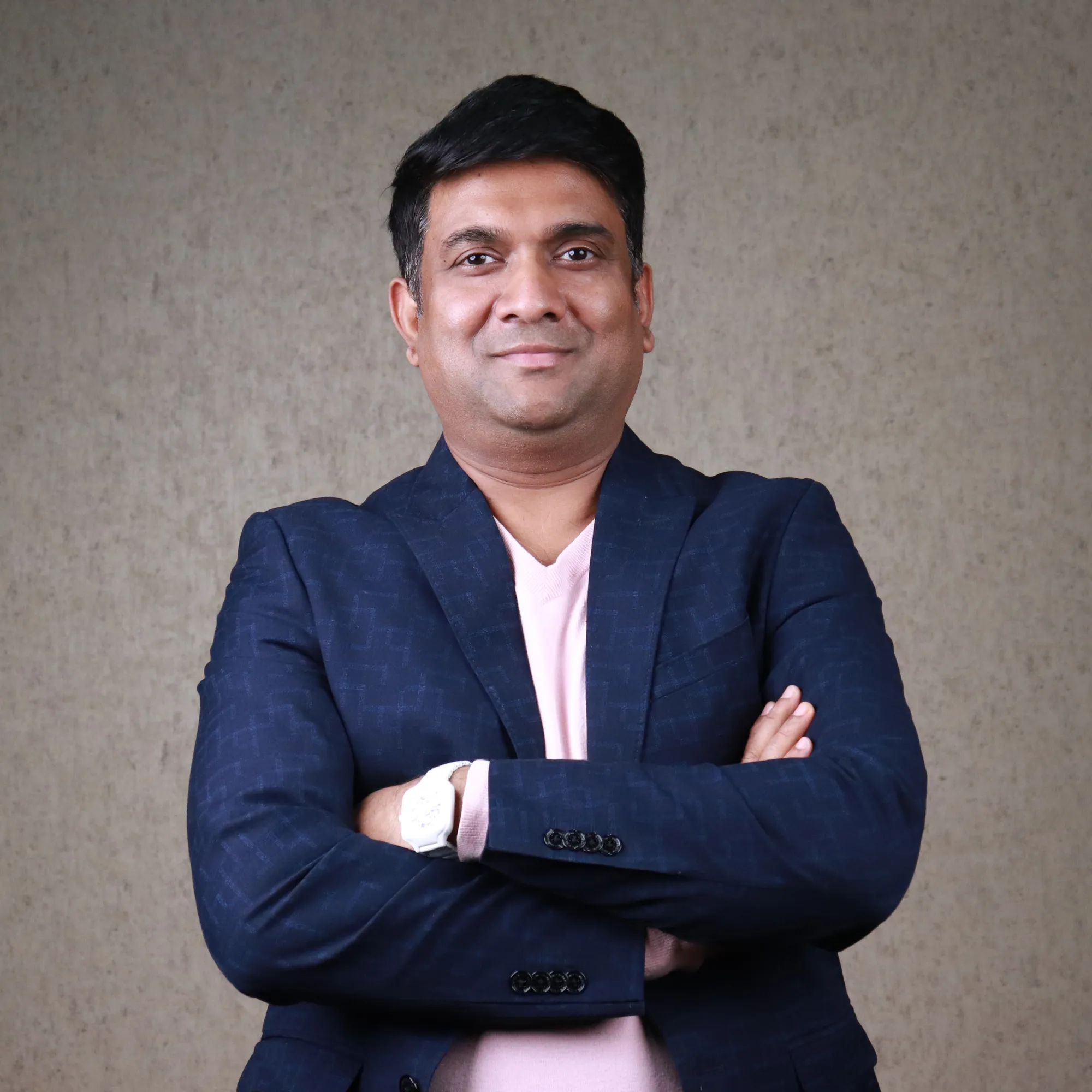
Masayoshi Son is SoftBank Group's founder, Chairman and CEO, and its largest individual shareholder. Born in Japan in 1957 to a family of Korean descent, he studied economics at the University of California, Berkeley before returning to Tokyo to start SoftBank. He is known for extremely long-term thinking — he has publicly laid out a 300-year vision for the group — and for very large, concentrated bets.
That style cuts both ways. Alibaba, Arm and, so far, OpenAI have produced enormous gains. WeWork, which SoftBank backed with billions of dollars, filed for bankruptcy in the US in November 2023, and Son publicly acknowledged that his judgement on it had been wrong. For an investor, backing SoftBank is in large part backing Son's capital-allocation decisions.
What Is the SoftBank Vision Fund, and How Has It Performed?
Vision Fund 1 launched in 2017 with close to US$100 billion — the largest technology fund ever raised at the time. Saudi Arabia's Public Investment Fund was the biggest outside investor with about US$45 billion, and Abu Dhabi's Mubadala also participated. It backed late-stage companies such as Uber, DoorDash, Slack and WeWork. Vision Fund 2, launched in 2019, is funded mainly by SoftBank itself and is now the vehicle for its OpenAI investment.
|
Vision Fund bet |
What happened |
|
Uber, DoorDash |
Went public; generated sizeable gains for Vision Fund 1 |
|
Arm (held at group level) |
Re-listed on Nasdaq, September 2023; SoftBank remains majority owner |
|
WeWork |
Filed for US bankruptcy, November 2023 — one of SoftBank's largest losses |
|
Didi (China) |
Co-led a US$5.5 bn round in 2017; Didi later delisted from NYSE in 2022 amid Chinese regulatory action |
|
OpenAI (via Vision Fund 2) |
Largest single bet; ~US$64.6 bn cumulative once 2026 tranches complete |
The lesson: the Vision Fund is a high-variance engine. Losses in 2022 were so large that SoftBank shifted into what it called "defence mode" for a while, before swinging back to aggressive AI investing in 2024–26.
How Big Is SoftBank's OpenAI Bet?

On 27 February 2026, SoftBank signed a definitive agreement to invest a further US$30 billion in OpenAI through Vision Fund 2, taking its expected cumulative investment to about US$64.6 billion for an ownership interest of roughly 13%. The money is going in three US$10 billion tranches; the second was executed on 1 July 2026, funded by bridge borrowings, and the third was scheduled for 1 October 2026.
The bet has already moved SoftBank's numbers dramatically. For the January–March 2026 quarter, SoftBank reported net income of about ¥1.83 trillion, with the jump attributed largely to around US$25 billion of valuation gains on OpenAI. By the end of June 2026 it reported a record net asset value of ¥72.3 trillion, though its later pro forma NAV was lower at ¥58.3 trillion — a reminder of how quickly these valuations can move.
Time-sensitive figures
OpenAI figures are as of 25 September 2026. The third US$10 bn tranche had not yet been executed on that date. Check SoftBank Group's investor-relations page (group.softbank/en/ir) for the latest position.
What Has SoftBank Invested in India?
SoftBank has put more than US$15 billion into Indian technology companies and at one point backed close to one-fifth of the country's unicorns. That makes it one of the most influential foreign investors in India's startup story — and a useful case study for Indian investors in how late-stage private valuations translate (or fail to translate) into listed-market returns.

|
Company |
Status (as of Sep 2026) |
Outcome for SoftBank |
|
PB Fintech (Policybazaar) |
Fully exited, Jan 2024 |
~US$200 M invested, ~US$650 M returned — a clear win |
|
Zomato (now Eternal) |
Fully exited, Dec 2023 |
Gain, mainly via its Blinkit holding |
|
Paytm (One97) |
Stake heavily reduced |
Loss of more than US$500 M reported |
|
Lenskart |
Listed; SoftBank sold shares in 2026 |
Gains; ~US$100 M paper gain in Jan–Mar 2026 |
|
Meesho |
Listed; SoftBank selling down |
Sold 1.7% stake for ₹1,650 Cr in Sep 2026 |
|
Swiggy, Ola Electric, Delhivery, FirstCry |
Listed |
Paper losses in Jan–Mar 2026; Delhivery stake cut to 7.61% by June 2026 |
|
OYO, others |
Unlisted |
Outcome depends on future listing or sale |
In the January–March 2026 quarter, SoftBank's India-listed holdings recorded mark-to-market losses of more than US$600 million, with Lenskart the only gainer. Since then, SoftBank has been selling blocks of Lenskart and Meesho through the stock exchanges while making only selective new Indian bets. These are paper and realised numbers reported in the media; they are not a verdict on the future of any Indian company.
For Indian retail investors
When a large early investor like SoftBank sells a block through the exchange, the stock can see short-term pressure. That is a supply event, not necessarily a statement about the business. Always check the company's own results and disclosures on NSE/BSE before drawing conclusions.
Where Does SoftBank Stock Trade, and What Are 9984 and SFTBY?
SoftBank Group's ordinary shares trade on the Tokyo Stock Exchange under securities code 9984, where one trading unit is 100 shares. In the US there is no main-exchange listing; instead there are two over-the-counter lines:
• SFTBY — an unsponsored ADR (American Depositary Receipt), created by a depositary bank without a formal agreement with SoftBank.
• SFTBF — SoftBank's ordinary shares quoted over-the-counter in the US. It is not a sponsored ADR, contrary to what many older articles say.
SoftBank has split its shares several times. The two most recent were a 2-for-1 split in June 2019 and a 4-for-1 split effective 1 January 2026, announced after the share price hit ¥22,255 on 10 November 2025, pushing the cost of one 100-share unit above ¥2 million. A split lowers the price per share but does not change the company's total market value or any investor's economic stake.
Can Indian Residents Invest in SoftBank Shares?
Yes. Under the Reserve Bank of India's Liberalised Remittance Scheme (LRS), a resident individual can remit up to US$250,000 per financial year for permitted purposes, including buying listed shares of foreign companies. In practice, access depends on the international brokerage platform you use: many Indian-facing platforms offer only US-exchange-listed stocks and may not offer Tokyo shares or US OTC lines like SFTBY.
|
Point to check |
What to know (FY 2026-27) |
|
Remittance limit |
LRS cap of US$250,000 per person per financial year |
|
TCS on remittance |
Tax Collected at Source applies on LRS remittances for investment above ₹10 lakh in a financial year; it can be adjusted against your tax liability |
|
Capital gains |
Foreign shares held more than 24 months: long-term, generally 12.5% without indexation; otherwise short-term at slab rates |
|
Dividends |
Taxable in India at slab rates; foreign tax withheld may be claimed as credit (Form 67) |
|
Disclosure |
Foreign assets must be reported in Schedule FA of the ITR — non-reporting can attract Black Money Act penalties |
|
Currency risk |
Returns in rupees depend on JPY/USD–INR movement as well as the share price |
Note
Tax provisions are summarised for education and reflect the law as understood on 25 September 2026, including the transition to the Income Tax Act, 2025. Confirm your position with a chartered accountant before investing overseas.
SoftBank Bull Case vs Bear Case: What Do Investors Debate?
Finowings does not recommend buying or selling any stock. The table below simply sets out the arguments market participants commonly make on each side, so you can understand the debate.
|
Bull case (what supporters argue) |
Bear case (what sceptics argue) |
|
Owns large stakes in two of AI's most important companies — Arm and OpenAI |
Heavy concentration: a fall in OpenAI's valuation would hit SoftBank's NAV hard |
|
Shares often trade below the value of holdings (a holding-company discount) that could narrow |
The discount can persist for years; it is not guaranteed to close |
|
Son's track record includes Alibaba and Arm |
The same record includes WeWork and large Vision Fund write-downs |
|
Stated leverage discipline: LTV below 25% in normal markets, 35% upper limit |
Big AI commitments are being funded partly with bridge loans and asset sales |
|
Diversified cash flows from SoftBank Corp., PayPay and Arm royalties |
Earnings are highly volatile and hard for ordinary investors to forecast |
What Are the Main Risks of SoftBank?
• Valuation swings: profits are driven largely by changes in the market value of holdings, so results can flip from record profit to large loss.
• Concentration risk: OpenAI and Arm together account for a large share of NAV; bad news for either has an outsized effect.
• Leverage and funding: multi-billion-dollar commitments rely on borrowing, bond issues and asset sales; tighter credit markets could raise costs.
• Private-market valuation risk: OpenAI is unlisted, so its value is set by funding rounds rather than a daily market price.
• Investor-base and geopolitical scrutiny: Vision Fund 1 relied heavily on sovereign wealth funds, and SoftBank's global deals face regulatory reviews in the US, EU and China.
• Key-person risk: strategy is closely tied to Masayoshi Son.

Conclusion
SoftBank is not really a phone company, and it is not a simple tech stock either. It is a listed vehicle for Masayoshi Son's conviction bets — today, above all, on artificial intelligence through OpenAI, Arm, Ampere and, once the deal closes, ABB's robotics business. That makes it one of the most direct ways global markets express a view on AI, and also one of the most volatile.
For Indian readers, SoftBank carries three practical lessons. First, big money is not always smart money — Policybazaar tripled SoftBank's investment, while Paytm lost it hundreds of millions of dollars. Second, private valuations and listed prices are different things, which is exactly why several SoftBank-backed Indian IPOs have traded below their peak private rounds. Third, if you ever consider international stocks, the process runs through RBI's LRS, carries TCS, tax and disclosure obligations, and adds currency risk on top of market risk.
Understand the structure, respect the volatility, and let your own goals and risk appetite — not headlines about trillion-yen profits — guide any decision.

DISCLAIMER: This blog is NOT any buy or sell recommendation. No investment or trading advice is given. The content is only for educational purposes. Always discuss with your SEBI-registered financial advisor for investment-related decisions.
Follow this WhatsApp Channel for the latest updates directly on WhatsApp.






.jpeg)
.jpeg)