A fund house is the company responsible for managing mutual fund schemes. It is commonly known as an Asset Management Company, or AMC. A fund house pools money from multiple investors and invests it in assets such as shares, bonds, government securities, and money-market instruments according to each scheme’s investment objective.
However, a fund house and a mutual fund scheme are not the same. The fund house manages the investments, while the scheme is the specific product in which an investor puts money.
In this blog, we will cover what a fund house is, how it operates, components of a Mutual Fund and what responsibilities it performs, and common mistakes to avoid, which can help investors evaluate mutual funds more carefully instead of selecting a scheme only because of its brand name or recent returns.
What Is the Meaning of a Fund House?
In simple words, a fund house is the organisation that manages investors’ money through different mutual fund schemes.
For example, when you invest in an equity mutual fund, the fund house appoints a professional fund manager and research team to identify suitable companies, monitor the portfolio, and make buying or selling decisions according to the scheme’s stated objective.
The fund house also performs several administrative and compliance-related functions, including:
- Managing scheme portfolios
- Appointing fund managers and research teams
- Calculating and publishing the Net Asset Value
- Providing periodic portfolio disclosures
- Managing investment risks
- Maintaining investor records
- Handling purchases and redemptions
- Complying with SEBI regulations
- Communicating scheme-related information to investors.
SEBI explains that when a person invests in a mutual fund scheme, the responsibility for managing the invested money is effectively assigned to the Asset Management Company. Mutual fund portfolios are managed by professional fund managers and disclosed periodically under applicable regulations.

Fund House, AMC and Mutual Fund: Are They the Same?
The terms “fund house,” “AMC” and “mutual fund” are often used interchangeably in everyday conversations. Technically, however, they do not mean the same thing.
Here’s the information presented cleanly in a table:
|
Term |
Meaning |
|
Fund house |
Common term used for the company or brand managing mutual fund schemes |
|
Asset Management Company |
The company appointed to manage a mutual fund’s schemes professionally |
|
Mutual fund |
A trust that pools money from investors and operates one or more schemes |
|
Mutual fund scheme |
The specific investment product in which investors purchase units |
|
Fund manager |
The professional responsible for implementing the scheme’s investment strategy |
|
Custodian |
The SEBI-registered entity responsible for holding the scheme’s securities |
Under SEBI’s regulatory framework, a mutual fund is established in the form of a trust. It includes a sponsor, trustees, an Asset Management Company and a custodian. The AMC manages the schemes, while the custodian holds the securities purchased by those schemes.
Therefore, while “fund house” and “AMC” are commonly treated as similar terms, the AMC is only one part of the complete mutual fund structure.
How Does a Fund House Work?
A fund house does not simply collect money and invest it wherever it chooses. Every mutual fund scheme operates according to a defined investment objective, asset allocation strategy and regulatory framework.
Here is how the process generally works.
1. The fund house launches a scheme
An AMC creates a mutual fund scheme with a specific investment objective. For example, a scheme may aim to:
- Invest primarily in large-cap companies
- Track a stock-market index
- Generate income through debt securities
- Invest across equity and debt
- Focus on a particular sector or theme.
The scheme’s objectives, risks, asset-allocation limits, fees and investment strategy are disclosed in its official documents.
2. Investors purchase units
Investors put money into the scheme through a lump-sum investment or a Systematic Investment Plan.
The collected money is pooled with contributions from other investors.
According to AMFI, a mutual fund is a collective investment vehicle that pools money from several investors and invests it in assets such as equities, bonds, government securities and money-market instruments.
3. The fund manager invests the money
The fund manager and research team select securities according to the scheme’s mandate. In an actively managed fund, the fund manager decides which securities to buy, hold or sell. In a passive fund, the portfolio generally aims to replicate a specified market index.
4. The portfolio is monitored
The AMC continuously monitors:
- Portfolio performance
- Market conditions
- Liquidity
- Credit quality
- Sector exposure
- Concentration risk
- Compliance with the scheme mandate
- Investor inflows and redemptions.
The fund manager may modify the portfolio when market conditions or the investment outlook changes, provided the decisions remain within the scheme’s permitted framework.
5. NAV is calculated
The Net Asset Value represents the per-unit value of the mutual fund scheme after accounting for its assets and liabilities.
NAV may rise or fall depending on changes in the market value of the securities held by the scheme.
It is important to understand that a lower NAV does not automatically mean that a mutual fund is cheaper or better than another scheme.
What Are the Main Components of a Mutual Fund?
A properly regulated mutual fund structure involves several entities. Each one performs a different role.
Sponsor
The sponsor establishes the mutual fund and is similar to the promoter of a company.
SEBI requires a sponsor to meet specified eligibility, financial, and integrity-related requirements. A sponsor must also contribute to the net worth of the Asset Management Company according to applicable regulations.
Trustees
Trustees oversee the operations of the mutual fund and are expected to protect the interests of unitholders.
They supervise whether the AMC is managing schemes according to regulations and disclosed investment objectives.
Asset Management Company
The AMC manages the mutual fund schemes. It appoints fund managers, analysts, operations teams and compliance professionals.
Its major responsibilities include:
- Conducting investment research
- Managing scheme portfolios
- Monitoring risks
- Publishing mandatory disclosures
- Following SEBI regulations
- Processing investor transactions.
Custodian
The custodian holds the securities owned by the mutual fund schemes.
This separation is important because the scheme’s securities are not simply stored as assets of the AMC itself. SEBI’s framework requires the appointment of a custodian to hold securities and perform authorised custodial activities.
Registrar and Transfer Agent
A Registrar and Transfer Agent, commonly called an RTA, maintains investor records and processes operational requests such as:
- Purchases
- Redemptions
- SIP registrations
- Account statements
- Nomination changes
- Contact-detail updates.
Why Does the Fund House Matter?
The fund house matters because its investment culture, research capabilities, risk-management systems and governance standards can influence how its schemes are managed.
A reliable fund house generally demonstrates:
- A clearly defined investment philosophy
- Experienced fund-management teams
- Strong research processes
- Consistent risk controls
- Transparent investor communication
- Appropriate compliance systems
- Reasonable scheme costs
- Continuity during fund-manager changes.
However, investors should not choose a mutual fund solely because it belongs to a large or popular fund house.
Two schemes managed by the same AMC may have completely different:
- Investment objectives
- Risk levels
- Asset allocations
- Costs
- Fund managers
- Performance patterns.
Therefore, the suitability of the individual scheme is usually more important than the popularity of the fund-house brand.

How Does a Fund House Earn Money?
Fund houses primarily earn revenue through the expenses charged for managing mutual fund schemes. These costs form part of the Total Expense Ratio, or TER.
The expense ratio may cover expenses related to:
- Investment management
- Fund administration
- Record maintenance
- Compliance
- Marketing and distribution
- Registrar services
- Custody
- Investor communication.
The TER is adjusted in the scheme’s NAV. This means investors do not usually pay it as a separate bill.
Over long investment periods, even a relatively small difference in expense ratios can affect an investor’s final returns. However, cost should not be considered in isolation. The scheme’s category, strategy, risk, tracking quality and consistency must also be evaluated.
How to Evaluate a Fund House
Investors should first identify an appropriate mutual fund category and then use the quality of the fund house as one of several evaluation factors.
1. Start with your investment goal
Before comparing fund houses, determine:
- Why you are investing
- When you will need the money
- How much risk you can tolerate
- Whether you need regular income or long-term growth
- Whether you understand the selected product.
A fund suitable for a long-term goal may not be suitable for money needed in the near future.
2. Select the right mutual fund category
Compare schemes within the same category.
For example, comparing a large-cap equity fund with a liquid fund would not be meaningful because the two products have different objectives and risk characteristics.
Mutual fund categories may include:
- Equity funds
- Debt funds
- Hybrid funds
- Index funds
- Exchange-traded funds
- Solution-oriented funds
- Sectoral or thematic funds.
3. Examine the investment philosophy
Check whether the fund house follows a clear and consistent investment process.
Some AMCs may focus on:
- Value investing
- Growth investing
- Quality-focused portfolios
- Quantitative strategies
- Passive investing
- Asset allocation
- Credit research.
Frequent changes in investment style or unexplained deviations from a scheme’s stated approach may require further investigation.
4. Review fund-manager stability
Check:
- How long the current manager has managed the scheme
- Whether the AMC depends heavily on one star fund manager
- How frequently managers are replaced
- Whether the investment process remains consistent after leadership changes
- Whether the AMC has a strong supporting research team.
A process-driven fund house may be better positioned to handle management changes than one that depends entirely on a single individual.
5. Evaluate performance consistency
Do not select a fund house or scheme based only on its most recent one-year return. Review performance across:
- Different market conditions
- Bull and bear markets
- Three-, five- and longer-term periods
- Rolling-return periods
- Relevant benchmark comparisons
- Category-peer comparisons.
Past performance does not guarantee future returns, but consistent behaviour across market cycles may help investors understand how a scheme is managed.
6. Assess risk management
Returns should always be viewed together with risk. Investors should examine:
- Portfolio concentration
- Sector exposure
- Credit quality
- Volatility
- Downside performance
- Liquidity
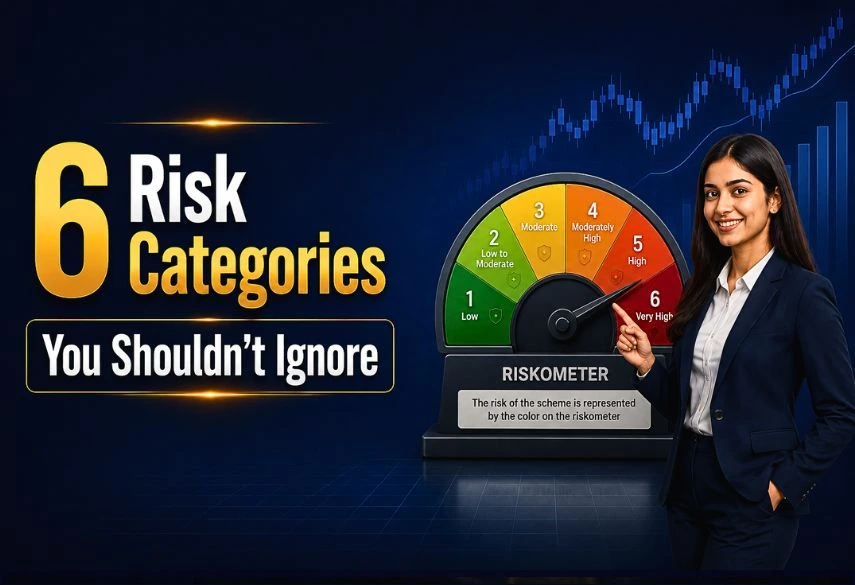
- Riskometer classification
- Deviation from the scheme mandate.
A scheme producing high returns by taking unusually high risk may not be suitable for every investor.
7. Compare the expense ratio
Compare the expense ratio with similar schemes in the same category. A lower expense ratio can be beneficial, particularly for index funds where the investment objective is to track a benchmark. However, the cheapest scheme is not automatically the most suitable one.
For passive schemes, investors should also examine tracking error and tracking difference.
8. Check disclosure quality
A transparent fund house should provide clear and timely access to:
- Monthly factsheets
- Portfolio disclosures
- Scheme Information Documents
- Key Information Memorandums
- Fund-manager details
- Expense ratios
- Riskometer information
- Benchmark details
- Investment-strategy updates.
Incomplete, confusing or outdated disclosures can make a scheme more difficult to evaluate.
9. Review governance and regulatory history
Investors can check whether an AMC has faced material regulatory action, governance concerns or repeated compliance issues.
One historical issue should not automatically disqualify a fund house, but investors should understand:
- What happened
- How serious the issue was
- Whether investors were affected
- What corrective action was taken
- Whether similar issues occurred again.
10. Examine the product range
A large product range is not always an advantage.
Check whether the AMC offers:
- Clearly differentiated schemes
- Excessive overlapping products
- Frequent New Fund Offers
- Schemes launched mainly around temporary market trends
- Products that fit different genuine investor needs.
A clean and understandable product range may indicate stronger product discipline.
Fund House Red Flags Investors Should Watch
Consider investigating further when you notice:
- Frequent fund-manager departures
- Repeated changes in investment strategy
- Persistent underperformance without a clear explanation
- Excessive portfolio concentration
- Significant style drift
- Unusually high expenses compared with peers
- Repeated regulatory concerns
- Too many overlapping schemes
- Aggressive marketing based only on recent returns
- Lack of clear or timely disclosures.
A single red flag may not be enough to reject a fund house, but multiple unresolved issues can increase investment risk.
Should You Invest Through a Direct or Regular Plan?
Most mutual fund schemes are available in direct and regular plans.
Direct plan
A direct plan is purchased directly from the AMC or through a platform that offers direct mutual funds. It generally has a lower expense ratio because distributor commissions are not included.
Regular plan
A regular plan is purchased through a mutual fund distributor or intermediary. Its expense ratio is generally higher because distribution-related costs may be included.
SEBI’s investor-education material explains that direct plans generally have lower expense ratios than regular plans. However, the appropriate option depends on whether an investor can independently select, monitor, and manage the investment.
Investors who require personalised investment advice should consider consulting a SEBI-registered investment adviser rather than selecting products solely on the basis of online rankings or promotional claims.
Should You Invest Through Only One Fund House?
It is possible to invest in multiple schemes from one fund house, but doing so may create concentration in a particular investment culture, research process or management style.
At the same time, opening schemes across too many AMCs can make a portfolio difficult to monitor.
The number of fund houses is not the most important factor. What matters more is whether the overall portfolio is:
- Aligned with your goals
- Diversified across appropriate assets
- Free from unnecessary scheme overlap
- Suitable for your risk profile
- Easy to review and manage.
Investors should avoid adding new schemes merely to increase the number of fund houses in their portfolios.
Common Mistakes When Choosing a Fund House
Choosing only by brand name
A well-known AMC can provide strong systems and resources, but brand recognition does not guarantee that every scheme will outperform.
Selecting the recent top performer
A scheme that ranks first over one year may have benefited from a temporary market trend or a higher-risk portfolio.
Looking only at AUM
Large Assets Under Management may indicate investor confidence and operational scale. However, AUM alone does not prove that a scheme is appropriate or likely to perform better.
Ignoring the scheme category
The fund house should be evaluated only after selecting a category suitable for your goal and risk profile.
Investing in several similar schemes
Owning multiple schemes does not automatically create diversification. Many mutual funds may hold similar companies or follow similar strategies.
Ignoring expenses and taxes
Expense ratios, exit loads and applicable taxation can affect actual investor returns.

Conclusion
Understanding what a fund house is helps investors look beyond advertisements, brand recognition and short-term return rankings. A fund house provides the investment-management systems, professional teams, research capabilities and operational infrastructure behind mutual fund schemes. However, the reputation or size of the AMC should never be the only factor in selecting a mutual fund.
Start with your financial goal and risk tolerance. Select an appropriate scheme category, examine its investment strategy, compare its costs and risks, and then evaluate the fund house’s process, governance and consistency.
(Sources: Value Search Online, Livemint, ET Money, Economics Time, TimesofIndia)

DISCLAIMER: This blog is NOT any buy or sell recommendation. No investment or trading advice is given. The content is only for educational purposes. Always discuss with your SEBI-registered financial advisor for investment-related decisions.