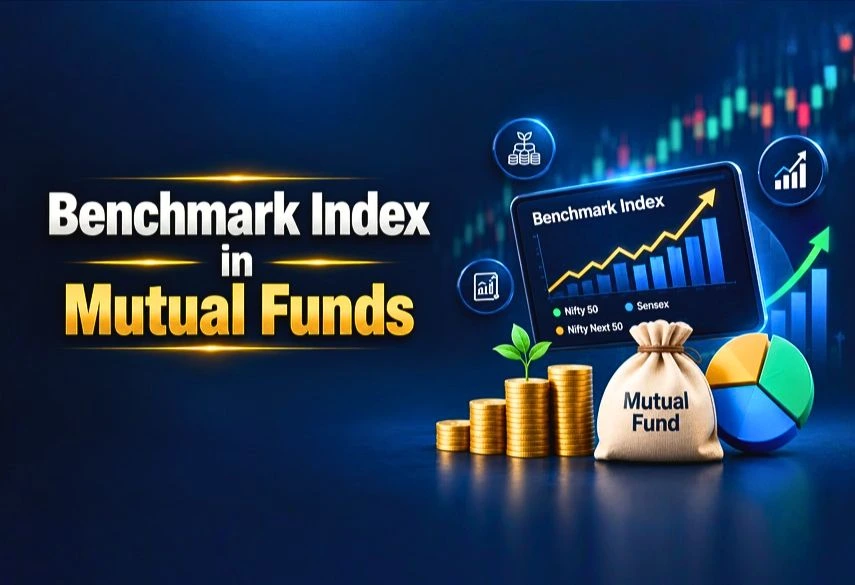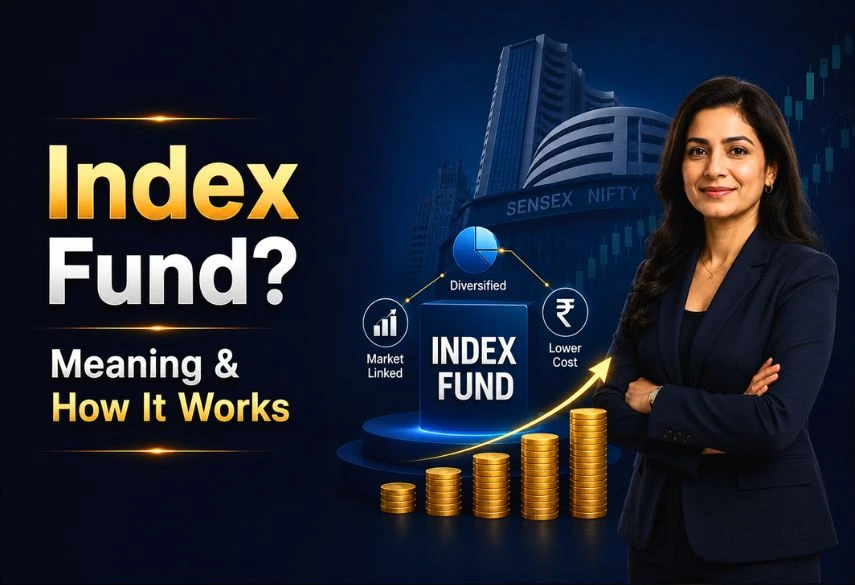
An index fund is a mutual fund that aims to replicate the performance of a particular market index, such as the Nifty 50 or Sensex. Instead of a fund manager actively choosing stocks to outperform the market, an index fund generally invests in the securities represented in its benchmark and tries to follow that benchmark as closely as possible. SEBI classifies this as a passive investment approach, where the objective is to track the index rather than beat it.
For investors who want a simple way to participate in the stock market without selecting individual companies, index funds can be worth understanding. They generally offer diversification, relatively low costs, and a transparent investment strategy.
However, index funds are not risk-free, and choosing one simply because it has a low expense ratio can be a mistake.
This guide explains the index fund meaning, how index funds work, their benefits and risks, index fund vs ETF differences, taxation, tracking error, and how to choose an index fund in India.
What Is an Index Fund?
An index fund is a type of mutual fund designed to track a specific market index. For example, a Nifty 50 index fund attempts to replicate the Nifty 50, which is a diversified index consisting of 50 stocks and is calculated using a free-float market-capitalisation-weighted methodology.

Instead of asking “Which stocks will perform best?”
An index fund follows a predefined benchmark. Its investment strategy is therefore mostly rule-based rather than dependent on frequent stock selection by a fund manager.
Index Fund Meaning
Think of a stock market index as a basket representing a group of securities. If an index contains companies A, B and C in particular weights, an index fund tracking that benchmark attempts to maintain a similar portfolio.
When the composition of the benchmark changes, the index fund adjusts its portfolio accordingly. The objective is generally to generate returns close to the benchmark after accounting for expenses and tracking differences.
How Do Index Funds Work?
Understanding how index funds work becomes easier when you break the process into four steps.
1. The Fund Selects a Benchmark
Every index fund tracks a specific benchmark.
Examples may include:
-
Nifty 50
-
Sensex
-
Nifty Next 50
-
Nifty 100
-
Sector or thematic indices
-
International indices
-
Bond indices.
Two index funds can therefore behave very differently if they track different benchmarks.
2. The Fund Replicates the Index
The fund attempts to hold all or most of the securities represented by its benchmark in similar proportions.
According to SEBI, an index mutual fund follows a passive strategy and seeks to mirror its chosen index rather than relying on frequent active stock selection.
3. The Portfolio Changes When the Index Changes
Indices are periodically reviewed and rebalanced. When a security enters or exits an index, a fund tracking that index may also have to adjust its holdings. This keeps the portfolio aligned with the benchmark.
4. Returns Follow the Benchmark—But Not Exactly
Suppose an index generates a particular return during a period. The index fund's return may be slightly different because of:
-
Expense ratio
-
Transaction costs
-
Cash holdings
-
Portfolio rebalancing
-
Operational factors
-
Tracking differences
This is why investors should not assume that every fund tracking the same index will generate exactly the same return.
What Is Tracking Error in an Index Fund?
Tracking error is one of the most important metrics to check when evaluating an index fund. It measures how closely the fund's performance follows its benchmark.
SEBI describes tracking error as a measure of the difference between portfolio returns and benchmark returns over time. A lower tracking error generally indicates that an index fund or ETF is tracking its benchmark more consistently.
Simple Example
Suppose:
Benchmark return:10%
Fund return:9.7%
The fund has not matched the index perfectly. Expenses and other implementation factors can contribute to this gap.
When comparing two funds that track the same index, investors should therefore evaluate more than just past returns.
What Is Tracking Difference?
Tracking error and tracking difference are related, but they are not exactly the same concept.
Tracking difference refers to the difference between the fund's return and its benchmark return over a particular period.
Tracking error measures the consistency or variability of those differences over time.
For a passive fund, both can provide useful information about how efficiently the scheme is tracking its benchmark.
What Are the Benefits of Index Funds?
Index funds have become an important part of passive investing because of several characteristics.
1. Simple Investment Strategy
You do not need to understand why a fund manager selected every individual company. The benchmark determines the basic portfolio strategy. This makes index funds easier for many beginners to understand.
2. Diversification
An index fund can provide exposure to several companies through a single investment. A broad-market index can reduce dependence on the performance of one individual stock. However, diversification does not eliminate market risk. If the overall index declines, the value of the fund can also fall.
3. Lower Management Costs
Because passive funds do not require the same level of ongoing stock selection as actively managed funds, their management costs are generally lower. SEBI also identifies lower costs as one of the characteristics of index mutual funds.
Investors should nevertheless compare the actual expense ratios of individual schemes instead of assuming every index fund is equally inexpensive.
4. Transparency
An index fund follows a known benchmark. This makes its investment strategy relatively easy to understand.
If you know what index the scheme tracks, you can usually understand the broad type of portfolio exposure you are receiving.
5. Less Dependence on Fund Manager Stock Selection
An actively managed fund depends considerably on investment decisions made by its fund management team. An index fund primarily follows the rules of its benchmark.
This reduces dependence on a manager's ability to consistently select outperforming stocks. It does not, however, remove risks associated with the underlying market or index construction.
What Are the Risks of Index Funds?
A common misconception is that index funds are automatically “safe” because they are diversified. That is incorrect.
Market Risk
If the benchmark falls, an index fund tracking it is also likely to decline. An index fund is designed to follow the market, not protect investors from a market correction.
Concentration Risk
Not every index is broadly diversified. Some indices may have significant exposure to:
-
A few large companies
-
One sector
-
One theme
-
One country
-
One market-cap segment.
Always examine the underlying index rather than judging a fund only by the words “index fund.”
Tracking Risk
A fund may not perfectly replicate benchmark performance. Higher expenses, implementation challenges and portfolio differences can contribute to deviations. Tracking error is therefore an important comparison metric.
Valuation Risk
An index automatically holds its constituents according to its methodology. It does not necessarily avoid a company simply because the stock appears expensive.
No Downside Protection
An index fund does not normally move into cash simply because the market appears overvalued. If its benchmark falls sharply, the fund generally participates in that decline.
Index Fund vs Actively Managed Mutual Fund
An index fund is itself a mutual fund. Therefore, the more accurate comparison is index fund vs actively managed mutual fund.
|
Feature |
Index Fund |
Actively Managed Mutual Fund |
|
Investment Style |
Passive |
Active |
|
Objective |
Track an index |
Try to outperform the benchmark |
|
Stock Selection |
Based on index composition |
Fund manager selects stocks |
|
Expense Ratio |
Generally lower |
Generally higher |
|
Fund Manager Dependency |
Low |
High |
|
Tracking Error |
Important metric |
Not primary metric |
|
Transparency |
Generally high |
Depends on strategy |
|
Return Potential |
Close to benchmark minus costs |
Can outperform or underperform benchmark |
|
Suitable For |
Investors wanting simple passive exposure |
Investors comfortable with active management |
Neither option is automatically superior in every situation. The appropriate choice depends on an investor's goals, risk profile, investment horizon, costs and portfolio strategy.
Index Fund vs ETF: What Is the Difference?
Index funds and exchange-traded funds (ETFs) can both follow market indices, but they are structured and traded differently.
|
Feature |
Index Fund |
ETF |
|
Investment Route |
Mutual fund/AMC platform |
Stock exchange |
|
Price |
Applicable NAV |
Market price |
|
Demat Account |
Usually not required |
Generally required |
|
SIP |
Easy to automate |
Depends on broker/platform |
|
Intraday Trading |
No |
Yes |
|
Liquidity Concern |
Usually less relevant for purchase/redemption |
Exchange liquidity matters |
|
Bid-Ask Spread |
No exchange spread |
Can have bid-ask spread |
|
Best For |
Simple long-term investing |
Investors comfortable with exchange trading |
Therefore:
Index fund = mutual fund route
ETF = exchange-traded route
Both may track the same or similar indices, but the investor experience and execution mechanism are different.
Nifty 50 Index Fund: Why Is It Popular?
The Nifty 50 is one of India's best-known equity benchmarks and represents 50 stocks across important sectors of the economy. It uses a free-float market-capitalisation-weighted methodology.
A Nifty 50 index fund gives investors exposure to companies represented in that benchmark through a single mutual fund scheme.
However, “popular” should not automatically be interpreted as “best for everyone.”
Before selecting any benchmark, consider:
-
Investment horizon
-
Risk tolerance
-
Existing portfolio
-
Market-cap exposure
-
Financial goals.

How to Choose an Index Fund in India
Instead of simply selecting the fund showing the highest recent return, evaluate the following factors.
1. Understand the Index First
This is the most important step.
Ask:
-
Which companies does the index contain?
-
Is it large-cap, mid-cap, or small-cap?
-
Is it broad-market or sector-specific?
-
How concentrated is it?
-
How frequently is it rebalanced?
A good fund tracking the wrong index for your objective is still the wrong investment.
2. Compare Tracking Error
For funds following the same benchmark, lower and more consistent tracking error can indicate better benchmark replication. SEBI specifically identifies tracking error as a useful tool for assessing how closely passive portfolios follow their benchmarks.
3. Check the Expense Ratio
Even relatively small recurring costs can influence long-term returns. Compare expense ratios among funds tracking the same benchmark. Do not choose entirely on cost, however. Tracking quality also matters.
4. Examine Tracking Difference
Check how the fund has actually performed relative to its benchmark over relevant periods. A very low expense ratio is less impressive if the fund consistently trails its index by a much larger amount.
5. Read the Scheme Documents
Before investing, review documents such as:
-
Scheme Information Document
-
Factsheet
-
Portfolio disclosure
-
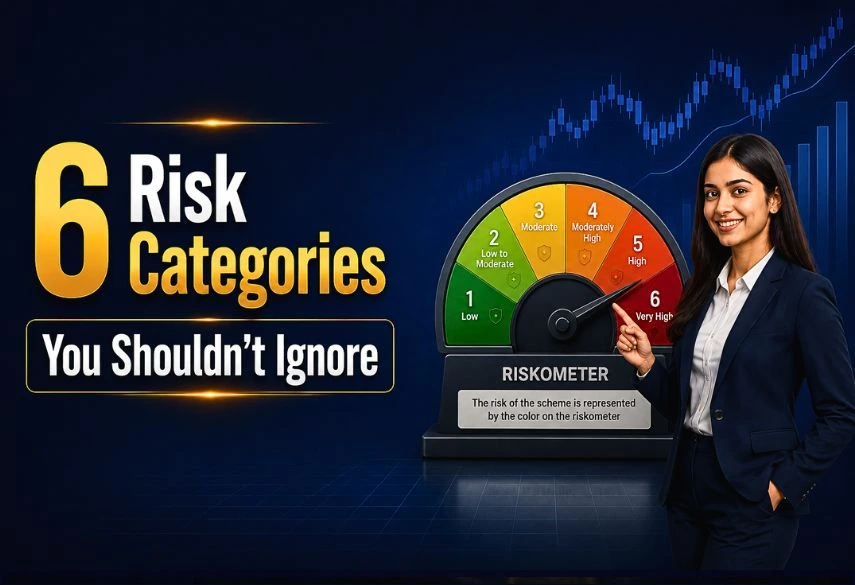
Riskometer
-
Benchmark
-
Expense ratio
-
Exit-load conditions, if applicable.
This is particularly important because two products carrying similar names can track different indices or follow different strategies.
Should Beginners Invest in Index Funds?
Index funds can be relatively straightforward for beginners because they provide access to a diversified portfolio without requiring the investor to select individual stocks. But beginners should first understand that:
-
Returns are not guaranteed.
-
Equity markets can experience significant declines.
-
A low-cost fund can still lose money.
-
Different indices carry different levels of risk.
-
Past benchmark returns do not guarantee future returns.
An index fund should therefore be selected as part of a financial plan rather than because it happens to be popular.
Can You Invest in an Index Fund Through SIP?
Yes, mutual fund index schemes commonly support systematic investing, subject to the rules and minimum investment requirements of the particular scheme. A Systematic Investment Plan (SIP) allows investors to contribute money periodically rather than making the entire investment at once.
SIPs can help investors maintain investing discipline, but they do not guarantee profits or protect against losses.
What Returns Can You Expect From an Index Fund?
There is no fixed or guaranteed return from an equity index fund.
Its performance primarily depends on:
1. Performance of the underlying benchmark
2. Expense ratio
3. Tracking difference
4. Tracking error
5. Market conditions.
When evaluating historical benchmark performance, investors should preferably look at a Total Return Index (TRI) rather than only a price index because TRI includes the effect of dividends from index constituents. Nifty Indices specifically notes that total-return indices incorporate both price movement and dividend receipts.
Historical returns can help understand past behaviour, but they should not be interpreted as an expected future CAGR.
How Are Equity Index Funds Taxed in India?
Tax treatment depends on the type of fund and applicable tax law, so investors should verify the classification of their specific scheme.
For qualifying equity-oriented mutual fund units, the Income Tax Department currently treats holdings of more than 12 months as long-term. For transfers on or after 23 July 2024, qualifying short-term capital gains under Section 111A are taxed at 20%, while qualifying long-term capital gains under Section 112A are taxed at 12.5% on aggregate eligible gains exceeding ₹1.25 lakh, subject to the applicable conditions, including STT requirements.
Tax rules for debt-oriented, international, or other types of index funds can be different.
Tax laws can change, so verify current rules or consult a qualified tax professional before making tax-related investment decisions.
Common Mistakes to Avoid With Index Funds
-
Choosing a fund only because it has the lowest expense ratio
-
Cost matters, but tracking quality matters too.
-
Compare funds tracking the same benchmark on multiple factors.
Comparing Funds That Track Different Indices
A Nifty 50 fund and a Nifty Next 50 fund do not have the same underlying portfolio or risk characteristics. Comparing them purely on recent returns can be misleading.
Investing Based Only on Past Returns
-
An index that has performed strongly recently may not continue doing so.
-
Past performance is not a guarantee of future results.
Ignoring Concentration
-
Some indices may appear diversified because they hold multiple companies while still having substantial exposure to a handful of sectors or stocks.
-
Check index composition before investing.
Expecting Index Funds to Protect Against Market Falls
They do not. A passive equity fund generally follows its benchmark both upward and downward.
Owning Too Many Similar Index Funds
Buying several funds that track substantially overlapping indices may create unnecessary duplication rather than meaningful diversification.
Who May Consider an Index Fund?
An index fund may be considered by investors who:
-
Prefer a simple investment strategy
-
Want broad market exposure
-
Do not want to select individual stocks
-
Prefer relatively low-cost passive investing
-
Have an investment horizon appropriate for the underlying asset class
-
Understands market volatility.
Who Should Be More Careful?
An equity index fund may not be suitable for someone who:
-
Needs the invested money in the near term
-
Cannot tolerate significant market fluctuations
-
Expects guaranteed returns
-
Wants complete capital protection
-
Does not understand the underlying index
-
Is investing solely because of recent market performance.
Investment suitability depends on individual circumstances.
Index Funds vs Direct Stock Investing
Buying individual stocks requires you to decide:
-
Which companies to buy
-
Their valuation
-
Entry and exit strategy
-
Portfolio allocation
-
Risk limits.
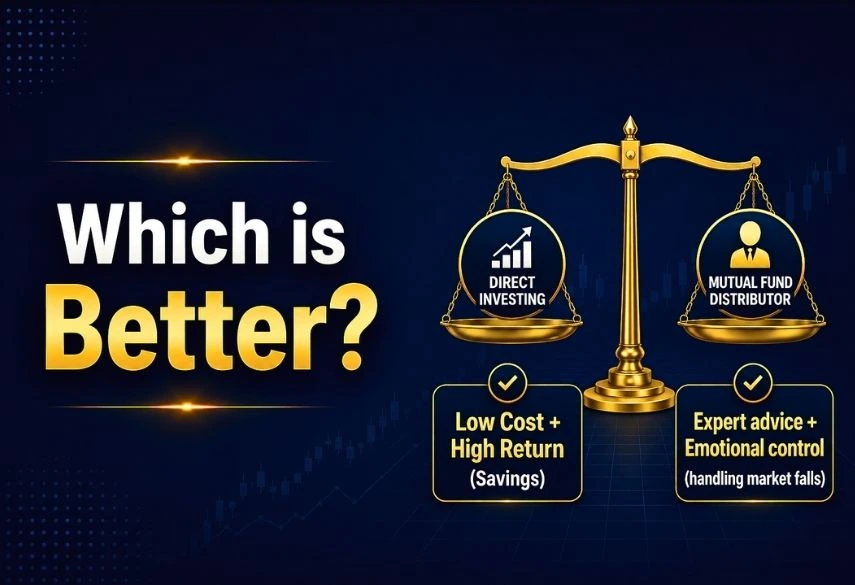
An index fund simplifies much of this decision-making because portfolio composition is determined primarily by the benchmark methodology. Direct stocks can provide greater control, while index funds provide greater simplicity.
They serve different investment approaches.
Are Index Funds Completely Risk-Free?
No. Index funds eliminate neither market volatility nor the possibility of capital loss. Diversification can reduce the impact of poor performance from an individual company, but broad market declines can still affect the entire fund.
The correct question is therefore not “Is an index fund safe?” A more useful question is “Is the risk level of this particular index appropriate for my goals and investment horizon?”

Conclusion
An index fund is a passive mutual fund designed to track a market index rather than actively select securities in an attempt to beat the market. Its major advantages include simplicity, diversification, transparency, and generally lower management costs.
But choosing an index fund should involve more than finding the cheapest scheme. For a beginner, understanding these factors can make index investing considerably more useful than blindly choosing a fund based on recent returns.
(Sources: SEBI, Nifty Indices, Income Tax India)

DISCLAIMER: This blog is NOT any buy or sell recommendation. No investment or trading advice is given. The content is only for educational purposes. Always discuss with your SEBI-registered financial advisor for investment-related decisions.









.webp)