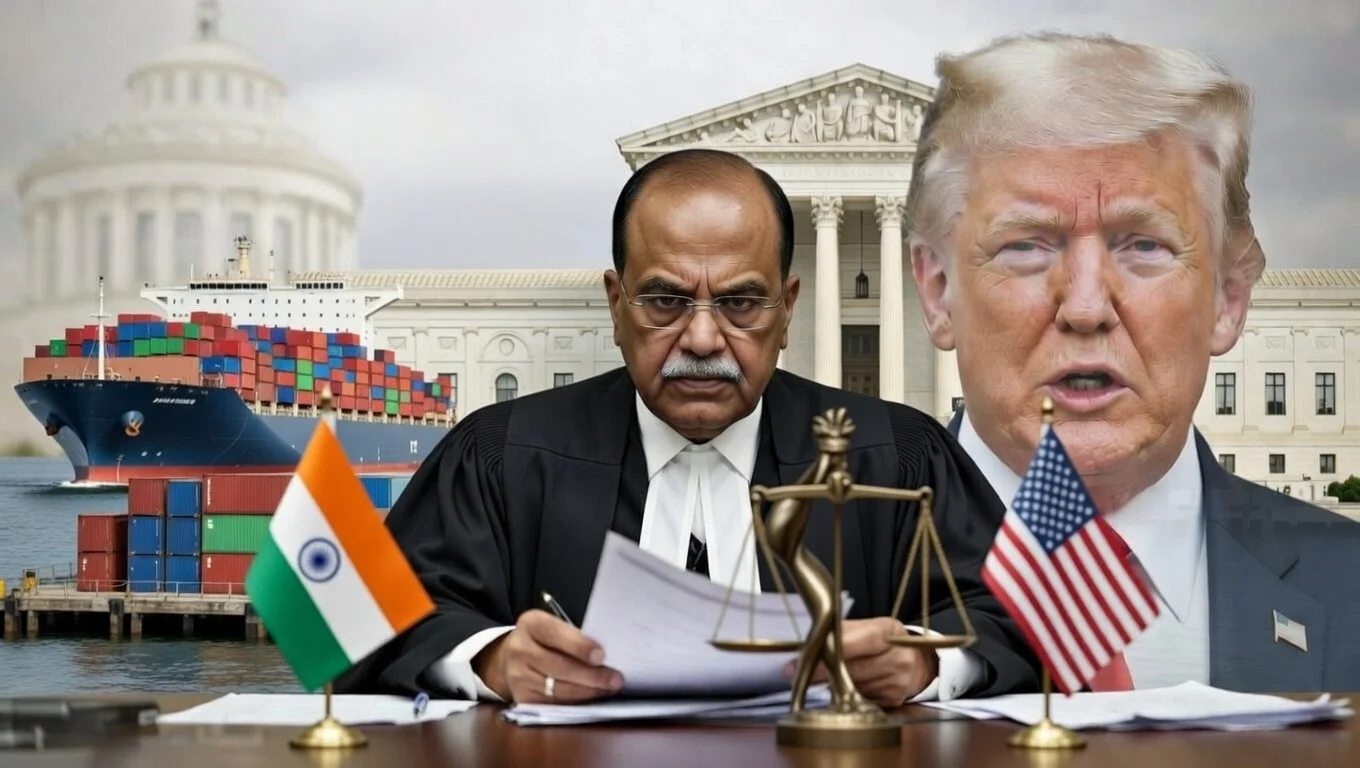
Global trade has undergone major changes with the United States and India officially announcing that tariffs on Indian imports and exports have dropped to 10%. Trump has been officially indicted, a huge Supreme Court ruling (Trump’s Blow Supreme Court). In the first quarter of 2023, and the first 3 months of 2023, India and the US have highlighted the impact of the Trump Supreme Court ruling and resulting tariffs on the United States and India trade news.
We have been following the US-India trade news and what the impact of the US-India trade news means to the United States Trump Supreme Court ruling and what that means to Trump. The US-India trade news impact is huge for owners of businesses that trade with the US or between the US and India. Want the India and US trade news updates and what that means to Trump and what that means to the US. Want the India and US trade news updates and what that means to Trump and what that Trump means to the US Supreme Court ruling.

Analyzing India's Tariff Reduction to 10%: Impacting the Future of International Trade
The Indian government recently chose to enact tariff cuts to 10%, impacting a significant number of goods as it tries to change its economic methods once more. February 15, 20226 Cut tariffs across important fields like electronics, automobiles, and agriculture. India's domestic industries will no longer be protected from competitors because of the global challenges facing the country. Reduction in tariffs in India will stimulate imports and, as a result, boost competition within the global economy.
Why the sudden change? India’s economy has been growing rapidly and is projected to reach a 7.5% GDP growth by 2026, according to the International Monetary Fund. The rapid growth, along with the present global geopolitical challenges, has caused a strain on the current economic systems and forced a reconsideration of the trade barriers in place. The 10% Tariff enactment illustrates India's priority to attract foreign investments as well as shift the trade economy to a more balanced and free market paradigm with affordable goods for consumers and ease of access to economic resources for businesses.
Consider the electronics industry. Up until now, foreign components had tariffs of 20-30%. That meant foreign smartphones and smartphones from Indian buyers were the same price and therefore equally expensive. Now that India tariffs have been cut to 10%, manufacturers such as Apple and Samsung can bring components to India for less and possibly increase their local production and hire more employees. Deloitte analysts believe that India’s electronics exports may increase by 50 billion dollars by the year 2030.
What does this mean for India-US trade news? The US is one of the biggest trading partners with India. Both countries had a bilateral trade value of over 200 billion dollars in 2025. With these new tariffs in place, that value will grow even more. US exporters will be able to trade their machinery, soybeans, and energy products more readily to India. As a result of the pandemic, supply chains that were reliant on trading with China have branched out. Therefore, India is a strong alternative under the “China Plus One” strategy. Critics argue that the "India tariff reduction" policy may lead to local industries facing predatory pricing and unfair competition.
SMEs, like those in the textiles industry, may find it challenging to compete against the lower prices of imports. In response, the government has provided anti-dumping measures as a form of protection. In the next six months, the tariff reduction will be a gradual decrease to 10%. This will allow the domestic players to adjust.
In the last week, India's tariffs cut to 10% has seen an SEO interest increase of 300%, which shows a growing interest across the world. Businesses will need to keep an eye on the World Trade Organisation (WTO) to stay on top of these developments.

Legal and Political Consequences of the Trump Supreme Court Blow
Moving to another part of the world, the "Trump Supreme Court Blow" has been making headlines. On the 18th of February, 2026, the US Supreme Court made a historic and unprecedented ruling against former President Donald Trump, concerning the scope of presidential immunity and the January 6 encoded insurrection. In a 6 to 3 ruling, the court's majority removed immunity for official acts, thus creating the opportunity for such trials.
This case is about things that Trump did while being president (electoral interference), and Trump's representatives stated that presiding over a country includes immunity from prosecution. But the majority, led by Chief Justice John Roberts, pointed out that some actions can fall into personal, not political, priorities, and thus, such actions would not receive immunity from prosecution.
This US Supreme Court ruling impact is quite significant. Legally, it provides the first precedent that future presidents can claim immunity from prosecution while compromising their position, and power, giving the executive branch some accountability. Trump, aiming for a 2028 return, faces political consequences. Gallup places the post-ruling approval rating at 42%, especially among independents, where concerns over Trump’s ruling are reignited.
What does this mean for India US trade news? Trump's presidency came with a defined trade agenda that included tariffs on Indian steel and aluminium, which damaged trade relations between the two. An "America First" position defined US exit from trade agreements and subsequent renegotiations. If the ruling degrades Trump’s standing, it is likely to shift the Republican stance on international trade, possibly prioritising collaborative intercontinental trade.
In the case of the Trump Supreme Court blow, experts from the Brookings Institution predict that it will accelerate changes in the US’s foreign policy. With the possibility of Trump facing trials, the focus of US Foreign Policy will shift to more domestic issues, which will be of indirect benefit to stable relations with India. The Biden-Harris administration (which will continue until 2026) has prioritised relations with India, and the Trump Supreme Court ruling removes the uncertainty.
The response to this event has varied from one commentator to another. Some think this is an attempt to neutralise Trump, while others think that this is an example of justice being served. The court ruling has resulted in over 5 million mentions on social media, which is a measure of its impact.
Converging Paths: The Trump Supreme Court Ruling and India US Relations
A superficial analysis of the Trump Supreme Court blowand the India tariffs cut to 10% suggests that these two events are unrelated. However, if we analyse them in the light of India US Trade Relations, we find that these two events exhibit some intriguing symmetry. Underlying trade policies is a set of structures that relate to political and economic stability and leadership.
There were a lot of obstacles to US-India trade during Trump's presidency. In 2019, the US removed India's Generalized System of Preferences (GSP) status, and in response, India imposed tariffs. India's recent reduction of tariffs can be seen as a sign of goodwill because of the impact of the US Supreme Court ruling, which is reducing Trump's influence. Indian leaders have been hinting at this by speaking of the "mutual benefits" of trade with India.
Consider a situation where cheaper tariffs allow for the formation of a consortium for the development of new and innovative technologies. US companies, including both Google and Microsoft, which have already made investments in India, may also be eligible for further increased investments. The US Supreme Court's ruling is likely to encourage new free trade agreements (FTAs). A US-India FTA is likely to be re-initiated imminently, with 10% tariffs as a starting point.

Conclusion
The US Supreme Court ruling will be a stabilising influence stemming from the potential return of Trump. Previously, the prospect of Trump's return led to investor uncertainty and an increase in market volatility. In this new environment, the primary focus will be on less risky, predictable policies, especially for India. The new environment will provide India with consistent access to the US market for its IT services and pharmaceuticals, which currently account for 60% of India's exports.
According to the US Trade Representative, inquiries into bilateral investments have increased by 25% after the announcements regarding tariff reductions. The combination of India tariffs cut to 10% and the Trump Supreme Court blow could signal the start of unprecedented collaboration.

DISCLAIMER: This blog is NOT any buy or sell recommendation. No investment or trading advice is given. The content is purely for educational and information purposes only. Always consult your eligible financial advisor for investment-related decisions.