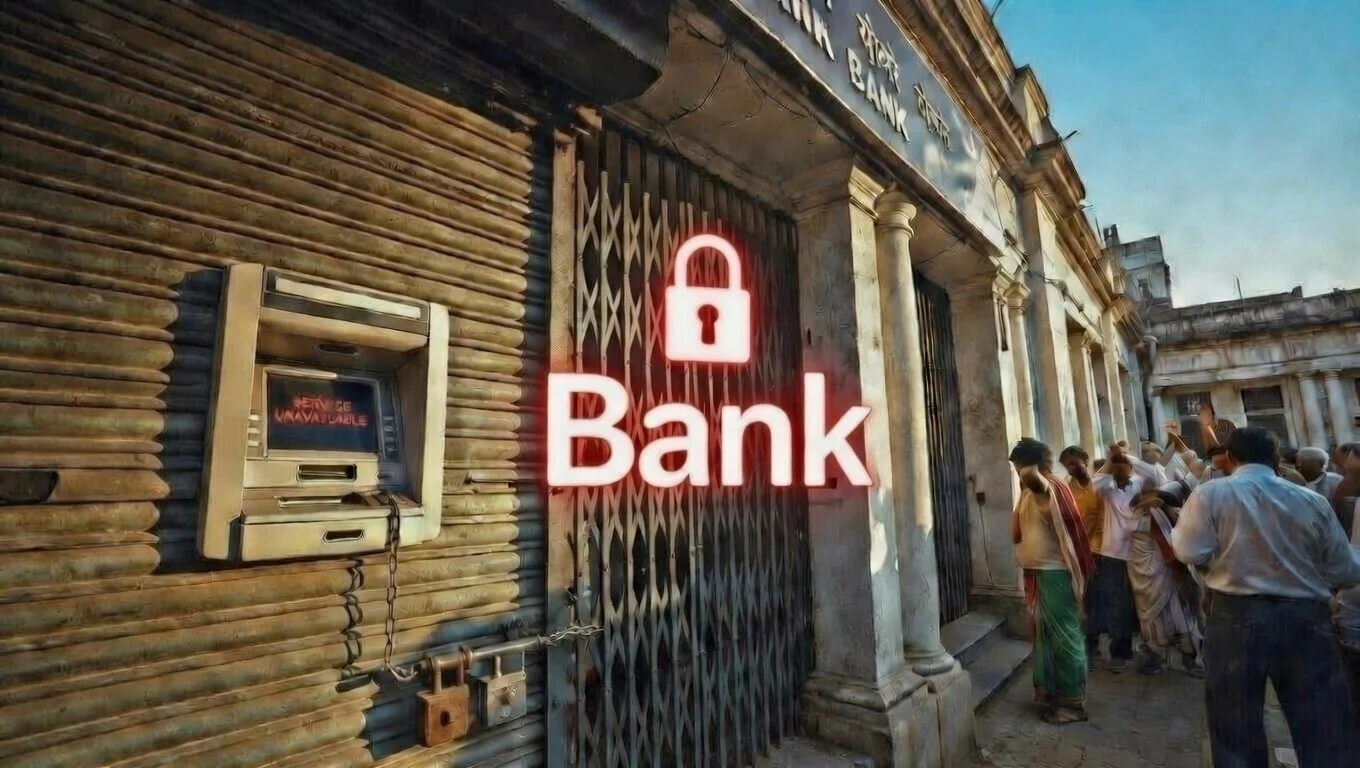
The world of personal finance can be quite stressful. It is stressful when you cannot access your bank. Many people were worried about the bank strike on February 12. On February 12, 2026, a nationwide bank strike will occur in India, affecting many customers. Are banks going to close? Is there going to be a bank holiday India? What will be the impact of this strike on money?
In this guide, we'll review everything the nationwide bank strike will entail, the causes of the strike, the banking services disruption the strike will create, and the best ways to protect your money. Your knowledge of these changes will help you manage your day, whether you are an employee expecting a salary credit or a business owner managing cash flows.
Impact of Bank Employee Strike of February 12, 2026
The bank strike on February 12 is one of the dozen other strikes that make up the Bharat Bandh, which is a general strike for the nation, organised by the major trade unions of all sectors, including banking. The major unions that are participating are the All India Bank Employees’ Association (AIBEA), All India Bank Officers’ Association (AIBOA), and Bank Employees Federation of India (BEFI). This protest is set to take place at the same time as 30 crore workers across the country, which would make this protest one of the largest in the last few years.
This is a long weekend, but that is not the reason RBI has not mandated this closure. Additionally, SBI, Bank of Baroda (BoB), and UCO Bank have warned customers about this strike in their stock exchange filings. Furthermore, SBI has claimed that their work at the branches could be impacted, and has kept the branches open.
The strike is happening on Thursday, February 12, 2026, which may impact operations in union-heavy states like Kerala, Tamil Nadu, Maharashtra, and West Bengal. Concerns for the big private banks like HDFC, ICICI, and Axis may be overstated, as their unions do not fully participate; however, associated industries may still experience some impact.

Why Are Bank Workers Striking?
Why are bank workers striking? The desk protest is mainly driven by the frustration of the workers due to the government’s economic policies, particularly the four new Labour Codes that union leaders feel provide fewer protections to workers and encourage privatisation and job loss.
Unions firmly believe the Codes must be repealed, and in addition, demand increased wages, expanded social security, and the cessation of privatisation of state-owned banks, the repeal of the five-day banking week, and the revision of pensions. AIBEA has noted that the protest is intended to convey to the government that the strike must not be taken lightly, but there are some who are cynical and believe the protest is to create a long holiday.
Other instances of these types of protests are not uncommon, like the January 27 2026, protests for specific banks regarding bipartite settlements and five-day weeks. The February 12 protests are regarding anti-labour policies and are a collaboration with farmers' unions and informal workers' unions.
Is February 12 a Bank Holiday in India?
No, February 12, 2026, is not a bank holiday in India. The Reserve Bank of India does not list February 12 on its holiday calendar, as it does with the bank holidays for other festivals and national holidays. Banks are expected to be open, but due to the nationwide bank strike, employee absences may result in the day appearing as a bank holiday.
In paperwork submitted to the government, Bank of Baroda (BoB) stated they have strike notices and have contingency plans prepared to reduce the strike's impact. However, regions with greater union participation may have branches open with very few employees. This is not the same as a holiday where all bank branches are open; it's just less staff.
In India, bank holidays, along with the strike, create unpredictability.
The Banking Services Disruption: What to Expect
The bank strike on 12th February will affect banking services disruption differently across banks and locations. Public sector banks will take the biggest hit with disruptions in:
- Operations at the Branch Level: Services at the counter such as deposits, withdrawals, account openings, and cheque clearings, could be delayed and unavailable.
- Loans and Accounts: Services such as processing new loans, updating passbooks, and handling fixed deposits will be affected.
- Customer Service: There will be longer wait times to speak to customer service if employees participate in the strike.
The good news is that most digital banking services are expected to continue functioning. ATMs should be operational, although cash shortages might happen if the ATM is not refilled. Banking apps, UPI transactions, online banking, and net banking are expected to continue operating as these services don’t rely on staff at the physical branches.
Inter-bank services such as NEFT and RTGS might be understaffed so there may be minor delays. Private banks are expected to function normally; however, there may be indirect impacts from the strike.

Effect of Bank Strike on Your Money
Impact of the Bank Strike on your Money will be the everyday consumers' real concern. If you are planning a large purchase on 12th February, you may want to revise that plan. If your employer uses that bank, your paycheck may be delayed, which can affect your ability to pay your bills and your EMIs.
Investors will be impacted. If you are planning to sell a stock or a mutual fund, you may be delayed in receiving your money. Businesses that operate on a cash basis will be impacted by a lack of ability to make cash deposits. Accessing money may be more difficult for retirees, as they may have to go to a bank for cash.
The Bank Strike in India highlights some of the problems that exist in the banking system. India relies on customers to strike a balance between the need for digital banking and the rights of workers to strike. The strike has caused worries that there will be more bank closures and negative impacts on the transport, retail, and other economic sectors.
The impacts of the closures will be more psychological than real. The banking system has a history of strikes, and banking services will return. The duration of the strikes will be the most important impact on the banking system. History has shown that the banking system has shown resilience and services have bounced back.
What Can You Do During the Bank Strike?
Use tools that limit the disruption to your banking services:
- ATM usage to withdraw cashand use Google Pay or Phone Pe or cash out your wallet.
- Use Online banking to pay your bills and check your balance.
- Use Private or Non-Strike Bank branches to attend to urgent banking needs.
- Postpone branch visits from 13th Feb.
SBI and some other banks have started sending alerts through SMS and social media. They have suggested that customers plan their banking well in advance. However, in case of urgency, services from hospitals and some other emergency services are exempt from the bandh.
Preparing for Bank Strikes
Banking Services Strikes are something that might definitely happen. They are, however, avoidable by being financially prepared and resilient. Also, keep your banking activities diversified by using both Public and Private Banking. Invest in your digital skills. Also, bank on your knowledge to limit your visits to the bank branches.
Keep an eye on the Banking Unions and the RBI for your strike preparedness. India needs to have balanced reforms so that the unit of government and the citizens are not forced to collide over the stagnant and unequally distributed banking services. You can be confident that the Digital-nation strikes are more than a digital economic essence.

Conclusion
While not a total shutdown, the nationwide bank strike on February 12, 2026, may result in a discernible disruption of financial services. The impact of the strike on money justifies preparedness, even though it is not an official bank holiday in India. You can reduce hassles by comprehending the causes - opposition to labor codes and worker rights and utilizing digital alternatives.
Keep yourself updated by following news sources and official bank channels. Keep in mind that these behaviors are a reflection of larger socioeconomic discussions, and as consumers, our flexibility guarantees financial security. If there are any interruptions, they will be brief, but the readiness lessons will endure.

DISCLAIMER: This blog is NOT any buy or sell recommendation. No investment or trading advice is given. The content is purely for educational and information purposes only. Always consult your eligible financial advisor for investment-related decisions.