
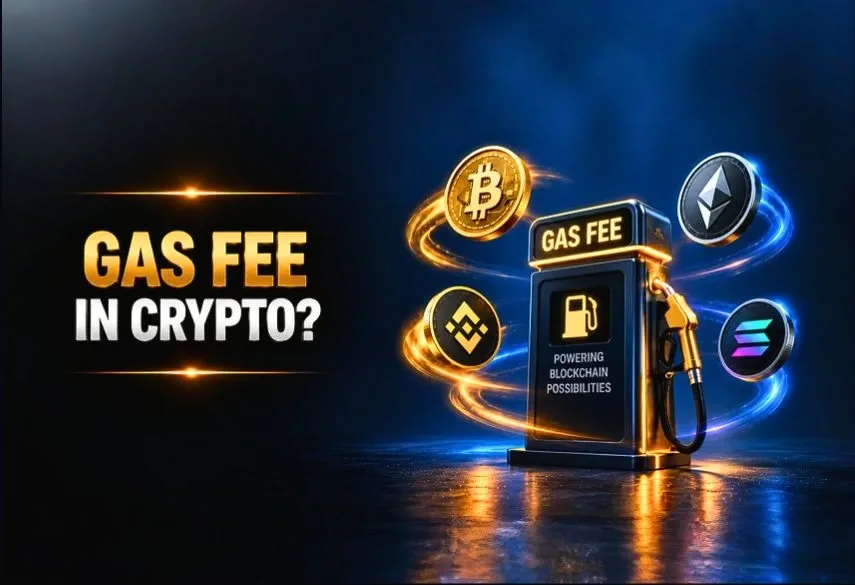
A blockchain gas fee is the payment required to process transactions on a blockchain network. Whenever you send cryptocurrency, swap tokens, interact with a smart contract, or mint an NFT, you pay a network fee that compensates validators for using their computing power.
Gas fees are the fuel that powers blockchain transactions. Just like a car needs fuel to run, blockchain networks need gas fees to process operations, maintain security, and prevent spam.
Many beginners first encounter gas fees when they see an unexpected charge while sending crypto or using a decentralized application. Questions like “What is a gas fee in crypto?” and “Why are Ethereum gas fees so expensive?” are common among new blockchain users.
This guide explains everything about blockchain gas fees, including:
- What blockchain gas fees mean
- How Ethereum gas fees are calculated
- Difference between gas limit and gas price
- Why crypto transaction fees increase
- How to reduce gas costs
- Comparison of fees across different networks.
What Is a Blockchain Gas Fee?
A blockchain gas fee is a transaction fee paid to a blockchain network to execute an operation.

The fee covers:
- Computing resources used by the network
- Transaction validation
- Smart contract execution
- Network security.
Each blockchain uses its own native cryptocurrency for fees.
Examples:
|
Blockchain |
Gas Fee Currency |
|
Ethereum |
ETH |
|
Solana |
SOL |
|
Polygon |
POL |
|
Bitcoin |
BTC |
Every blockchain transaction requires resources. A simple crypto transfer needs less processing power, while complex smart contracts require more computational work.
Therefore, more complex transactions = More gas required = Higher fee
Gas Fee Meaning: Why Is It Called Gas?
The term “gas” comes from Ethereum. Ethereum developers compared blockchain computation with fuel consumption. A vehicle needs gasoline to travel. A blockchain transaction needs gas to execute. Gas measures the computational effort required for an operation.
Examples:
Sending ETH → Low gas usage
Token swap → Medium gas usage
NFT minting → High gas usage
Complex DeFi transaction → Very high gas usage
This system prevents users from performing unlimited free transactions that could overload the blockchain.
How Do Ethereum Gas Fees Work?
Ethereum is the most well-known blockchain using the gas fee model. Every Ethereum transaction requires:
- Gas units
- Gas price
- Network demand
The basic formula is:
Total Gas Fee = Gas Used × Gas Price
After Ethereum’s EIP-1559 upgrade, fees are calculated using:
Total Fee = Gas Units Used × (Base Fee + Priority Fee)
What Is Base Fee?
The base fee is the minimum amount required by the Ethereum network. It changes automatically depending on blockchain activity.
When demand increases:
→ Base fee increases
When network activity decreases:
→ Base fee decreases
The base fee is burned, reducing ETH supply.
What Is Priority Fee?
The priority fee is an optional tip paid to validators. Users can increase the priority fee when they want faster confirmation.
Higher priority fee:
- Faster processing
- Higher transaction cost
Lower priority fee:
- Cheaper transaction
- Slower confirmation
Ethereum Gas Fee Calculation Example
Suppose:
Gas used: 21,000 units
Base fee: 10 gwei
Priority fee: 2 gwei
Formula:
21,000 × (10 + 2)
= 252,000 gwei
= 0.000252 ETH
The actual cost changes based on:
- ETH price
- Network congestion
- Transaction complexity.

Why Are Blockchain Gas Fees High Sometimes?
Gas fees are not fixed. They increase and decrease depending on blockchain demand.
The main reasons are:
1. Network Congestion
Blockchains have limited transaction capacity. When many users try to complete transactions at the same time:
-
Demand increases
-
Users compete for block space
-
Fees rise.
Examples:
2. Transaction Complexity
Different blockchain activities require different amounts of computation.
|
Activity |
Gas Requirement |
|
Sending crypto |
Low |
|
Token transfer |
Low |
|
Token swap |
Medium |
|
NFT minting |
High |
|
Smart contract execution |
Very High |
3. Transaction Speed Preference
Most wallets offer:
-
Slow
-
Standard
-
Fast
Fast transactions incur higher fees because users pay more for priority.
Blockchain Gas Fees Comparison
Different networks use different fee systems.
|
Network |
Fee Model |
Cost Level |
|
Gas units + Base fee + Priority fee |
Medium to High |
|
|
Transaction size-based fee |
Variable |
|
|
Fixed fee + priority fee |
Very Low |
|
|
Polygon |
EVM gas model |
Low |
|
Base |
Layer-2 scaling fees |
Very Low |
|
Arbitrum |
Layer-2 transaction fees |
Very Low |
Ethereum Gas Fees vs Bitcoin Transaction Fees
Although both networks charge fees, their systems are different.
Ethereum Gas Fees
Ethereum fees depend on:
- Computational work
- Smart contracts
- Gas price
- Network demand.
Used for:
- ETH transfers
- DeFi applications
- NFTs
- Smart contracts.
Bitcoin Transaction Fees
Bitcoin fees depend mainly on:
- Transaction size
- Network congestion
- User-selected fee rate.
Bitcoin does not use Ethereum-style gas units.
How to Reduce Blockchain Gas Fees?
Users can reduce crypto transaction costs by following these methods:
1. Use Layer-2 Networks
Layer-2 solutions process transactions more efficiently and reduce costs. Popular Layer-2 networks include:
- Base
- Arbitrum
- Optimism
- zkSync.
Benefits:
- Lower fees
- Faster transactions
- Ethereum security advantages.
2. Check Gas Prices Before Transactions
Before confirming a transaction:
- Check current network activity
- Compare available networks
- Avoid unnecessary high fees.
Many wallets automatically estimate fees, but manual checking can save money.
3. Avoid Busy Network Periods
Gas fees are usually higher during:
- Market volatility
- Popular NFT launches
- Major token events.
Waiting for lower activity can reduce costs.
4. Choose the Right Network
For frequent transactions:
- Use low-cost chains
- Use Layer-2 solutions
- Avoid expensive mainnet transactions when unnecessary.
What Is Gas Limit vs Gas Price?
Many beginners confuse these two concepts.
Gas Limit
Gas limit is the maximum amount of gas a transaction can consume.
Example:
A simple ETH transfer:
21,000 gas units
A complex smart contract:
Much higher gas limit
Gas Price
Gas price is the amount paid for each gas unit.
Higher gas price:
→ Faster confirmation
Lower gas price:
→ Cheaper but slower transaction
How to Check Current Gas Fees?
Before making a transaction, users should check current network conditions.
Useful resources include:
- Blockchain explorers
- Wallet fee estimates
- Gas tracking tools.
Checking fees helps users decide:
- When to transact
- Which network to use
- How much fee to pay.

Conclusion
Blockchain gas fees are simply the cost of using blockchain computing power.
They help networks:
- Process transactions
- Reward validators
- Prevent spam
- Maintain security
Understanding concepts like:
- Gas price
- Gas limit
- Network congestion
- Layer-2 solutions
Helps users make smarter blockchain decisions and avoid unnecessary transaction costs. Whether you are transferring crypto, using DeFi applications, or interacting with NFTs, understanding gas fees allows you to use blockchain technology more efficiently.
(Sources: Ethereum, Data Wallet, Coin Law, Binance)

DISCLAIMER: This blog is NOT any buy or sell recommendation. No investment or trading advice is given. The content is only for educational purposes. Always discuss with your SEBI-registered financial advisor for investment-related decisions.













.webp)


