How Real Estate Investment Trusts Actually Work in 2026
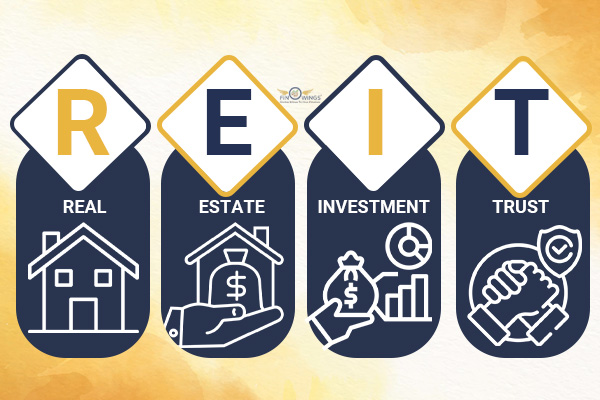
A REIT (Real Estate Investment Trust) lets you own a slice of India's Grade-A commercial property — office parks, malls and warehouses — without buying a building. You buy units on the NSE or BSE through a demat account, and SEBI requires the trust to pay out at least 90% of its net distributable cash flow to unitholders, at least quarterly. India has six listed REITs as of August 2026. Because the trading lot is one unit, an entry costs roughly ₹100 to ₹400 rather than the crore-plus a commercial property would need.

Figure 2 — Indian REIT market snapshot, August 2026.
What a REIT actually is
A Real Estate Investment Trust is a trust registered with SEBI under the SEBI (Real Estate Investment Trusts) Regulations, 2014, which pools money from many investors to own completed, income-generating real estate, is compulsorily listed on a recognised stock exchange, and is required to distribute at least 90% of its net distributable cash flow to unitholders.Strip away the acronym and the idea is simple. A large office park in Bengaluru might be worth two thousand crore rupees. No individual investor is buying that. A REIT buys it, splits the ownership into hundreds of millions of units, lists those units on the exchange, and hands the rent — minus costs and debt servicing — back to whoever holds the units.
The comparison people usually reach for is a mutual fund, and it is a useful starting point: pooled money, professional management, proportionate ownership. But the analogy breaks in three places that matter. A REIT is a trust with a distinct three-party structure — a sponsor who brings the assets, a manager who runs them, and a trustee who protects unitholders. A REIT must be listed, so its price is set by the exchange and can trade above or below the net asset value of the property underneath it. And a REIT is taxed under Section 115UA of the Income Tax Act as a business trust, which works quite differently from mutual fund taxation.
The other thing worth being precise about: REITs issue units, not shares. You are a unitholder, not a shareholder. This is not pedantry — the tax treatment of what you receive depends on it.

Figure 3 — How money moves through an Indian REIT structure.
India's REIT market opened in April 2019 with Embassy Office Parks. It took four years to reach four trusts and then added two in eighteen months. As of August 2026 there are six.

Figure 4 — Growth of India's listed REIT market, 2019 to 2026.
|
REIT |
Listed |
Asset focus |
|
Embassy Office Parks REIT |
April 2019 |
Office parks — Bengaluru, Mumbai, Pune, NCR, Chennai. India's first listed REIT. |
|
Mindspace Business Parks REIT |
August 2020 |
Office parks — Mumbai, Hyderabad, Pune, Chennai. |
|
Brookfield India Real Estate Trust |
February 2021 |
Commercial office — Mumbai, Noida, Gurugram, Kolkata. Sponsored by Brookfield Asset Management. |
|
Nexus Select Trust |
May 2023 |
Retail — India's first listed mall REIT, 17 operating shopping centres. |
|
Knowledge Realty Trust |
August 2025 |
Commercial office portfolio. |
|
Bagmane Prime Office REIT |
May 2026 |
Grade A+ office parks in Bengaluru; committed occupancy near 98.8% at the time of listing. |
Not a recommendation
This list is descriptive, not a buy list. Finowings does not recommend any specific REIT. Occupancy, tenant mix, lease expiry profile, debt levels and unit price all change; check the latest quarterly disclosure on the trust's own website and on the exchange before you act.

Search for "types of REITs in India" and you will find the same list on dozens of sites: equity REITs, mortgage REITs, hybrid REITs, healthcare REITs, private REITs. That list is imported wholesale from the United States, and most of it does not apply here.
Under Regulation 18 of the SEBI REIT Regulations, at least 80% of a REIT's asset value must be invested in completed and rent- or income-generating property. The remaining 20% has a permitted list, and REITs are specifically barred from investing in vacant land, agricultural land, or mortgages other than mortgage-backed securities. A mortgage REIT — a trust that lends against property rather than owning it — cannot be structured this way in India. Neither can a hybrid.
A change to diarise
Section 115UA originally pointed to Section 112 for long-term gains, not Section 112A — which meant the ₹1.25 lakh annual LTCG exemption did not apply to REIT units. The Finance Act 2025 amended 115UA to include Section 112A with effect from FY 2026-27, bringing that exemption into play from that year. If you are filing for an earlier year, the exemption does not apply. Use ITR-2; ITR-1 does not support business trust distributions.
SM REITs — the one genuine second category
SEBI notified the small-and-medium REIT framework in March 2024, and this is a real structural distinction rather than a borrowed label. An SM REIT scheme can hold assets of ₹50 crore or more against ₹500 crore for a conventional REIT, must put at least 95% of scheme assets into completed revenue-generating property, and cannot hold under-construction assets at all. The investment manager needs a net worth of at least ₹20 crore, and a scheme needs a minimum of 200 unitholders.
The catch is the ticket size. The minimum investment in an SM REIT is ₹10 lakh, which puts it in a different bracket from a listed REIT entirely. Property Share Investment Trust became the first registered SM REIT and has launched schemes under the framework. Treat SM REITs as an HNI product that happens to sit under the same regulatory roof, not as a cheaper entry point.
This is where the older Indian REIT explainers are most misleading, because they conflate the primary and secondary markets.
In a REIT IPO or follow-on offer, SEBI's July 2021 notification set the minimum application value at ₹10,000 to ₹15,000. That is the primary market — you are subscribing to a new issue. In the secondary market, where most retail investors actually buy, the trading lot was reduced to a single unit in the same notification. Indian REIT units currently trade in a range of roughly ₹100 to ₹400, so the real minimum is the price of one unit plus brokerage.

Figure 5 — Minimum entry ticket across real estate investment routes (log scale).
SEBI requires a REIT to distribute at least 90% of its net distributable cash flow, and to do so at least quarterly. Note the phrase: net distributable cash flow, not revenue and not profit. NDCF is struck after operating costs, interest and reserves, which is why a REIT reporting strong rental growth can still deliver a flat distribution in a quarter when debt costs rise.
Taxation is where most investors get caught out, because a single distribution is not a single kind of income. Under Section 115UA a REIT is a business trust with pass-through status — the trust is not taxed on the pass-through income; you are.
|
Component of a distribution |
How it is taxed in your hands |
|
Interest |
The REIT lends to its SPVs and passes the interest through. Taxed at your slab rate. TDS of 10% under Section 194LBA for residents. |
|
Dividend |
Exempt if the SPV is on the old corporate tax regime. Taxable at your slab rate if the SPV has opted into the Section 115BAA concessional regime. Most investors do not check this — the trust discloses it. |
|
Rental income |
Arises where the REIT owns property directly rather than through an SPV. Taxed at your slab rate. |
|
Repayment of debt / return of capital |
Not taxed on receipt. It reduces your cost of acquisition, which increases your capital gain when you eventually sell. |
Capital gains on the units themselves
Separate from distributions, and separately taxed. The holding-period threshold for listed business trust units was cut from 36 months to 12 months with effect from 23 July 2024.
|
|
Holding period |
Rate |
|
Short-term (STCG) |
12 months or less |
20% under Section 111A |
|
Long-term (LTCG) |
More than 12 months |
12.5% under Section 112, no indexation |
A change to diarise
Section 115UA originally pointed to Section 112 for long-term gains, not Section 112A — which meant the ₹1.25 lakh annual LTCG exemption did not apply to REIT units. The Finance Act 2025 amended 115UA to include Section 112A with effect from FY 2026-27, bringing that exemption into play from that year. If you are filing for an earlier year, the exemption does not apply. Use ITR-2; ITR-1 does not support business trust distributions.
Finowings is not a tax advisory. Rates and provisions change with every Finance Act — confirm your position with a qualified chartered accountant before you file.
If you read about REITs two or three years ago and have not looked since, the regulatory picture has shifted underneath the asset class.

Figure 6 — SEBI and tax milestones shaping Indian REITs, 2014 to 2026.
REITs are now classified as equity for mutual funds
By a circular dated 28 November 2025, following an amendment to the Mutual Funds Regulations notified on 31 October 2025, SEBI directed that from 1 January 2026 any fresh investment by a mutual fund or a Specialised Investment Fund in a listed REIT is to be treated as an investment in equity-related instruments. Previously REITs sat in the hybrid bucket. InvITs remain hybrid.
Existing REIT holdings in debt schemes as at 31 December 2025 were grandfathered, so no forced selling was triggered, though SEBI encouraged AMCs to reduce those positions gradually. The practical effect is that equity fund managers can now hold REITs inside equity mandates, which widens the pool of institutional money the asset class can draw on.
Nifty index eligibility
NSE Indices followed by updating its methodology so that REITs became eligible for consideration in Nifty equity indices for the first time. SEBI's circular allowed index inclusion only after a six-month cooling-off, from 1 July 2026, which makes the September 2026 reconstitution the first realistic window.
Read this carefully
Eligibility is not inclusion. A REIT still has to clear each index's free-float market capitalisation, liquidity and methodology tests. If one does get added, passive funds and ETFs tracking that index would need to buy units, which over time could improve liquidity. Anyone framing this as guaranteed inflows is selling you something. Check what the September 2026 reconstitution actually did before you act on it.
Bank lending rules tightened
The Reserve Bank of India issued Third Amendment Directions in June 2026 to its Commercial Banks credit facilities framework, permitting banks to lend only to SEBI-registered and listed REITs and InvITs. Loans must be fully secured, repayment must track cash flows, and bullet or ballooning structures are barred. Aggregate bank exposure to any one REIT, including its SPVs and holding companies, is capped at 49% of gross asset value. The directions come into force from 1 October 2026.
For a unitholder this is mildly positive on credit discipline and mildly negative on growth financing for smaller trusts — worth knowing, not worth trading on.
|
REITs may suit you if… |
Look elsewhere if… |
|
You want commercial property exposure without the capital, paperwork or tenant management that direct ownership requires |
You are looking for a guaranteed or fixed return — distributions are variable and depend on occupancy and cash flow |
|
You want regular income and can accept that the amount varies quarter to quarter |
You need the money within a year or two; REIT unit prices are volatile and the tax treatment penalises short holding |
|
You want an asset that behaves differently from your equity and debt holdings |
You expect capital protection; there is none, and units can and do trade below issue price |
|
You are comfortable reading a quarterly disclosure and tracking occupancy and lease expiries |
You want tax-efficient income; REIT distributions are largely taxed at slab rates with no special exemption |
|
You already have a demat account and are investing for five years or more |
You want residential property exposure — Indian REITs hold commercial assets, not homes |
A REIT being SEBI-regulated and exchange-listed tells you that disclosure is mandatory and that fraud risk is lower than in an unregulated fractional-ownership scheme. It tells you nothing at all about whether you will make money.
• Occupancy risk. A REIT's income is rent. If a large tenant does not renew, distributions fall. Watch committed occupancy and the weighted average lease expiry in every quarterly disclosure.
• Tenant concentration. Several Indian REITs derive a substantial share of rent from a handful of global capability centres. That is high-quality credit, but it is concentrated credit.
• Interest rate sensitivity. REITs are leveraged and are bought partly for yield, so they tend to de-rate when rates rise on both counts at once.
• Refinancing and covenant risk. Debt has to be rolled. The RBI's 2026 lending directions make bank funding more disciplined but also more restrictive.
• Price volatility. Units trade on the exchange and can move well away from the appraised value of the underlying property, in either direction.
• Sector concentration. Most of the Indian market is Bengaluru, Mumbai, Hyderabad and NCR office space. A structural shift in office demand hits several trusts at once.
• Tax drag. A large part of a typical distribution is taxed at your slab rate. For an investor in the highest bracket, the post-tax yield is materially lower than the headline.
1. Open or use an existing demat and trading account with a SEBI-registered broker. REIT units settle in demat exactly as equity does.
2. Decide the route. Secondary market gives you immediate execution at market price and a one-unit minimum. A REIT IPO or follow-on offer requires a ₹10,000–₹15,000 minimum application and is applied for via ASBA or UPI, the same as an equity IPO.
3. Do the homework on the specific trust: committed occupancy, weighted average lease expiry, tenant concentration, net debt to gross asset value, and the distribution history across at least eight quarters — not one.
4. Check the distribution split. The trust discloses what share of each distribution is interest, dividend, rent and return of capital. That split determines your actual post-tax yield.
5. Place the order by exchange symbol, or apply in the offer. Units are credited to your demat account.
6. Track it quarterly and report it correctly. File ITR-2, and reconcile against Form 26AS for the TDS deducted under Section 194LBA.
An indirect route also exists: some mutual funds and fund-of-funds schemes hold REIT units, including funds giving access to international REITs. Following SEBI's January 2026 reclassification, domestic equity schemes can hold Indian REITs within an equity mandate. Check the scheme's current portfolio disclosure rather than relying on a fund name.

REITs did something genuinely useful for Indian retail investors: they took an asset class that used to require a crore of capital, a lawyer and a tolerance for tenant disputes, and reduced it to a line item in a demat account costing a few hundred rupees. That is a real democratisation, and the market has grown into it — from one trust in 2019 to six in 2026, with a gross asset value above ₹2.72 lakh crore and quarterly distributions now reaching close to five lakh unitholders.
But the honest framing is narrower than most articles suggest. A REIT is a yield-oriented, exchange-traded claim on office and mall rent, mostly in four Indian cities, taxed largely at your slab rate. It is not a substitute for owning a home, it is not a fixed-income product, and the SEBI regulation that governs it protects you from opacity rather than from loss. The trusts whose units you buy can and do trade below their issue price.
The 2025–26 reclassification of REITs as equity instruments, and their new eligibility for Nifty indices, is the most consequential development the asset class has seen since listing began. It may broaden institutional ownership and deepen liquidity over the next few years. It is not, by itself, a reason to buy anything this week.
If REITs fit your plan, treat them the way you would treat any equity holding: size the position deliberately, hold for years rather than quarters, read the quarterly disclosure rather than the yield headline, and understand what share of your distribution the tax department will take before you count it as income. Do your own research, know your risk appetite, and speak to a SEBI-registered adviser if the decision is a large one.

DISCLAIMER: This blog is NOT any buy or sell recommendation. No investment or trading advice is given. The content is only for educational purposes. Always discuss with your SEBI-registered financial advisor for investment-related decisions.












.jpg)